




Antique Kitchen Bench
When sourcing an antique kitchen bench, collectors look for robust utility paired with the honest character of nineteenth-century timber forms.
Antique Kitchen Bench
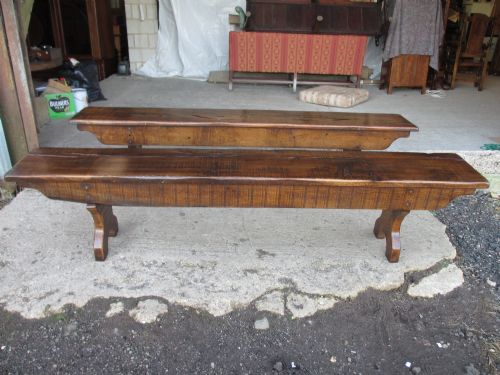
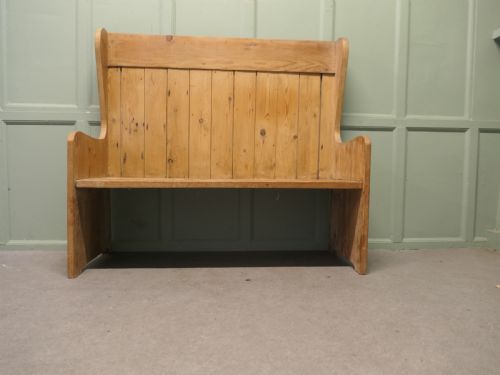
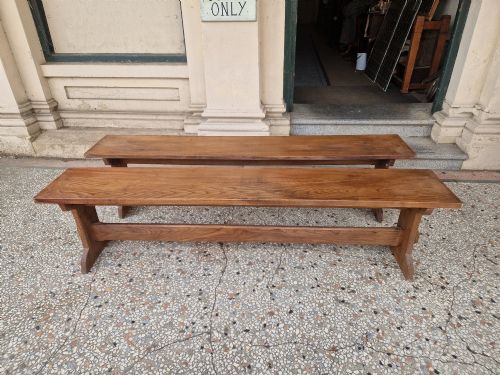
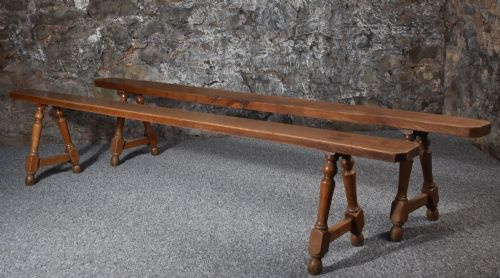
An antique kitchen bench encompasses utilitarian seating and heavy work surfaces shaped by domestic and workshop demands across European households. The selection spans long pine settles, French cherrywood planks, and heavy oak trestle designs originating from the Victorian era back to earlier vernacular traditions.
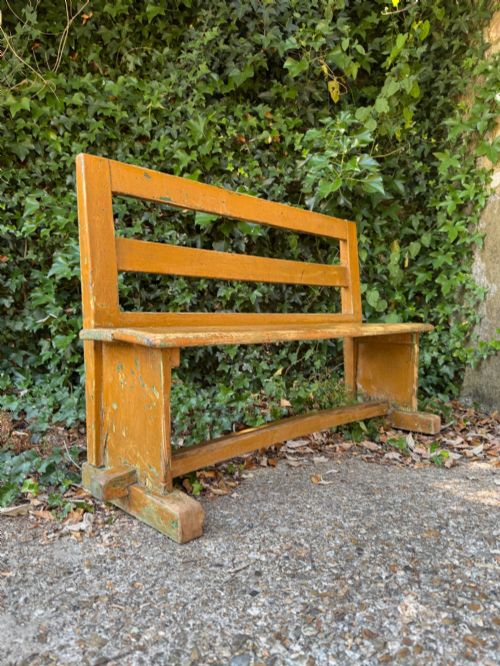
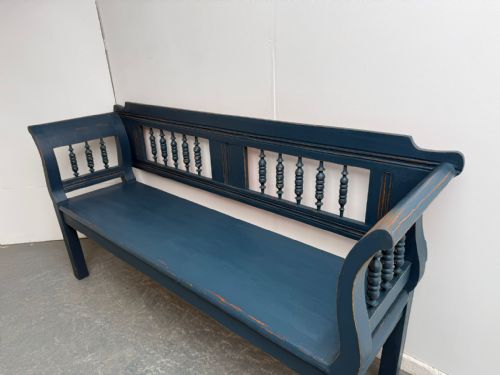
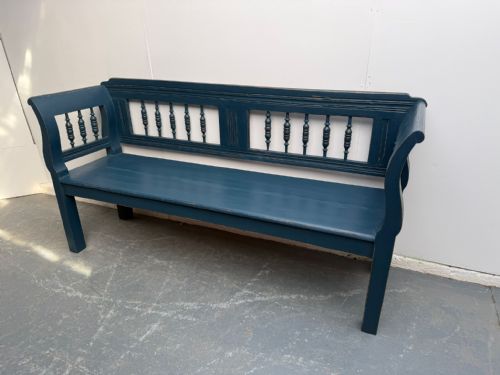
Buyers frequently encounter simpler pine boards, painted Hungarian three-seater benches, and sturdy fruitwood forms designed for daily household use. These pieces bridge the gap between heavy workshop preparation tables and communal dining seating.
Regional variations introduce distinct profiles, from high-back fireside settles to low-slung French provincial forms and Scandinavian scrubbed planks. Each piece reflects the specific domestic tasks of its locale, prioritising function and durability.
Materials and Construction
Makers relied on domestic timbers such as pine, oak, elm, and cherrywood, joined with pegged mortise and tenon structures to withstand heavy daily labour. Boards were often selected for thickness and durability, resulting in solid plank-tops and heavy trestle ends.
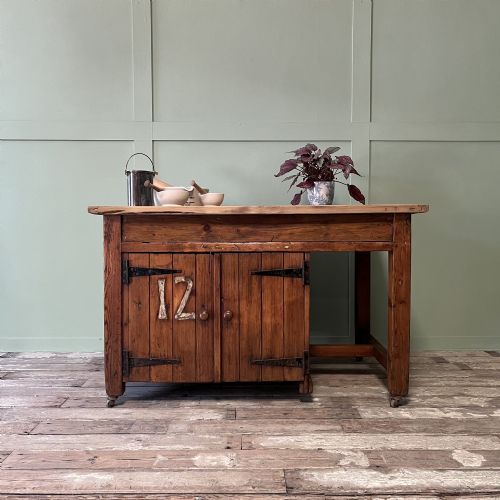
Surfaces frequently show the marks of hand-planing and sustained utility, occasionally protected by early layers of paint or milk-based pigments in blue, green, or neutral tones. The integration of iron vices and structural braces on workshop variants reveals a purely functional approach to construction.
Several heavy workbenches retain built-in wooden vices, perfect for holding bread dough or stubborn nineteenth-century boots in place.
Assessing Quality and Character
The distinction between standard utility items and superior examples lies in the integrity of the timber, the depth of patination, and the retention of original surface treatments. Unaltered paintwork and substantial board thickness elevate a piece well above heavily restored equivalents.
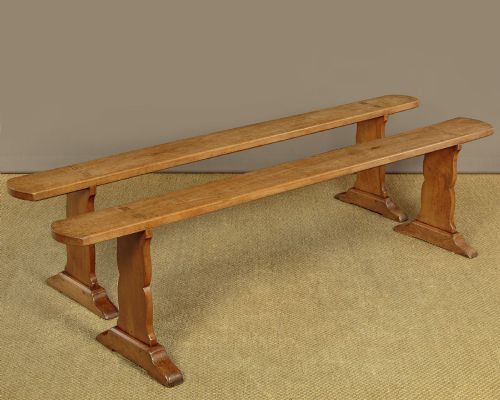
Proportion and structural balance dictate the desirability of longer forms, where matching pairs or exceptionally long single planks command greater attention. Subtle details such as shaped trestle ends and dovetail joints indicate a higher grade of regional craftsmanship.
Trussant and Cie
The Antique Kitchen Bench Glossary
- Settle
- A wooden bench with a high back, solid arms, and often an enclosed box seat beneath. This form provided shelter from draughts in early kitchens and halls.
- Trestle
- A structural support consisting of a horizontal beam fixed to two splayed legs. This method allows for maximum legroom along long dining benches.
- Form
- An early term for a long wooden bench without a backrest. These pieces were pulled up to communal tables for dining or prep work.
- Patina
- The surface sheen and colour developed through decades of handling, cleaning, and wear. It serves as a primary indicator of age and authenticity.
- Prep Table
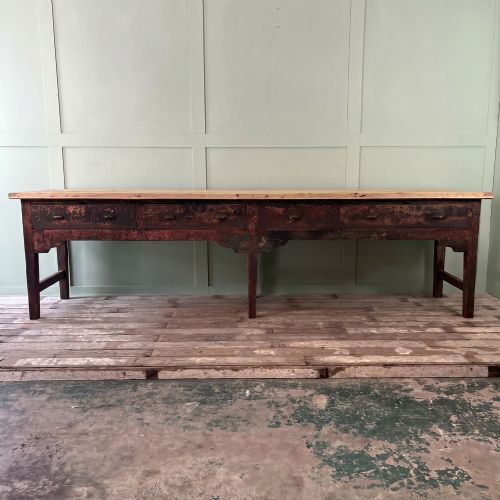
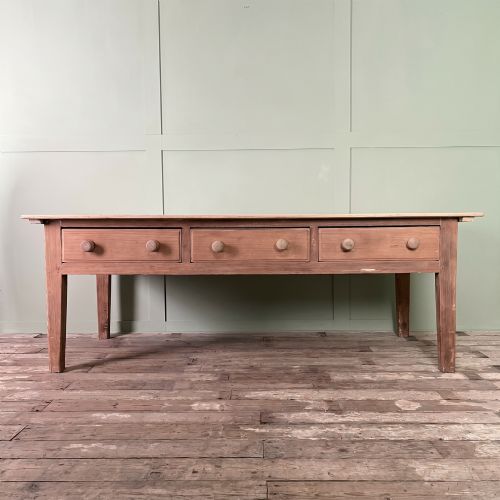
- A heavy-topped working table used for baking, butchery, or dairy tasks. They often feature scrubbed timber surfaces alongside drawers or lower tiers.
Antique Kitchen Bench: Frequently Asked Questions
How were kitchen benches used originally?
These benches served primarily as communal seating around large farmhouse dining tables and as stable platforms for daily food preparation tasks.
In many households, high-back settles were placed near firesides to block draughts while providing concealed storage beneath the seat for household goods.
How do I care for antique pine?
Maintain timber surfaces by dusting regularly with a dry cloth and avoiding excessive moisture or direct heat sources that cause wood to split.
Apply a neutral beeswax sparingly to nourish dry grain while preserving the accumulated patina of the piece over time.
Are painted finishes original?
Many European benches retain early layers of blue, green, or neutral paint applied to protect the softwood from kitchen moisture and heavy wear.
Close inspection of the pigment layers helps distinguish period surface treatments from later decorative overpainting.
What is the difference between a settle and a bench?
A settle incorporates a solid high back and enclosed sides designed to shield occupants from cold air currents in older domestic spaces.
A standard bench offers open seating without a backrest or enclosed base, making it easier to tuck neatly beneath a dining table.