

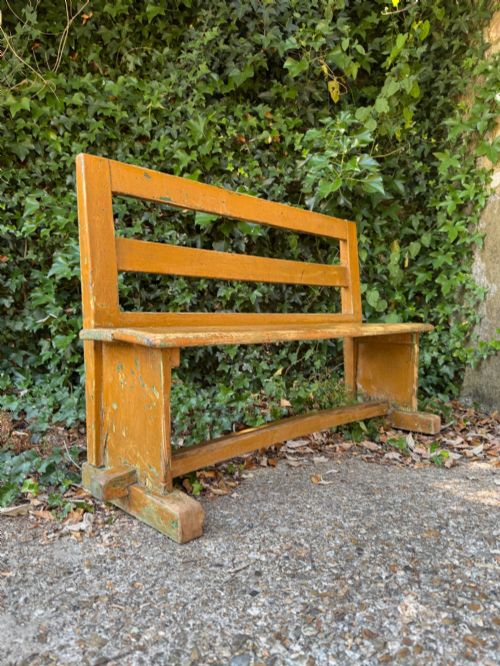
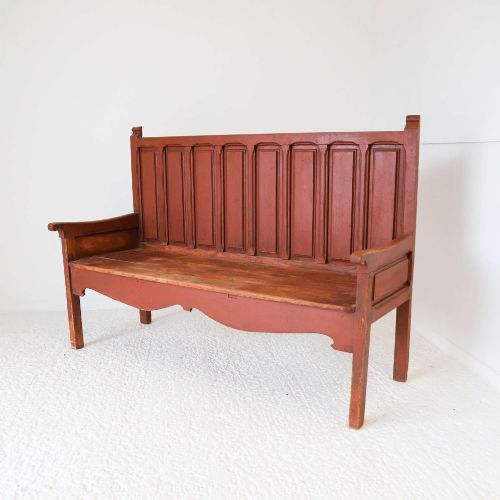
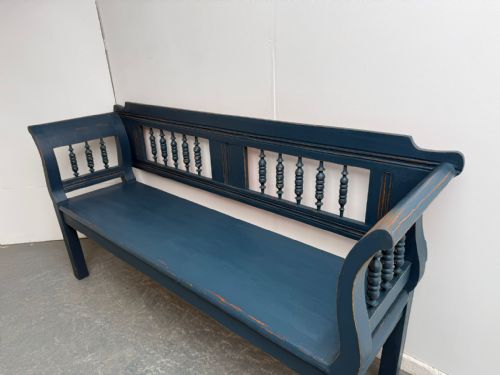
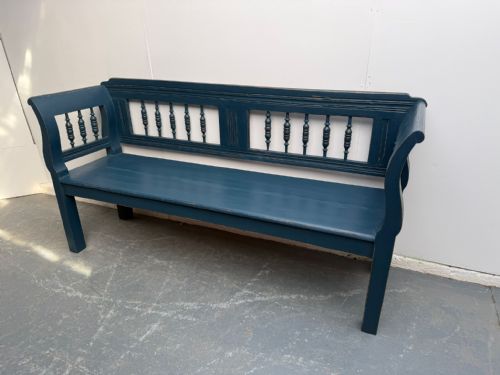
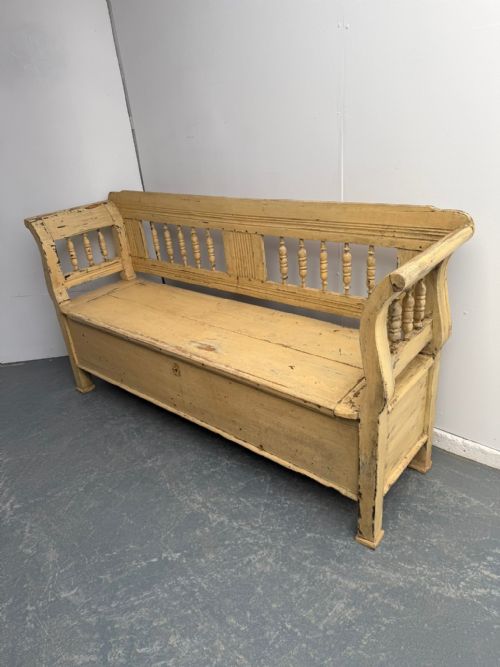


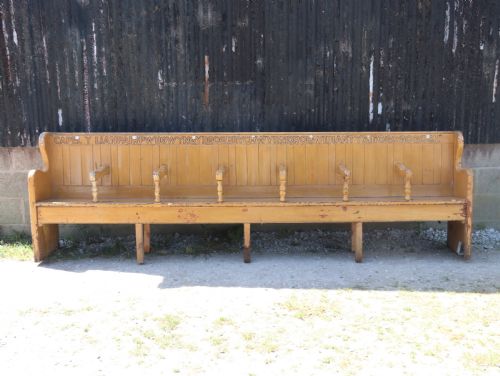


Painted Pine Pew
These painted pine pew pieces bring honest utility and character to a hallway or kitchen, offering practical seating built to last generations.
Painted Pine Pew
When you search for a painted pine pew, you encounter robust seating forms designed for daily use across domestic and public spaces. The selection ranges from straightforward benches to high-backed settles with integrated storage.
You are most likely to meet nineteenth-century and Victorian examples on this page, spanning English country house pieces alongside continental European variations. These items bridge utilitarian necessity and folk art tradition.
Regional origins shape the character of each piece, taking in English vernacular forms, Spanish country furniture, and Hungarian folk art designs. Each piece reflects the specific domestic requirements of its original setting.
Materials and construction
Construction relies upon solid timber, with pine serving as the primary structural material supported by iron fixings where necessary. Craftsmen built these benches to withstand heavy daily wear in settings such as taverns and chapels.
Surface treatment defines the aesthetic, featuring layers of original paint in cream, blue, and various traditional tones. This painted finish protects the underlying softwood while recording the decorative preferences of past decades.
Painted Pine Pew Retail Price Guide 2026
Typical asking prices for painted pine pew among the pieces listed under this phrase on Sellingantiques today, from the lower quarter to the upper quarter. They describe what is for sale here now, not the wider market.
One notable Victorian bench arrives directly marked for the chapel at Llanfair, carrying its institutional past into the present day.
Assessing quality and authenticity
Quality rests upon the integrity of the original construction and the preservation of authentic surface finishes. Pieces retain greater interest when the painted decoration shows natural patination rather than modern intervention.
Proportion and scale distinguish finer examples, particularly in larger settle benches and multi-seater configurations. The balance between the timber frame and the functional design dictates the visual appeal of each bench.
The Painted Pine Pew Glossary
- Pine
- A softwood timber commonly used for utilitarian furniture due to its availability and workability. It takes paint readily and forms a sturdy structure.
- Settle
- A wooden bench with a high back, solid arms, and often a closed base or box seat. It was designed to block draughts in older rooms.
- Vernacular
- Everyday architecture and furniture made by local craftsmen using regional materials to satisfy practical needs. It avoids high-style academic design.
- Box settle
- A variation featuring a hinged seat opening to a storage compartment below. This provided a dual function for rooms with limited space.
Painted Pine Pew: Frequently Asked Questions
What is a painted pine pew?
A painted pine pew is a utilitarian wooden bench finished with decorative or protective paint layers. These items served practical seating roles in domestic halls, taverns, and religious spaces.
They combine robust softwood construction with regional decorative traditions, resulting in functional seating that doubles as a strong visual statement in modern interiors.
Where were these benches used?
Original locations included country houses, local taverns, rural chapels, and farmhouses across Britain and continental Europe. Their hardy build suited high-traffic environments.
High-backed variants specifically helped deflect cold draughts in large, stone-floored rooms before central heating became common.
How do I care for painted pine?
Maintain the surface by dusting gently with a dry cloth and avoiding harsh chemical cleaning agents. Direct sunlight can fade old paint layers over time.
Keep the timber away from extreme humidity fluctuations to prevent the wood from splitting or warping the original joints.
How do I identify the period?
Dating relies on examining construction methods, tool marks, and the chemical composition of the paint layers. Nineteenth-century examples often display hand-cut joinery and aged surface patination.
Comparing the specific proportions and regional stylistic traits against documented vernacular furniture helps narrow down the decade of origin.