

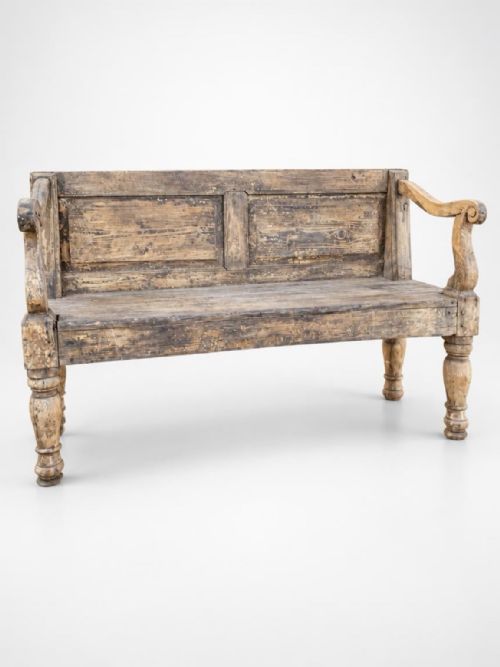
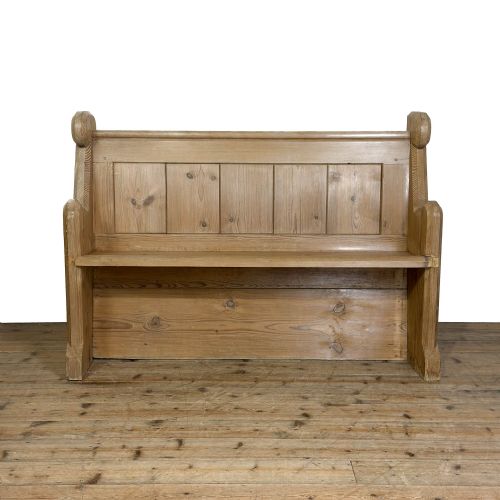
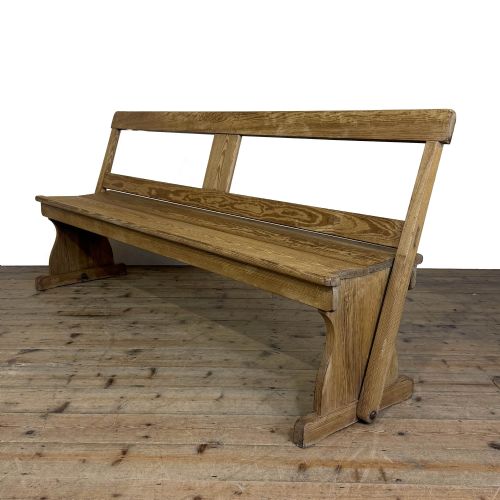
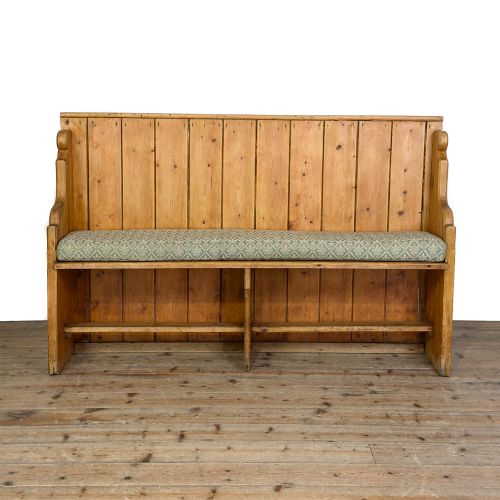
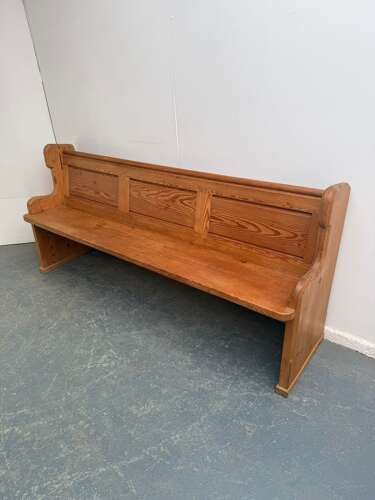


Rustic Pine Church Pew
A rustic pine church pew brings honest timber and quiet architectural presence straight from chapel to hallway.
Rustic Pine Church Pew
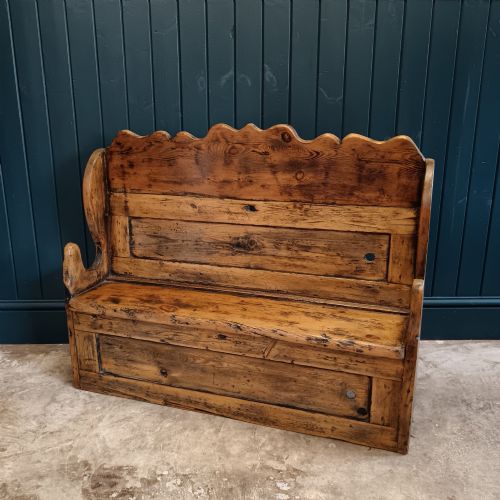
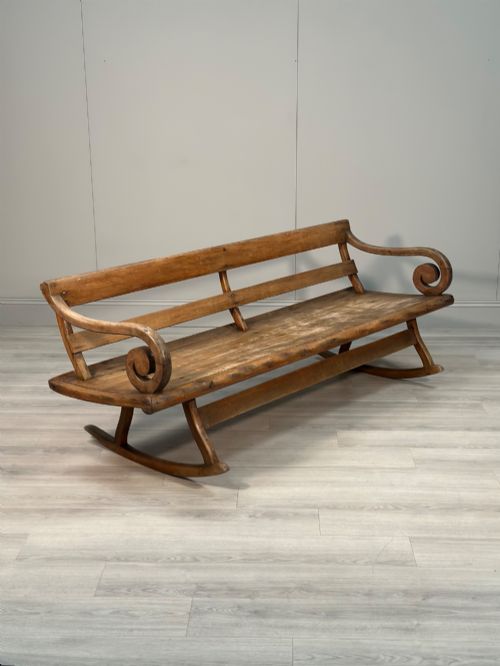
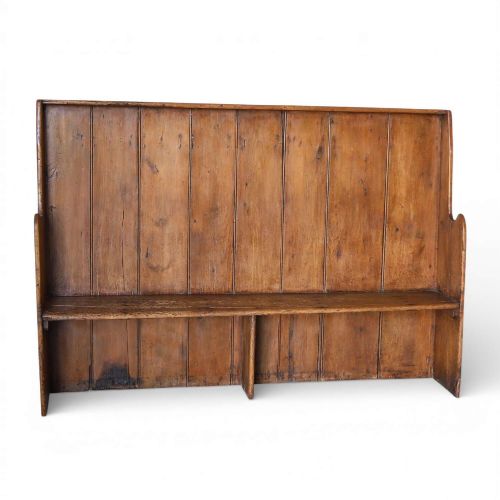
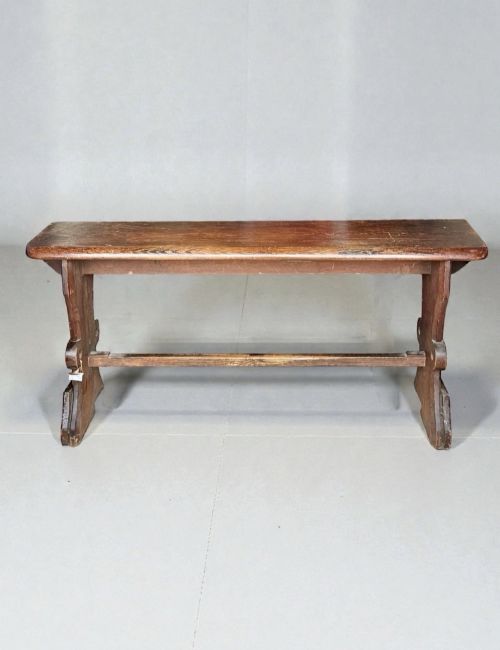
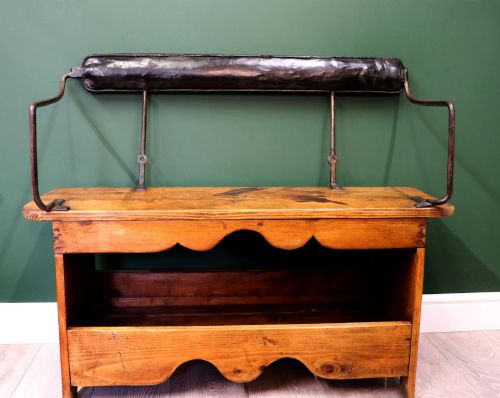
When you search for a rustic pine church pew, you are looking at substantial wooden seating rooted in ecclesiastical and vernacular domestic traditions. These pieces take the form of straight-backed benches, high-back settles, and organist seats designed for communal spaces.
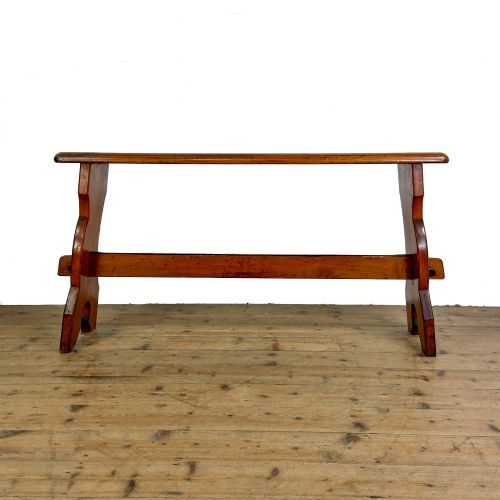
The versions most likely to meet you on this page date from the nineteenth century, including Victorian examples alongside European country benches. Makers built them for utility in churches, village halls, and taverns, utilising robust timber to withstand heavy daily use.
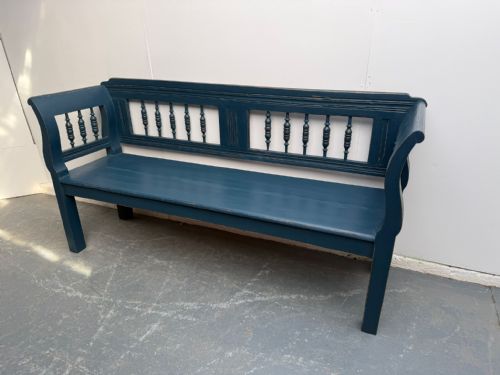
Regional variations span English country designs, French dining benches, and painted Austrian or Hungarian settles. You will encounter both simple open benches and enclosed high-back forms meant to block drafts in draughty public rooms.
Materials and construction methods
Constructed predominantly from solid pine, these benches frequently incorporate secondary woods such as elm or structural iron for added support. Joinery relies on traditional pegged mortise and tenon methods, ensuring stability across long spans of timber.
Surfaces show various historic finishes, ranging from warm wax and honey brown patina to original blue or multi-layered paint. Over generations, heavy use and simple maintenance created the distinct tactile surfaces seen on surviving examples today.
Rustic Pine Church Pew Retail Price Guide 2026
Typical asking prices for rustic pine church pew among the pieces listed under this phrase on Sellingantiques today, from the lower quarter to the upper quarter. They describe what is for sale here now, not the wider market.
Organist benches often feature slightly asymmetrical wear patterns where players repeatedly pivoted toward the stops.
Distinctions in build and condition
Quality rests upon the integrity of the timber, the honesty of the construction, and the preservation of original surfaces. Benches retaining their early or original paint finish and untouched patination stand apart from those stripped down or heavily restored.
Proportion and scale also dictate desirability, particularly with exceptionally long dining benches or slim hallway formats. Original fixings, structural soundness without excessive timber replacement, and balanced proportions mark out the better examples.
The Rustic Pine Church Pew Glossary
- Settle
- A wooden bench with a high back, solid arms, and often a storage box beneath the seat. It was historically placed near the hearth to keep seated occupants warm.
- Patina
- The surface sheen and colour developed over decades through handling, waxing, and exposure to light. It signals the age and continuous history of the wood.
- Ecclesiastical furniture
- Furnishings specifically made for use within churches and chapels. This category includes pews, clergy stalls, and vestry cupboards.
- Tavern bench
- A long, sturdy wooden seat designed for public houses and inns. These pieces prioritized simple durability and straightforward construction.
- Mortise and tenon
- A traditional woodworking joint where a projecting tongue fits snugly into a corresponding cavity. This method provides strong, durable framing without relying on metal fasteners.
Rustic Pine Church Pew: Frequently Asked Questions
How do I clean a waxed pine pew?
Dust the timber regularly with a soft, dry cloth to prevent grit buildup on the surface. Apply a traditional beeswax sparingly when the wood appears dry, then buff gently with a clean cloth.
Avoid modern liquid polishes containing silicone, as they can soften old wax and damage the historic patina over time.
Where should I place a church pew at home?
These benches fit naturally along a hallway wall, behind a dining table, or providing seating against a living room backdrop. Their narrow footprint allows them to sit comfortably in tight spaces.
Keep them away from direct heat sources such as radiators to prevent the pine from drying out, shrinking, or splitting.
Can I use an antique pine bench outdoors?
These historical pieces were built for indoor chapel and domestic use and lack weather-resistant finishes. Moisture will quickly raise the grain, rot the pine, and ruin historic paint or wax surfaces.
Retain them strictly inside dry environments to preserve their structural integrity and surface character.
How do I date a nineteenth-century pine bench?
Examine the tool marks, nail types, and joinery methods visible underneath and behind the seat. Hand-sawn boards and forged iron fixings generally point towards earlier Victorian manufacture.
Compare the wear patterns and patination around the footrests and seat edges, which accumulate natural smoothing from decades of sitting.