

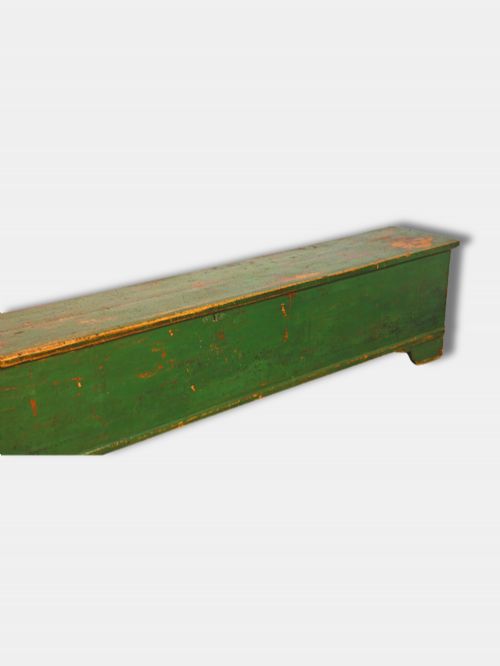
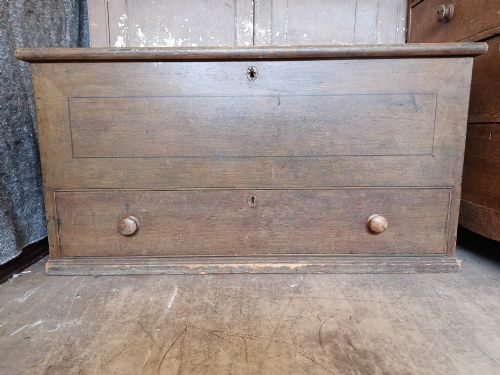


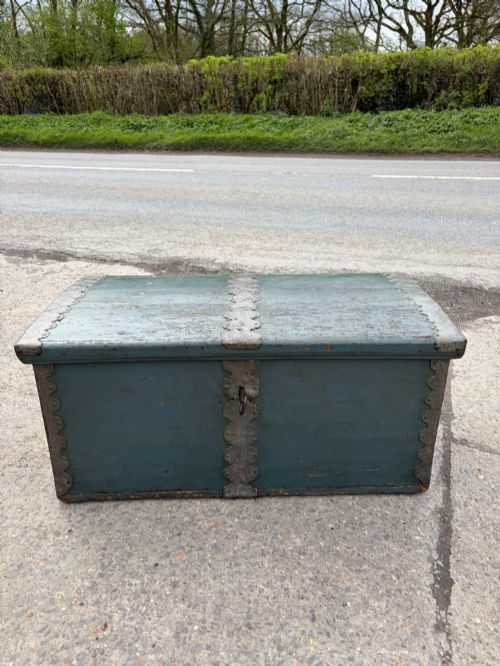


Rustic Painted Trunk
These rustic painted trunks bring utilitarian folk art and enduring storage into a room with genuine regional character.
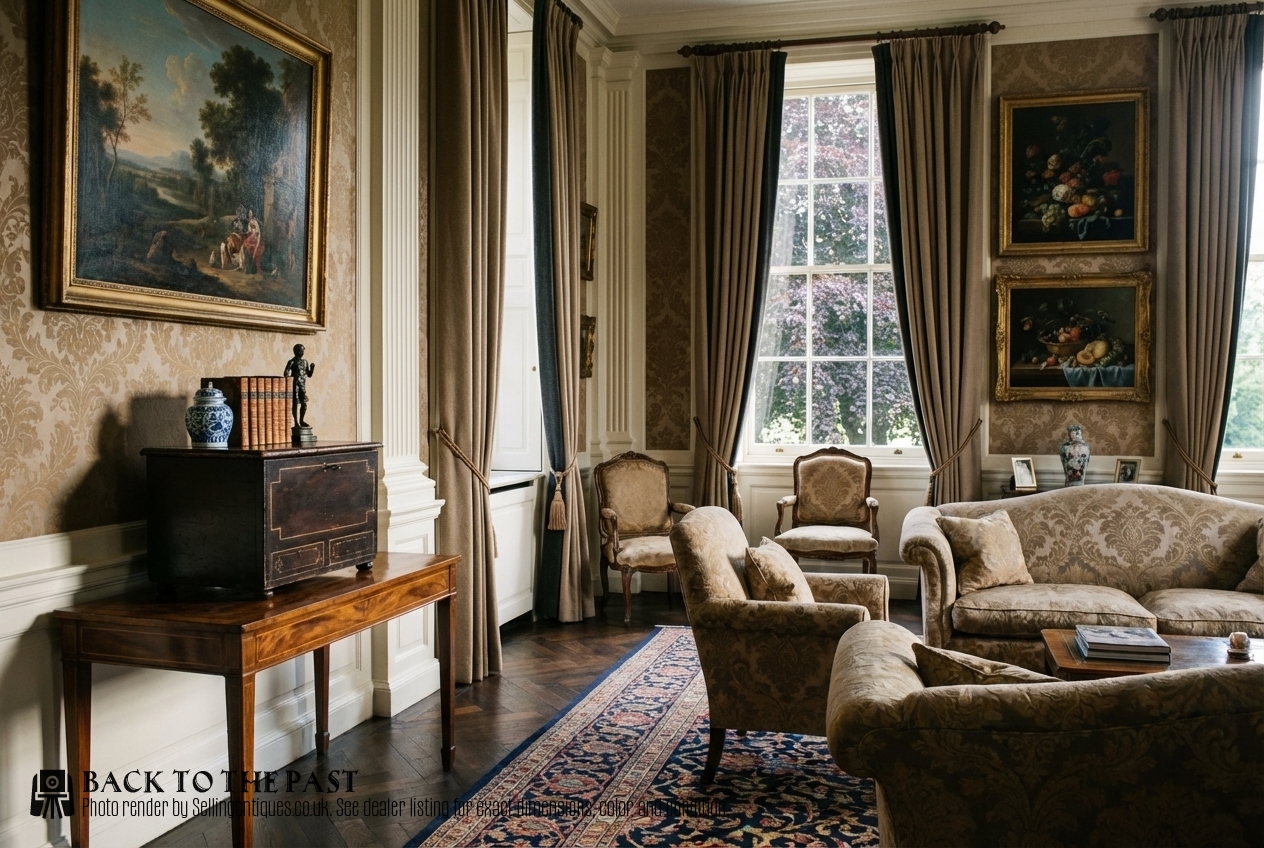
Rustic Painted Trunk
A rustic painted trunk serves as a robust storage solution, frequently taking the form of a blanket box, coffer, or mule chest designed for domestic utility. Buyers searching this phrase encounter substantial storage chests originating from nineteenth-century Britain, Scandinavia, and wider Europe.
The selection centres heavily on nineteenth-century examples alongside earlier Georgian and Regency pieces. Forms range from dome-top coffers and travel trunks to larger blanket boxes fashioned for daily household use.
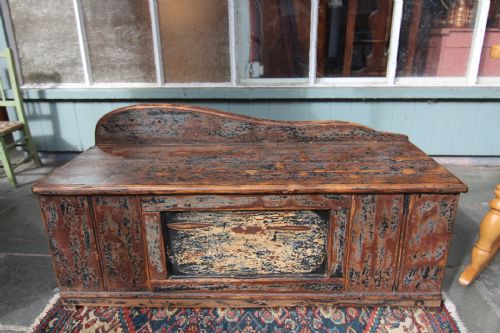
Regional variations dominate the available stock, spanning English pine items, Welsh coffers, and distinct folk art traditions from Sweden, Hungary, and the Alpine region. Many retain original pigment, scumble glaze, or hand-forged ironwork.
How they were made
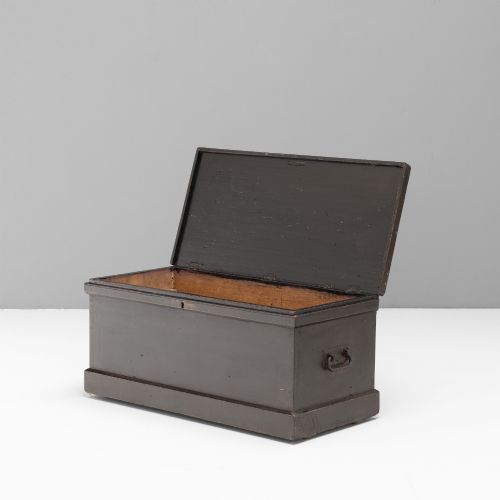
Construction relies primarily on sturdy pine and oak boards joined to create heavy-duty carcasses capable of enduring travel and heavy storage. Carpenters utilised dovetail joints and iron strapwork to reinforce lids and corners against daily wear.
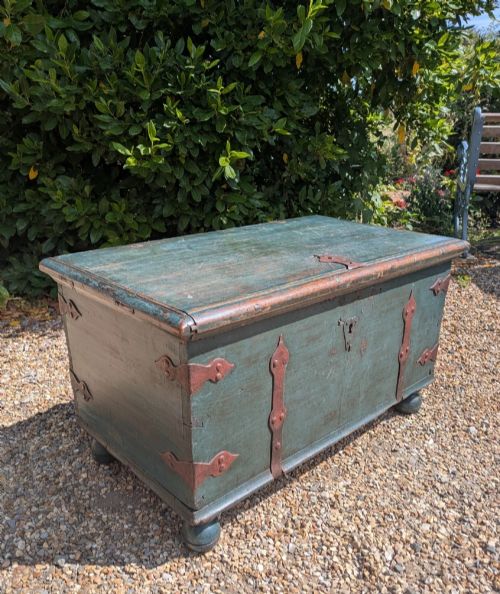
Surfaces were prepared with pigmented paint, scumble glazes, or hand-painted folk motifs directly applied to the wood. Hand-forged iron and brass fittings completed the hardware, providing functional hinges, locks, and carrying handles.
Rustic Painted Trunk Retail Price Guide 2026
Typical asking prices for rustic painted trunk among the pieces listed under this phrase on Sellingantiques today, from the lower quarter to the upper quarter. They describe what is for sale here now, not the wider market.
Period origins span the Georgian, Regency, and Victorian eras, alongside specific nineteenth-century dating points.
What varies in quality
Quality rests upon the preservation of the original surface and the integrity of the timber frame. Pieces retaining their initial pigment, marriage box inscriptions, or scumble paintwork command greater interest than those stripped down or repainted later.
Structural robustness also defines the upper tier, marked by intact hand-forged iron strapwork, original bracket feet, and functioning locks complete with keys. The subtlety of regional folk art details and the heft of the underlying pine or oak further separate standard utility boxes from exceptional regional examples.
The Rustic Painted Trunk Glossary
- Mule chest
- A storage chest featuring one or more drawers beneath the main internal compartment. This form bridges the traditional blanket box and the standard drawer chest.
- Scumble
- A decorative painting technique involving a translucent glaze dragged over a lighter base colour to simulate wood grain or create textured patterns. It appears frequently on nineteenth-century storage boxes.
- Marriage chest
- A specially commissioned box created to mark a wedding, often inscribed with dates, initials, or symbolic folk art motifs. These pieces originate frequently from Scandinavian and Alpine workshops.
- Coffer
- A heavy, timber-framed box traditionally used for safekeeping valuables or textiles. They often feature hinged lids and sturdy iron hardware.
- Strapwork
- Decorative or reinforcing bands of iron or brass fixed across the exterior of a trunk. Hand-forged versions secure the corners and lid joints.
Rustic Painted Trunk: Frequently Asked Questions
Where were these painted trunks made?
The evidence points to workshops across Britain, France, Hungary, and the Scandinavian and Alpine regions. Each area developed distinct regional painting styles and construction habits.
English and Welsh pieces often display simpler utilitarian finishes, whereas Swedish and Hungarian examples frequently showcase elaborate folk art motifs or marriage chest inscriptions.
What is a scumble painted finish?
Scumbling involves applying a darker, translucent glaze over a paler base coat and manipulating the wet layer to create mottled or grained effects. It was widely used during the Victorian era to elevate plain pine surfaces.
This technique provided domestic furniture with a richer decorative presence without requiring expensive exotic timbers.
How do I care for an antique painted box?
Keep wooden storage boxes away from direct heat sources and sudden humidity fluctuations to prevent timber movement and paint flaking. Dust gently with a dry cloth and avoid harsh chemical cleaners.
Preserving the original pigment requires maintaining a stable indoor environment and handling iron hardware with care.
Can I use a blanket box as a coffee table?
Many sturdy nineteenth-century chests possess proportions and flat lids that suit functional placement in a living space. Their internal capacity simultaneously provides convenient storage for blankets or household items.
Ensure the antique lid hinges and timber structure remain stable before placing objects on top.