
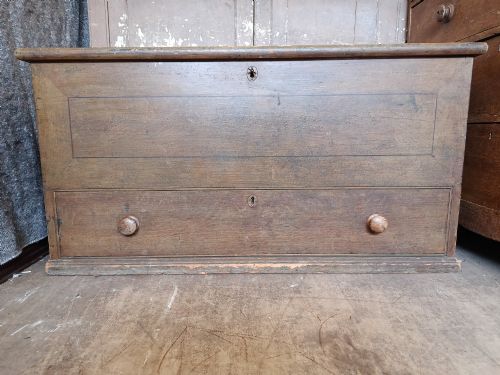

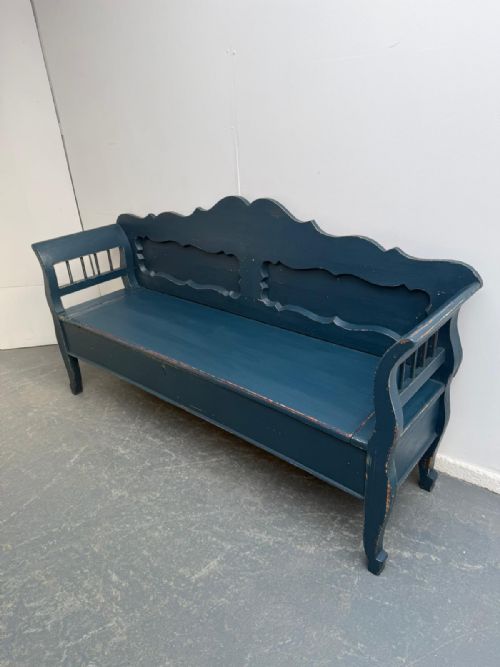


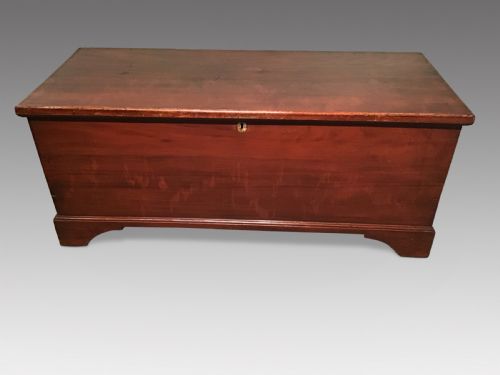

Georgian Painted Coffer
These georgian painted coffer examples combine generous domestic storage with surface decoration spanning English, Welsh and continental traditions.
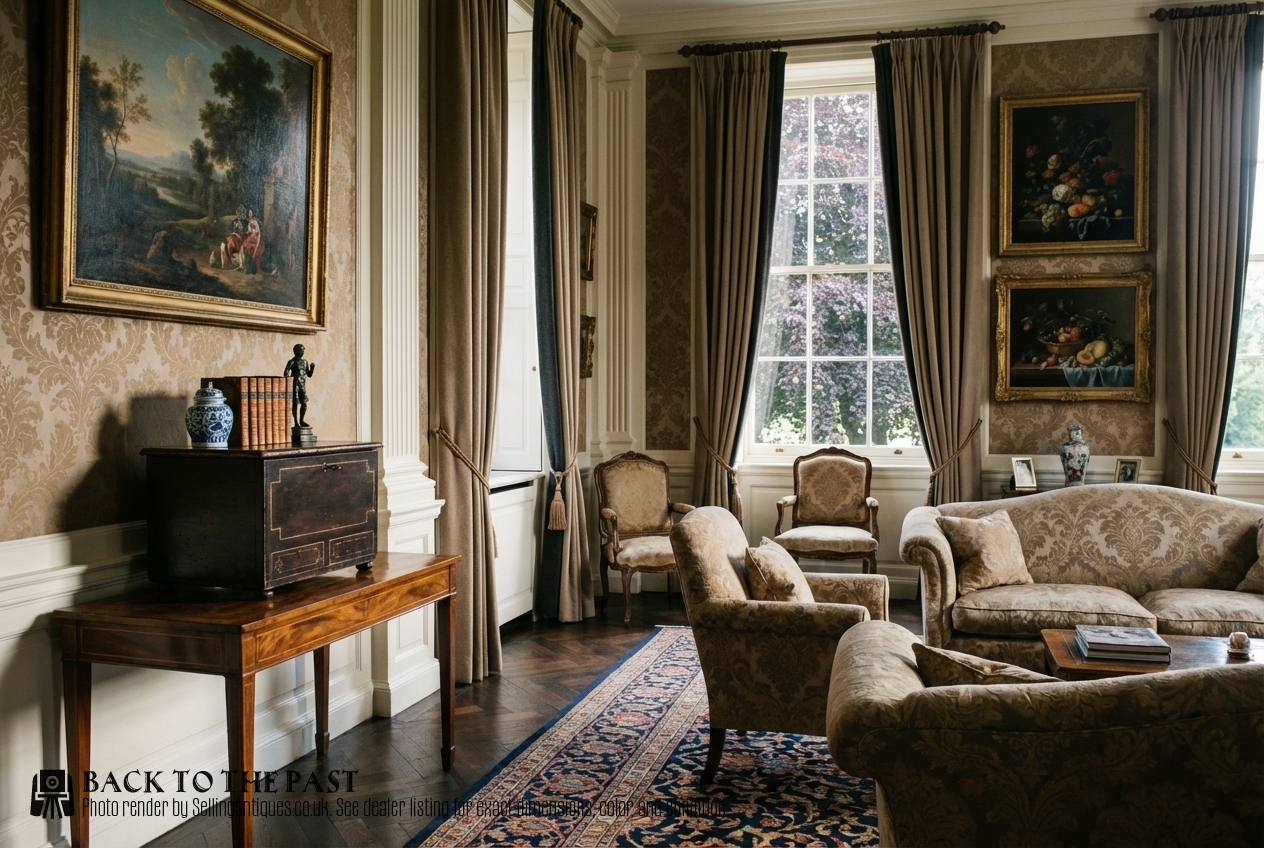
Georgian Painted Coffer
A georgian painted coffer serves as a robust storage box, blanket chest or mule chest, often fitted with lower drawers for versatile household use. These items range from simple vernacular pieces to elaborate regional examples designed to hold household linens and personal belongings.
The pieces on this page lean heavily toward 18th century and 19th century constructions, featuring regional styles such as Welsh vernacular, maritime folk art and European folk art. Buyers encounter various forms, including pine storage benches, commodes and smaller trinket boxes.
Pine and oak form the structural core of most examples, finished with decorative paint schemes in blue, teal, green or natural tones. Many items carry the marks of domestic wear, retaining the original pigments applied centuries ago.
How they were made
Joiners constructed these chests primarily from solid pine and oak, utilising sturdy board construction and traditional joinery to withstand daily domestic service. Iron and brass hardware, including hinges, carrying handles and lock plates, reinforced the wooden bodies.
Surfaces received decorative coats of paint, frequently using regional pigments that now show desirable crazing and patina. Some chests incorporate enamel or specialised metal fittings alongside detailed folk art motifs.
Listings feature pine and oak constructions decorated with iron, brass, enamel and copper elements across multiple centuries.
What varies in quality
The integrity of the original paint surface dictates much of the visual appeal, separating untouched historical decoration from later overpainting. Pieces retaining their primary blue, green or teal pigments command greater interest among collectors.
Proportion and regional character define the finer examples, where vernacular details like raised panels or integrated base drawers display careful proportion. Hardware originality also influences the overall standing of an individual chest.
The Georgian Painted Coffer Glossary
- Mule chest
- A traditional storage chest featuring one or more drawers built into the base beneath the main compartment. This form bridges the gap between a simple coffer and a chest of drawers.
- Vernacular
- Objects made by local craftsmen using regional traditions and readily available materials rather than high-style metropolitan designs. These pieces reflect the specific domestic needs of their geographic area.
- Folk art
- Utilitarian items decorated or embellished by self-taught makers or regional artisans. The style prioritises expressive surface design over academic artistic conventions.
- Coaching trunk
- A durable travel chest constructed to withstand the rigours of carriage transport. These trunks typically feature reinforced edges and secure metal hardware.
- Commode
- A low cabinet or chest of drawers, often standing on short legs. Eighteenth-century Italian examples introduce more formal decorative surfaces to the basic storage form.
Georgian Painted Coffer: Frequently Asked Questions
What were painted coffers used for originally?
These chests served primarily for storing household linens, blankets and valuable garments in domestic settings. Their sturdy lids also allowed them to double as impromptu seating or benches within the home.
Larger variations, such as seaman's chests and mule chests, accommodated personal belongings for travel or provided secure organisation for daily provisions.
How do I care for an antique painted surface?
Keep painted wooden pieces away from direct sunlight and steady heat sources to prevent the pigments from fading and the timber from drying out. Dust them gently with a dry, soft cloth without applying modern chemical polishes.
Maintain a stable room humidity to protect both the underlying pine or oak structure and the fragile historic paint layers from cracking.
How can I tell a regional style apart?
Regional pieces display distinct construction methods, colour palettes and decorative motifs native to their specific area of origin. Welsh and English vernacular items often rely on simpler pine forms, while Hungarian and Italian examples showcase distinctive folk art painting traditions.
Examining the underlying timber and the nature of the iron or brass hardware also helps point toward a particular geographical workshop.
Are these chests suitable for modern living spaces?
Their practical storage capacity makes them ideal for concealing modern clutter, blankets or shoes in a hallway or living room. The flat tops allow them to function effectively as coffee tables or window benches.
Their robust construction ensures they easily withstand everyday domestic use while adding historical character to a room.