




Rustic Painted Coffer
A rustic painted coffer brings practical storage and vernacular colour to an interior, shaped by generations of regional makers.
Rustic Painted Coffer
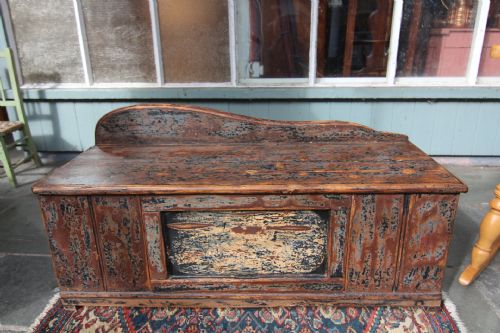
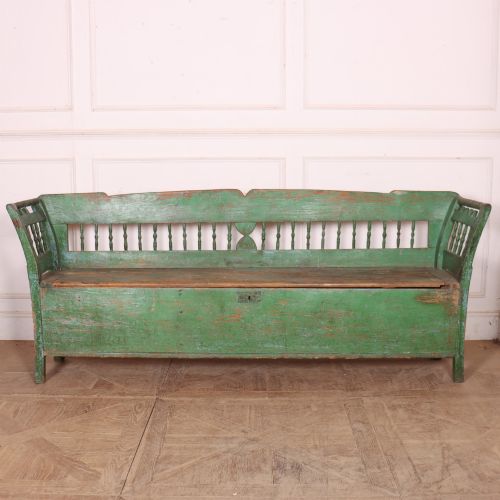
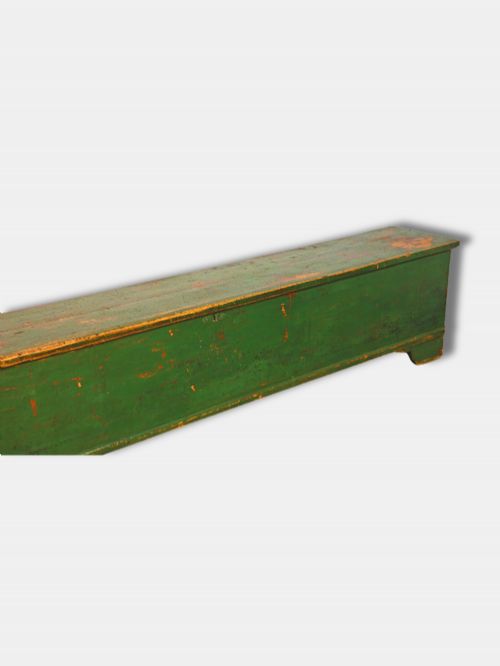
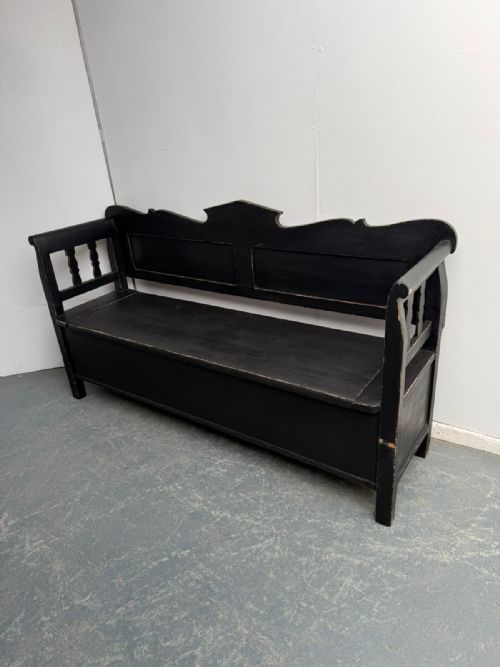
A rustic painted coffer is a storage box or chest fashioned for domestic use, frequently utilised as a blanket box, mule chest, or strong box. The examples gathered here span the nineteenth century, including Georgian, Regency, and Victorian periods, alongside specific regional types from Hungary, Sweden, and Wales.
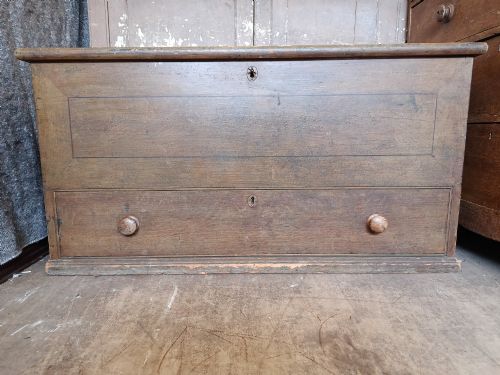
The primary forms take shape as dome top chests, flat-lidded storage boxes, and mule chests fitted with lower drawers. Buyers encounter pine predominantly, alongside occasional oak, constructed for daily household service in farmhouses and domestic settings.
How they were made
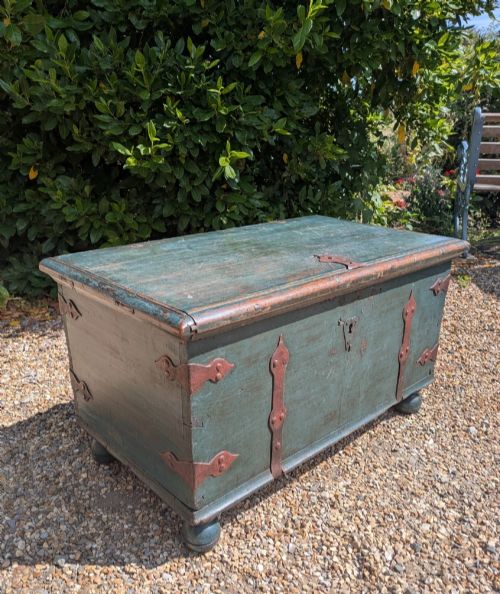
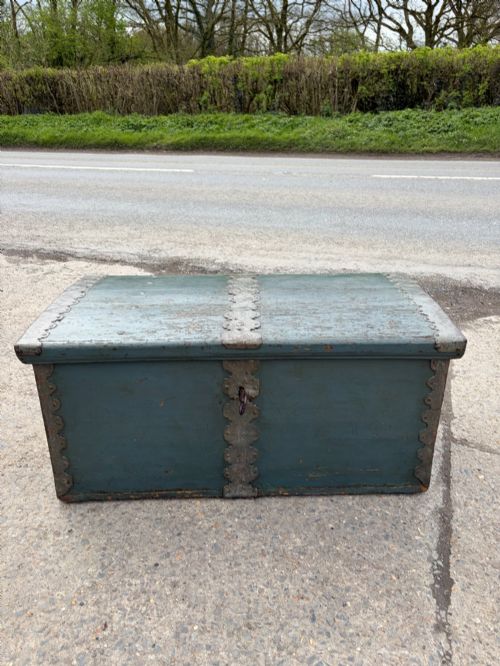
Construction relies on solid pine or oak boards joined simply, often complemented by hand-forged iron strapwork, hinges, and bracket feet. The surfaces receive layers of paint, scumble glaze, or folk art decoration applied directly to the timber.
Makers utilised iron and brass for hardware such as locks and keys, while decorative finishes range from plain green or dark pigments to elaborate Scandinavian folk art motifs and grained effects.
Listings feature pine and oak construction spanning the Georgian, Regency, and Victorian periods, decorated with folk art and scumble paint.
What varies in quality
The distinction between pieces rests in the survival of original surface decoration and the integrity of the timber. Original paintwork and untouched scumble finishes elevate a coffer above examples stripped or repainted at a later date.
Proportion and construction detail also divide the range, from simple provincial utility boxes to large marriage chests bearing deliberate folk art composition and hand-forged hardware.
The Rustic Painted Coffer Glossary
- Cofer
- An archaic spelling of coffer, denoting a large chest used for storing valuables or household goods. These sturdy boxes often served as luggage or domestic furniture.
- Mule chest
- A storage chest featuring one or more drawers beneath the main lift-top compartment. This form bridges the traditional cofer and the modern chest of drawers.
- Scumble
- A decorative painting technique involving a translucent glaze dragged over a lighter base colour to imitate wood grain or create mottled texture. It appears frequently on nineteenth-century pine boxes.
- Marriage chest
- A commissioned box presented to mark a wedding, often inscribed with dates, initials, or symbolic folk art painting. Swedish and Alpine examples display this tradition clearly.
- Strapwork
- Ornamental bands of iron fixed across the exterior of a chest to reinforce the joints and secure the panels. Hand-forged examples add structural strength and visual contrast to the painted wood.
Rustic Painted Coffer: Frequently Asked Questions
What is a rustic painted coffer used for?
These chests serve as functional storage furniture for blankets, linen, and household items while anchoring a room with vernacular character.
Placed at the foot of a bed or within a living space, they provide concealed storage alongside a decorative surface.
How do I date a painted wooden chest?
Dating relies on examining construction methods, hinge types, and the composition of the paint layers. Hand-forged ironwork and original pigment characteristics often point towards nineteenth-century or earlier origins.
Secondary clues include nail types, dovetail joints, and regional stylistic traits associated with specific European folk art traditions.
What is the difference between a coffer and a mule chest?
A standard coffer consists of a single lidded box compartment opening from the top. A mule chest incorporates one or more drawers built into the base beneath the main storage well.
This drawer addition developed during the transitional period towards standard drawer-based furniture.
How do I care for antique painted wood?
Protect the original surface by keeping the timber away from direct heat sources and strong sunlight that can cause paint to fade or flake. Dust gently with a dry cloth rather than applying modern chemical polishes.
Maintaining a stable indoor humidity level preserves both the pine structure and the historic painted finish.