
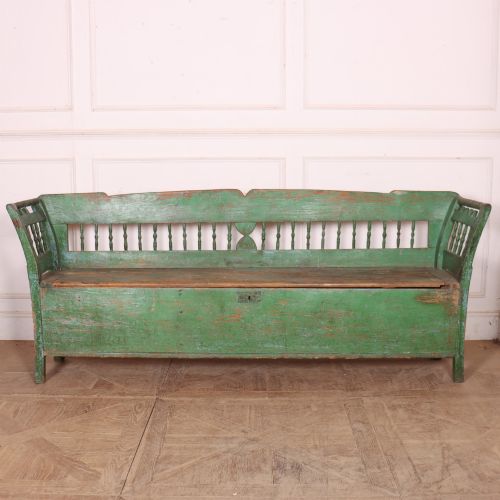
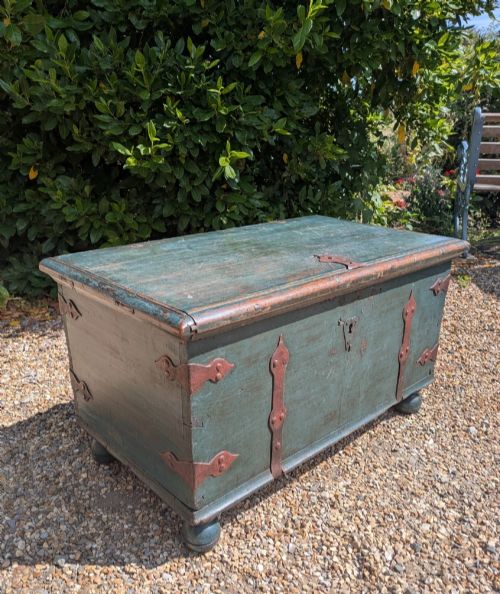
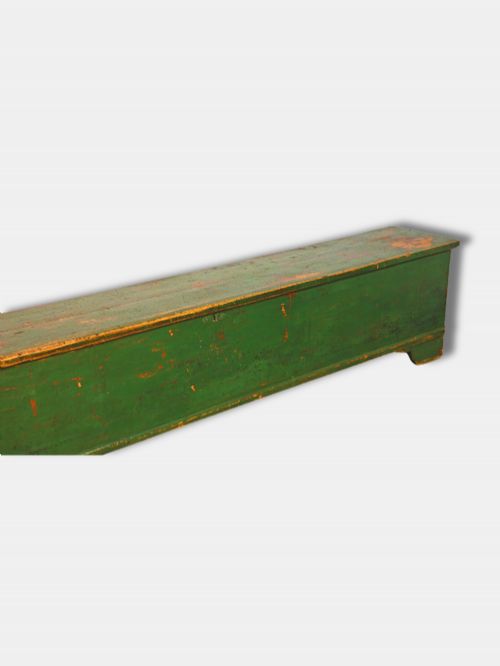


Green Painted Coffer
A green painted coffer offers honest utility and rustic charm, bringing historic European character and practical storage directly into modern interiors.

Green Painted Coffer
A green painted coffer is a sturdy storage chest typically fashioned from pine or oak, originating across various European folk traditions and country workshops. These pieces served generations of households for storing blankets, linen, or personal valuables.
How they were made
Carpenters constructed these coffers primarily using solid pine and oak, relying on durable joined boards to withstand heavy daily use. Surfaces received coats of pigment, with many surviving examples retaining original green paint layers applied decades or centuries ago.
Makers reinforced the chests using functional metalwork, incorporating hand-forged iron strapwork, brass details, and wrought iron hardware. Some specialised variants also integrated leather coverings or domed top constructions for enhanced weather resistance and security.
The selection spans pine, oak, and leather materials, featuring folk art and rustic country styles from Austrian, Dutch, and Scandinavian traditions.
What varies in quality
Quality in these coffers rests primarily in the survival of original painted surfaces and the integrity of the timber structure. Pieces retaining their initial folk art decoration or authentic patination command greater interest than later repainted surfaces.
Construction details also distinguish the pieces, such as the complexity of hand-forged strapwork, the presence of original locks with keys, and the purity of regional stylistic details. Early seventeenth and eighteenth-century examples exhibit heavier joinery traditions compared to later nineteenth-century vernacular items.
The Green Painted Coffer Glossary
- Coffer
- A large wooden chest used for storing valuables, textiles, or documents. These heavy boxes typically feature hinged lids and robust construction.
- Strapwork
- Ornamental or reinforcing bands of metal, usually hand-forged iron, fastened across the exterior of a chest to provide structural strength.
- Marriage chest
- A specialised storage box commissioned or decorated to mark a wedding, often featuring specific dates, initials, or regional folk motifs.
- Kist
- A traditional regional term used for a wooden chest or box, common in northern European and Scottish vernacular furniture traditions.
- Folk art
- Artistic work produced from an indigenous culture or peasant tradition, characterised by unpretentious design and hand-mixed pigments.
Green Painted Coffer: Frequently Asked Questions
Where should I place a green painted coffer?
These versatile storage chests work well at the foot of a bed, beneath a window, or as a coffee table in a living room. Their robust build allows them to handle heavy everyday items while anchoring a room with historic colour.
Keep them away from direct heat sources and strong sunlight to protect the aged wood and original painted surfaces from fading or drying out over time.
How do I clean the surface safely?
Dust the exterior gently with a dry, soft microfiber cloth to remove loose particles without disturbing the historic paint. Avoid modern chemical sprays, solvent cleaners, or excessive moisture that can lift or dissolve historic pigment.
If the wood appears particularly dry, a light application of appropriate conservation wax can help nourish the surface without altering its matte or patinated finish.
Are these chests suitable for daily storage?
Most pieces remain structurally sound and spacious enough for holding blankets, winter woollens, or household linens. The internal spaces provide dark, enclosed environments well suited to textile preservation.
Ensure that stored items are clean and completely dry before placing them inside to prevent dampness or mildew from accumulating within the enclosed timber box.
How can I tell the period of a coffer?
Examine the construction methods, tool marks on the wood, and the type of iron hardware used in the hinges and strapwork. Hand-forged components and pegged joinery often indicate earlier manufacturing dates, while machine-cut timber points toward the later nineteenth or early twentieth century.
Regional paint styles and decorative motifs also offer strong clues to a piece's geographic origin and approximate decade of creation.