
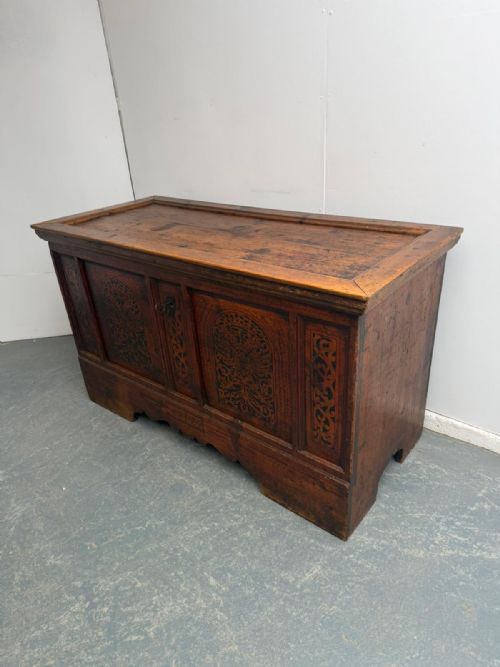
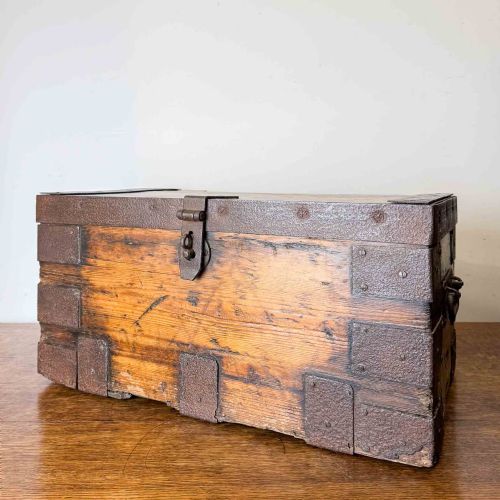


Brown Pine Coffer
A brown pine coffer is a robust utility chest built for storage, carrying the honest grain and marks of past centuries.
Brown Pine Coffer
When you search for a brown pine coffer, you look at solid timber storage chests originating primarily from the eighteenth and nineteenth centuries. These sturdy boxes served households, travellers, and farmers for blankets, provisions, and valuables before modern wardrobes existed.
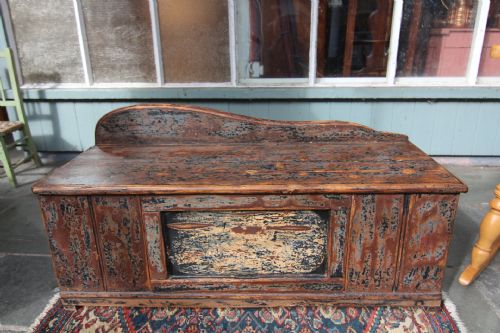
The version you meet most often on this page is a nineteenth century or Victorian piece, frequently displaying regional character from British, Scandinavian, or continental workshops. Many examples arrive with painted finishes, scumbled decoration, or iron hardware rather than bare wood.
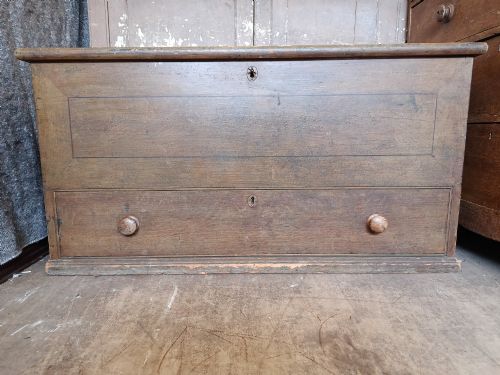
Beyond standard blanket boxes, the selection encompasses mule chests with lower drawers, strongboxes bound in metal, and travel trunks designed for mobility. Regional variations span Welsh coffers, Scottish kists, and painted Hungarian or Swedish boxes.
How they were made
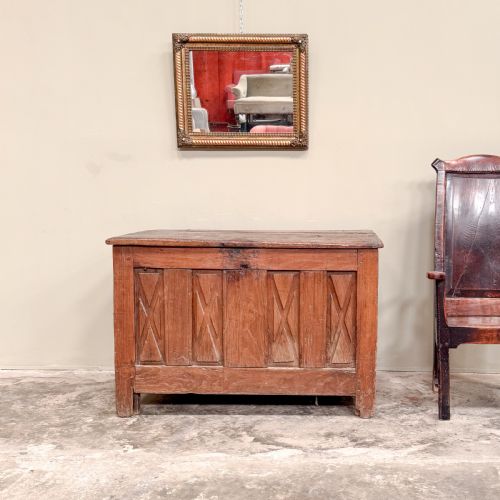
Carpenters constructed these pieces predominantly from solid pine, occasionally combining elm or oak for structural strength. Boards were joined simply and stoutly, often relying on panelled construction or dovetailed corners to withstand heavy domestic use.
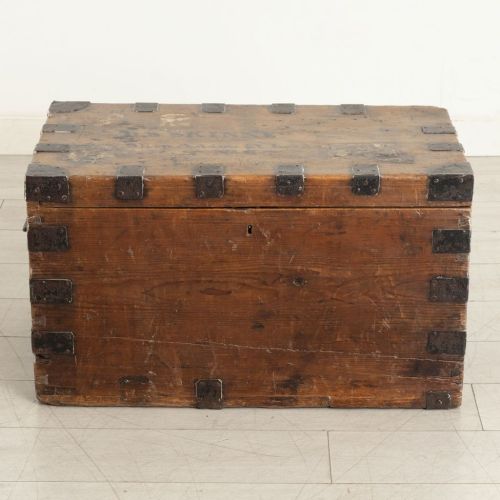
Metalwork played a critical functional role in reinforcement. Blacksmiths forged wrought iron strapwork, hinges, and carrying handles, while military or travel trunks utilised brass bindings and locks for extra security on the road.
Many surfaces received protective and decorative coats of paint, graining, or scumble glaze to mimic more expensive hardwoods or to brighten provincial interiors. Hand-painted floral motifs and folk art designs frequently adorned Scandinavian and continental pieces.
Listings demonstrate that pine coffers frequently incorporate iron strapwork, brass bindings, and hand-painted folk art from Scandinavian and British regional workshops.
What varies in quality
The distinction between ordinary utility boxes and superior examples rests in the preservation of original surfaces and regional decoration. Pieces retaining their early paintwork, scumble, or folk art detailing command greater interest than those stripped down to bare timber.
Construction methods and hardware integration separate basic domestic chests from specialised strongboxes or travel trunks. Hand-forged iron bindings, intact brass mounts, and well-executed dovetailing indicate a higher grade of craftsmanship from the workshop.
Proportion and form define the aesthetic merit of each piece, from simple boarded trunks to panelled mule chests raised on bracket feet. Better examples maintain their original hinges, locks, and interior tills without excessive replacement timber.
The Brown Pine Coffer Glossary
- Coffer
- A heavy wooden chest traditionally used for storing valuables, linen, or documents. These storage boxes often feature hinged lids and sturdy iron mounts.
- Mule chest
- A storage chest with one or more drawers built into the base beneath the main compartment. This hybrid form bridges the gap between a traditional coffer and a chest of drawers.
- Scumble
- A decorative painting technique where a translucent glaze is manipulated over an opaque base colour to simulate wood grain or texture. Victorian makers used this method to give pine the appearance of richer timber.
- Kist
- A traditional Scottish or northern regional term for a wooden chest or box. These pieces served domestic storage needs in farmhouses and cottages.
- Strongbox
- A heavily reinforced security chest bound in iron or metal to protect money and important papers. They often include internal compartment locking systems.
Brown Pine Coffer: Frequently Asked Questions
What did people store in a brown pine coffer?
Households used these sturdy wooden boxes to store household textiles, winter blankets, and personal belongings. In rural settings, they also held dry provisions, tools, and valuable documents.
Because domestic architecture lacked fitted closets, these chests provided the primary secure storage space in bedrooms and halls.
How do I identify a Victorian pine box?
Victorian examples frequently display machine-sawn timber uniformity alongside traditional hand-planed surfaces. They often appear with scumbled finishes, painted graining, or cast iron strapwork.
Clues also emerge from the hardware, such as stamped brass hinges and utilitarian locks characteristic of nineteenth-century production.
Are painted pine chests authentic?
Many pine chests received decorative paint finishes during the eighteenth and nineteenth centuries, particularly in Scandinavian and folk art traditions. Original paintwork often shows natural craquelure, wear, and patina consistent with age.
Careful inspection reveals whether the surface pigment dates to the period of manufacture or represents a later decorative layer.
How do I care for antique pine furniture?
Antique pine benefits from stable indoor humidity and protection from direct sunlight, which can dry out the timber and crack painted surfaces. Regular dusting with a dry cloth keeps the wood clean without damaging historic finishes.
Applying occasional appropriate wax preserves unpainted pine surfaces while maintaining the natural patina accumulated over centuries.