


Traditional Marriage Chest
A traditional marriage chest is a substantial box made to hold a household dowry, offering robust storage with centuries of regional craftsmanship.
Traditional Marriage Chest
A traditional marriage chest is a heavy storage piece built to hold household goods and linens for a wedding. These items appear in forms such as coffers, mule chests, trunks, and blanket chests.
The versions you encounter most often span the seventeenth to the nineteenth centuries. They originate from English, European folk art, Hungarian, Spanish Colonial, Italian, and Swedish traditions.
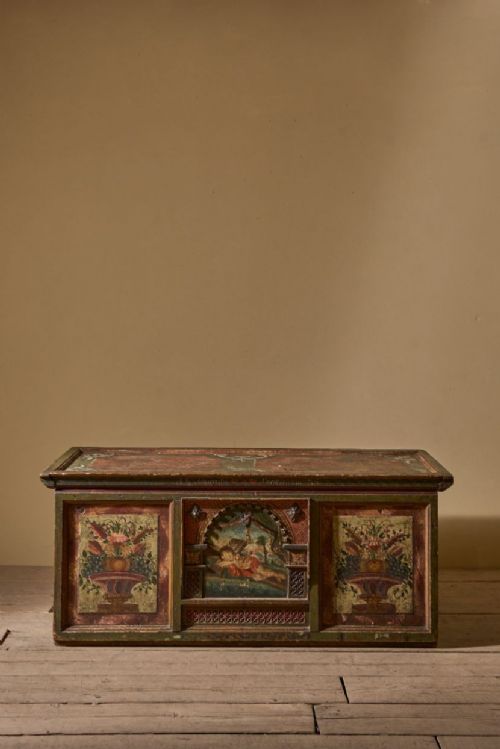
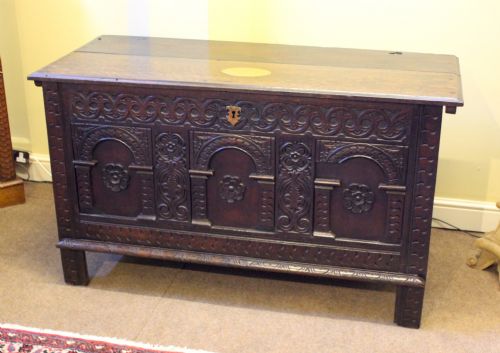
Many examples take the form of painted pine boxes decorated with floral motifs or regional pigments. Others are constructed from solid oak with carved or inlaid details.
What varies in quality
The skill of the hand-carving or the preservation of the original painted surface dictates the distinction between pieces. Crisp details on oak panels and intact regional pigments elevate a chest.
The integrity of the construction, including period brass and iron hardware, separates a well-preserved survivor from a heavily altered box.
Listings span the 17th, 18th, and 19th centuries, featuring oak, pine, iron, brass, and tempera paint.
The Traditional Marriage Chest Glossary
- Mule chest
- A storage chest fitted with one or more drawers beneath the main compartment. This form bridges the gap between the traditional coffer and the chest of drawers.
- Coffer
- A heavy wooden box with a lid, traditionally used for safekeeping valuables and documents. Earlier examples often feature hand-carved oak panels and sturdy stiles.
- Cassone
- A large Italian chest intended for holding the bride's trousseau. These pieces frequently display elaborate hand-painted decoration characteristic of regional workshops.
- Temperatype
- A permanent painting medium consisting of coloured pigments mixed with a water-soluble binder. It appears frequently on the surfaces of painted folk art chests.
Traditional Marriage Chest: Frequently Asked Questions
What was a traditional marriage chest used for?
These chests served to store the linens, textiles, and household goods that a bride brought into a marriage. Families often commissioned or decorated them specifically for the wedding.
Over time, they remained in the home as durable storage furniture for blankets and valuable possessions, prized for their heavy lids and secure construction.
How do I tell an oak coffer from a painted pine chest?
Oak coffers rely on natural wood grain, hand-carved panels, and structural joinery dating back to the seventeenth and eighteenth centuries. They emphasise sculptural woodwork over surface decoration.
Painted pine chests utilise tempera or mineral pigments to display floral motifs and folk art scenes. Their appeal rests in the survival of the original painted surface rather than carved relief.
Where do most painted marriage chests originate?
The painted examples on this page hail from various European regions, including Hungary, Sweden, Spain, and Italy. Each area employed distinct colour palettes and floral motifs.
Regional workshops passed down specific decorative styles, making it possible to identify the geographic origin of a piece through its paintwork.
How do I care for a painted antique chest?
Keep painted chests out of direct sunlight to prevent the tempera and mineral pigments from fading. Maintain a stable indoor humidity to protect both the pine timber and the historic paint.
Dust the surface gently with a dry, soft cloth and avoid chemical cleaners that might lift or dissolve the original nineteenth-century paint layers.