






Rustic Overmantel Mirror
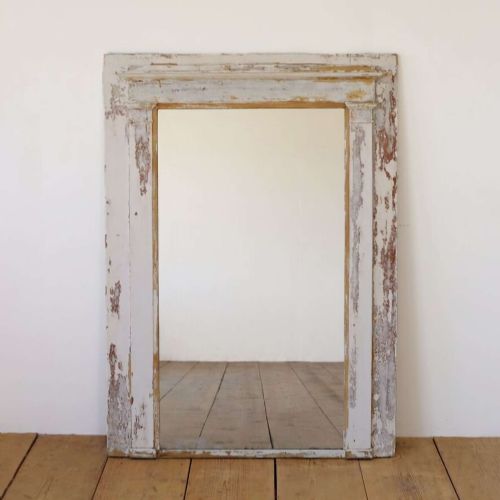
A rustic overmantel mirror brings heavy timber, distressed paint, and grand scale into a room, anchoring a fireplace with period character.
Rustic Overmantel Mirror
A rustic overmantel mirror is a large wall glass designed to sit above a mantelpiece, drawing on styles such as Victorian, Edwardian, Arts and Crafts, and French Provincial. These pieces bring substantial presence to an interior through architectural scale and weathered surfaces.
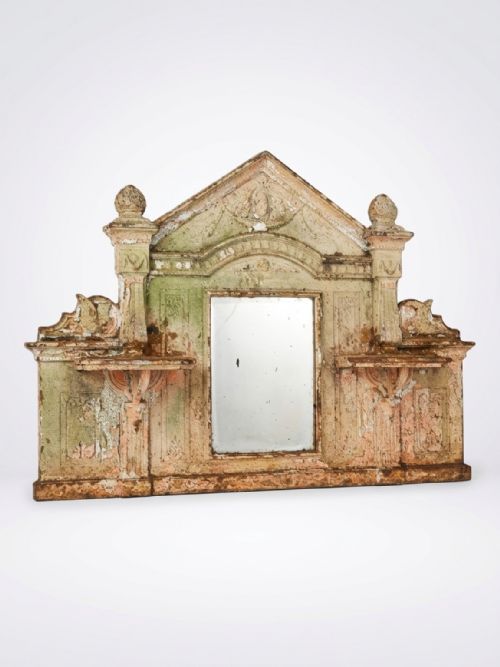
The versions met most often on this page date from the nineteenth century into the Edwardian era, spanning origins from English workshops to French country houses. Oak and carved wood predominate, often paired with painted finishes, gesso, or cast iron details.
Materials and construction
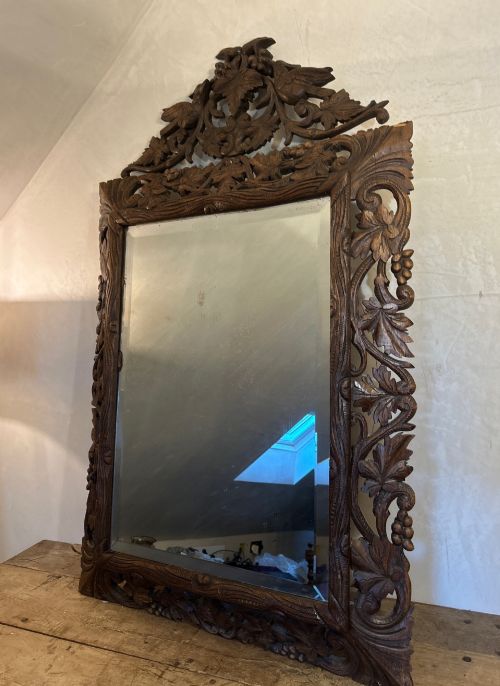
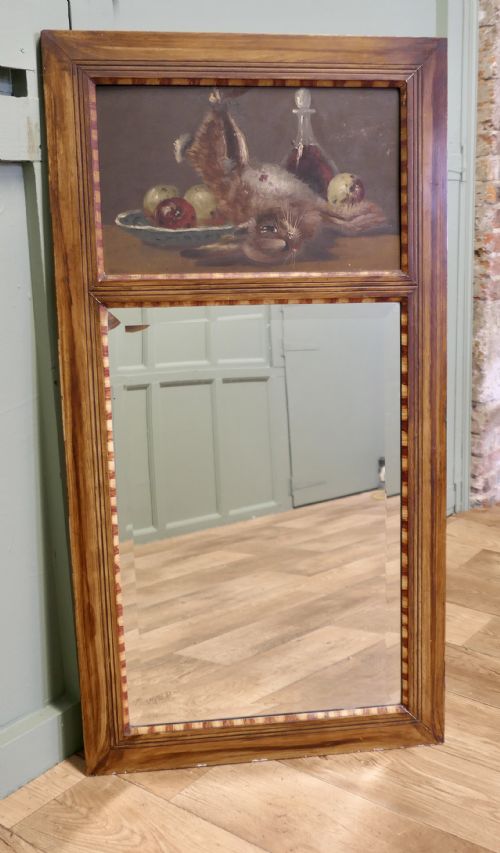
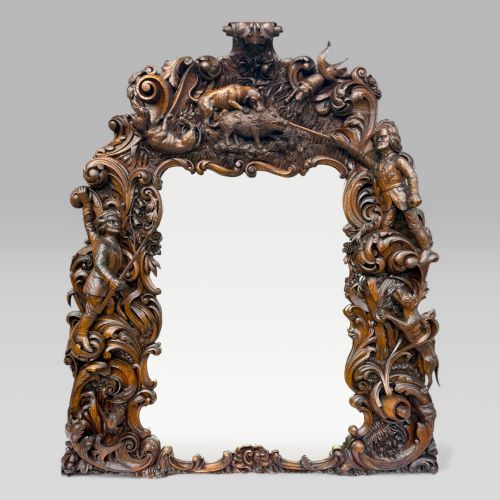
Carved oak and general wood provide the primary structural frames for these pieces, shaped into arched tops, trumeau forms, and heavy mouldings. Artisans worked solid timber by hand, applying decorative relief work and structural joints suited to large wall hangings.
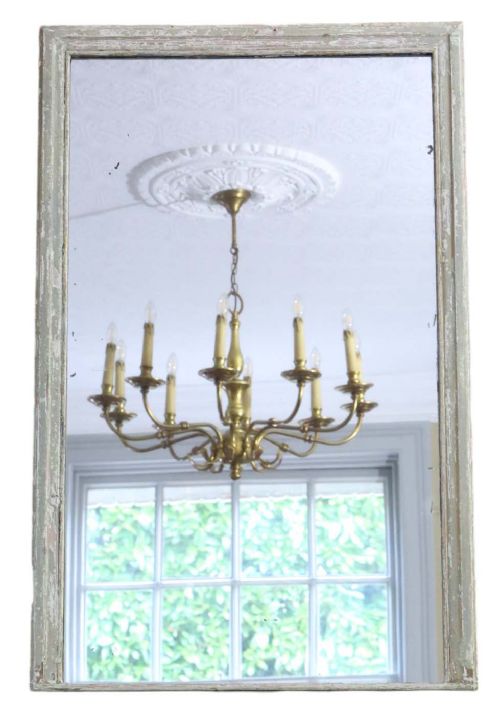
Gesso, paint, and oil paint finishes complete many of the frames, adding colour and texture that age over decades. Glass plates are fitted securely into the wooden rabbets, occasionally showing the original distressing of nineteenth-century manufacture.
A hunting lodge mirror brings the unmistakable atmosphere of nineteenth-century forestry straight into your sitting room.
Assessing quality and craftsmanship
The quality of a rustic overmantel mirror rests on the depth of the woodcarving and the structural integrity of the timber frame. Deeper relief work, balanced proportions, and robust joinery separate finer examples from simpler utility pieces.
The character of the surface finish also defines the standard of the object, whether through the crispness of surviving gesso details or the genuine patina of aged paint. Original glass plates with authentic foxing contribute further to the integrity of the piece.
The Rustic Overmantel Mirror Glossary
- Overmantel mirror
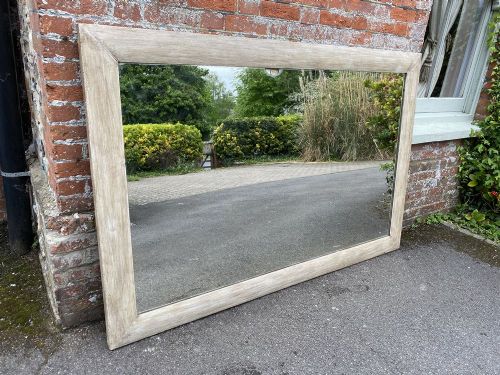
- A large wall mirror specifically proportioned to hang on the wall directly above a fireplace mantel. These pieces often feature wide horizontal or tall arched formats designed to reflect light across a principal room.
- Trumeau mirror
- A tall wall glass traditionally fitted into the architectural panel of a pier or wall space. French country examples frequently incorporate painted wooden panels above the glass plate.
- Gesso
- A plaster-like mixture applied to wooden frames as a smooth base for paint or gilding. It allows for crisp, moulded decorative relief work around the mirror border.
- Foxing
- The natural age spots and discoloration that develop within antique glass plates over time. This process creates mottled dark patches across the silvered backing.
- French Provincial
- A decorative style reflecting rural French craftsmanship from the eighteenth and nineteenth centuries. These objects typically display simpler carved motifs and painted wood surfaces.
Rustic Overmantel Mirror: Frequently Asked Questions
How do I hang a heavy overmantel mirror?
These large wooden mirrors require secure fixings into structural wall studs or masonry to support their substantial weight safely. Professional installation using heavy-duty brackets ensures the frame remains stable against the wall.
Because nineteenth-century frames are heavy, distributing the load across two solid anchor points prevents warping or strain on the original wooden joints.
Can these mirrors be placed on top of a mantel?
Many overmantel mirrors are designed to rest directly upon the shelf of a fireplace mantel while being anchored to the wall for safety. This placement follows traditional nineteenth-century domestic arrangements.
Ensuring the weight is balanced properly between the mantel shelf and the wall fixings protects both the antique frame and the fireplace surround.
How do I clean an antique glass mirror?
Cleaning requires a soft microfiber cloth and a mild, ammonia-free glass cleaner sprayed onto the cloth rather than directly onto the glass. This prevents moisture from seeping behind the plate.
Care must be taken around the edges of the mirror and the wooden frame to avoid damaging aged gesso, painted surfaces, or vulnerable silvering.
What is the difference between Victorian and Edwardian mirrors?
Victorian mirrors often display heavier, more ornate carved decoration and darker oak tones, reflecting the eclectic revival styles of the nineteenth century. They frequently incorporate French Renaissance or gothic influences.
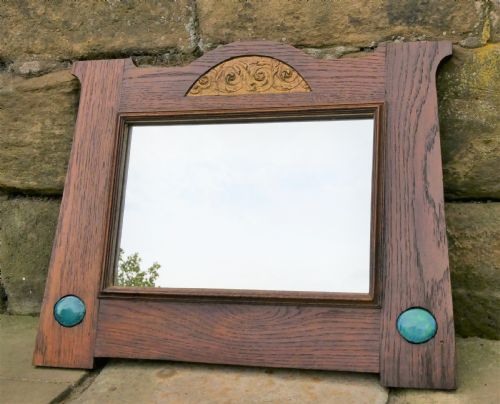
Edwardian pieces tend to show lighter construction and simpler Arts and Crafts or vernacular styling, aligning with changing domestic tastes at the start of the twentieth century.