



Rustic Wooden Wall Mirror
A rustic wooden wall mirror brings texture and warmth to a room through visible grain and hand-carved detail.
Rustic Wooden Wall Mirror
A rustic wooden wall mirror is a practical furnishing shaped from natural timber, spanning periods from the nineteenth century into the Edwardian era. When you search for a rustic wooden wall mirror, you encounter pieces designed for hallways, cloakrooms, and living spaces across English and continental traditions.
The selection here draws heavily on French country and Arts and Crafts origins, alongside Black Forest and regional English workshops. Oak predominates, accompanied by pine, maple, and painted woods configured as trumeaux, overmantles, and simpler wall-hanging forms.
Materials and construction
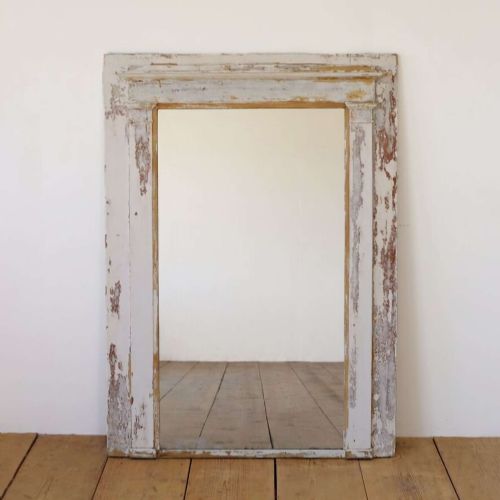
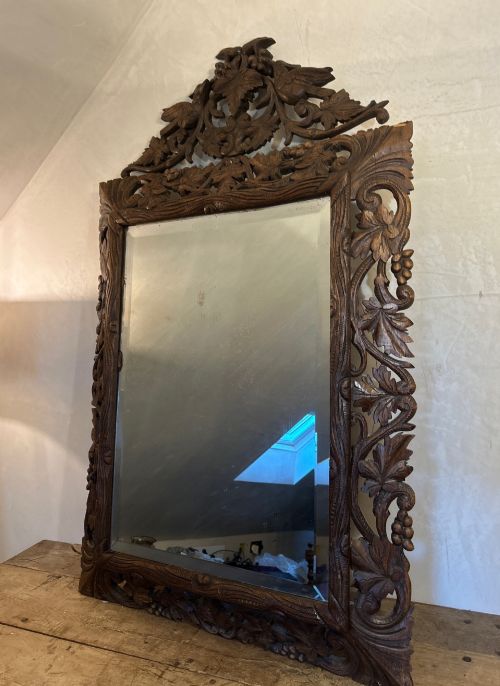
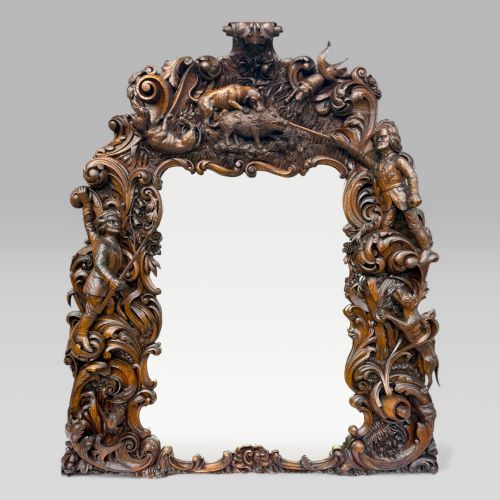
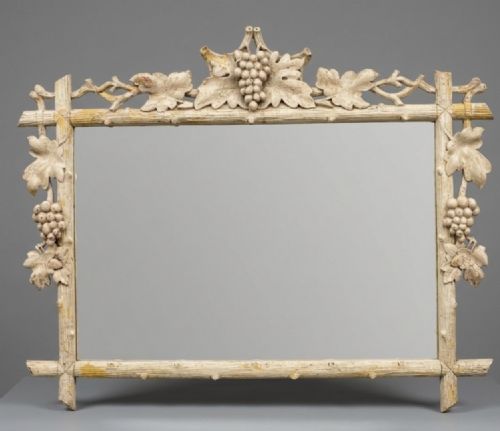
Carpenters utilised solid timbers such as oak, pine, and maple, shaping frames through hand-carving and joinery techniques appropriate to the period. Details range from deep relief carvings of foliage and wildlife to applied gesso and painted finishes that mimic natural branches.
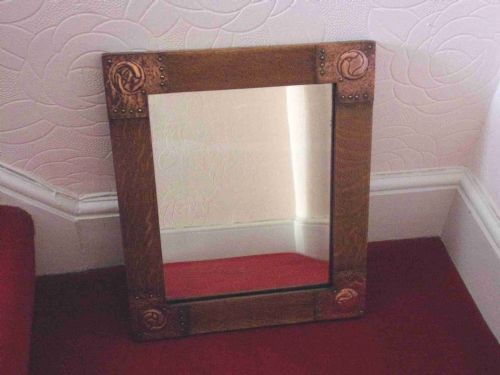
Reflecting Arts and Crafts principles, some examples integrate metalwork elements like copper decorations secured with visible fixings. Glass plates are typically bevelled or flat, held securely within rebated wooden backs.
Several mirrors include built-in shelves originally intended for depositing hats and calling cards in busy Victorian hallways.
Quality and craftsmanship
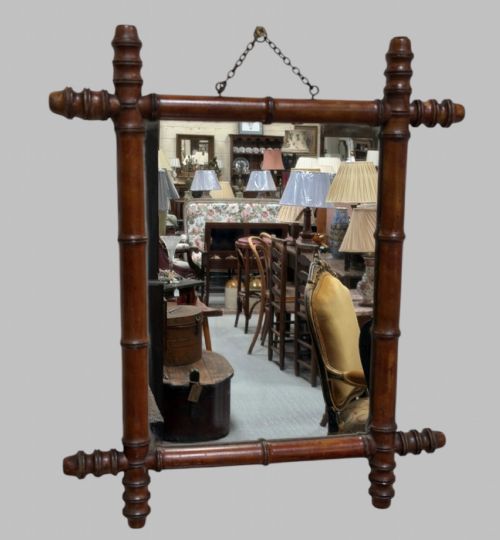
The distinction between standard examples and finer pieces lies in the depth and execution of the carving. Crisp relief work on heavy oak or detailed faux bamboo turnings demonstrates superior workshop skill.
Proportion and structural integrity also set pieces apart. Heavier overmantle and pier mirrors require robust framing joints to support large glass plates safely over time.
The Rustic Wooden Wall Mirror Glossary
- Trumeau
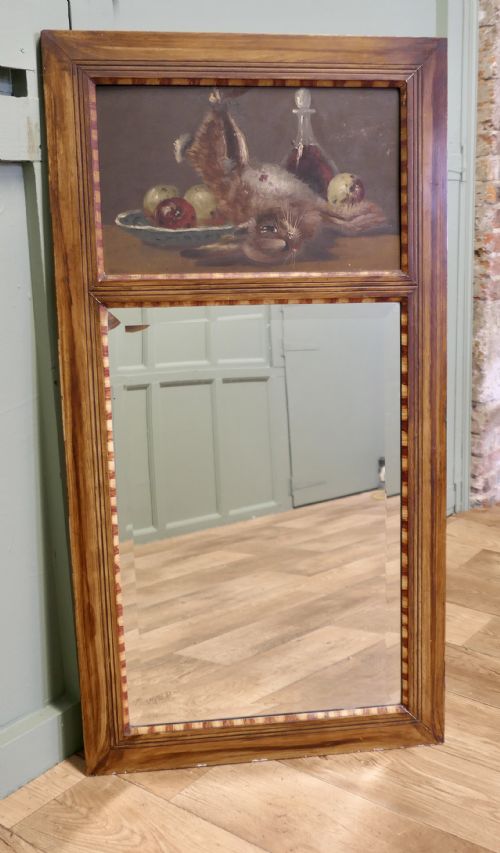
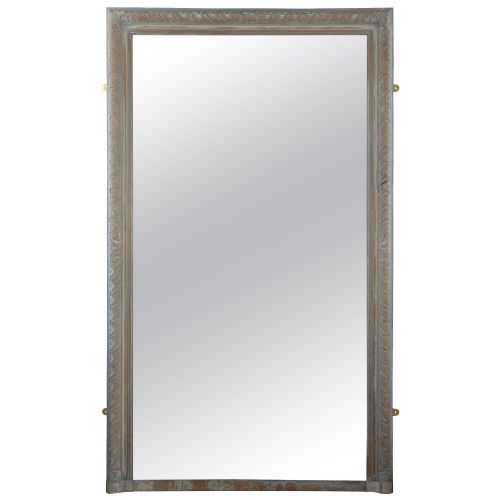
- A decorative wall mirror, often incorporating a painted panel or carved motif above the glass plate. These tall pieces frequently originated in French country interiors.
- Overmantle
- A large horizontal mirror designed to hang specifically above a fireplace mantelpiece. They often feature substantial wooden frames with extensive carved detail.
- Faux Bamboo
- A decorative technique where wood is turned and carved to resemble natural bamboo stalks. This style gained popularity during the late nineteenth century.
- Black Forest
- A regional style originating from the wooded mountain region of Central Europe, characterised by deeply carved wildlife and naturalistic foliage. Pieces often utilise rich dark oak.
- Bevelled
- A glass edge angled and polished to a thinner margin, catching the light and adding depth to the reflection. This finish typically denotes finer production values.
Rustic Wooden Wall Mirror: Frequently Asked Questions
How do I hang a heavy wooden mirror?
Heavy wooden mirrors require secure wall fixings suited to the weight of the timber frame and glass plate. Fixing directly into wall studs or using heavy-duty masonry anchors ensures safe suspension.
Position the mirror at an appropriate height where the frame can be adequately supported by brackets or a substantial hanging wire rated for the load.
What rooms suit a rustic wooden mirror?
These mirrors function well in hallways, cloakrooms, and living spaces where natural wood finishes complement existing furniture. Overmantle variants fit naturally above fireplaces, while narrower pieces suit entrance halls.
Placement opposite a window helps maximise natural light within smaller or darker rooms.
How do I clean an antique mirror frame?
Dust wooden frames gently with a dry, soft cloth to prevent accumulation in carved recesses. Avoid harsh chemical cleaners that can strip original wax or painted finishes.
Glass plates can be cleaned using a mild glass cleaner applied to a cloth rather than sprayed directly, protecting the surrounding timber from moisture damage.
Are these mirrors original antique pieces?
The selection includes authentic nineteenth-century and early twentieth-century pieces spanning Victorian, Edwardian, and Arts and Crafts periods. Materials, construction methods, and wear patterns correspond to their stated eras of manufacture.
Inspect the backboards, fixings, and glass silvering to understand the age and history of each individual item.