
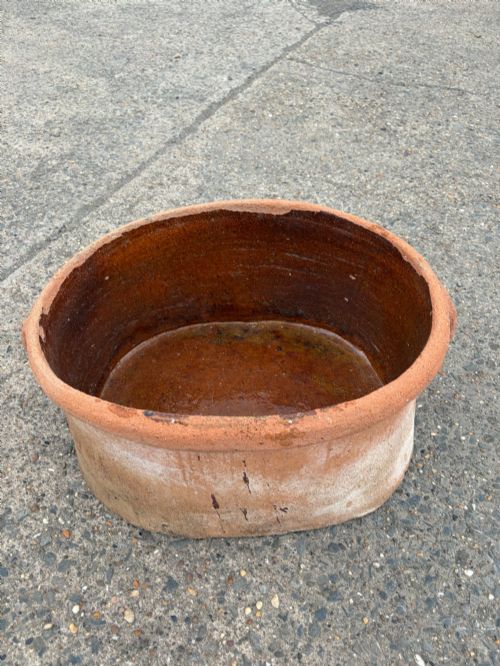


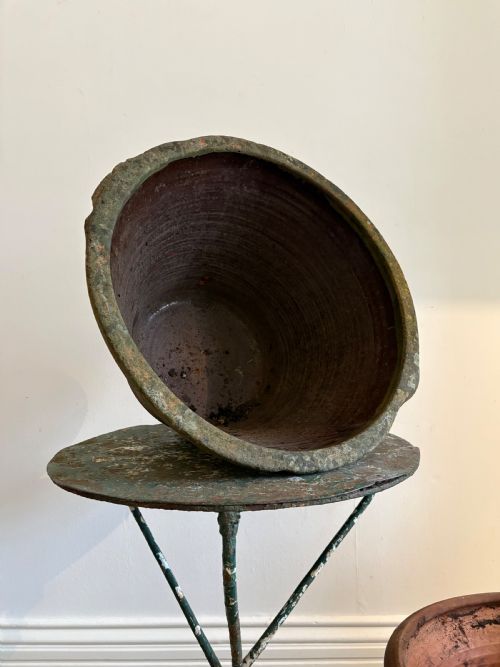


Rustic Earthenware Vessel
A rustic earthenware vessel brings earthy warmth and tactile history into a room, shaped for utility in centuries past.
Rustic Earthenware Vessel
When you search for a rustic earthenware vessel, you encounter utilitarian containers designed for domestic labour, agriculture, and food storage. The selection spans the eighteenth and nineteenth centuries, featuring items from French, Italian, German, and English origins.
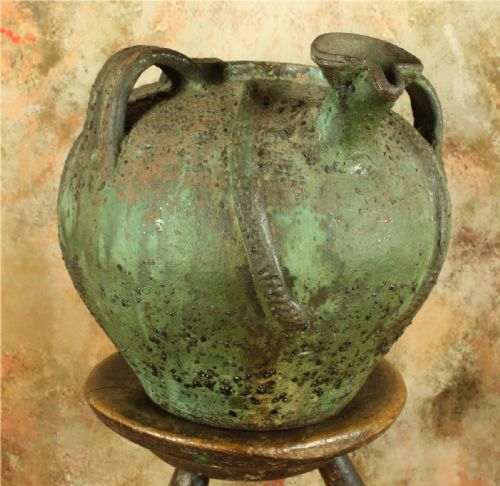
You are most likely to meet large oil jars, confit pots, dairy bowls, and wine vessels on this page. These forms reflect the everyday practicalities of rural life, often bearing the marks of heavy daily handling and functional repair.
The aesthetic is resolutely unpretentious, relying on simple silhouettes and honest materials rather than ornamental excess. Each piece carries the distinct character of its regional workshop and period of production.
How they were made
Potters utilised native clays, shaping them by hand or on simple wheels to create thick, durable walls capable of withstanding heavy farm use. Terracotta and earthenware predominate, complemented by occasional salt-glazed stoneware.
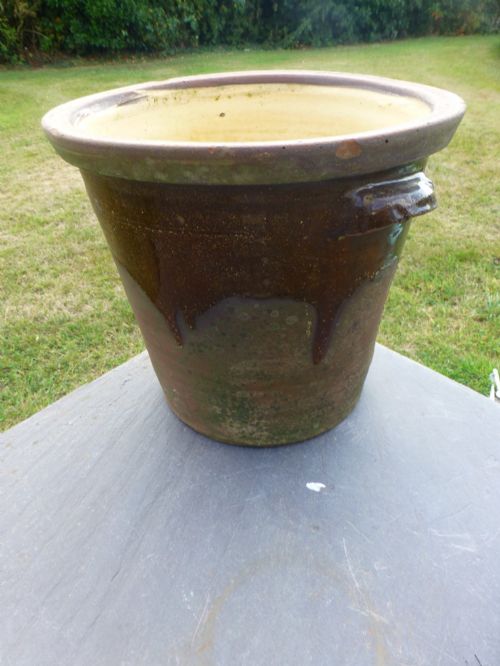
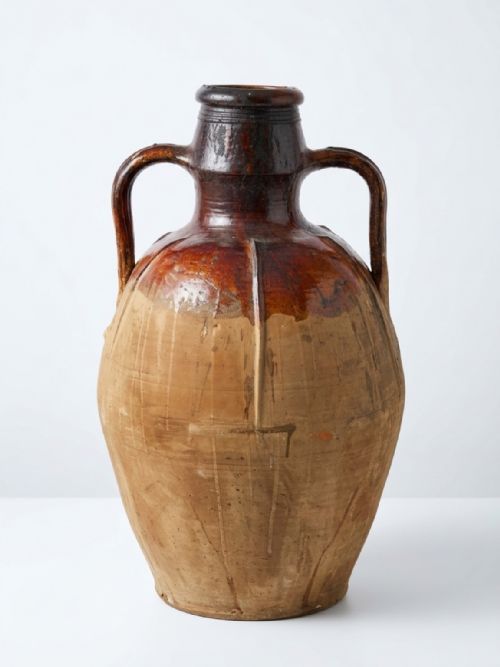
Glazes were applied selectively, often limited to the interior or rim of a dairy bowl or confit jar to ensure the vessel remained waterproof for holding liquids, oils, or salted provisions. Wrought iron additions occasionally appear as structural handles or reinforcing bands.
Materials represented across the inventory include terracotta, earthenware, salt-glazed stoneware, and wrought iron.
What varies in quality
Quality rests in the harmony of proportion and the honest integrity of the material, where a well-thrown rim and balanced body elevate a simple utilitarian object. The thickness of the clay wall and the depth of the firing colour contribute significantly to the visual weight of the piece.
The character of the glaze or slip application differentiates standard utility wares from finer regional examples, especially where drips and pooling reveal the hand of the potter. Preservation of the original surface texture, free from inappropriate modern restoration, dictates the standing of any given vessel.
The Rustic Earthenware Vessel Glossary
- Confit pot
- A French earthenware jar traditionally used for preserving meat, usually featuring a glazed upper section and unglazed lower body.
- Slipware
- Pottery decorated with a thin mixture of clay and water applied before firing, creating linear or brushed patterns.
- Salt glaze
- A glossy, slightly pitted finish achieved by throwing common salt into the kiln during high-temperature firing.
- Terracotta
- Unglazed, brownish-red fired clay valued for its porous nature and earthy hue.
- Amphora
- A two-handled jar with a narrow neck, historically used for transporting and storing oil or wine across the Mediterranean.
Rustic Earthenware Vessel: Frequently Asked Questions
What were rustic earthenware vessels used for originally?
These vessels served essential agricultural and domestic functions, including storing olive oil, wine, milk, and salted meats in rural households and farmhouses.
Their robust construction was designed for daily utility rather than display, making them the workhorses of pre-industrial kitchens.
Can these vessels be used outdoors in the garden?
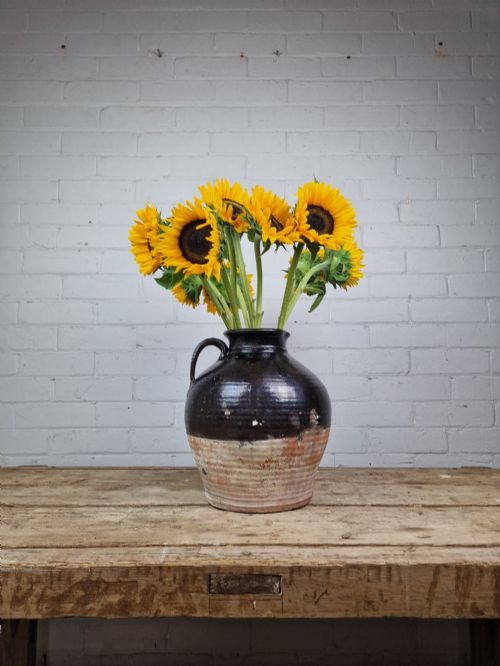
Many terracotta jars and bowls adapt well to garden settings, though porous earthenware is susceptible to cracking if water freezes inside the clay.
Bring sensitive pieces indoors during freezing winter months to preserve the integrity of the historic material.
How can I tell the age of an old clay pot?
Age is indicated by surface wear, irregularities in the handmade form, old kiln marks, and the natural patination acquired through decades of use.
Examining the type of glaze and the regional potting style helps place the object within the eighteenth or nineteenth-century timeframe.