

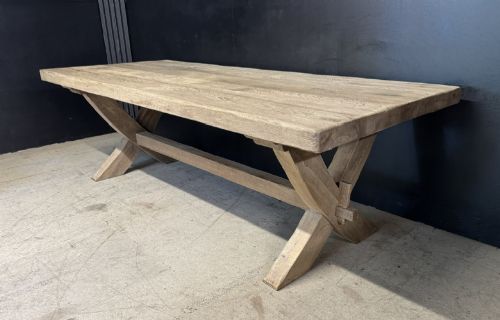
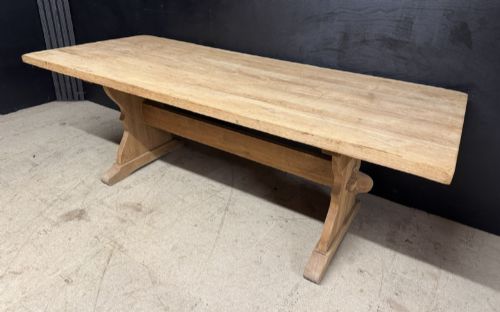
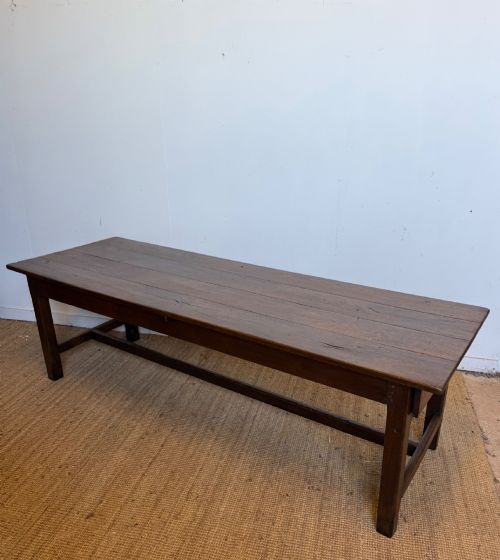
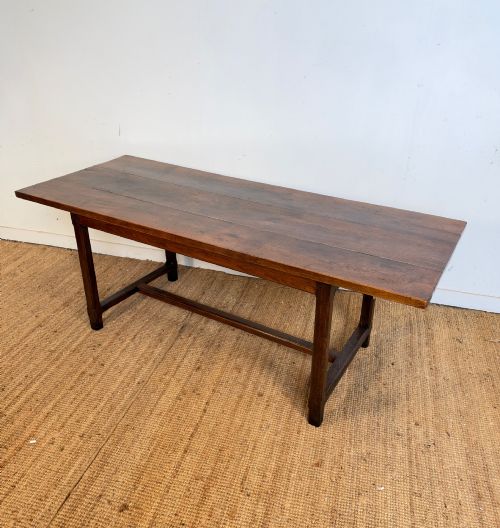
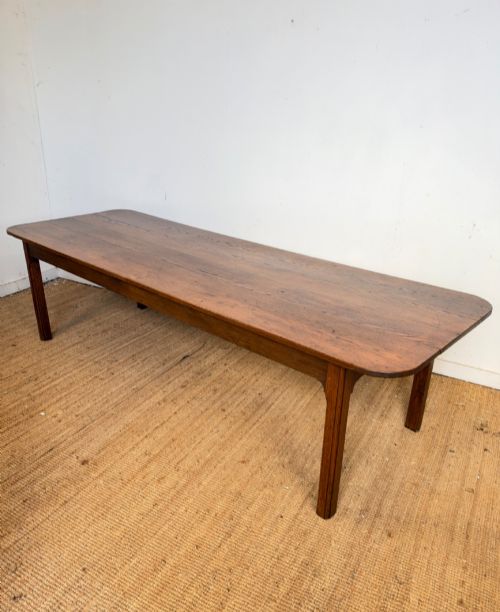
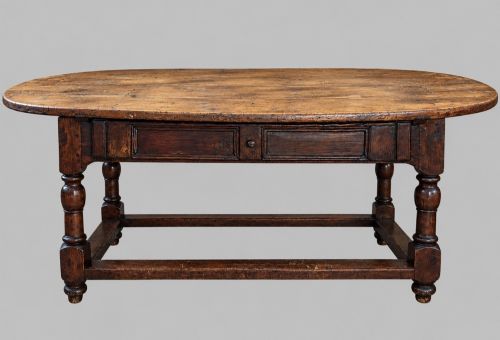
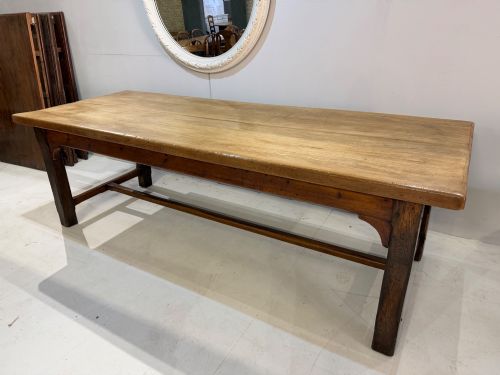
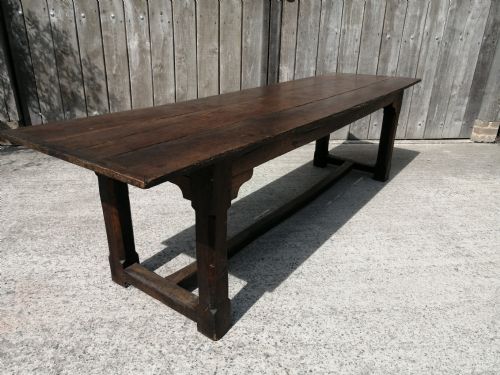
Rustic Country Dining Table
A rustic country dining table brings practical surface area and plain utility to a room, built from solid timbers to handle daily meals.
Rustic Country Dining Table
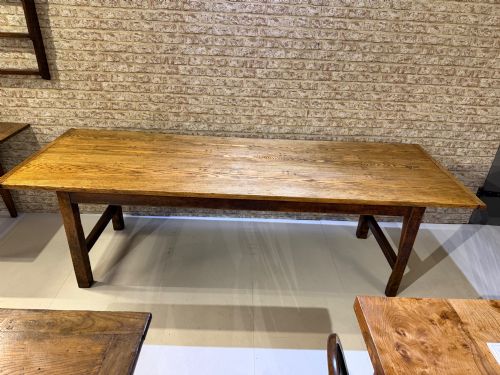
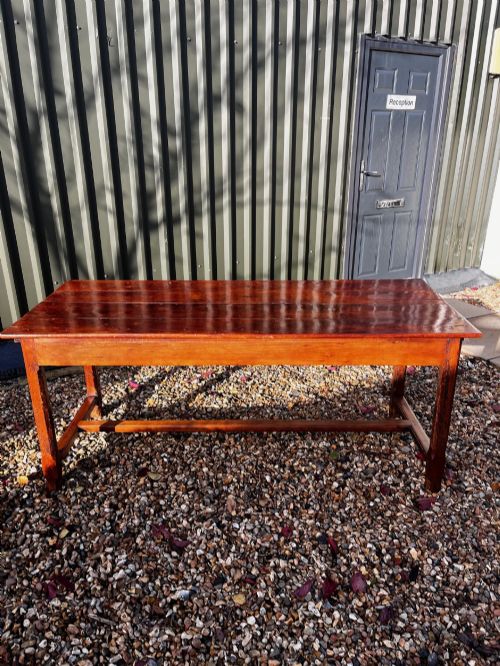
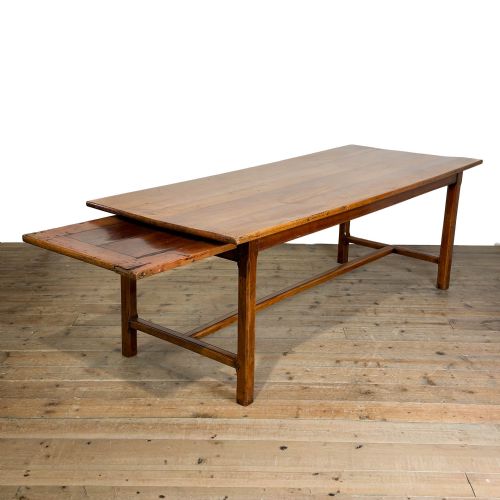
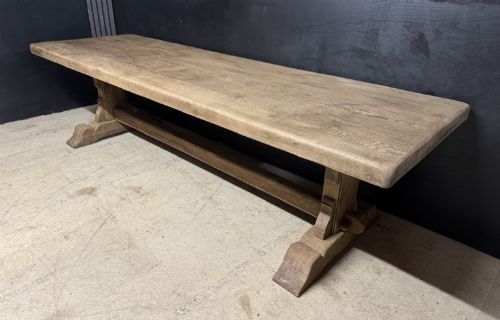
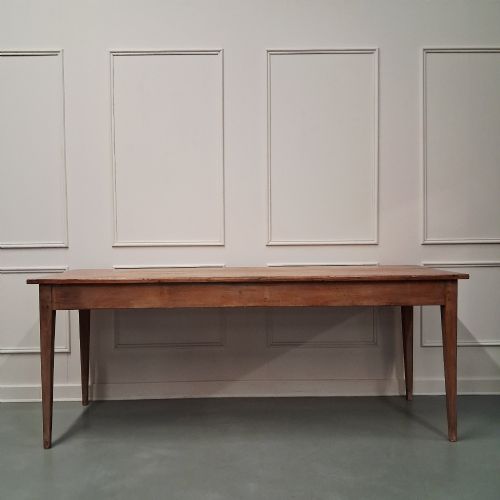
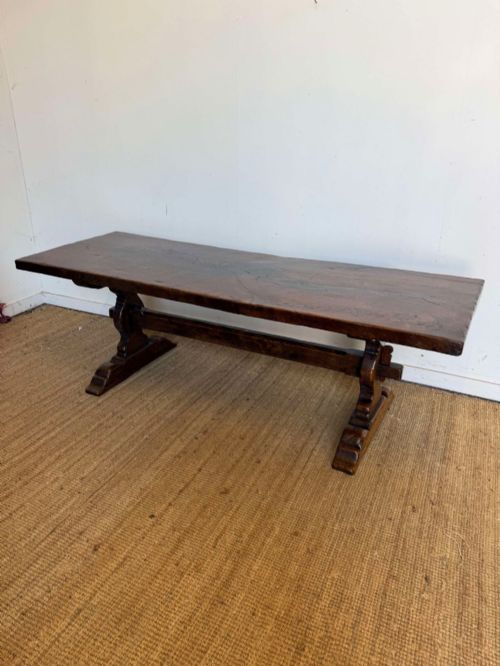
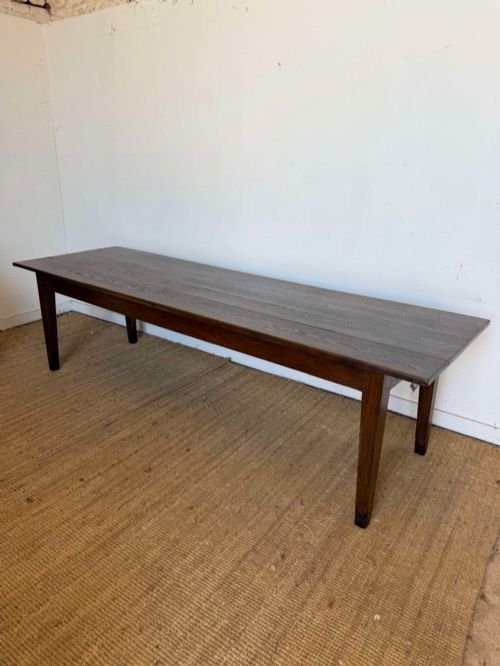
A rustic country dining table is typically a substantial wooden board set on sturdy legs, built for domestic kitchens and dining rooms rather than formal parlours. When searching for a rustic country dining table, buyers encounter forms ranging from large refectory tables to drop leaf and gateleg designs.
The materials span oak, pine, elm, fruitwood, walnut, and cherry wood, reflecting the local timber available to makers. Many examples date from the eighteenth and nineteenth centuries, carrying the marks of decades of kitchen use and family gatherings.
How they were made
Construction relies on solid hardwoods and softwoods joined with traditional methods, often pairing an oak or elm top with beech or pine supports. Planks are selected for width and strength, sometimes utilising single boards for the main top surface.
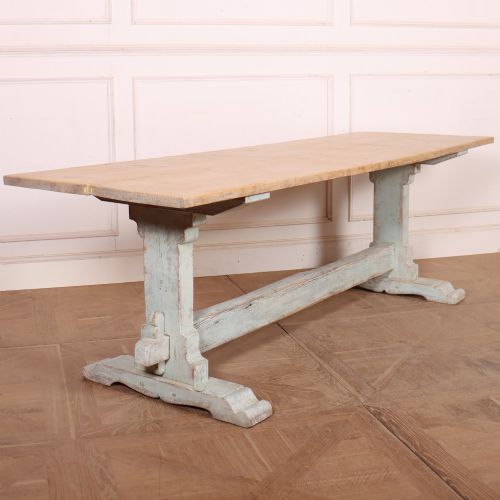
Leg designs vary from simple tapered and bobbin turned supports to heavier trestle and refectory frames. Surfaces show plain wax or natural timber finishes, alongside painted treatments recorded on Victorian and later pieces.
Rustic Country Dining Table Retail Price Guide 2026
Typical asking prices for rustic country dining table among the pieces listed under this phrase on Sellingantiques today, from the lower quarter to the upper quarter. They describe what is for sale here now, not the wider market.
Table forms include gateleg, refectory, drop leaf, and extendable formats designed for kitchens and dining rooms.
What varies in quality
Quality rests in the selection of timber and the structural integrity of the frame rather than surface ornamentation. Tables built from single planks of oak or fruitwood command attention for their visual weight and stability.
Proportion and scale dictate the success of the piece, particularly in longer refectory and harvest formats. Original legs and undisturbed structural joints distinguish pieces that retain their integrity from those altered over time.
The Rustic Country Dining Table Glossary
- Refectory table
- A long dining table traditionally used in communal halls and later adapted for domestic country kitchens. These pieces often feature stretcher rails connecting the legs for added stability.
- Gateleg table
- A drop leaf table where the leaves are supported by hinged legs that swing out like a gate. This form allows the table surface to expand or contract depending on space.
- Harvest table
- A long, narrow dining table designed to seat many people during seasonal gatherings. They frequently employ pine or fruitwood tops with slender turned legs.
- Single plank
- A tabletop constructed from one wide board rather than multiple joined pieces. This feature indicates large timber sections sourced from mature trees.
Rustic Country Dining Table: Frequently Asked Questions
How do I choose the right size table?
Consider the room dimensions and the number of people who need to sit around the surface on a daily basis. Longer refectory and harvest formats suit spacious kitchens, while drop leaf versions fit smaller dining areas.
Measure the clearance around the table to ensure chairs move freely without hitting walls or furniture.
What woods are most common?
Oak and pine appear frequently across English and French examples, alongside elm, fruitwood, walnut, and cherry wood. Hardwoods like oak provide heavy, durable surfaces, while pine offers lighter utility.
Different timbers bring distinct grain patterns and colour variations to the room.
How do I care for a wood top?
Protect the surface from excessive moisture and heat by using coasters and placemats during meals. Regular application of clear wax maintains the timber finish without building up heavy residues.
Avoid harsh chemical cleaners that strip the natural oils from the antique wood.
How do I identify eighteenth-century pieces?
Examine the construction methods underneath the top and around the frame joints for hand-cut pegs and traditional joinery. Timbers from this period often show wider board widths and deeper patination from age.
Gateleg and refectory forms from the seventeen-hundreds display simpler, heavier structural proportions than later Victorian equivalents.