
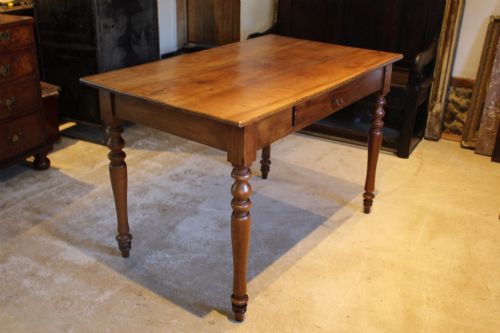
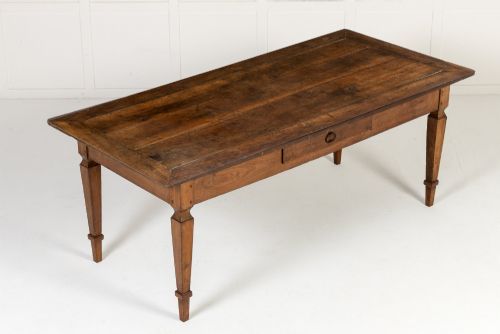
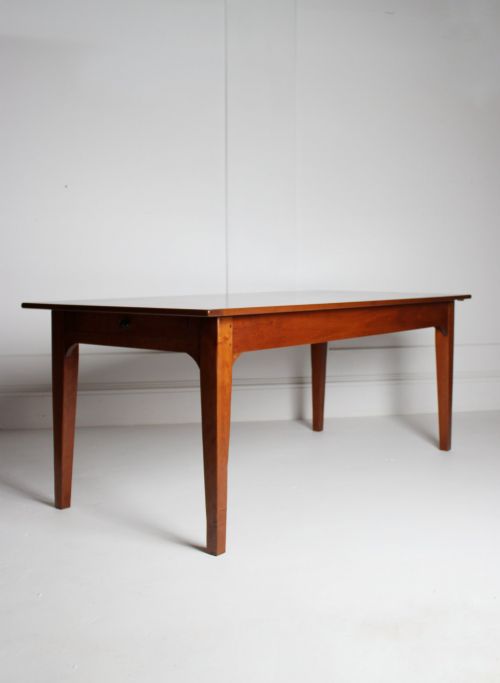
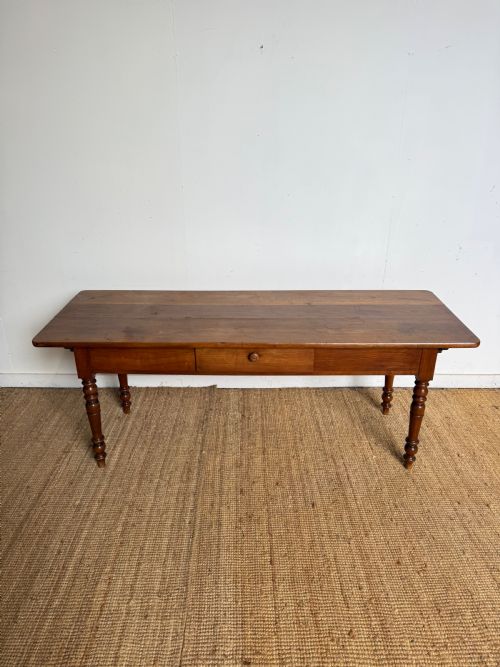
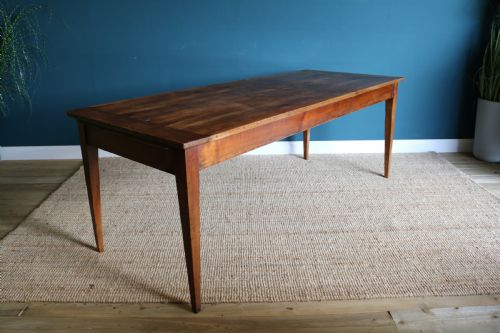
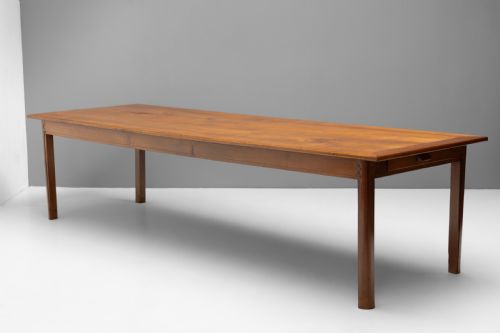


Rustic Cherry Wood Table
These rustic cherry wood table pieces bring warmth and honest construction to a room, offering the sturdy utility that collectors seek.
Rustic Cherry Wood Table
A rustic cherry wood table combines practical domestic use with the rich grain of fruitwood, appearing frequently in French provincial and farmhouse styles across the eighteenth and nineteenth centuries. These pieces encompass dining tables, kitchen tables, refectory tables, and smaller forms such as side tables, coffee tables, and console tables.
Buyers most commonly encounter nineteenth-century French farmhouse tables on this page, alongside Edwardian dining versions and earlier eighteenth-century examples. Forms range from large extending tables equipped with bread slides to smaller proportions suited for everyday living.
Regional variations appear in the selection, including manor house kitchen tables from Bresse and vendange tables combining cherry and oak. Side tables and coffee tables with single drawers represent the more compact domestic pieces found within the records.
How they were made
Construction relies primarily on cherry wood and cherrywood, sometimes paired with secondary timbers such as oak and fruitwood for structural components. Metal and brass elements appear selectively in hardware or fixings.
Joinery methods support heavy daily use, seen in refectory and farmhouse formats designed for rural kitchens and dining rooms. Turned legs, cabriole legs, and sliding bread boards demonstrate the functional adaptability built into these tables.
Recorded forms include extending mechanisms, cabriole legs, turned legs, and integrated sliding bread boards.
What varies in quality
Quality rests upon the proportion of the timber and the character of the grain, where mature cherry develops a deep, faded warmth over centuries of use. The handling of structural elements like extending mechanisms, bread slides, and drawer construction distinguishes simpler provincial work from finer manor house pieces.
The integrity of the timber and the restraint in proportion separate ordinary examples from exceptional ones. Tables retaining original fruitwood or oak supporting frames without excessive replacement hold greater interest for collectors.
The Rustic Cherry Wood Table Glossary
- Refectory table
- A long, narrow dining table originally built for monastic dining halls and later adapted for domestic farmhouse use. They often feature stretcher bases for stability.
- Bread slide
- A pull-out wooden board integrated beneath the tabletop, historically used for slicing bread or cooling loaves. This feature is common on French provincial dining tables.
- Cabriole leg
- A furniture leg that curves outward and then tapers inward, mimicking the shape of an animal's leg. It appears frequently on eighteenth and nineteenth-century tables.
- Vendange table
- A harvesting table built to withstand the demands of the grape harvest, often constructed with sturdy cherry and oak tops and folding or fixed frames.
- Drop leaf table
- A table with a fixed centre section and hinged flaps on either side that can be folded down to save space. These provide versatile scaling for smaller rooms.
Rustic Cherry Wood Table: Frequently Asked Questions
What is a rustic cherry wood table?
A rustic cherry wood table is a practical domestic or dining surface constructed from cherry timber, often originating from French provincial regions during the eighteenth and nineteenth centuries.
These pieces range from large farmhouse and refectory dining formats to smaller side, coffee, and console tables designed for daily use.
How do I date an antique cherry table?
Dating relies upon examining construction methods, timber patination, and design characteristics such as leg profiles and hardware.
Eighteenth-century examples typically display hand-finished joinery and deep patination, while nineteenth-century pieces often incorporate functional additions like extending frames and bread slides.
How do I care for cherry wood?
Cherry wood benefits from regular dusting with a soft cloth and occasional treatment with natural beeswax to nourish the grain.
Keeping the wood away from direct heat sources and strong sunlight preserves the natural fading and rich colour developed over generations.