



Rust Tribal Rug
A rust tribal rug brings deep earthy warmth and distinct village character to a room through traditional hand-knotted weaving.
Rust Tribal Rug
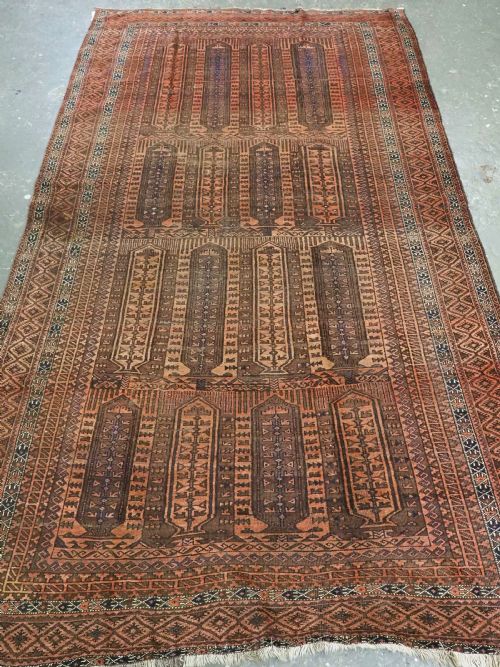
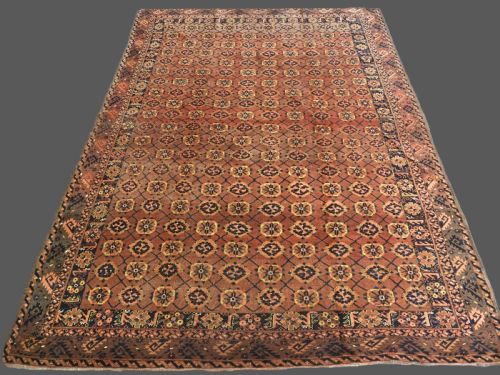
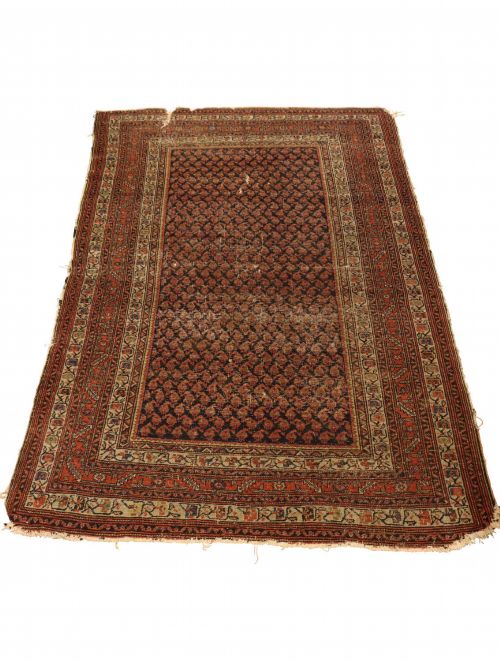
A rust tribal rug encompasses hand-knotted village and nomad carpets from Persia, Central Asia, and Anatolia dating from the nineteenth and early twentieth centuries. These pieces display geometric guls, boteh motifs, and runner formats created by weavers working within traditional tribal idioms. Buyers encounter Baluch, Heriz, and Turkmen pieces that rely on saturated madder red and rust ground colours.
The selection ranges from small dowry rugs and torba bag faces to large country house carpets and narrow corridor runners. Village workshops and nomadic groups produced these textiles for utilitarian floor covering and domestic storage using locally sourced materials. The surviving examples demonstrate distinct regional patterns passed down through generations of weavers.
How they were made
Weavers constructed these textiles using hand-spun wool foundations and pile, occasionally incorporating cotton for structure or goat hair for durable side cords. The application of natural dyes, particularly madder root, yielded the characteristic rust, terracotta, and deep red tones that define the palette. Artisans knotted the wool by hand onto vertical looms, varying the density according to the tribal tradition.
Nomadic and village producers utilised symmetrical or asymmetrical knots depending on the specific weaving group, from Baluch to Tekke Turkmen. Finished edges were overcast by hand, and flatweave ends frequently protected the pile from unraveling. These traditional methods produced flexible, resilient textiles capable of enduring decades of heavy domestic use.
Listings span periods from the early nineteenth century to the early twentieth century, utilising wool, cotton, and natural dyes.
What varies in quality
The distinction between standard examples and superior specimens rests on the depth of the dye work and the precision of the tribal drawing. Finer knot counts and tightly beaten foundational weaves separate intricate dowry pieces from everyday utility carpets. The complexity of the secondary borders and the clarity of motifs like the gul or lattice pattern indicate the weaver's skill.
Age and original condition also influence the standing of a piece within the broader spectrum of tribal weavings. Uniform pile preservation and complete original borders enhance the visual impact of the natural dye palette. Masterful village execution elevates certain runners and carpets beyond standard regional production.
The Rust Tribal Rug Glossary
- Gul
- A repeating octagonal medallion motif frequently found in Turkmen and Baluch tribal carpets. The design often serves as a clan identifier.
- Boteh
- A teardrop or almond-shaped motif with a curved upper end, commonly used in Persian and village rug designs. It represents a floral or cypress shoot symbol.
- Madder
- A natural red dye derived from the root of the Rubia plant, producing durable terracotta, rust, and crimson shades. It forms the foundation of traditional village palettes.
- Torba
- A small storage bag or hanging sack produced by Turkmen tribes for domestic use inside a yurt. These pieces display intricate geometric face designs.
- Kilim
- A flatweave textile produced without a pile by tightly interweaving warp and weft threads. These items function as rugs, covers, or tent dividers.
Rust Tribal Rug: Frequently Asked Questions
Where were these rugs made?
These textiles originated in the villages and nomadic encampments of Persia, Central Asia, and Anatolia. Weavers from specific groups such as the Baluch, Ersari, and Heriz produced them for domestic utility and ceremonial use.
Production centres spanned diverse regions, resulting in distinct regional designs and knotting techniques that identify each piece's geographical source.
How do I care for a wool rug?
Regular gentle vacuuming without a rotating brush roll prevents dust accumulation in the wool pile. Professional cleaning by specialists in antique textiles preserves the natural dye stability.
Keeping the rug away from prolonged direct sunlight prevents fading of the rust and madder tones over extended periods of time.
What is a tribal runner?
A tribal runner is a long, narrow carpet traditionally utilised in corridors, hallways, or beside large beds. Village weavers in regions like Northwest Persia constructed these formats with repeated geometric borders.
Their elongated proportions accommodated narrow architectural spaces while showcasing the weaver's skill within a constrained width.
How are different tribes identified?
Collectors identify specific tribes through characteristic structural traits, colour palettes, and repeating motifs such as guls or calyx lattices. Edge finishes, side cord construction, and wool quality provide further clues to origin.
Comparing border designs and secondary ornamentation helps distinguish between Baluch, Turkmen, and Heriz pieces from the nineteenth century.