




Royal Worcester Lidded Jar
A royal worcester lidded jar brings hand-painted British porcelain into a room, offering both traditional form and intricate detail.
Royal Worcester Lidded Jar
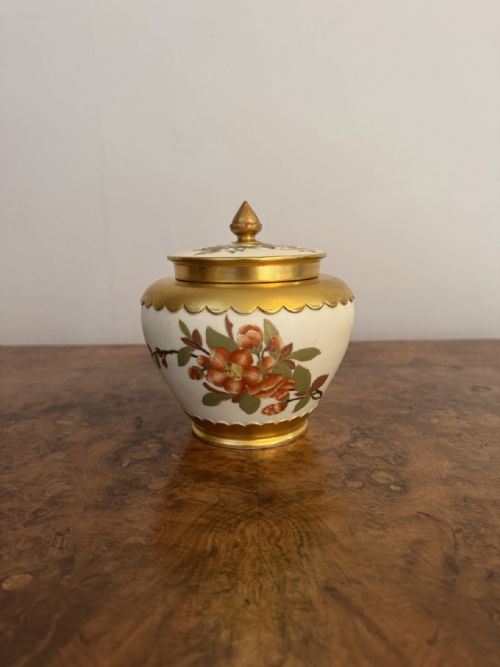
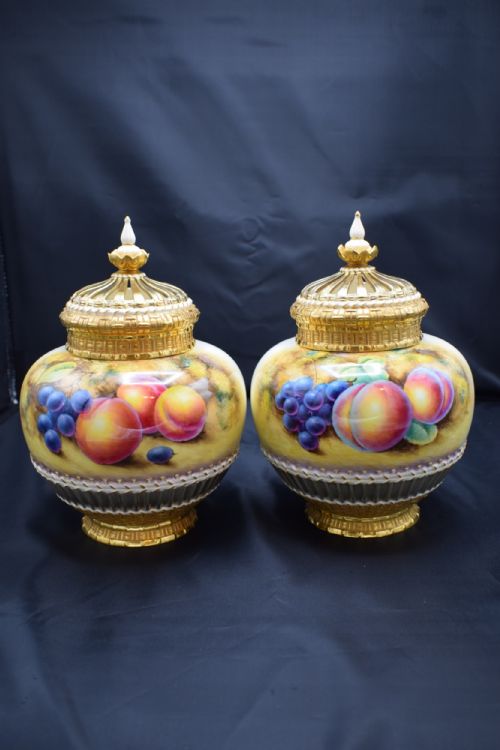
When you search for a royal worcester lidded jar, you encounter covered vessels designed primarily for decorative display and potpourri. The forms on this page span from the Victorian and Edwardian eras into the mid-twentieth century, including ginger jars, urns, and potpourri pots with covers. These pieces serve as traditional English porcelain items that frequently display painted fruit, floral motifs, or blush ivory surfaces.
The objects you meet most often combine nineteenth-century blush ivory aesthetics with mid-century painted fruit compositions. Potpourri vases and ginger jars dominate the selection, often featuring pierced crown tops or fitted lids designed to release scent. Makers and painters signed many of these works, linking individual pieces to specific studio artists from the factory.
How they were made
Pottery makers shaped these vessels from fine bone china, porcelain, and ceramic bodies before applying detailed surface decoration. Artisans utilised hand-painting techniques for botanical and fruit subjects, complemented by enamel work and gold leaf or gilt highlights. Gilding frames the painted panels and rims, requiring careful kiln firing to bond the metallic leaf to the glazed ceramic.
Lidded forms required precise throwing and moulding to ensure the covers fitted the jars and potpourri vases accurately. Pierced crown tops involved intricate cutting of the clay before glazing, allowing fragrance to escape from dried petals kept inside. Hand-painted fruit and floral scenes required multiple layers of pigment to achieve depth before final sealing and firing.
Some covers feature pierced crown tops designed specifically to let dried rose petals secretly perfume a Victorian drawing room.
What varies in quality
The standard of painting separates standard decorative items from exceptional artist-signed works. Pieces bearing signatures from known artists such as John Smith, Freeman, Ayrton, or the Stinton family command greater interest due to the precision of their hand-painted fruit and botanical scenes. The complexity of the vessel shape also influences the standard, with pedestal urns, pierced crown covers, and large rose jars representing higher tiers of production.
Surface preservation and the integrity of the gilding affect the overall quality of each jar. Fine bone china bodies with intact gold leaf, vibrant enamel colours, and unblemished painted fruit panels represent the peak of the factory output. The crispness of the moulding on blush ivory or traditional English porcelain forms further distinguishes finer studio outputs from routine factory pieces.
Royal Worcester·John Smith·Freeman·Jas Stinton·Hadley Ware
The Royal Worcester Lidded Jar Glossary
- Potpourri
- A mixture of dried petals and spices placed inside lidded jars to fragrance a room. The vessels often feature pierced covers to let the scent circulate.
- Ginger jar
- A ceramic vessel with a rounded body and a fitted lid, originally used for storing spices. Later English versions served purely decorative purposes.
- Gilding
- The application of gold leaf or gilt paint to ceramic surfaces. It accentuates rims, handles, and painted panels.
- Bone china
- A type of porcelain containing bone ash, producing a strong, translucent white body. It forms the base for many fine decorative vessels.
Royal Worcester Lidded Jar: Frequently Asked Questions
What is a royal worcester lidded jar?
A royal worcester lidded jar is a porcelain or bone china vessel featuring a fitted or crown top cover, often decorated with hand-painted fruit or floral motifs.
These pieces were produced in various forms, including ginger jars, potpourri vases, and pedestal urns, spanning from the Victorian period through the mid-twentieth century.
How were potpourri jars used?
Potpourri jars held mixtures of dried fragrant petals and spices to scent Victorian and Edwardian rooms.
Their pierced covers allowed the natural aromas to drift into the living space while keeping the botanical contents neatly contained.
How do I identify blush ivory pieces?
Blush ivory pieces feature a distinctive matte, cream-coloured ceramic body that mimics the tone of ivory. They often incorporate delicate floral transfers or hand-painted details combined with subtle gilding.
This finish became particularly popular during the late Victorian and Edwardian eras.
Are artist signatures important?
Artist signatures significantly distinguish individual works, particularly on mid-century painted fruit pieces. Names like Stinton, Smith, and Freeman indicate specific studio painters whose detailed brushwork enhances the piece.
Signed works represent a higher tier of factory production compared to unsigned or standard transfer-decorated items.
How should I display these jars?
Display these lidded jars on mantelpieces, cabinets, or tables where their hand-painted details and gilded highlights catch the light. Ensure they sit safely away from heavy traffic areas to protect delicate crown tops and handles.
Keep them out of direct sunlight to preserve the vibrancy of the enamel and painted fruit scenes over time.