


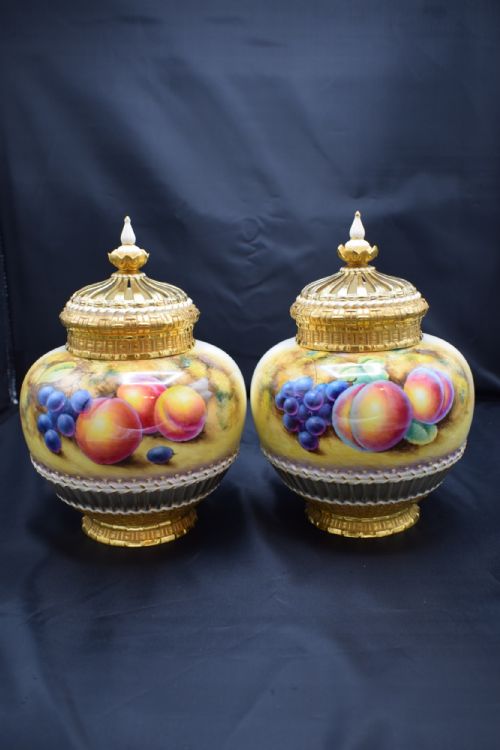


Gilt Porcelain Pot Pourri
These gilt porcelain pot pourri vessels bring scented dried leaves and petals into rooms with painted surfaces and gilded metal mounts.
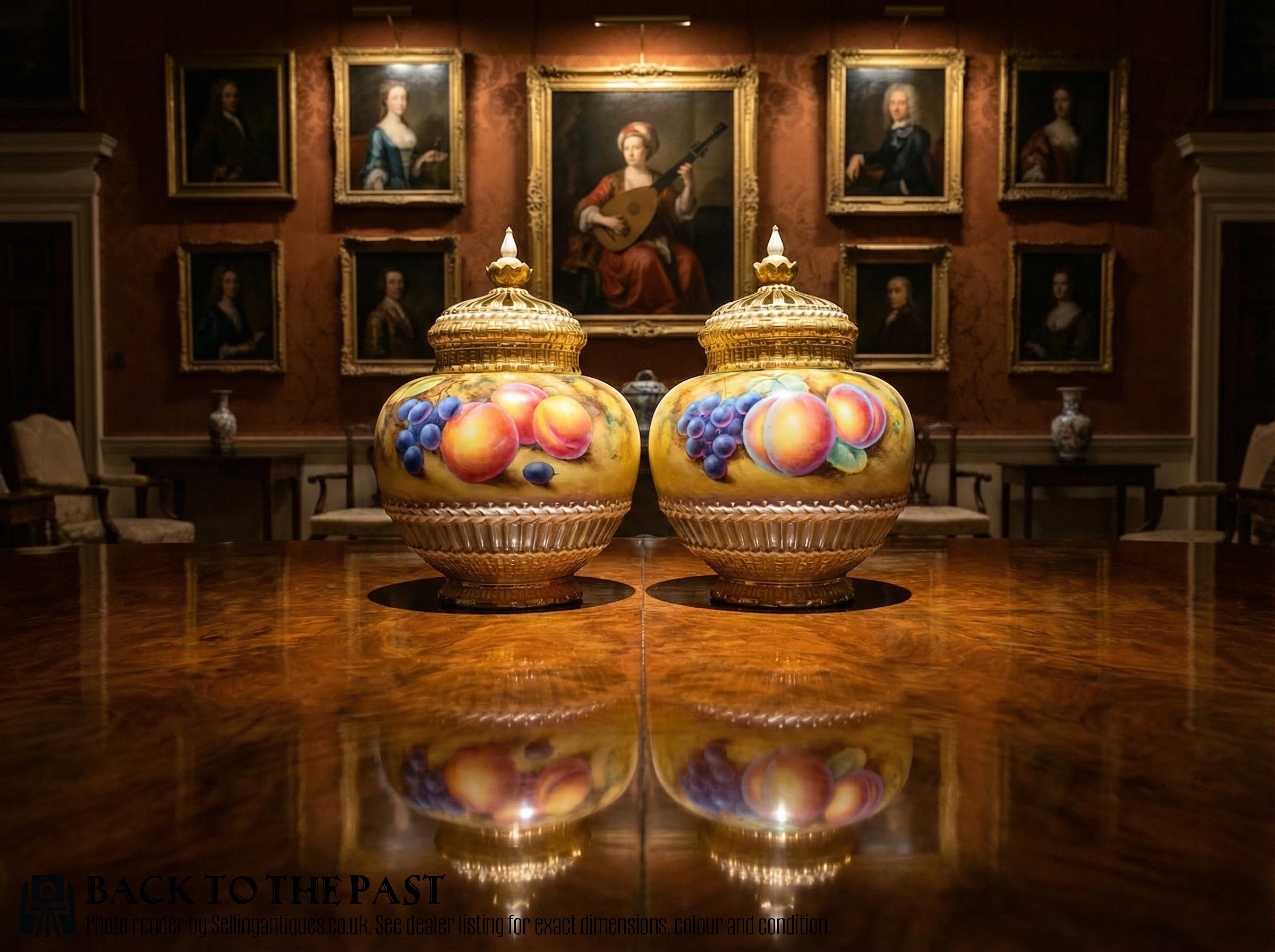
Gilt Porcelain Pot Pourri
When you search for gilt porcelain pot pourri, you look for ceramic vessels designed to hold aromatic mixtures while carrying rich surface gilding.
The versions you meet most frequently on this page span the nineteenth and twentieth centuries, taking the form of covered vases, urns, and jars.
Makers ranged from large English manufactories like Royal Worcester to French workshops producing pieces after Meissen with gilt bronze mounts.
Materials and construction
Potters shaped the bodies from porcelain, ironstone, and enamel before applying detailed hand-painted scenes of fruit, birds, and botanical subjects.
Workers then added gold leaf, gilt, and gilding to highlight handles, rims, and panels, often combining the ceramics with cast ormolu and gilt bronze mounts.
Gilt Porcelain Pot Pourri Retail Price Guide 2026
Typical asking prices for gilt porcelain pot pourri among the pieces listed under this phrase on Sellingantiques today, from the lower quarter to the upper quarter. They describe what is for sale here now, not the wider market.
Listings feature porcelain vessels decorated with gold leaf, enamel, and gilt bronze spanning the Georgian period through the mid twentieth century.
Judging quality and execution
Quality rests upon the crispness of the porcelain moulding and the artistic skill evident in hand-painted details such as fruit and swans.
The richness and preservation of the gold leaf or ormolu mounts separate standard production items from finer studio pieces with covers.
Royal Worcester·Samuel Alcock·Masons Ironstone
The Gilt Porcelain Pot Pourri Glossary
- Ormolu
- Gilded bronze used for mounts, feet, and decorative handles on nineteenth-century vessels. The technique involves applying a gold amalgam to bronze before heating.
- Pot pourri
- A mixture of dried petals and spices placed in a pierced or covered vase to scent rooms. These vessels feature perforated lids to release the fragrance.
- Ironstone
- A heavy, durable type of earthenware patented in the nineteenth century. It provided a sturdy alternative to soft-paste porcelain for decorative items.
- Gilding
- The application of gold leaf or powder to ceramic or metal surfaces. It defines the decorative character of these pieces.
- Imari
- A Japanese export style adopted by European potteries featuring iron red, cobalt blue, and gold. This palette appears on early nineteenth-century ironstone pieces.
Gilt Porcelain Pot Pourri: Frequently Asked Questions
What is a gilt porcelain pot pourri?
These are ceramic vessels created to hold dried scented mixtures of flowers and spices while displaying painted decoration and gold leaf.
Perforated covers allowed the fragrance to circulate through nineteenth and twentieth century drawing rooms.
How were these vessels used originally?
Households placed them on mantelpieces and side tables to freshen the air in formal rooms.
The pierced lids kept the dried botanical matter contained while releasing the aroma.
How do I date a gilt porcelain pot pourri?
Dating relies on factory marks, painting styles, and the integration of materials like gilt bronze ormolu.
Nineteenth-century examples often feature heavier mounts and traditional Imari patterns, while later twentieth-century pieces display detailed painted fruit.
Where were these pieces made?
The listings show production originating primarily from English manufactories alongside French workshops.
English porcelain houses and Staffordshire potteries created many of the painted fruit and floral designs.