




Royal Vienna Plate
These royal vienna plate examples bring elaborate mythological and classical hand-painted scenes to your walls and cabinets, prized for their rich gilding and narrative depth.
Royal Vienna Plate
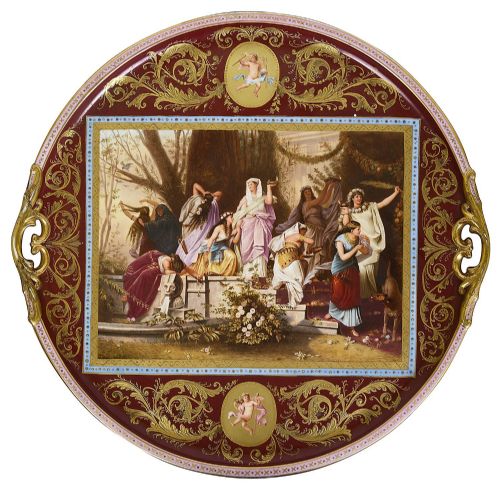
A royal vienna plate is a porcelain display piece typically created in large charger or cabinet plate formats. These items often showcase detailed narrative scenes drawn from classical mythology, history, and literature, such as the deaths of heroes or divine births.
The pieces you meet most frequently on this page date from the nineteenth century, including specific years like eighteen ninety and eighteen fifty. They span styles such as neoclassical, grand regency, and various nineteenth century historicism movements.
Makers and artists sometimes signed their work directly onto the porcelain surface, leaving names like Wagner, Sibl, and S. Stanley visible on the painted front. Forms range from standard cabinet plates and chargers to large decorative trays with pierced borders.
Assessing Quality and Execution
Quality rests heavily on the skill of the miniature painter, where finer brushwork, anatomical precision, and expressive faces separate master-painted cabinet plates from simpler decorative wares. The complexity of the narrative scene and the inclusion of known artist signatures elevate the piece significantly.
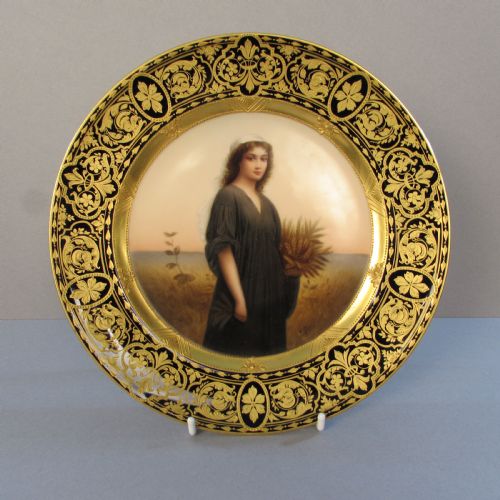
The abundance and intricacy of the gold leaf and gilding also dictate the tier of a piece, particularly when chased or raised gold tooling frames the cobalt blue borders. Additionally, physical scale matters, with larger chargers and pierced porcelain borders requiring greater technical mastery during firing.
Listings feature porcelain pieces spanning the nineteenth century up to nineteen twenty, incorporating cobalt glaze, enamel, and gold leaf materials.
S. Stanley·Sibl·Wagner
The Royal Vienna Plate Glossary
- Cabinet plate
- A porcelain plate intended for display in a cabinet or on a wall rather than for dining. These pieces usually feature elaborate painted artwork.
- Charger
- A large decorative plate or tray used primarily for display purposes. Examples in this category often exceed standard plate diameters and feature prominent historical scenes.
- Cobalt glaze
- A deep blue metallic ceramic colouring fired beneath or within the glaze. It frequently forms the rich background colour on classical plates.
- Gilding
- The application of gold leaf or gold paint to ceramic surfaces. This technique highlights rims, borders, and structural motifs.
- Neoclassical
- An artistic style inspired by the classical art and culture of ancient Greece and Rome. It informs the subject matter of many nineteenth century painted scenes.
Royal Vienna Plate: Frequently Asked Questions
How were royal vienna plates displayed originally?
These large porcelain chargers and cabinet plates were made primarily for visual display rather than table service. Wealthy collectors mounted them on walls or placed them upright in specialised cabinets to showcase their painted mythological scenes.
Today, they serve the same decorative purpose, though modern buyers must use secure wall brackets or dedicated plate stands designed to support the substantial weight of large nineteenth-century porcelain.
What subjects appear on these painted plates?
The artwork on these pieces draws heavily from classical mythology, ancient history, and dramatic literature. Common depictions include tragic figures, divine births, and scenes involving classical heroes and deities.
Artists also reproduced famous historical narratives, such as Caesar at the grave of Alexander the Great or dramatic literary moments from operas and classic plays.
How do I date a nineteenth-century porcelain plate?
Dating relies on stylistic clues, recorded artist signatures, and any visible factory marks on the reverse of the porcelain. Pieces from the mid to late nineteenth century often reflect neoclassical revival or historicism trends.
Examining the depth of the cobalt glaze, the application of the gold gilt, and the intricacy of the hand-painted enamel work also helps place the item within its specific era.
Can I use these plates for serving food?
These items are strictly decorative objects and unsuitable for holding food or everyday use. The delicate hand-painted enamel and raised gold leaf gilding can easily wear away or suffer damage from cutlery and washing.
Owners should treat them as fine art objects, keeping them away from direct sunlight and moisture to preserve the fragile painted surfaces.