
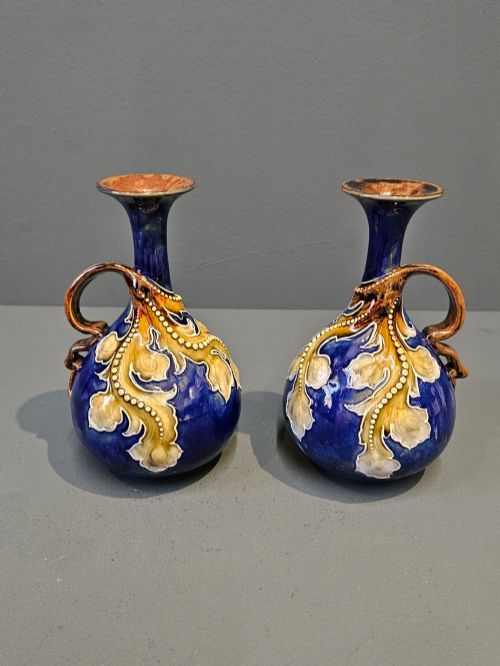
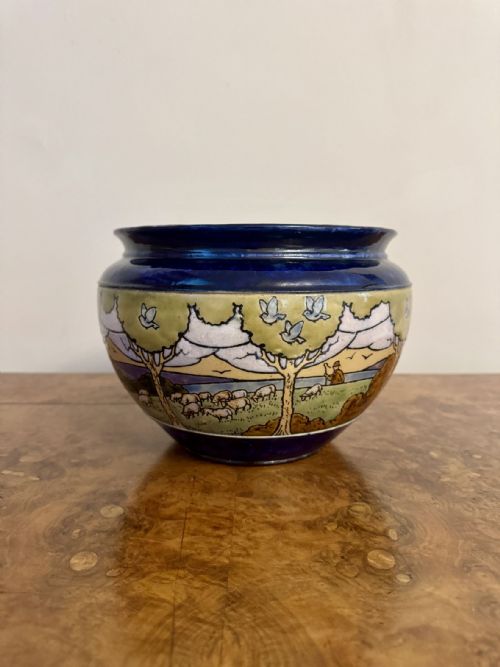
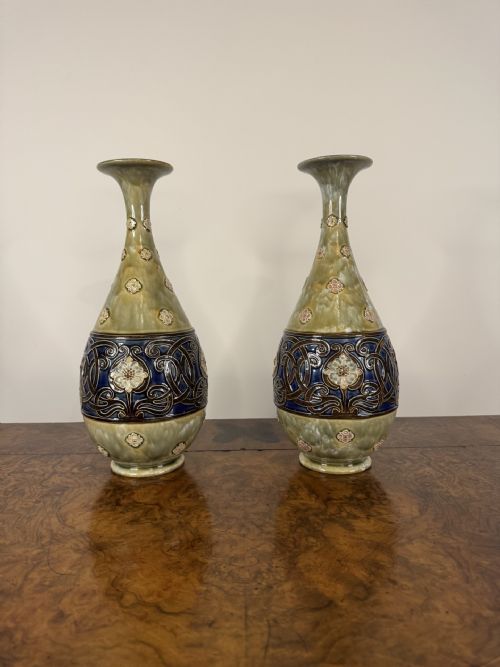


Royal Doulton Stoneware
Royal Doulton stoneware brings together robust ceramic bodies and rich glaze work, offering collectors enduring forms from the late Victorian and early twentieth centuries.
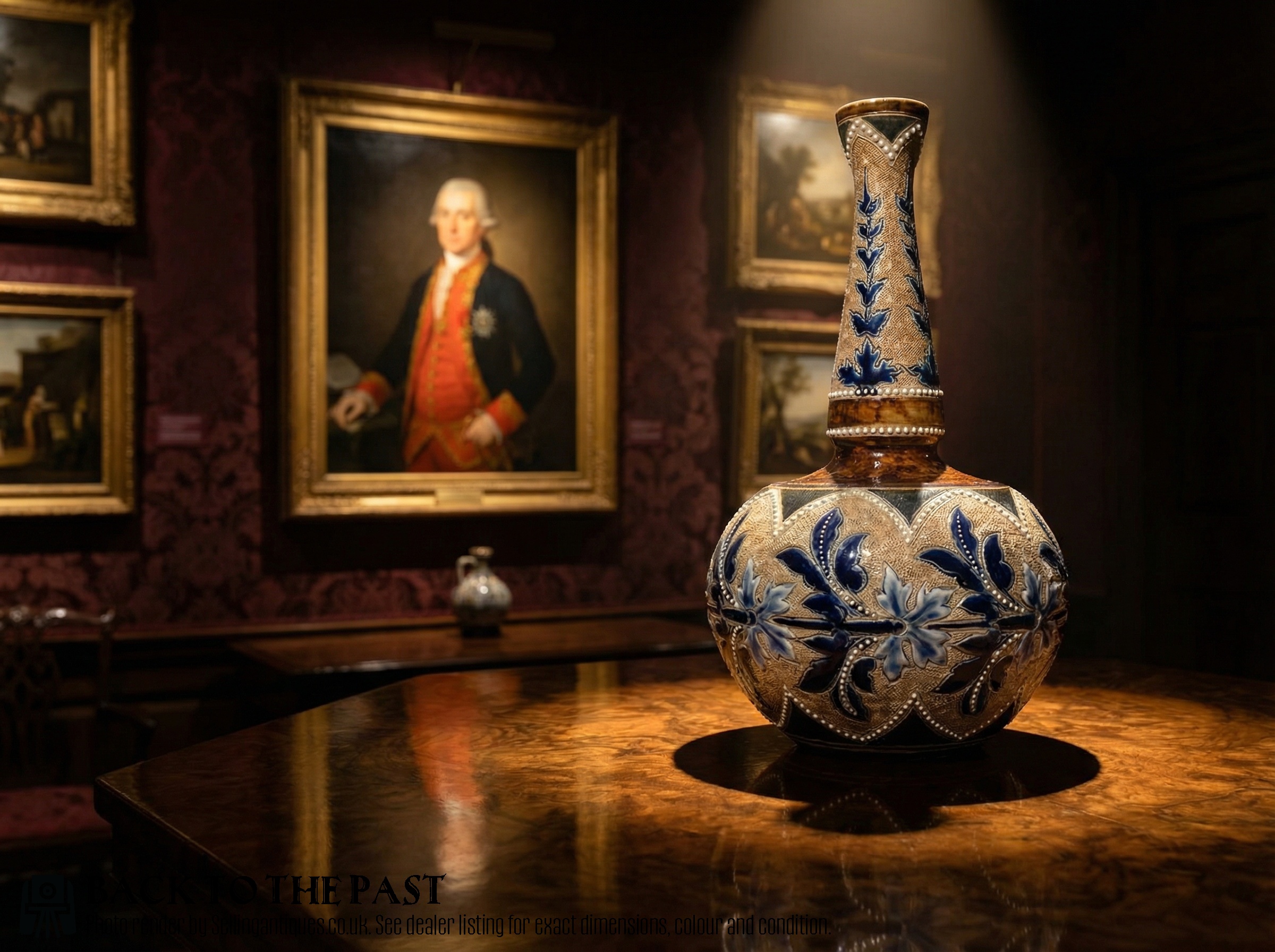
Royal Doulton Stoneware
Royal Doulton stoneware encompasses a wide variety of utilitarian and decorative objects designed to showcase dense ceramic bodies and intricate surface patterns. When you search for royal doulton stoneware, you encounter pieces that range from everyday vessels to major exhibition pieces shaped during the late nineteenth and early twentieth centuries.
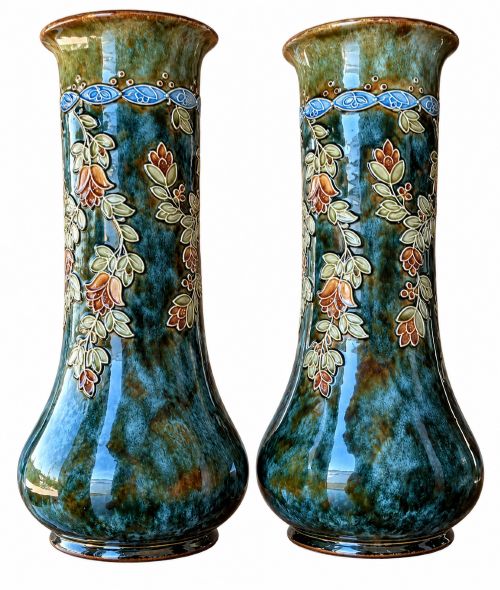
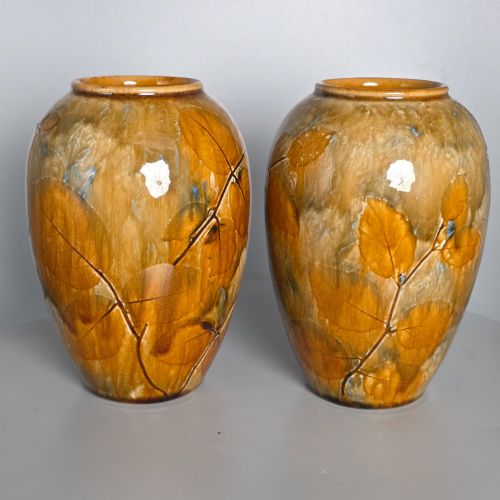
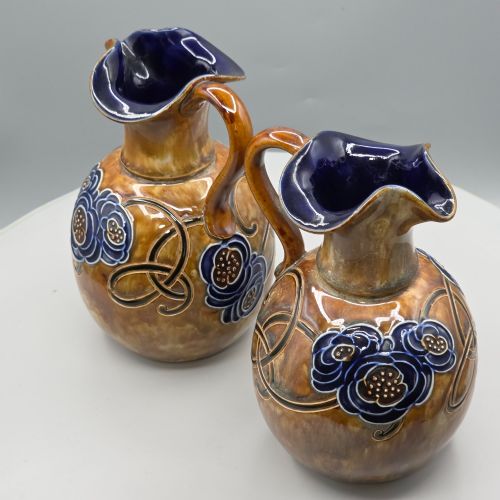
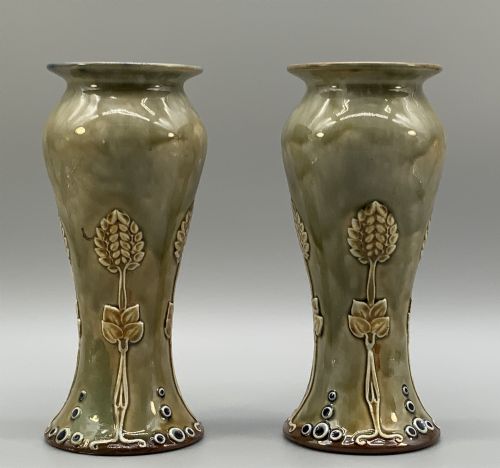
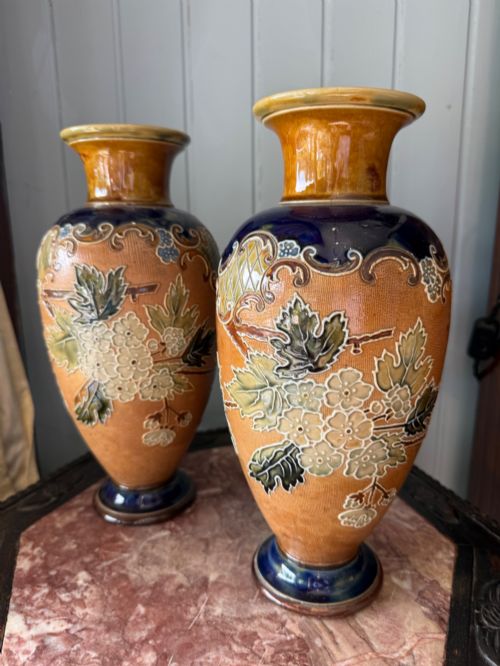
The items most frequently met on this page include vases, chambersticks, and tobacco jars alongside larger jardiniere stands and tea sets. These forms frequently adopt distinct styles such as Arts and Crafts, Victorian, and Art Nouveau, reflecting the aesthetic shifts of their periods.
Origins trace directly to the Lambeth pottery and related workshops where skilled makers transformed heavy clay into detailed domestic and commemorative objects. Pieces span from the 1880s through the 1920s, demonstrating a continuous evolution in decorative application.
Materials and construction
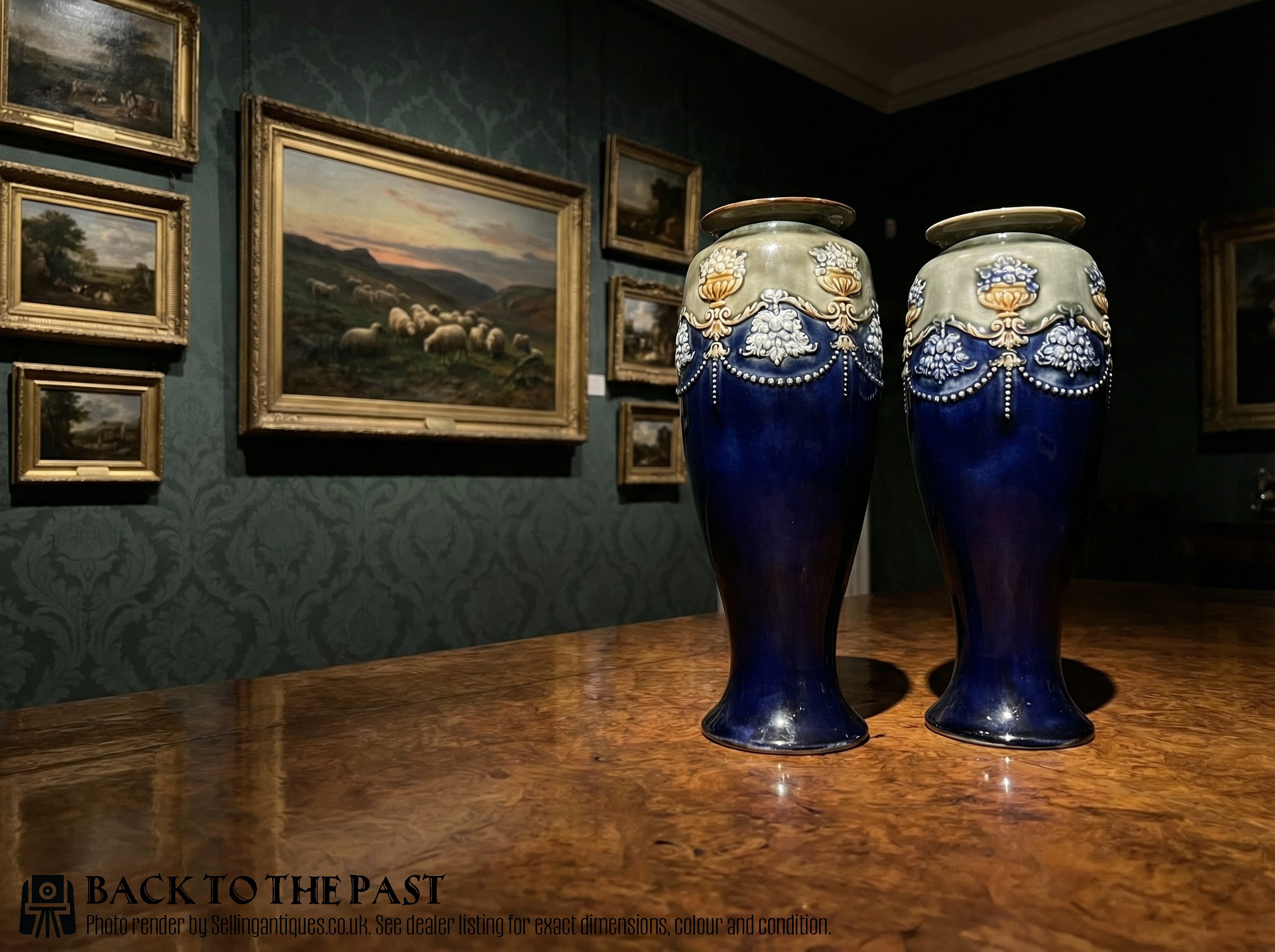
Makers utilised dense stoneware and ceramic bodies to form the foundation of each vessel, often combining glazed stoneware with enamel accents and occasional gold leaf highlights. This heavy material provided a durable base capable of holding rich, textured surface treatments.
Techniques relied upon hand-decoration and specialised glazing methods applied by studio artists. Surface effects included slaters texture, moulded details, and hand-painted motifs that brought out the individual character of each piece.
Royal Doulton Stoneware Retail Price Guide 2026
Typical asking prices for royal doulton stoneware among the pieces listed under this phrase on Sellingantiques today, from the lower quarter to the upper quarter. They describe what is for sale here now, not the wider market.
Some Victorian vases wear real lace impressions baked permanently into their clay coats.
The spectrum of quality
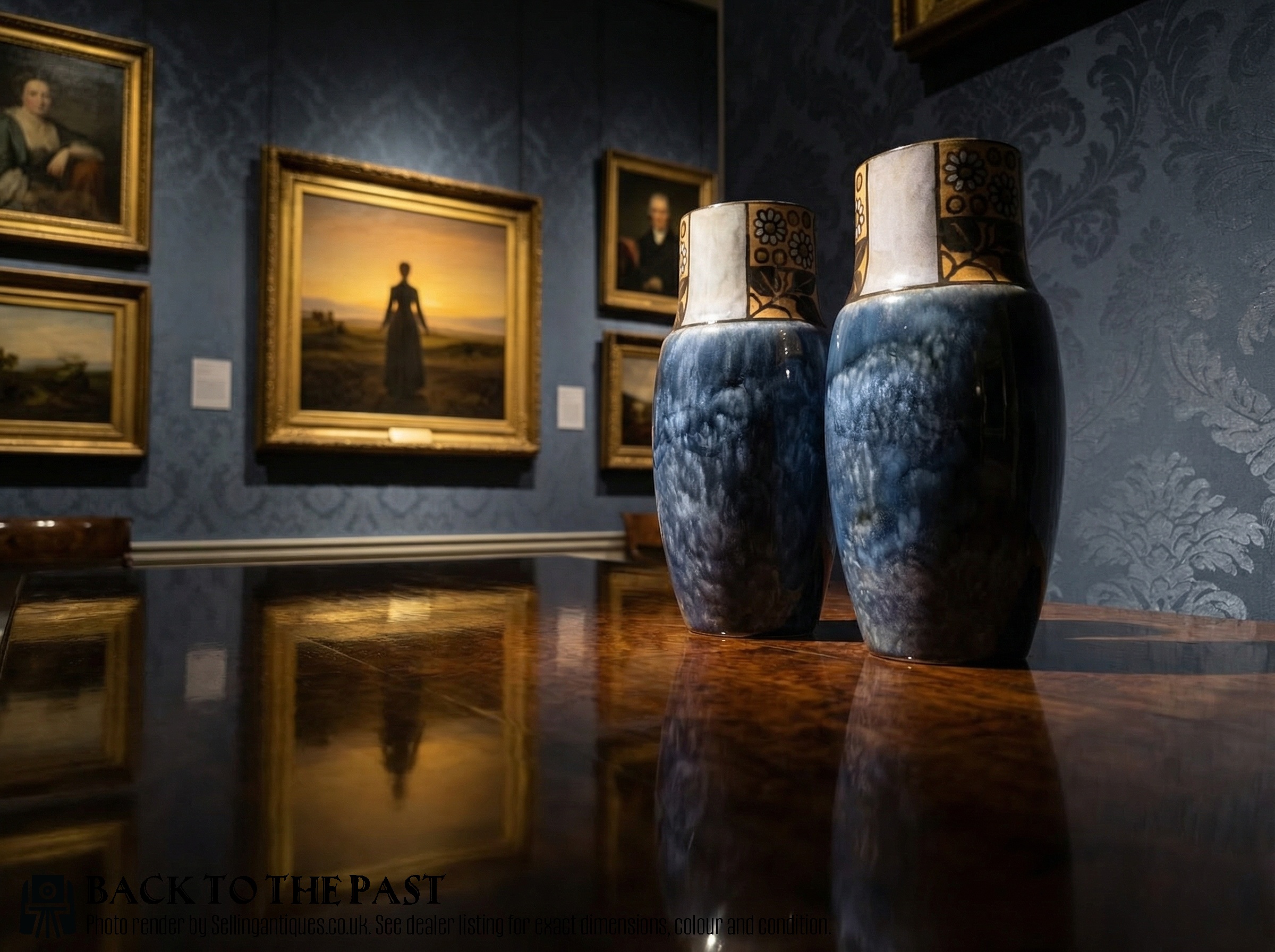
Quality rests upon the ambition of the form and the complexity of the hand-decoration executed by named artists. Pieces at the top of the range demonstrate deeply detailed surface work, harmonious glaze integration, and precise execution in styles like Art Nouveau or Arts and Crafts.
Simpler production pieces rely on standard moulded patterns and basic glaze finishes, representing the more utilitarian output of the pottery. The presence of specific artist signatures or specialised techniques elevates the status of an object within the broader output.
Emily Stormer·Bessie Newbery·Florrie Jones·Ethel Beard·Eliza Simmance·Mark V Marshall
The Royal Doulton Stoneware Glossary
- Stoneware
- A robust type of pottery fired at high temperatures until vitrified and rendered completely impermeable to liquids. This dense material forms the heavy structural base for the vast majority of Doulton decorative wares.
- Slaters patent
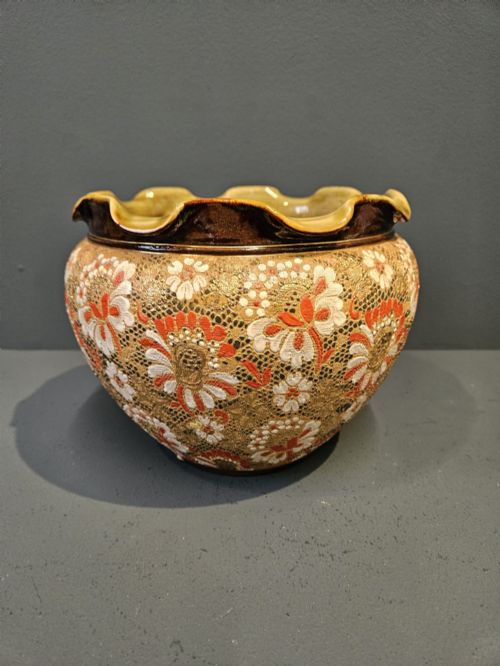
- A decorative technique involving the application of real lace or coarse fabric onto damp clay before firing to leave a distinctive textured impression. This method created patterned backgrounds frequently seen on Victorian vases.
- Jardiniere
- A large ornamental pot or stand designed specifically to hold potted plants or floral arrangements. These substantial vessels often display elaborate Art Nouveau motifs and require robust ceramic construction.
- Baluster
- A vertical architectural form characterised by a swelling lower body tapering toward a narrow neck. Many Doulton vases adopt this classical silhouette to balance heavy decorative glazes.
- Tyg
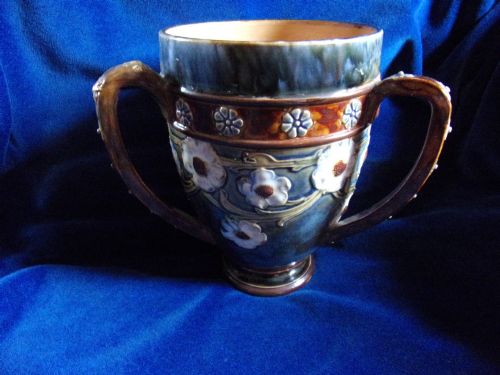
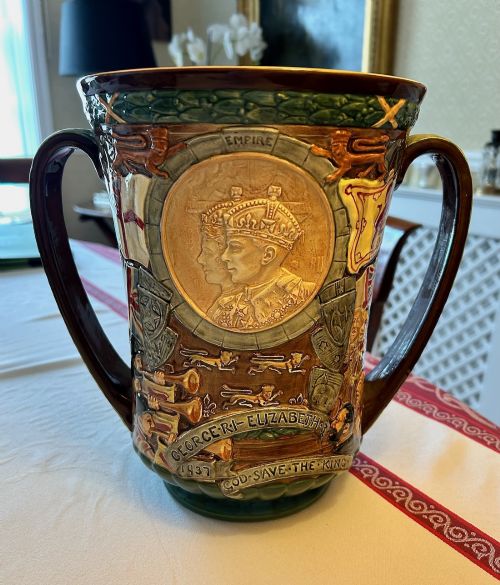
- A large drinking vessel featuring multiple handles designed for communal passing around a table. This traditional form occasionally appears in commemorative stoneware editions.
Royal Doulton Stoneware: Frequently Asked Questions
How do I date my Royal Doulton piece?
Dating relies primarily on the style of the decoration, the specific form, and any impressed factory marks found on the base of the ceramic body. Pieces span periods from the late nineteenth century through the 1920s, with distinct shifts between Victorian revivalism, Arts and Crafts, and flowing Art Nouveau aesthetics.
Studying the signatures of individual artists also helps narrow the production window. Comparing the piece against known archival records provides a clearer indication of its original era.
What is Slaters stoneware?
Slaters stoneware refers to pieces featuring textured backgrounds created by pressing real lace or woven fabric into the damp clay prior to firing. This technique produced a distinct patterned surface that was often combined with raised floral motifs and hand-applied coloured glazes.
Introduced during the Victorian period, this style offers a tactile contrast to smooth glazed sections. It remains one of the most recognisable surface treatments found on Doulton vases and jardiniere stands.
How should I display heavy stoneware?
Display heavy stoneware on sturdy, level surfaces that can comfortably support the considerable weight of dense ceramic and thick glaze layers. Positioning pieces away from high-traffic edges prevents accidental knocks against robust bodies.
Natural light helps illuminate the subtle variations in glaze texture and enamel work across Art Nouveau and Arts and Crafts designs. Adequate spacing allows each vessel silhouette to be appreciated independently.
Are all pieces signed by artists?
Not all pieces carry individual artist signatures, as many utilitarian or standard production items left the pottery bearing only factory stamps. Pieces featuring elaborate hand-decoration by senior artists typically include monograms or incised signatures near the base.
Markings evolved over time, reflecting the collaborative environment of the Lambeth studios where assistants often supported master decorators. The presence of specific ciphers adds significant interest for collectors tracking individual studio outputs.