

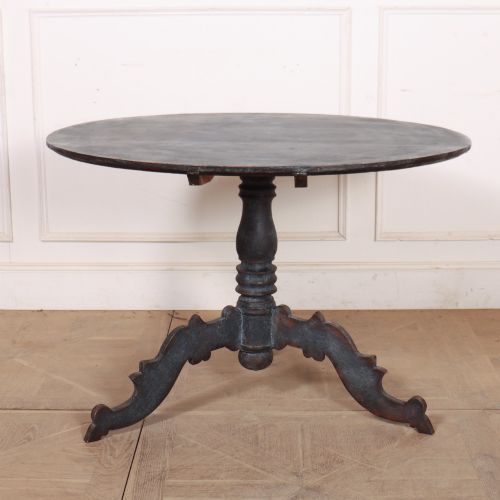
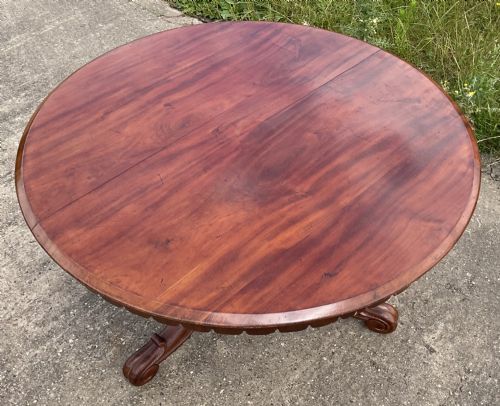
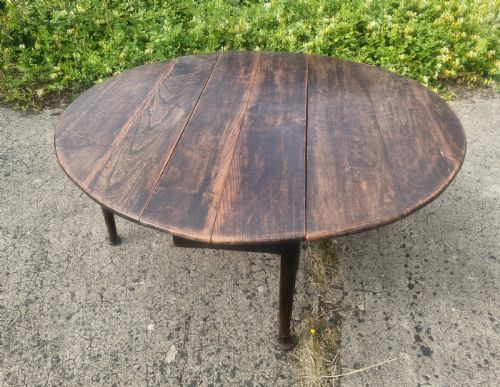
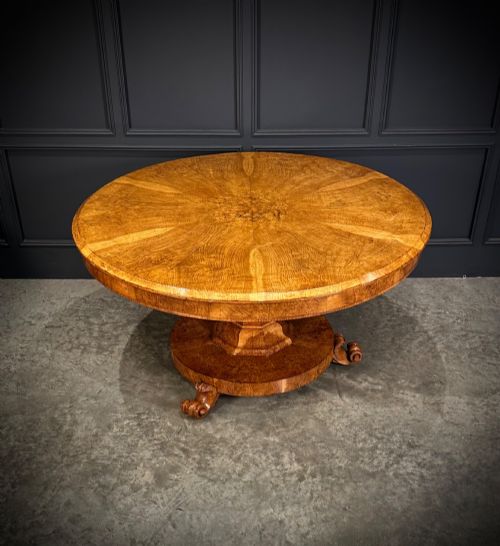




Round Wooden Dining Table
A round wooden dining table brings people together naturally, offering an intimate surface shaped in mahogany, oak, walnut and elm across various periods.
Round Wooden Dining Table
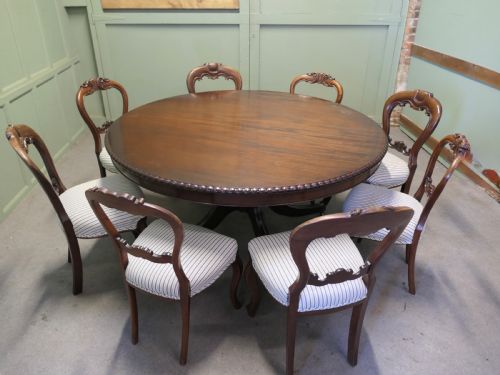
A round wooden dining table provides an inclusive setting for meals, discarding the rigid hierarchy of rectangular boards in favour of shared conversation. These pieces range from compact kitchen surfaces to grand pedestal forms designed for formal rooms.
The examples gathered here span from the eighteenth century through to the art deco era, encompassing vernacular farmhouse boards and polished Regency breakfast tables. Mahogany and walnut appear frequently in formal designs, while elm, pine and oak form the backbone of rustic and provincial kitchen tables.
Buyers will encounter tilt-top mechanisms, drop-leaf gatelegs and fixed pedestals amongst the selection. Georgian and Victorian examples sit alongside French provincial and Scandinavian country pieces, each offering a distinct regional character.
How they were made
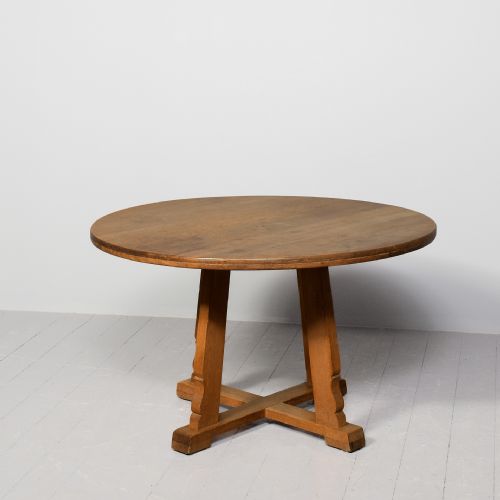
Cabinetmakers constructed these tables using dense hardwoods such as mahogany, rosewood and walnut, often employing crossbanding and decorative veneers to enhance the circular tops. Pine, elm and oak served as sturdy timbers for kitchen and farmhouse furniture.
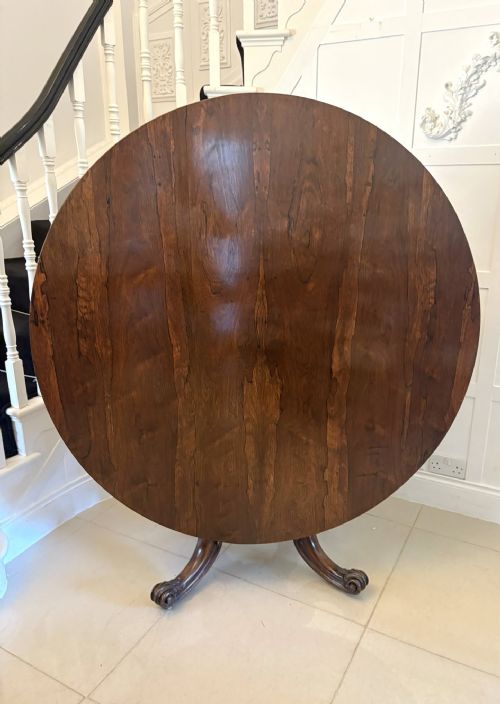
Many tables utilise tilting or snap-top mechanisms with brass catches, allowing the top to be stored vertically against a wall when not in use. Pedestal bases frequently feature carved columns resting on tripartite or quadrupartite legs.
French vineyard tables fold flat for storage, ready to emerge whenever the grape harvest or a sudden feast demands an immediate surface.
What varies in quality
Quality reveals itself in the selection of timber figures, such as pollard oak or burr walnut, and the precision of crossbanded borders. Superior examples show seamless joining in circular tops and robust, stable pedestal bases that support weight without listing.
The sophistication of the turning, carving and mechanism operation distinguishes standard utility tables from exceptional drawing room pieces. Finer workshop attributions often accompany superior timber matching and thoughtful proportion.
The Round Wooden Dining Table Glossary
- Tilt-top table
- A table with a pivoting surface that can be locked horizontally for dining or vertically for storage.
- Crossbanding
- A border of veneer laid with the grain running perpendicular to the central panel, adding a refined visual frame to the table top.
- Snap-top
- A spring-loaded or latched mechanism that secures a tilting table top firmly in its horizontal position during use.
- Centre table
- A freestanding piece designed to be viewed from all sides, frequently placed in the middle of a principal room.
- Drop-leaf
- A table with hinged flaps on either side that can be raised and supported by swing legs to extend the surface area.
Round Wooden Dining Table: Frequently Asked Questions
How do I choose the right size round table?
Consider the diameter of the top in relation to your room dimensions, ensuring adequate clearance for chairs to pull out comfortably.
Larger circular tables often feature pedestal bases which afford greater legroom than four-legged alternatives.
What is the difference between a breakfast table and a dining table?
Breakfast tables historically served lighter morning meals or functioned as centre tables in private chambers, frequently incorporating tilt-top mechanisms.
Standard dining tables provide fixed, stable surfaces intended for principal daily meals and larger gatherings.
How do I care for a polished wooden surface?
Maintain timber finishes by avoiding direct sunlight and excessive moisture, using coasters and placemats to protect the polish.
Regular dusting with a soft cloth preserves the natural lustre of mahogany, walnut and rosewood without heavy chemical intervention.
Can I use a tilt-top table every day?
Tilt-top tables handle daily dining perfectly well provided the locking mechanism remains secure and stable.
Take care when lowering or raising the heavy timber top to protect the pivot joint from sudden impacts.