





English Tilt Top Table
An english tilt top table brings ingenious space-saving design to any room, allowing the surface to fold vertically when not in use.
English Tilt Top Table
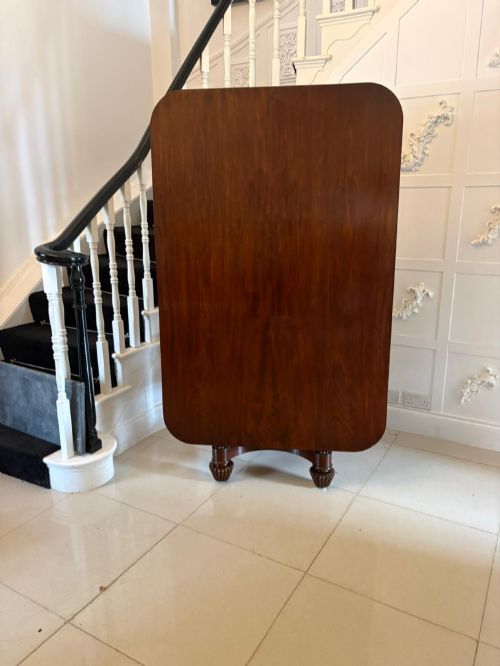
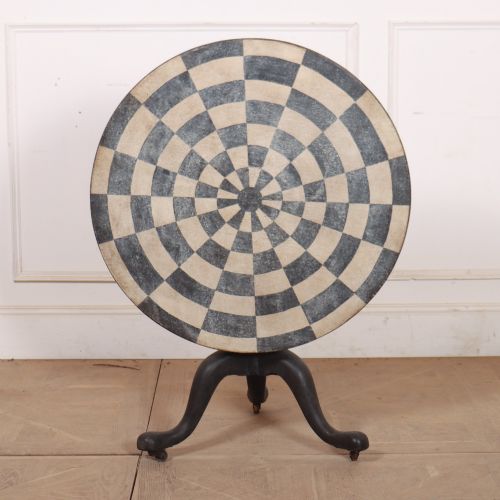
An english tilt top table encompasses versatile domestic furnishings designed to save space by pivoting the surface against a pedestal when idle. These pieces appear frequently in eighteenth-century vernacular and formal guises, particularly during the Georgian and Regency eras, extending into the Victorian period.
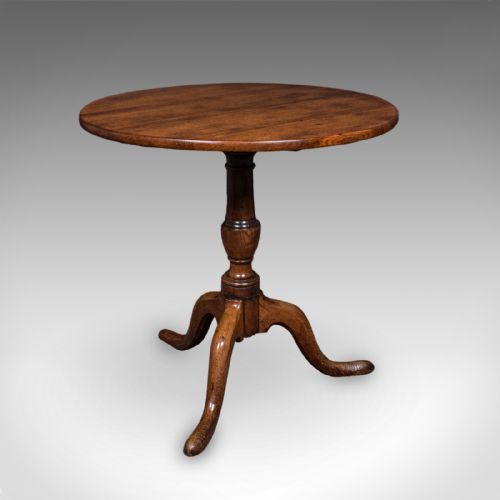
The format ranges from small wine and lamp tables supported by tripod legs to large breakfast and dining tables resting on heavy pedestals. Buyers encounter diverse top shapes including circular, rectangular, oval, and scalloped edges.
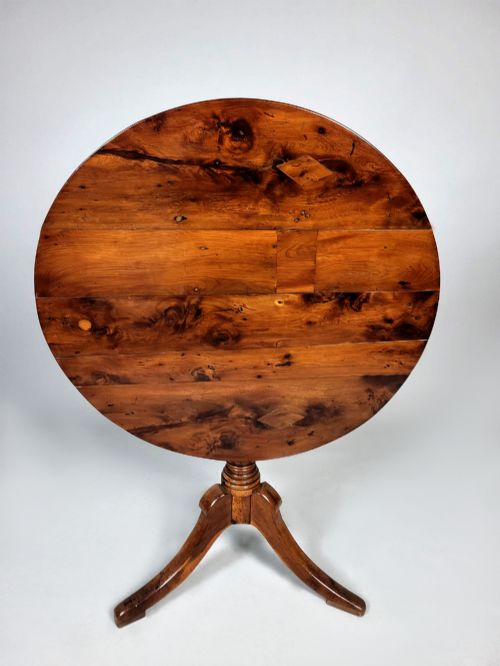
Makers utilised various formats for specific domestic tasks, including supper, card games, and afternoon tea. Regional workshops also produced sturdy examples in oak, fruitwood, and yew.
Materials and Construction
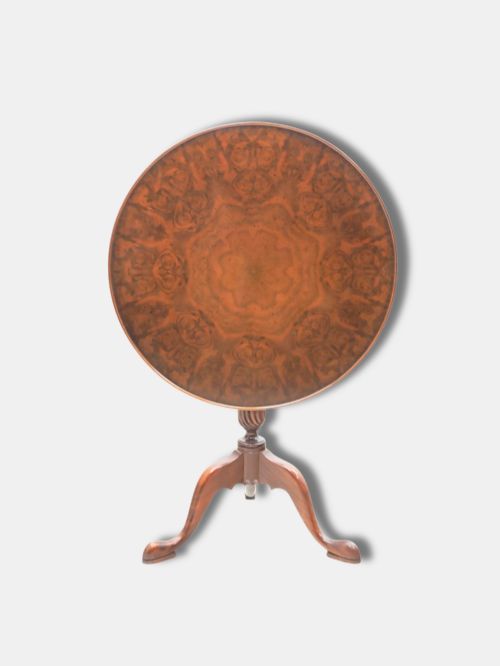
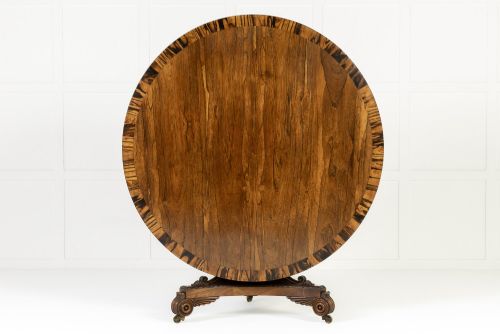
Cabinet makers built these tables using dense hardwoods such as mahogany, walnut, and rosewood, often selecting figured veneers and burr walnut for decorative surfaces. Regional pieces frequently utilise native timbers including oak, beech, fruitwood, and yew.
The tilting mechanism relies on specialised catches, hinges, and often a birdcage mount that permits the surface to both pivot and rotate. A sturdy central pillar or three-legged tripod base provides necessary counter-balance to the folding top.
Secret zodiac carvings lurk beneath the surface of certain Victorian parlour tables, designed to reveal astrological symbols only when tilted.
Design and Execution
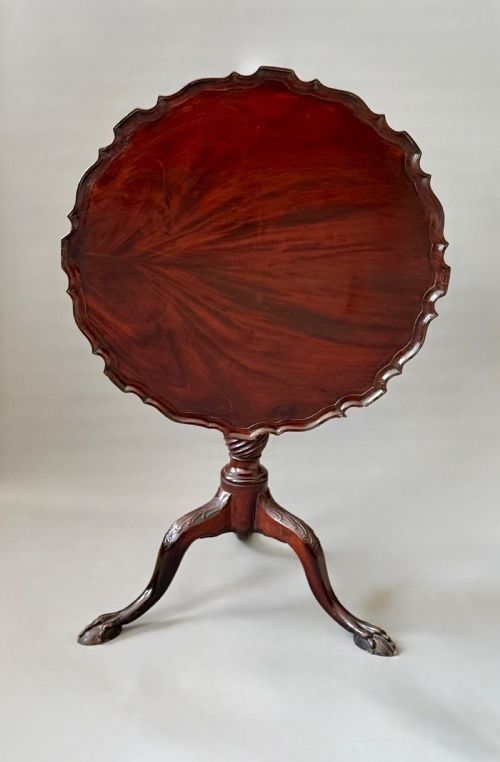
Superior examples display crisp carving upon the tripod knees and pillar bases, alongside tightly figured grain patterns selected for the table top. Finely executed pieces feature well-fitted birdcage mechanisms that maintain stability without excessive play in the joint.
Proportion and timber selection dictate the distinction between standard provincial pieces and high-status urban commissions. The integration of carving, such as pie crust borders or subtle mouldings, separates utilitarian items from distinguished drawing room furnishings.
James Shoolbred
The English Tilt Top Table Glossary
- Tilt-top
- A tabletop hinged to a central mechanism, allowing it to pivot upright for compact storage against a wall or in a corner.
- Tripod table
- A small freestanding table supported by a single central pillar resting on three spreading feet.
- Birdcage mount
- A timber framework beneath the tabletop that permits both rotation and tilting of the surface.
- Pie crust
- A decorative carved raised edge shaped with alternating curves, resembling traditional pastry crust.
- Loo table
- A large Victorian card and conversation table, frequently oval and mounted on a heavy central pedestal.
English Tilt Top Table: Frequently Asked Questions
How do tilt top mechanisms work?
The mechanism typically uses a wooden catch or a brass latch that secures the horizontal top to the central column. Releasing this catch allows the surface to pivot ninety degrees on its hinges.
Many examples incorporate a rotating block or birdcage assembly above the pillar. This allows the folded surface to turn independently of the base for convenient positioning.
Were these tables used for dining?
Larger formats such as breakfast and pedestal dining tables served morning meals and informal gatherings in private parlours. Their folding tops made them practical for clearing floor space when dining concluded.
Smaller tripod versions functioned as wine or lamp tables rather than primary dining furniture. These supported afternoon tea, reading material, or small candlelight supplies.
How can I date an english tilt top table?
Stylistic clues within the timber framing and leg geometry help establish the period of manufacture. Cabriole legs ending in pad or claw-and-ball feet point towards eighteenth-century Georgian origins.
Reeded pillars, platform bases, and heavier pedestal forms indicate later Regency and Victorian workmanship. Examination of construction marks and screw types further clarifies the age.
How do I maintain the tilting mechanism?
Regular inspection of the pivot pins and wooden catches ensures the hinge operates without undue friction. Keeping the metal components lightly lubricated prevents binding during movement.
Avoid forcing the catch if the wood expands or contracts with seasonal humidity changes. Gentle handling preserves the original joint tolerances and prevents strain on the pillar.