

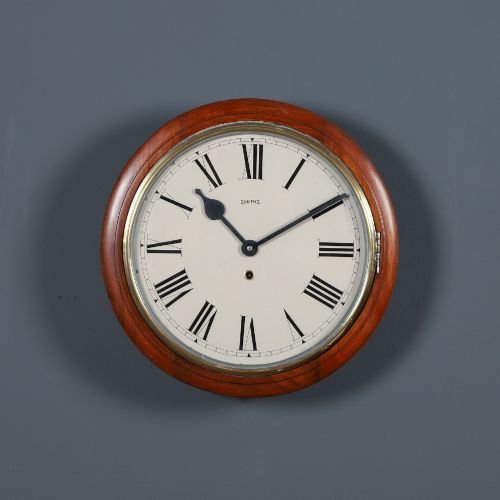
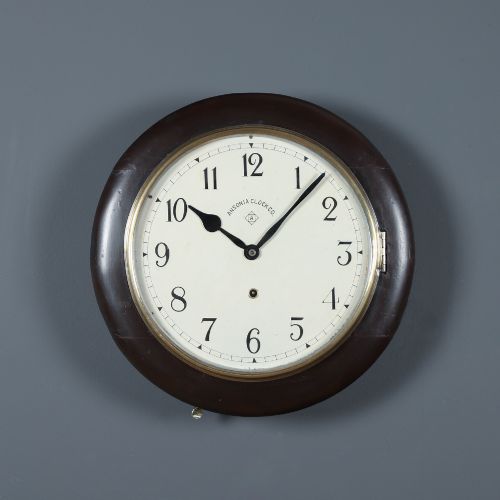
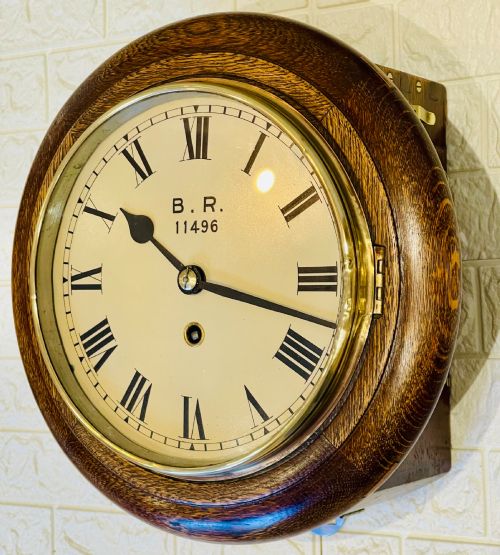
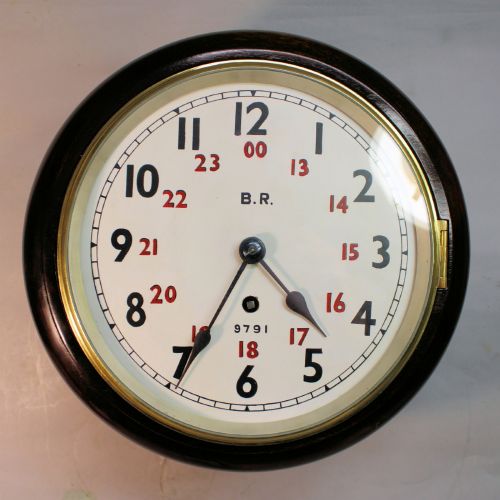


Round Mahogany Wall Clock
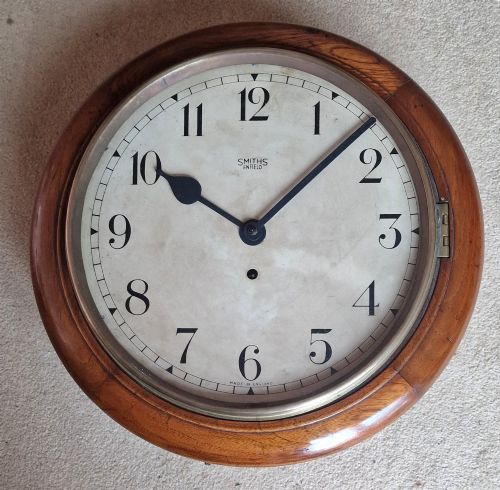
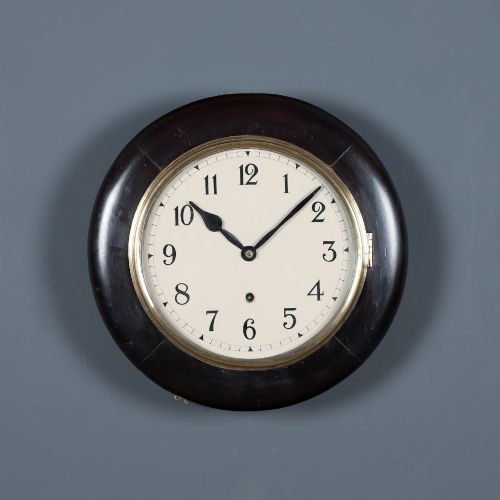
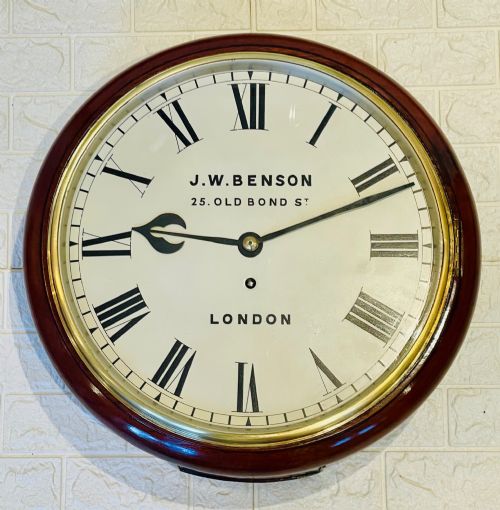
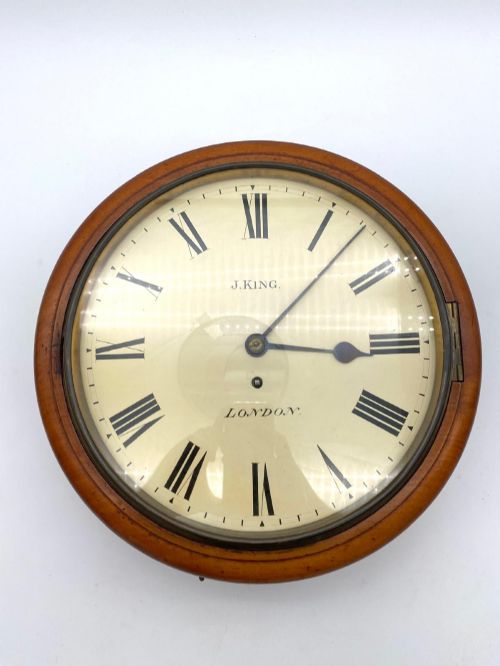
A round mahogany wall clock brings the striking presence of a nineteenth-century railway station or school room directly into your interior.
Round Mahogany Wall Clock
When you search for a round mahogany wall clock, you encounter utilitarian timepieces built for transport networks, public offices, and classrooms from the Victorian era onward into the mid-twentieth century. These items combine robust timber framing with clear, legible dials designed for distance viewing.
The pieces you meet most frequently on this page originate from the nineteenth and early twentieth centuries, spanning periods such as Victorian, Edwardian, and George V. Many carry specific provenance related to railway companies like the L.N.E.R. or British Rail, alongside military contexts from the Second World War.
Form follows function closely in these objects, presenting deep circular timber cases housing brass or painted iron dials protected by heavy glass bezels. They range from compact eight-inch dial formats up to substantial fifteen or sixteen-inch station clocks.
What varies in quality
The standard of an example rests heavily on the sophistication of its internal movement, distinguishing simple timepieces from those featuring chiming or striking trains. Fusee-driven mechanisms represent a higher grade of horological engineering compared to standard spring-driven alternatives.
Casing construction and dial preservation also dictate worth, with crisp timber carving, original glass bezels, and unblemished painted iron faces marking out superior examples. Provenance inscribed upon the dial or timber adds historical depth that elevates specific pieces.
Round Mahogany Wall Clock Retail Price Guide 2026
Typical asking prices for round mahogany wall clock among the pieces listed under this phrase on Sellingantiques today, from the lower quarter to the upper quarter. They describe what is for sale here now, not the wider market.
The listings show dial clocks spanning the nineteenth century through the 1950s, utilising mahogany, oak, brass, and painted iron.
Smiths·Enfield·Ansonia·Anglo Swiss·John Walker·Balbiani Brookley·Wyatt Bournemouth·Palmer and Co·Webster
The Round Mahogany Wall Clock Glossary
- Fusee
- A conical pulley connected to the mainspring by a cord or chain, designed to equalise the torque as the spring unwinds. This mechanism ensures consistent force is delivered to the escapement for accurate timekeeping.
- Dial clock
- A wall-mounted timepiece featuring a prominent circular face and a short wooden trunk or plain circular surround. They were standard fixtures in offices, railway stations, and schools.
- Convex dial
- A clock face that curves outward toward the glass, reducing glare and improving legibility from acute angles. This form is frequently found on station and office clocks.
- Drop-dial
- A clock case where the circular dial sits above an extended wooden box or trunk, often accommodating a longer pendulum or simply housing the drop-down weight and winding setup.
Round Mahogany Wall Clock: Frequently Asked Questions
Where were these clocks originally hung?
These timepieces hung in demanding public environments such as railway platforms, station master offices, municipal council rooms, and school assembly halls. Their robust construction ensured they could withstand heavy public footfall and atmospheric vibrations.
Today, they transition easily into domestic hallways, kitchens, and living rooms, bringing an authoritative industrial character to modern walls.
How do fusee movements work?
A fusee movement uses a specially shaped conical pulley paired with a chain or cord to regulate the power delivered from the mainspring. As the spring loses tension, the chain rides higher on the wider part of the cone to maintain steady torque.
This clever mechanical arrangement prevents the clock from losing speed as it runs down between windings, ensuring reliable chronological precision.
How do I wind a wall clock?
Winding requires inserting a matching key into the winding hole on the dial face and turning it gently clockwise until you feel firm resistance. You must avoid over-winding, which can strain or snap the internal mainspring.
Many of these older movements require weekly attention, offering a tactile routine that connects you directly to the mechanical nature of the object.
How do I identify railway provenance?
Railway-issued clocks frequently bear painted or engraved lettering on the dial face or timber casing naming specific networks like the L.N.E.R. or British Rail. Station names or inventory numbers are sometimes stamped directly onto the wood or brass bezels.
Documentation or regional association recorded in the piece history also helps confirm its operational service on the transport network.