
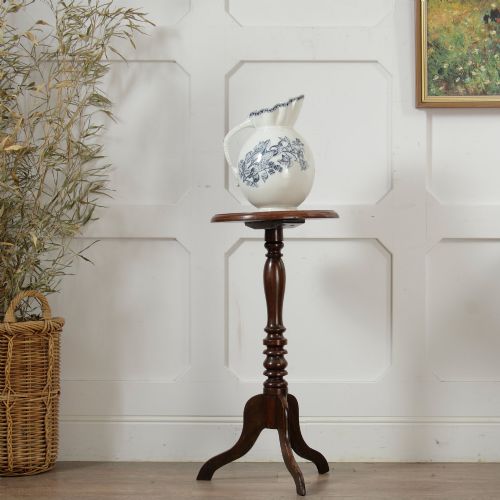
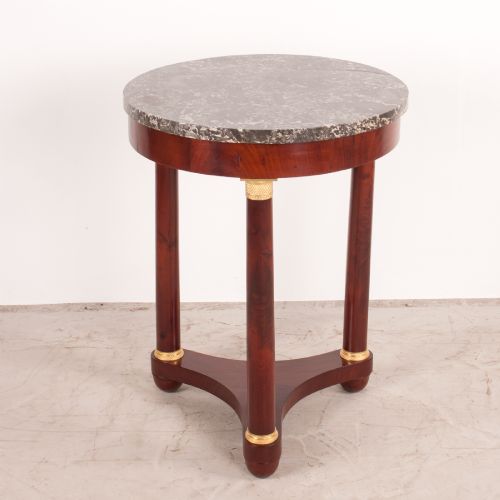
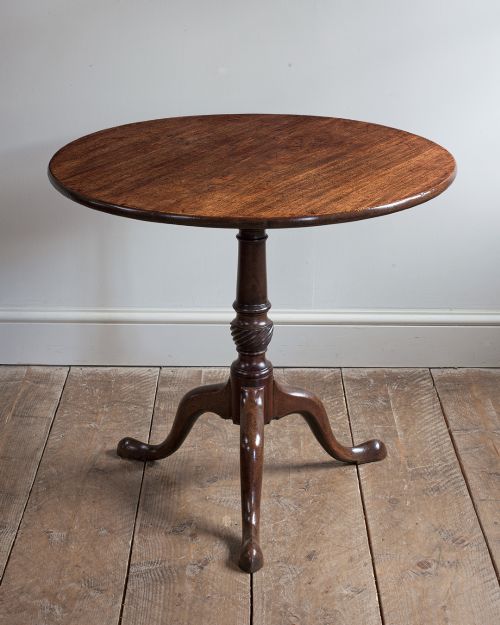
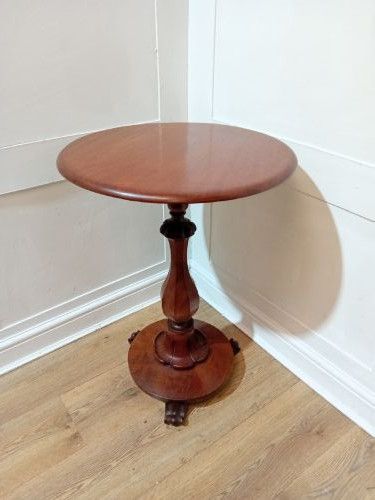
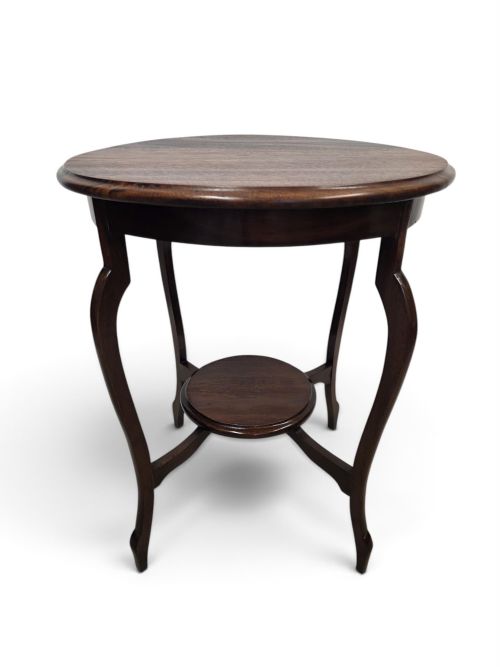
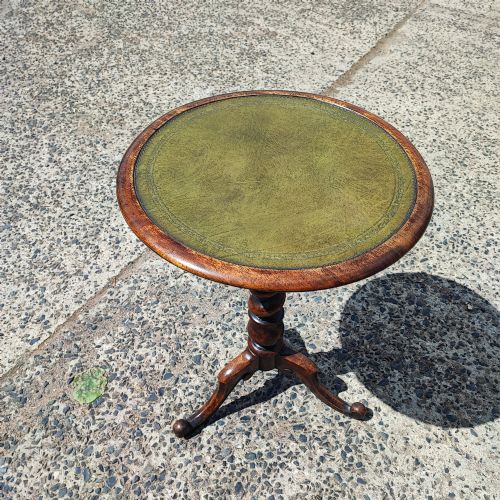
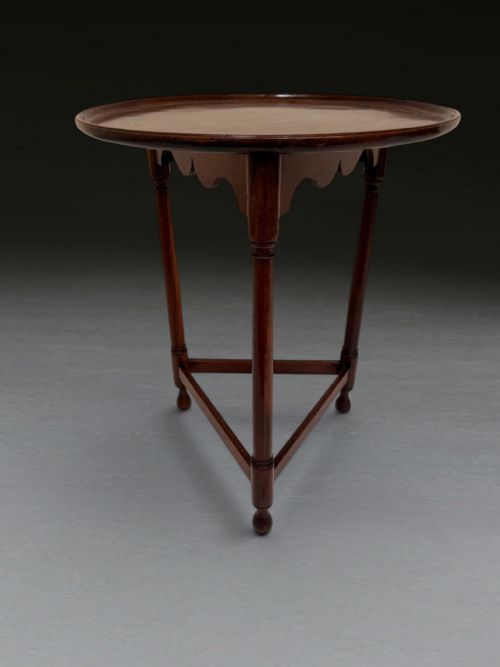

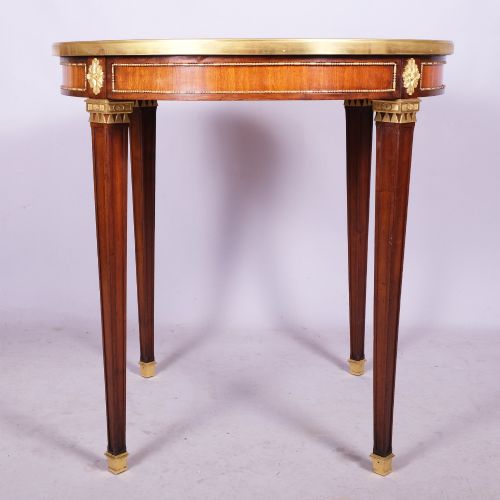
Round Mahogany Accent Table
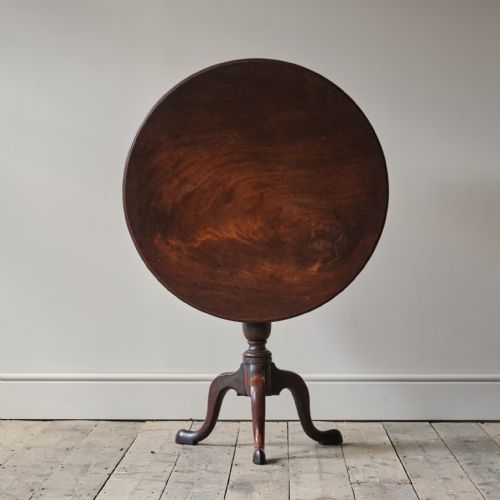
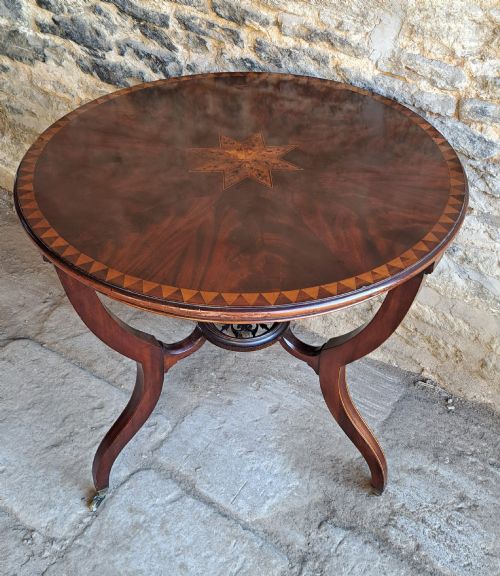
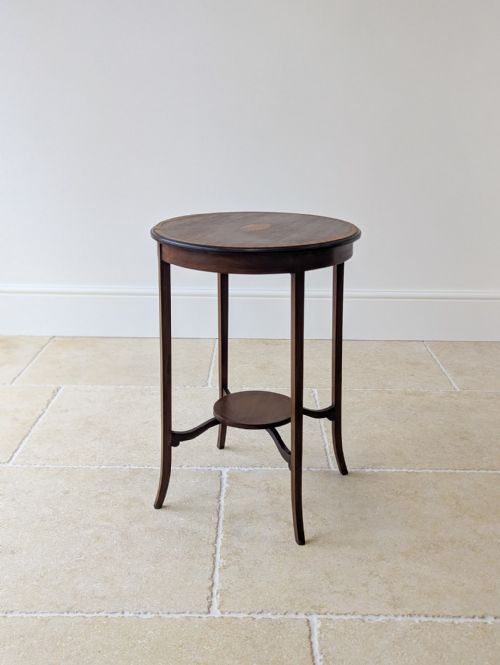
These round mahogany accent table pieces offer compact surfaces for living spaces, combining rich timber grains with classic forms.
What round mahogany accent table means
A round mahogany accent table brings compact utility and rich timber grain to a room, functioning equally well beside a seating group or as a standalone display piece. The selection here spans multiple eras and regional interpretations, offering distinct decorative character.
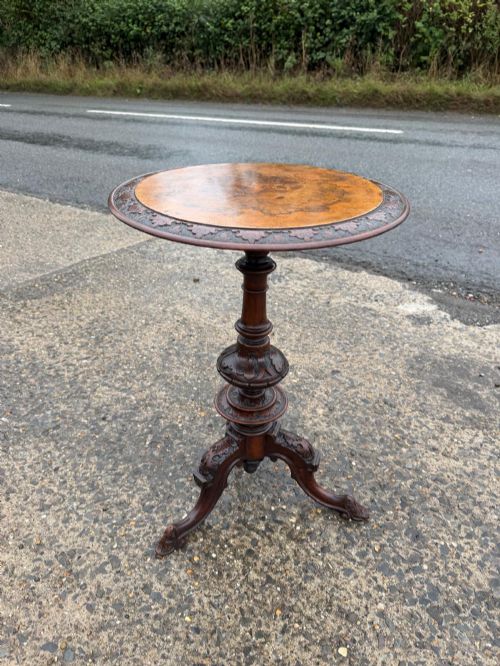
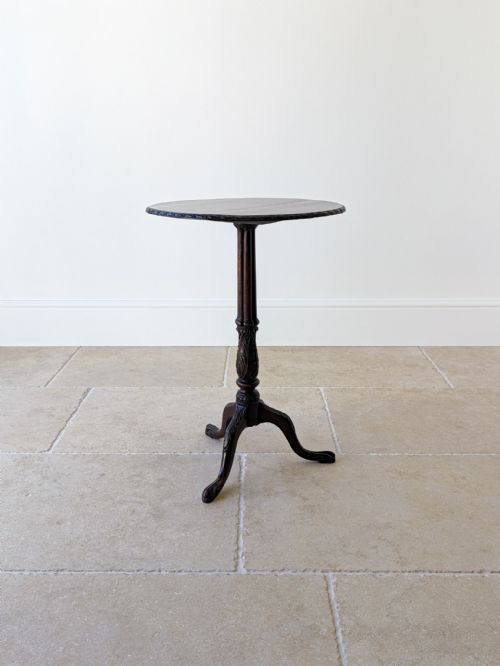
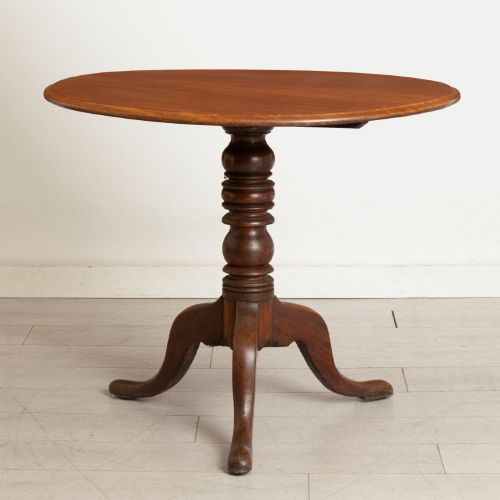
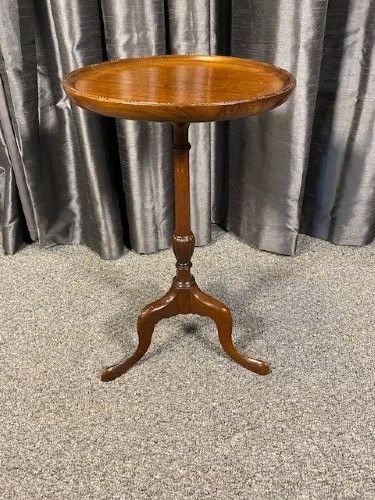
The Victorian and Georgian periods dominate the core forms, presenting traditional tripod bases and occasional table formats. Alongside these, examples from the early twentieth century and Swedish Empire styles show how the form adapted across different decades.
Materials and construction
Construction relies heavily on mahogany, frequently enhanced with burr wood veneers on the tops to create striking natural patterns. Metal elements in brass and bronze occasionally appear on specific structural or decorative components.
Joinery methods reflect traditional cabinet-making standards appropriate to each period, ensuring stable pillar and tripod supports. The combination of dense tropical timber and careful turning gives these tables their lasting structural integrity.
Retail Price Guide 2026
Typical UK retail prices for round mahogany accent table, calculated from the Sellingantiques database of over a million retail prices indexed since 2003. This retail price guide relies exclusively on Sellingantiques data; no external sources or auction records are used, so the figures do not describe the wider market.
Current listings span the Georgian, Victorian, and Swedish Empire styles, utilising mahogany, burr wood, brass, and bronze.
Judging quality
Quality rests in the choice of timber figure, particularly where burr wood top sections display complex grain movement. Finer examples show careful selection of stock and balanced proportions between the central pillar, the top, and the supporting feet.
Execution of detail defines the upper tier of pieces, from the sharpness of turned elements to the integration of regional styles such as Anglo-Indian or Swedish Empire. Simpler utility versions from later decades prioritise straightforward form over elaborate decorative embellishment.
The Round Mahogany Accent Table Glossary
- Mahogany
- A durable hardwood prized for its deep reddish-brown colour and stable grain. It forms the primary structural material across these listings.
- Burr wood
- Wood harvested from tree growths or burls, producing intricate, swirling grain patterns. It is typically used for veneering tabletop surfaces.
- Tripod table
- A small freestanding table supported by a central pillar resting on three feet. This format provides stability on uneven floors.
- Occasional table
- A small movable table intended for specific, intermittent use within a room. These pieces function easily as side or lamp tables.
Frequently Asked Questions
Where should I place a round mahogany accent table?
These tables fit easily beside armchairs, sofas, or in corners where surface space is limited. Their compact footprints allow them to function as lamp stands or display spots without crowding a room.
Because the surfaces are compact, consider what items will sit on them daily. Keeping functional items minimal helps preserve the visible wood grain.
What is the difference between Georgian and Victorian tables?
Georgian pieces typically date from the eighteenth or early nineteenth centuries, featuring restrained classical proportions and simpler turned supports. Victorian examples often incorporate more decorative carving or contrasting burr wood veneers.
Examining the construction methods and timber characteristics helps distinguish between the two eras. Each period brings its own approach to the basic tripod form.
Can I use these tables for serving coffee?
Specific forms like coffee tables sit lower and suit casual living spaces, while taller occasional tables work better beside seating. Select the height based on your intended daily use.
Protecting antique finishes is essential if the table experiences heavy daily contact. Trays can provide an extra layer of defence for vulnerable timber.