



Round Dial Clock
A round dial clock brings the steady rhythm of a nineteenth-century railway station or a quiet Edwardian office straight onto the wall.
Round Dial Clock
When searching for a round dial clock, buyers encounter heavy wooden wall pieces, school clocks, and railway timepieces alongside smaller desk models. Mahogany and oak dominate the selection, shaped primarily for public offices, stations, and domestic halls during the Victorian and Edwardian eras.
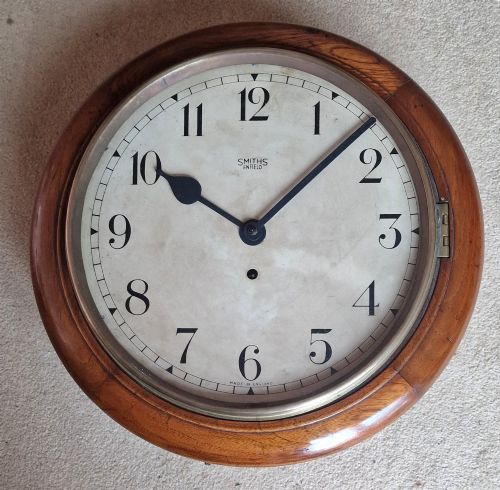
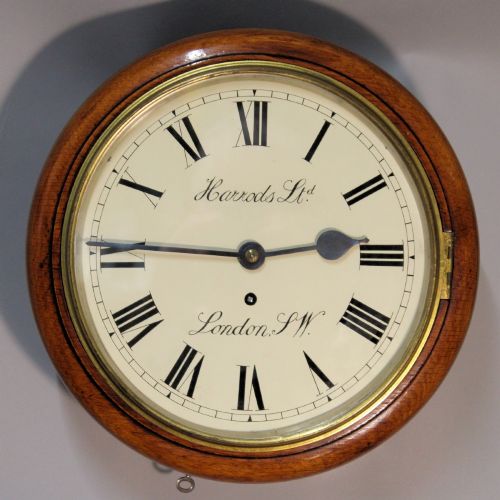
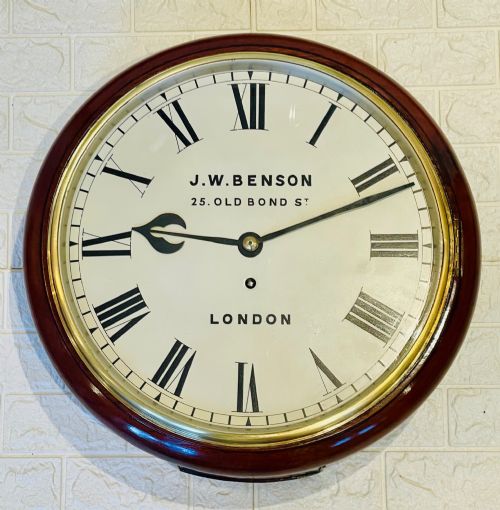
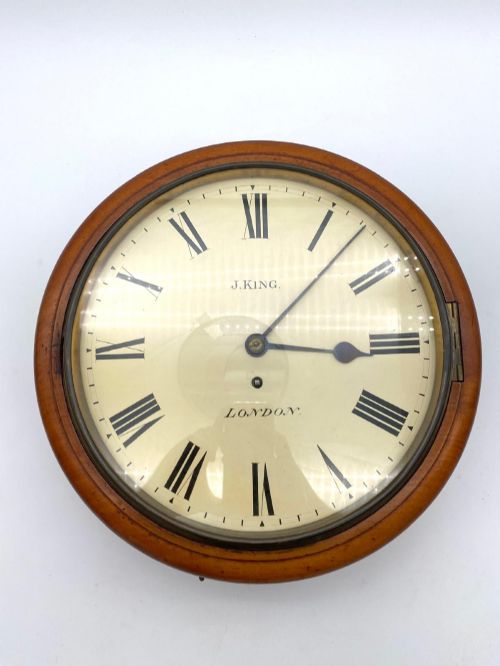
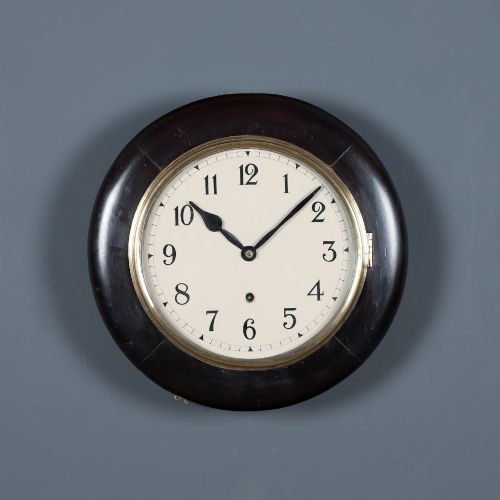
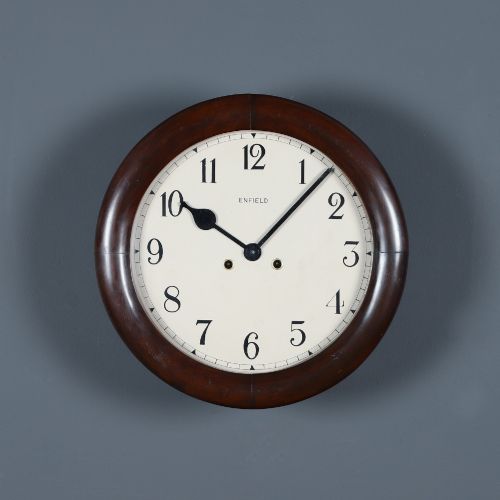
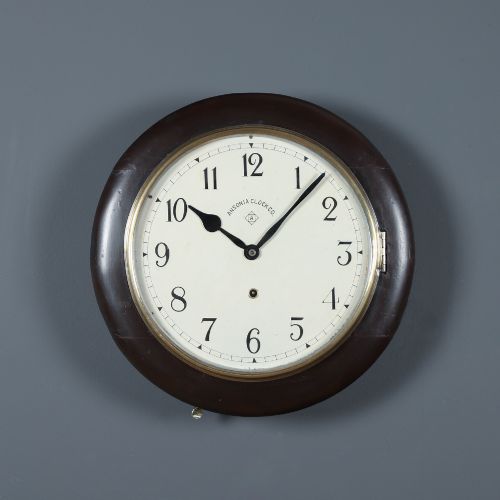
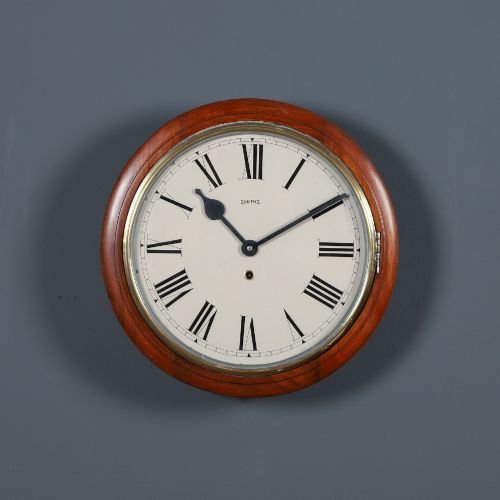
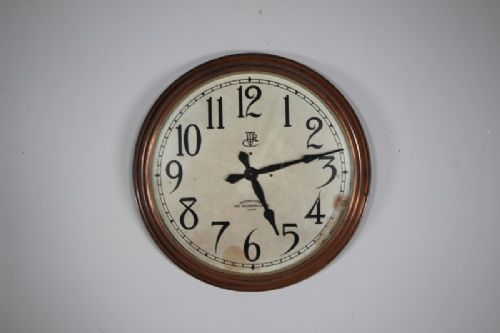
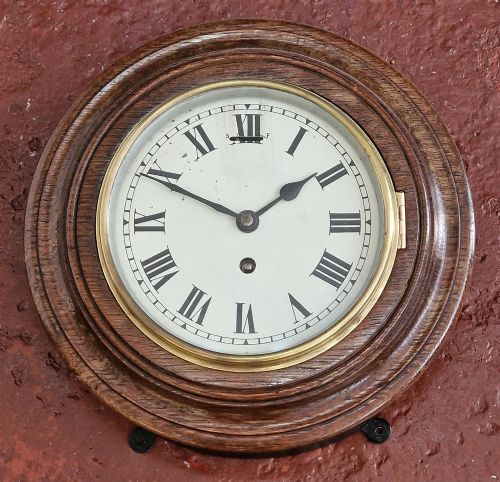
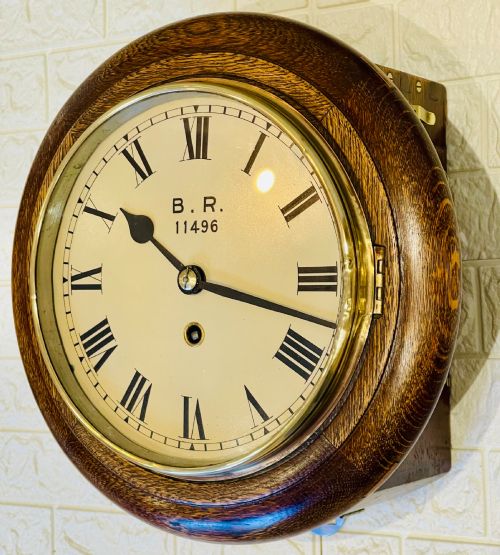
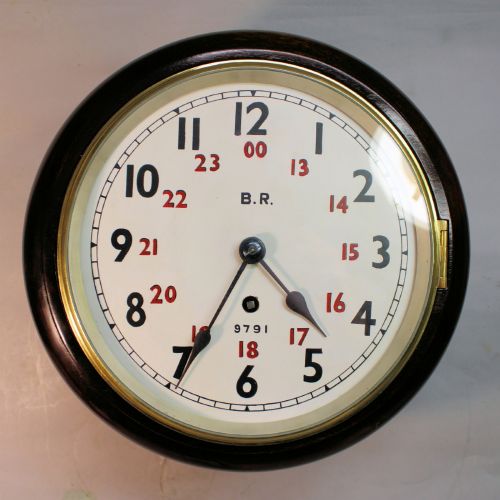
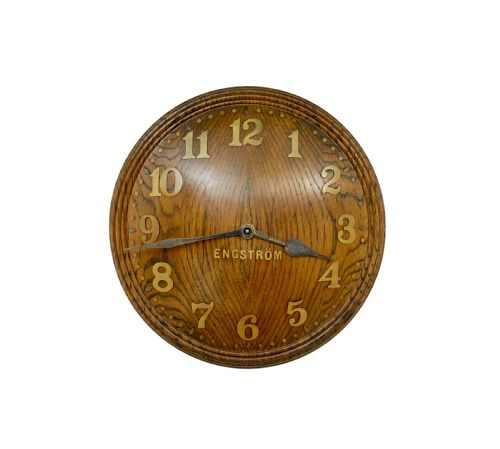
The most common examples on this page are mahogany or oak wall-mounted timepieces featuring prominent painted faces protected by glass and brass bezels. These practical timekeepers were built to be read from a distance in busy environments like railway platforms and schoolrooms.
Origins span provincial English makers, London retailers, and continental workshops, stretching from Georgian bracket clocks up to mid-century modern designs. Fusee movements appear frequently, driving single hands or chiming mechanisms housed in sturdy timber surrounds.
How they were made
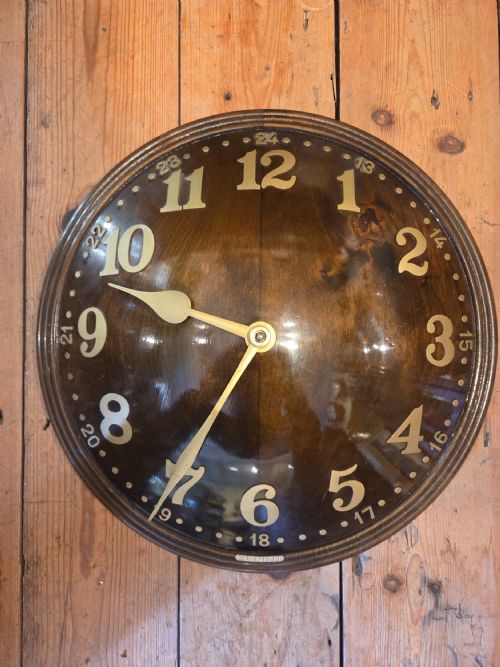
The dial itself typically consists of painted wood, metal, or convex glass, marked with clear Roman numerals designed for rapid legibility. Behind this face sits the mechanical movement, ranging from standard spring-driven mechanisms to reliable chain-driven fusee systems designed to maintain even power as the mainspring unwinds.
Round Dial Clock Retail Price Guide 2026
Typical asking prices for round dial clock among the pieces listed under this phrase on Sellingantiques today, from the lower quarter to the upper quarter. They describe what is for sale here now, not the wider market.
Several station clocks have spent decades listening to the whistle of steam trains before retiring to quiet domestic walls.
What varies in quality
The refinement of the movement sets exceptional examples apart from standard utility timepieces, with fusee movements representing superior clockmaking compared to basic spring-driven alternatives. Smooth hand-carving on the wooden cases and crisp, original hand-painted lettering on the dial also distinguish better workshops.
Provenance and original components heavily influence the standing of a piece, particularly when retail signatures or railway company stamps remain intact on the dial. The clarity of the glass bezels, the integrity of the brasswork, and the preservation of the original timber patina complete the measure of quality.
John Walker·Gustav Becker·Ansonia·Zenith·Smiths
The Round Dial Clock Glossary
- Fusee
- A conical pulley used in older clock movements to equalise the torque of the mainspring as it runs down. This mechanism ensures consistent timekeeping from a fully wound spring to the end of its reserve.
- Bezel
- The metal or wooden ring that holds the glass door protecting the clock face. It usually hinges open to allow hand-setting and winding.
- Timepiece
- A clock that tells the time without striking or chiming on the hour. These simpler movements focus purely on tracking hours and minutes.
- Drop-dial
- A clock case featuring an extended lower wooden trunk designed to accommodate a longer pendulum or simply to balance the visual weight of the round face above.
- Convex dial
- A clock face that curves outward toward the viewer. This curved profile catches light evenly and reduces glare from public windows or gas lighting.
Round Dial Clock: Frequently Asked Questions
How do I wind a fusee wall clock?
Open the side door or glass bezel carefully and insert the winding key into the aperture on the dial face. Turn the key gently clockwise until you feel firm resistance, avoiding over-winding.
Ensure you support the weight of the key and maintain a steady pace to protect the delicate chain or cord mechanism inside the wooden case.
Where were these clocks originally used?
Many examples on this page served operational roles in railway stations, schools, and local government offices where clear timekeeping was essential for daily schedules. Others hung in domestic hallways, parlours, and mercantile shops.
Railway pieces often carry specific company lettering on their dials to denote the exact network or station they monitored.
How do I date a wooden wall clock?
Examine the timber species, case construction methods, and the style of the painted dial numerals to narrow down the decade of manufacture. Mahogany cases with fusee movements frequently point to the Victorian era, while oak cases with distinct bezel latches often suggest Edwardian or later production.
Maker signatures and railway company initials painted on the face provide further historical markers.
What is the difference between a timepiece and a striking clock?
A timepiece measures and displays hours and minutes without producing any sound on the hour. This simpler mechanical setup requires fewer gears and maintenance.
A striking or chiming clock includes an additional gear train and hammer mechanism that hits a bell or gong to announce the passage of time.
How do I hang a heavy dial clock safely?
Mount the clock directly into a solid wall stud or use heavy-duty wall anchors rated to support the substantial weight of dense mahogany or oak timber. Hang the case securely from the mounting bracket provided on the backboard.
Ensure the clock hangs completely plumb so the pendulum swings freely without catching against the interior walls of the case.