



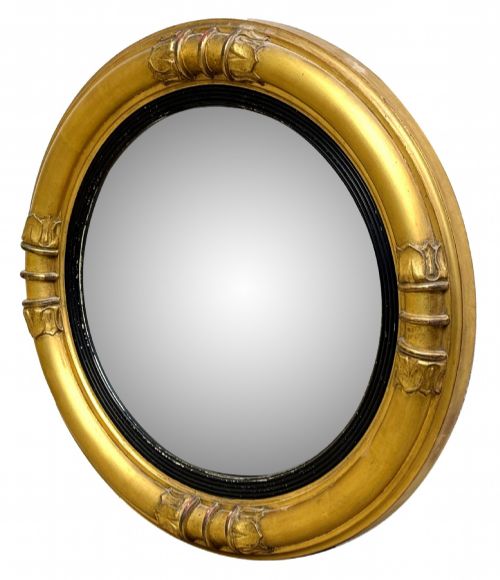
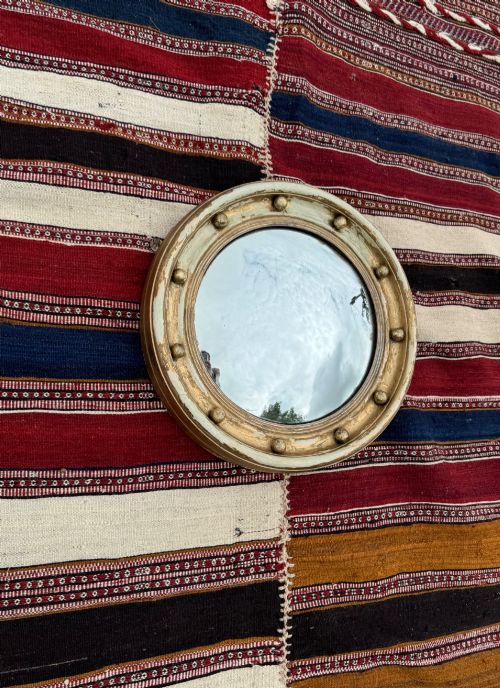
Round Convex Mirror
A round convex mirror bends the light of a room into a singular, wide-angled globe that catches every corner.
Round Convex Mirror
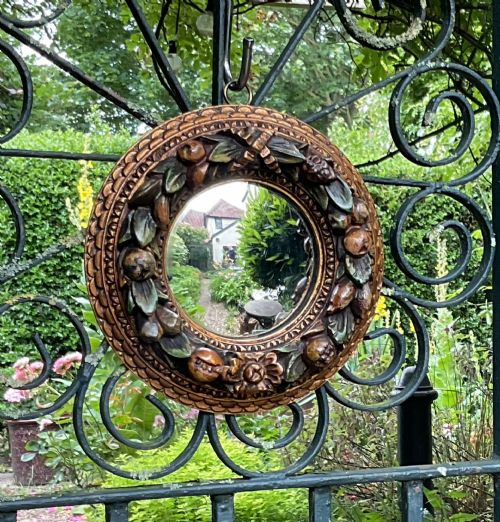
When you search for a round convex mirror, you look at circular wall looking glasses designed to throw a curved reflection across an interior space. These pieces capture the entire room in miniature, offering a distinct visual depth that flat plates cannot manage.
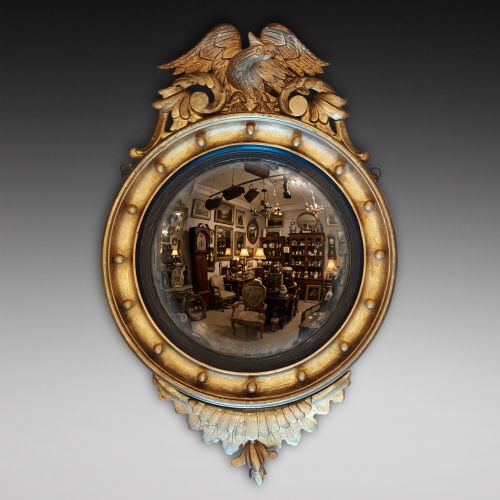
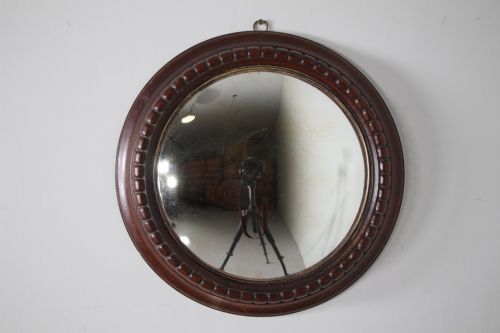
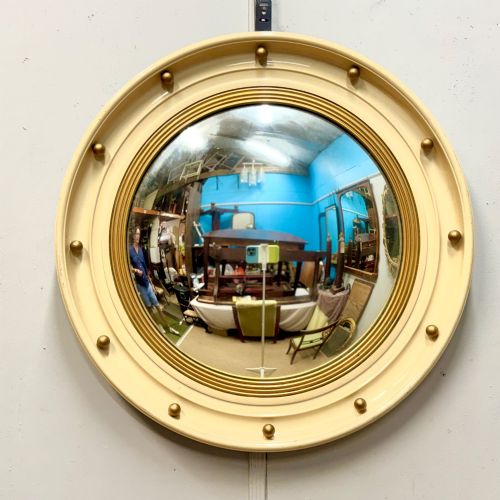
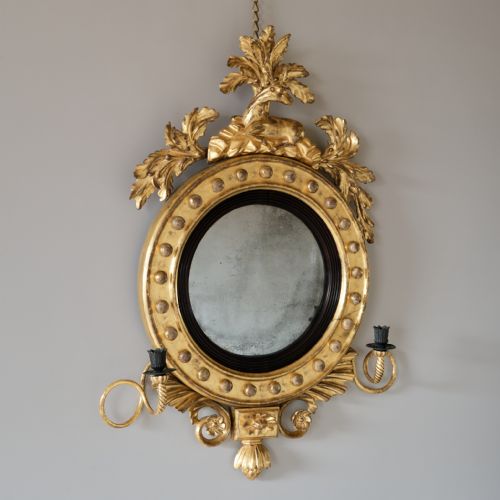
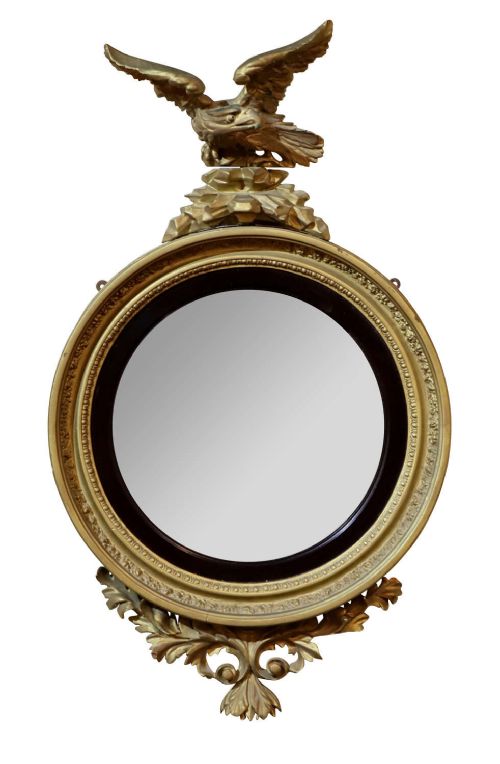
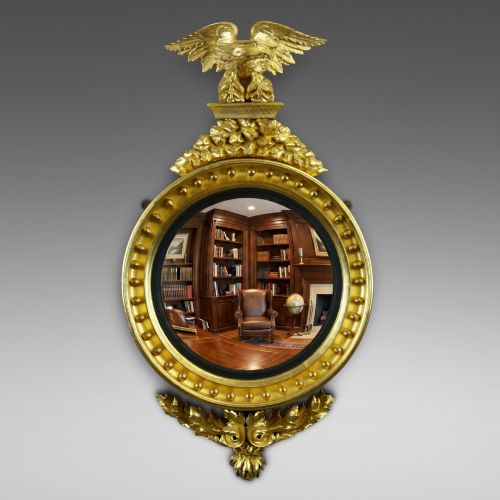
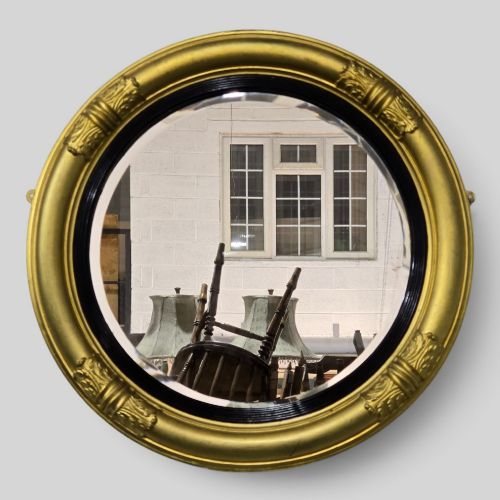
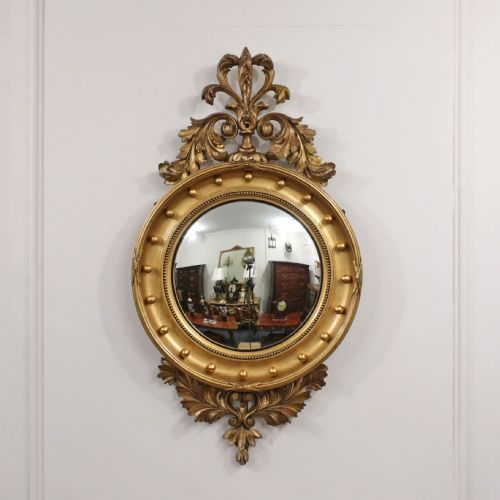
You are most likely to meet Regency examples on this page, alongside 19th Century, Victorian, and early 20th Century variants. Many of these wall mirrors take circular forms framed in gilded wood, often carrying decorative crests or mounts.
The historical record on this page shows pieces spanning the Georgian era through to the 1930s, including butler's mirrors and sorcerer's mirrors. These objects served both practical surveillance duties in domestic quarters and decorative functions in formal reception rooms.
How round convex mirrors were made
Maker workshops built these frames using timber, mahogany, and gesso as a base for intricate surface decoration. Giltwood and gilt applications dominate the construction, providing a bright reflective surface around the curved glass.
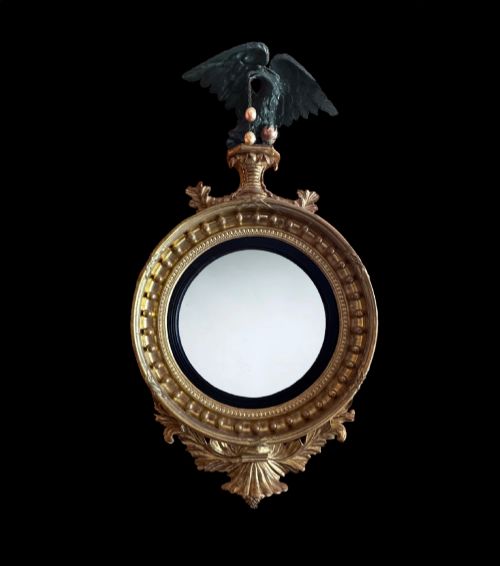
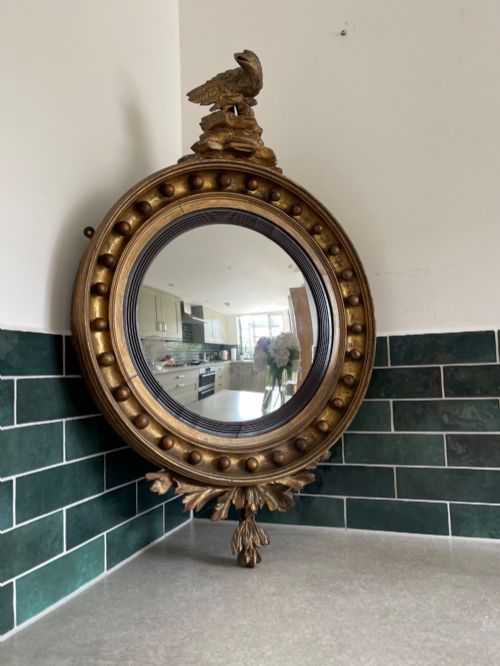
The fabrication frequently involved ebonised wood details, such as ebonised slips, to create strong visual contrast against the gold leaf. Artisans also employed carving techniques to shape eagles, dragons, and ornate circular borders into the wood.
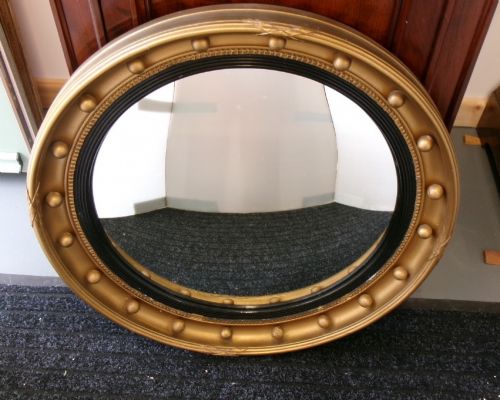
Glass production relied on blowing or forming techniques that yielded a curved, protruding surface, often referred to as bull's eye glass. This convex plate was then secured inside the wooden housing, sometimes accompanied by a secondary liner or slip.
Listings feature periods from the Georgian era and Regency through to the Victorian age, 1890, 1900, 1920, and the 1930s.
What varies in quality
The crispness of the carved ornamentation dictates the visual authority of the piece, particularly where figures like eagles or dragons surmount the frame. Sharp, deeply undercut carving separates finer workshop production from softer, more summary moulding.
The quality of the gilding and the preparation of the underlying gesso layer govern how the frame catches light over time. Smooth, even gold leaf application displays a richer lustre than flat or patchy metallic finishes.
The clarity and depth of the convex glass plate itself influence the fidelity of the reflected room. Plates with minimal distortion and stable silvering hold greater visual presence on the wall.
The Round Convex Mirror Glossary
- Convex glass
- A curved glass plate that bulges outward to create a wide-angle, spherical reflection of the surrounding interior space. This form compresses a whole room into a single circular view.
- Giltwood
- Timber that has been coated with a thin layer of gold leaf over a prepared gesso ground. It provides a luminous surface that catches ambient light.
- Ebonised slip
- A dark, black-stained inner moulding placed between the outer frame and the mirror glass. It creates a contrasting visual border within the design.
- Surmount
- An ornamental carving mounted at the very top of the mirror frame, such as an eagle or dragon. These additions elevate the formal status of the piece.
- Sorcerer's mirror
- An alternative name for a convex looking glass, historically associated with magical or divining uses in folklore. Collectors prize them for their unusual optical properties.
Round Convex Mirror: Frequently Asked Questions
How do I hang a heavy convex mirror?
These wall mirrors carry substantial weight due to their timber frames and thick glass plates, requiring secure fixings anchored directly into wall studs or solid masonry. Professional picture hooks rated for heavy loads ensure the piece remains safely suspended.
Position the glass at eye level where the curved reflection can capture the widest expanse of the room. Avoid placing them in direct, harsh sunlight that might degrade the antique gilding over decades.
What is a butler's mirror?
A butler's mirror is a specific style of round convex looking glass historically placed in domestic service areas like dining rooms or halls. The wide-angle reflection allowed servants to monitor the entire room and attend to guests discreetly.
Over time, these practical instruments transitioned into decorative salon pieces valued for their unique optical distortion. They retain a distinct circular profile often framed by simple gilded wood.
Why is it called a sorcerer's mirror?
The term sorcerer's mirror derives from historical associations between curved optical glass and scrying or divination practices. People once believed the globe-like reflection could reveal hidden truths or ward off negative spirits in a home.
Today, the name persists among collectors who appreciate the atmospheric, mysterious quality of the reflection. These pieces bring a sense of historical curiosity to domestic interiors.
How do I date a convex wall mirror?
Dating relies on examining the construction methods, framing styles, and the characteristics of the glass plate. Regency examples often feature crisp eagle crests and specific giltwood carving patterns typical of the early nineteenth century.
Later Victorian and 1920s iterations show shifts in timber preparation and moulding techniques. Inspecting the backboards and fixings often reveals clues about the period of manufacture.