


Rosewood Wooden Lap Desk
A rosewood wooden lap desk brings portable 19th-century elegance to a modern desk, offering folding writing surfaces and secret compartments for correspondence.
Rosewood Wooden Lap Desk
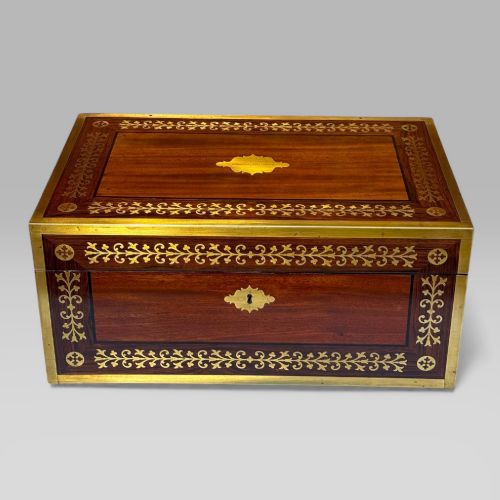
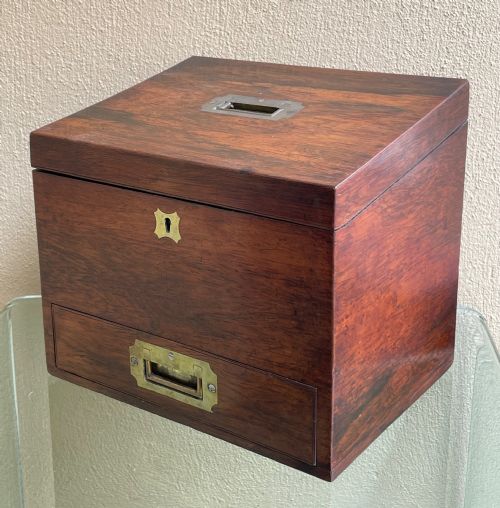
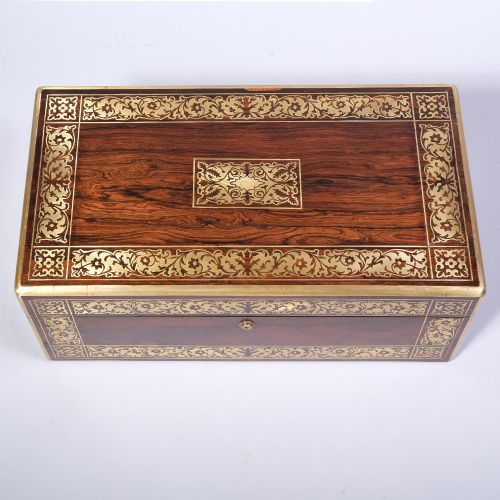
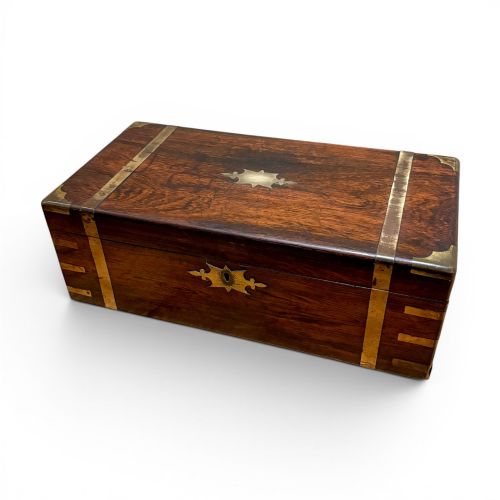
A rosewood wooden lap desk is a portable writing box designed for travel, opening to reveal a slanted writing surface lined for correspondence. The pieces seen here span the Georgian, Regency, and Victorian periods, alongside specific examples from the William IV, Napoleon III, and Anglo-Indian styles.
These items served travellers, officers, and the gentry who required a secure place for stationery, ink, and letters away from a permanent study. Secret drawers hidden within the interior compartments added security for valuables and personal papers.
Construction and materials
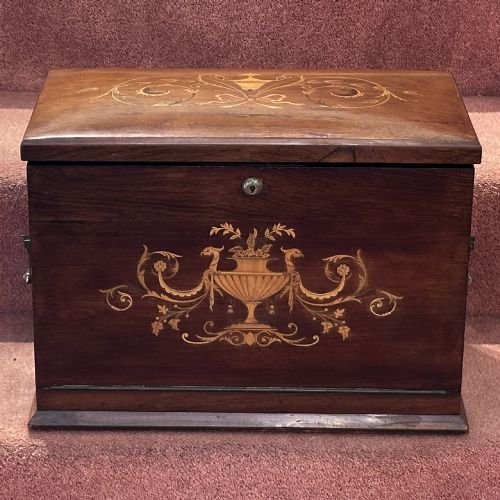
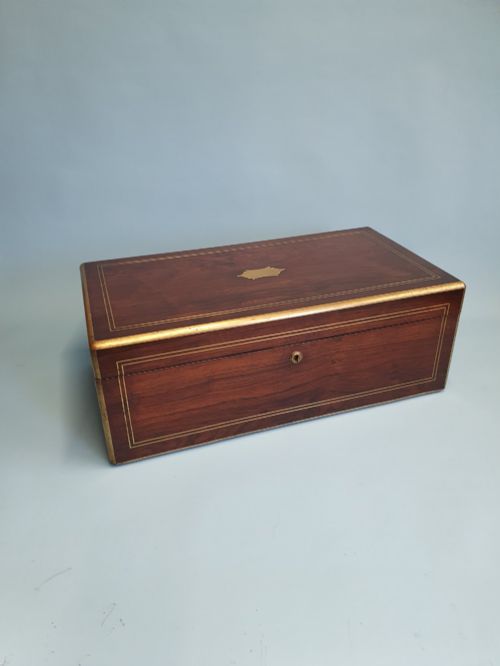
Cabinet makers built these boxes using dense rosewood timber, frequently accented with contrasting satinwood or boxwood inlay. Brass corners, straps, and escutcheons were embedded flush into the wood to withstand the rigours of campaign use.
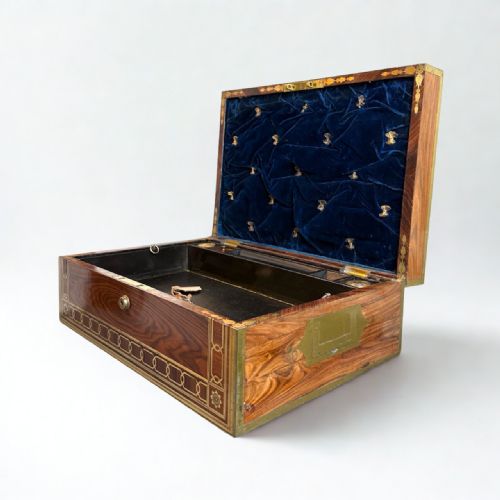
Interiors often feature fitted compartments for inkwells, pens, and stamps, alongside velvet or leather skivers glued onto the folding bi-fold writing boards. Mother-of-pearl inlay appears on select Victorian versions to decorate the exterior lids and escutcheons.
Judging the standard
Quality rests in the crispness of the brass inlay, the precision of the mitred corner joints, and the selection of the rosewood grain. Superior examples maintain intact secret drawers and original working locks with functioning keys.
Substantial proportions and secondary timbers like mahogany denote a sturdier build intended for military officers or extensive travel. Finer decorative touches, such as delicate satinwood stringing or intricate mother-of-pearl detailing, separate standard boxes from exceptional ones.
George Austin, Dublin
The Rosewood Wooden Lap Desk Glossary
- Writing slope
- A box with a hinged lid that opens to form an inclined surface for writing letters. The slanted plane often lifts to reveal storage space underneath.
- Campaign box
- A portable desk or chest reinforced with brass corners and flush handles designed for military officers on the move. These pieces prioritise rugged construction and compact storage.
- Secret drawers
- Concealed compartments hidden behind false panels or removable partitions within the box. Victorian makers integrated these to protect sensitive documents and valuables.
- Escutcheon
- A protective metal plate surrounding a keyhole, usually made of brass on these boxes. It prevents the wood from splitting around the lock during daily use.
- Bi-fold
- A writing surface that folds in half to lie flat when the box closes. This mechanism allows a full-length writing plane inside a compact exterior case.
Rosewood Wooden Lap Desk: Frequently Asked Questions
What is a rosewood wooden lap desk?
A rosewood wooden lap desk is a portable writing box from the 19th century designed to fold open into an angled writing surface. They housed paper, ink, and pens for travellers and officers.
These boxes served as portable offices before modern stationery became ubiquitous. Today, they function as decorative storage on tabletops.
How do I spot a Georgian slope?
Georgian and Regency rosewood boxes typically feature heavy brass binding and robust campaign styling with flush carrying handles. The proportions tend to be substantial and understated.
Victorian iterations often introduce more decorative elements such as mother-of-pearl inlay or satinwood stringing. Examining the construction of the interior compartments helps confirm the era.
What are secret drawers used for?
Secret drawers concealed behind removable partitions stored private letters, money, and valuable personal items. Travellers needed a secure place for valuables while away from home.
Finding these hidden compartments requires removing specific pen trays or sliding panels inside the main well.
Can I use it as a desk?
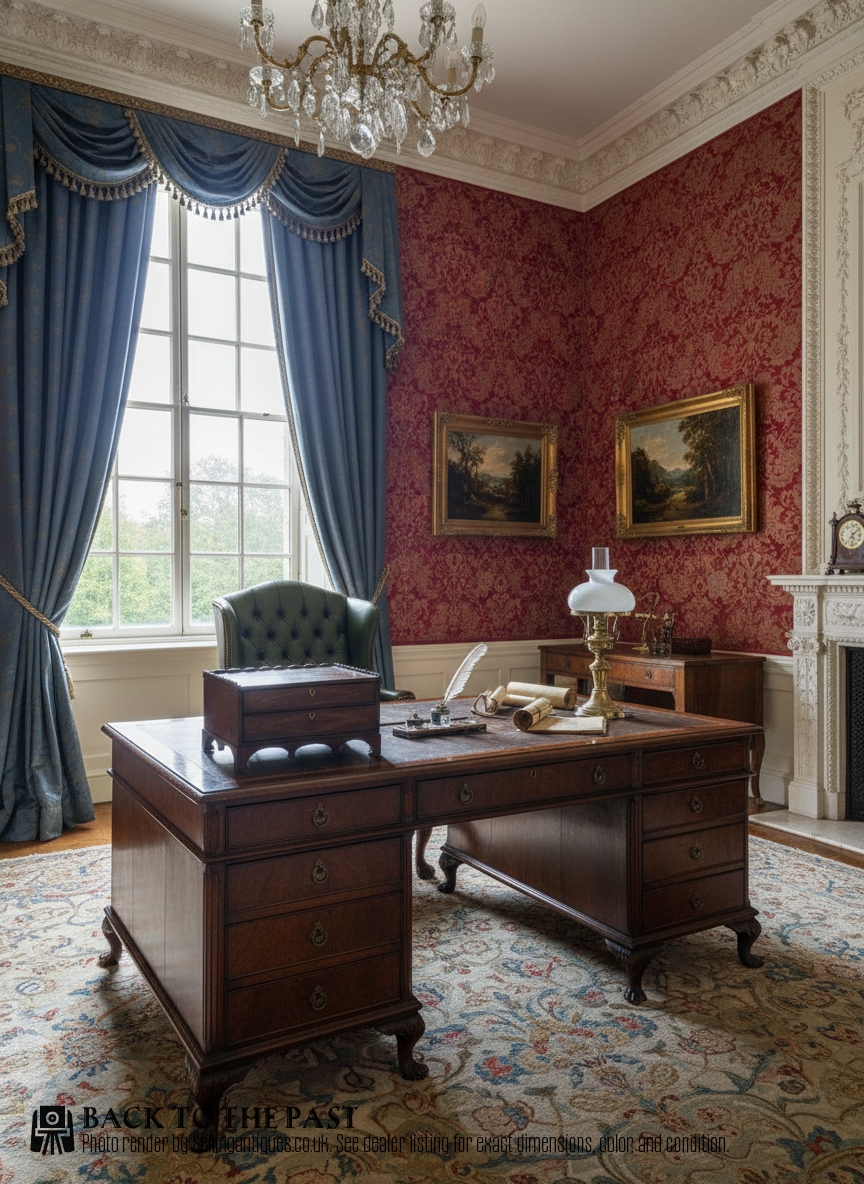
A rosewood wooden lap desk sits easily on a modern table to hold stationery or function as a laptop stand. The folding interior provides a compact surface for writing cards and letters.
Care should be taken with antique leather or velvet writing surfaces when placing heavy modern items inside.