
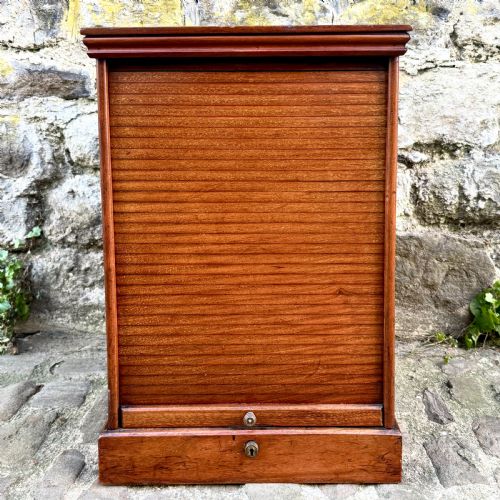
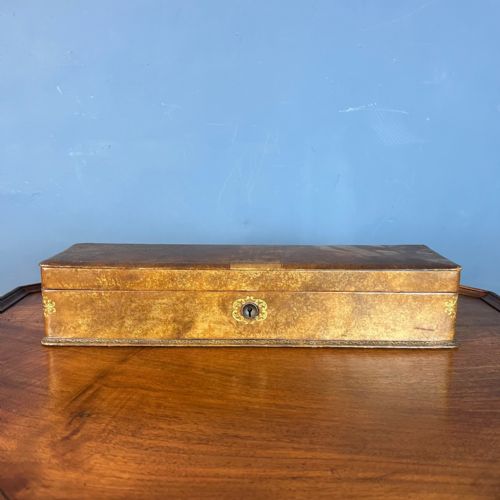


Victorian Stationery Chest
A victorian stationery chest is a sturdy desk accessory designed to organise correspondence, and you want one for its fine timber and clever internal compartments.
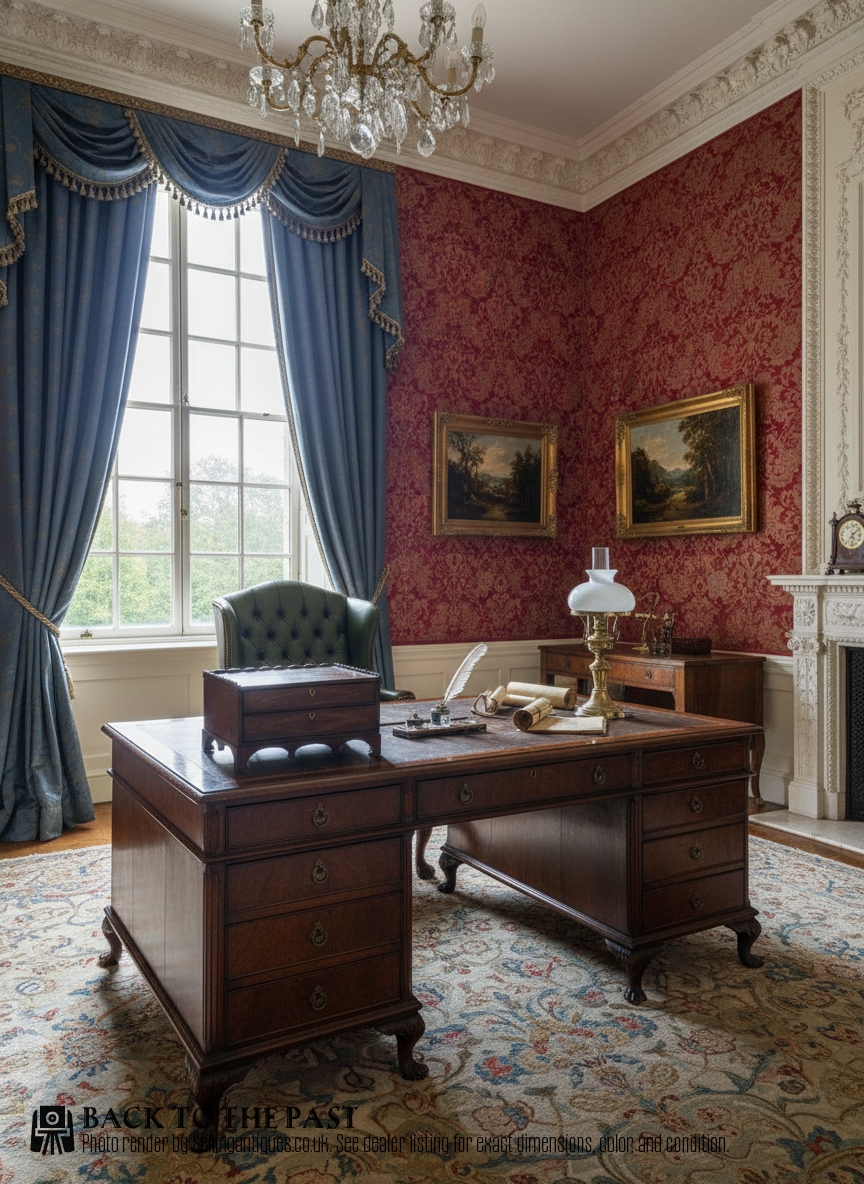
Victorian Stationery Chest
When you search for a victorian stationery chest, you are looking at practical desk furniture built to house correspondence, papers and writing tools in domestic and office settings. These pieces range from compact letter boxes and correspondence chests to larger side cabinets, writing slopes and table cabinets.
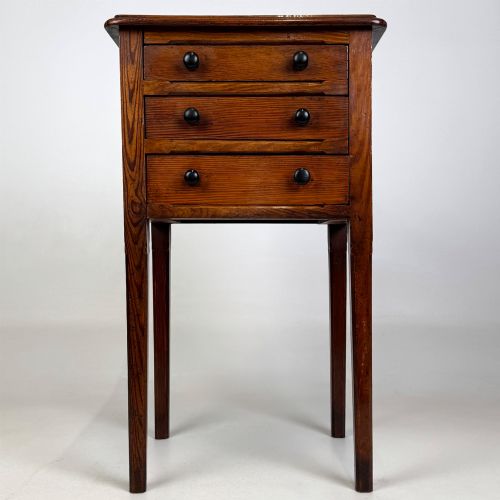
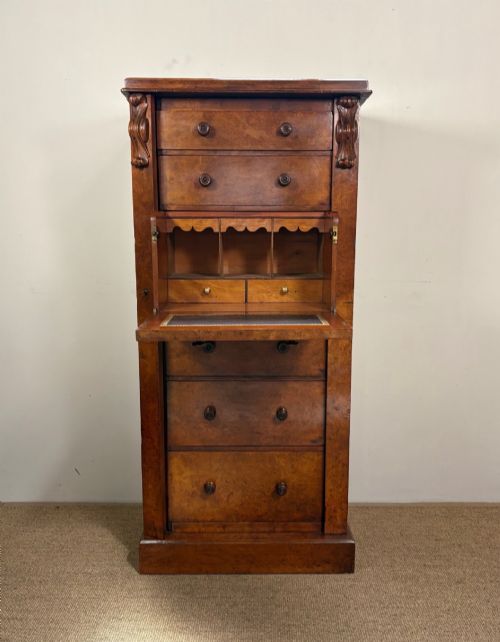
The most common examples you will meet on this page date from the nineteenth century, including the Victorian period and Edwardian eras, alongside related Georgian and nineteenth century pieces. They appear in forms such as dome top boxes, Wellington secretaire chests, and filing cabinets.
Makers and craftsmen of the period produced these boxes in various regional styles, spanning standard Victorian designs to Anglo-Indian, Arts and Crafts, Victorian Gothic Revival, and Art Nouveau interpretations. Their primary purpose remains the orderly storage of letters and documents.
How they were made
Cabinet makers utilised dense hardwoods including mahogany, walnut, rosewood, oak, pitch pine, pollard oak, camphor, and ebony to construct the carcase of each stationery chest. These timbers were frequently polished or left solid to highlight the natural grain.
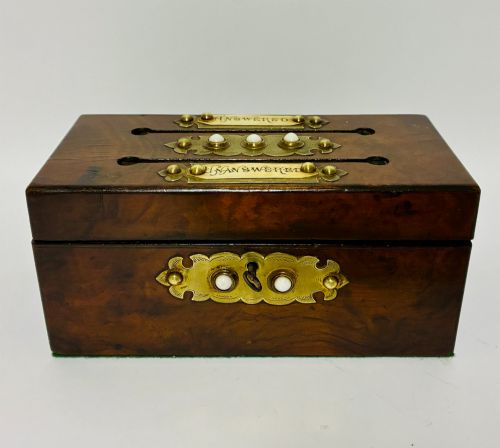
Makers incorporated brass mounts, hinges, and bindings for structural reinforcement and decorative effect, particularly on campaign and desk top boxes. Internal surfaces often featured tooled leather and bone details alongside fitted compartments for paper and pens.
Listings feature pieces from the Georgian, Victorian, and Edwardian periods, constructed in mahogany, walnut, rosewood, oak, camphor, and ebony.
What varies in quality
The distinction between tiers of quality rests upon the selection of timber, such as solid ebony or figured walnut against simpler pitch pine, and the precision of the joinery. Superior examples display thoughtful proportions and careful timber matching across the exterior.
Detailing determines the upper end of the range, including hand-tooled leather, robust brass hardware, and intricate marquetry or reeded decoration. Pieces with complex internal arrangements and specialist forms like metamorphic campaign items command greater interest.
The Victorian Stationery Chest Glossary
- Correspondence box
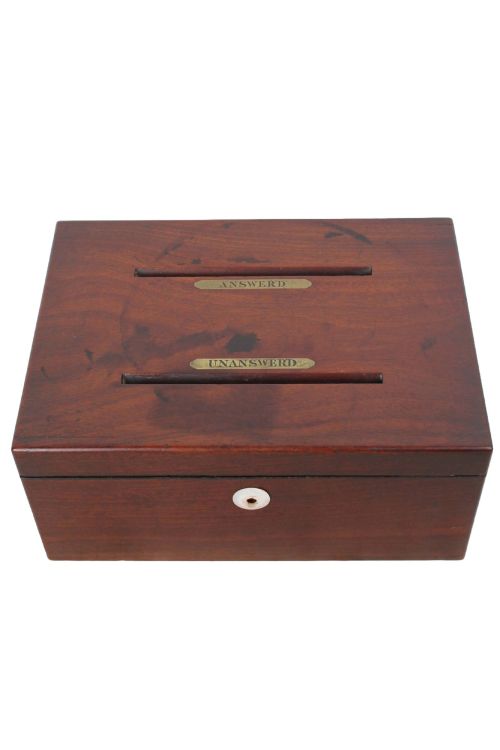
- A desk box specifically partitioned to hold writing paper, envelopes, and incoming or outgoing letters. These often feature sloping lids or vertical compartments for easy sorting.
- Secretaire chest
- A set of drawers or a cabinet incorporating a drop-front writing surface that conceals small pigeonholes and internal drawers. They combine chest storage with a compact writing desk.
- Writing slope
- A portable box with an angled hinged lid designed to provide a comfortable writing surface when placed on a table. The interior typically lifts to reveal secret compartments and inkwell slots.
- Marquetry
- The art of applying decorative veneer pieces in various woods to form geometric or floral patterns on a furniture surface. It requires considerable skill from the cabinet maker.
- Campaign box
- Portable furniture constructed for military officers on the move, typically fitted with flush brass handles and reinforced corners. These boxes dismantle or fold for ease of transport.
Victorian Stationery Chest: Frequently Asked Questions
What is a stationery chest?
A stationery chest is a desk accessory or small cabinet designed to hold letters, paper, envelopes, and writing implements in an organised manner.
They sit on desks or tables, keeping correspondence tidy and close to hand in studies and living rooms.
How were writing slopes used?
Writing slopes provided a portable slanted surface for writing letters before the widespread use of fitted flat-top desks.
The user opened the sloping lid to access stored paper and ink, often using the inside of the lid as a flat writing platform.
Where do Anglo-Indian boxes come from?
Anglo-Indian pieces were manufactured in India during the nineteenth century, often for British residents or for export back to Britain.
They frequently utilise dense native timbers like ebony and feature distinctive decorative carving or brass inlay work.
How do I clean a wood box?
Maintain wooden stationery chests by dusting them regularly with a dry, soft cloth to prevent the accumulation of dirt in crevices.
Avoid using modern silicone polishes, opting instead for traditional beeswax applied sparingly to nourish the timber.