



Rosewood Upholstered Sofa
A rosewood upholstered sofa brings rich timber grain and period elegance to a principal room, offering both formal presence and deep comfort.
Rosewood Upholstered Sofa
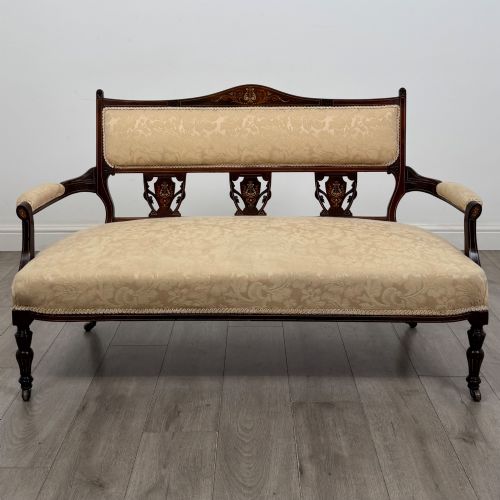
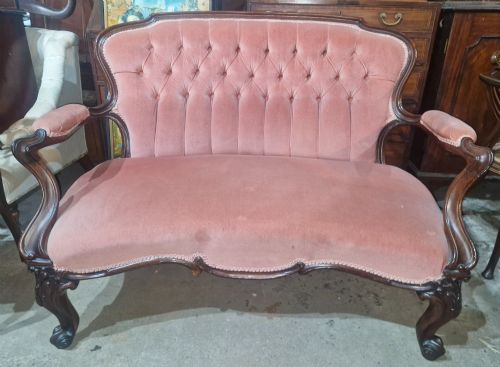
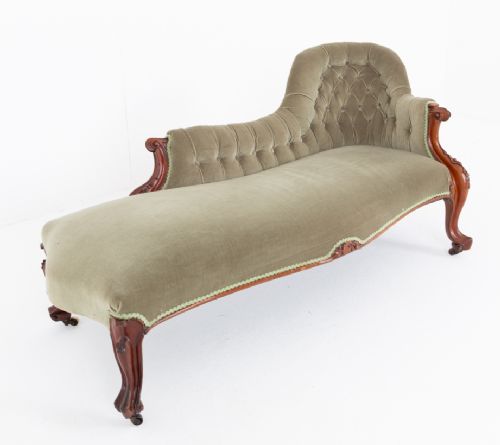
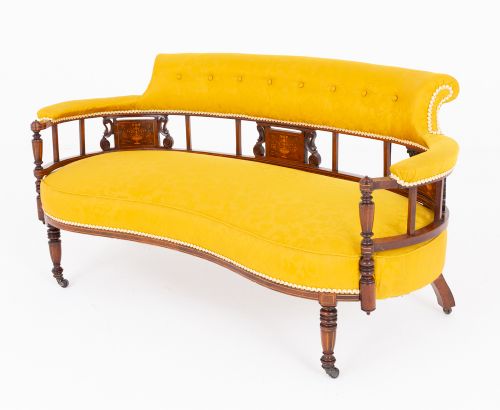
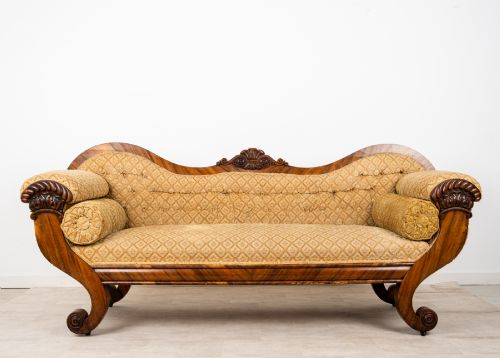
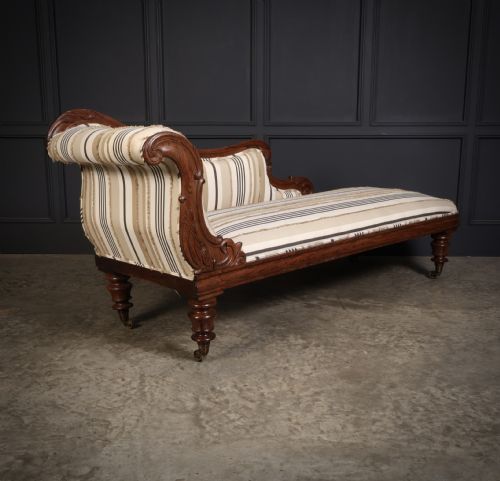
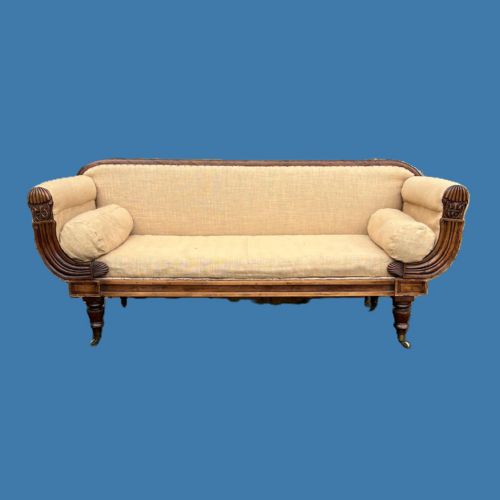
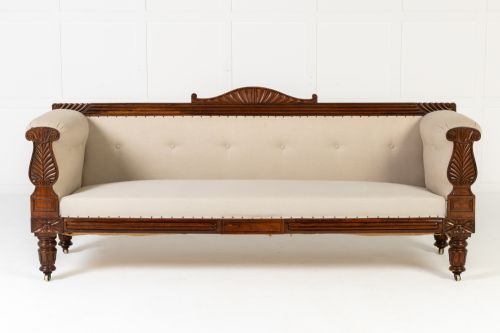
When you search for a rosewood upholstered sofa, you encounter a variety of forms spanning the Regency, William IV, and Victorian periods. The most frequent examples on this page are Victorian settees, chaise longues, and conversation seats featuring exposed timber frames.
Makers shaped these seating forms across the nineteenth century, ranging from substantial country house sofas to smaller salon settees and window seats. Later Edwardian examples also appear, alongside earlier simulated rosewood pieces from the Regency era.
The physical evidence includes double spoon back settees, daybeds, and scroll-ended couches upholstered in velvet, damask, or needlework fabric. Each piece reflects the evolving domestic fashions of its decade, from early century classical restraint to later nineteenth century revival styles.
Materials and construction
Cabinet makers utilised solid rosewood or applied veneers over secondary timbers, occasionally employing simulated rosewood finishes during the Regency period. Timber frames were constructed with carved scroll ends, show-wood show frames, and intricate inlay.
Upholstery techniques involved deep buttoning, silk, velvet, and damask coverings secured over traditional stuffing and springing. Brass castors and subtle brass mounts frequently completed the movement and feet of these seating pieces.
Several pieces arrive with conversation seats designed so two people could sit facing opposite directions while still maintaining a polite distance.
Judging the work
Quality rests in the crispness of the timber carving and the architectural balance of the frame, where finer pieces display deep relief work and well-proportioned scroll ends. The richness of the rosewood grain and the precision of any marquetry inlay further distinguish superior examples from standard production.
The integrity of the original show-wood frame and the quality of the chosen upholstery materials dictate the standing of a piece. Finer workshops invested greater labour in shaping the show-frames and ensuring the structural soundness of joints across complex seating forms.
H. Goodall & Sons·James Shoolbred
The Rosewood Upholstered Sofa Glossary
- Rosewood
- A dense, heavily figured dark timber prized for its distinctive grain patterns and warm reddish-brown colour. Cabinet makers utilised it extensively for high-status nineteenth century furniture.
- Settee
- A medium-length upholstered seat with a back and arms, designed to accommodate multiple people. The form encompasses everything from early Victorian double spoon back designs to inlaid salon pieces.
- Simulated Rosewood
- A painted or grained surface finish applied to a more common secondary timber to imitate the appearance of genuine rosewood. This technique appears on several Regency period daybeds and sofas.
- Show-Wood
- The exposed polished wooden framing of an upholstered chair or sofa that surrounds the padded sections. Victorian makers used show-wood to display the quality and grain of the rosewood timber.
Rosewood Upholstered Sofa: Frequently Asked Questions
What periods do these sofas cover?
The listings encompass pieces from the Regency and William IV eras through the Victorian decades and into the Edwardian period. Nineteenth-century examples dominate the selection.
Specific dates range from the eighteen-thirties up to nineteen-twenty, showing how the form evolved through changing design movements.
How do I identify a chaise longue?
A chaise longue combines a sofa back with an elongated seat intended for reclining. Many feature a single carved scroll end rather than symmetrical arms.
They appear frequently across the Victorian and William IV periods in both solid and simulated rosewood timbers.
What is a simulated rosewood finish?
Simulated rosewood is a painted or stained surface treatment applied to a cheaper wood to mimic the dark, figured grain of genuine rosewood. Craftsmen used this method during the Regency period.
It offers the visual appeal of the exotic hardwood while utilising alternative woods for the frame construction.
Where should I place a settee?
These pieces suit principal reception rooms, drawing rooms, or large entrance halls where their decorative timber frames and upholstery can be appreciated from multiple angles. Chaise longues and window seats work particularly well in larger bedrooms or libraries.
Their varied lengths, from compact salon seats to expansive country house sofas, allow them to fit both intimate corners and open spaces.