


Rosewood Victorian Couch
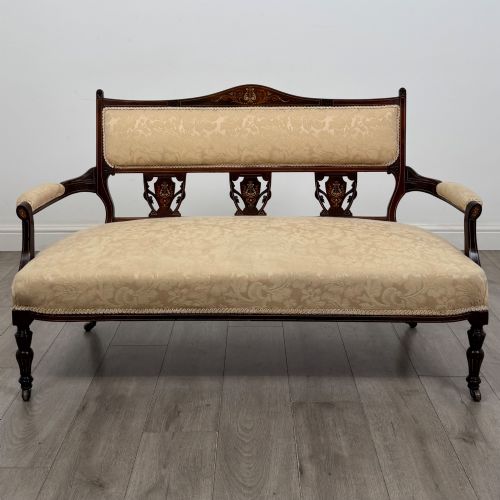
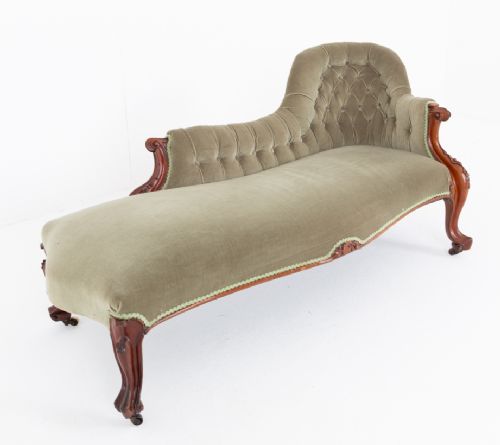
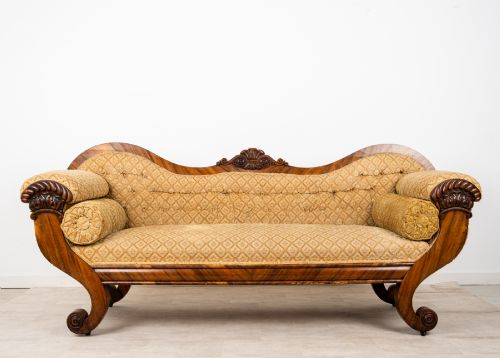
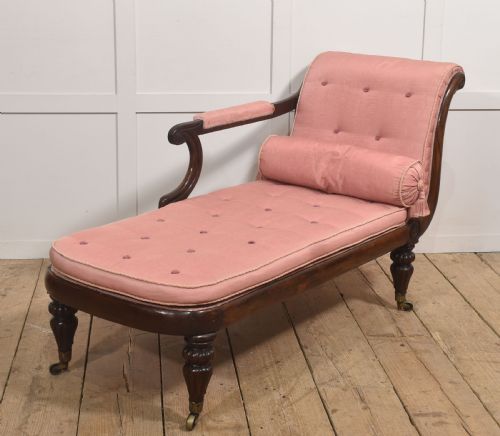
These rosewood victorian couch pieces offer deep carved frames and scrolling upholstery designed for reclining.
Rosewood Victorian Couch
A rosewood victorian couch brings together solid timber framing and luxurious textiles across forms such as settees, daybeds, and chaise longues. Buyers searching this phrase meet nineteenth century seating, spanning early, mid, and late Victorian periods along with related William IV and Edwardian influences.
The most common examples on this page are chaise longues and settees featuring carved scroll ends and exposed timber frames. Makers of the period utilised dense tropical hardwoods to build resilient seating meant for formal parlours and drawing rooms.
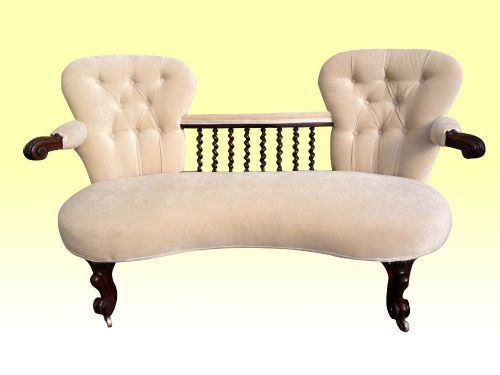
Pieces range from simple double spoon back settees to intricate conversational sofas and Anglo-Indian carved variations. Each variant serves the fundamental nineteenth-century purpose of domestic lounging and social entertaining in comfort.
How they were made
Frames rely upon solid rosewood and Rio rosewood, frequently shaped through steam bending and hand carving to produce deep scroll ends and spoon backs. Joinery incorporates traditional techniques to support the heavy timber weight and tension from upholstered surfaces.
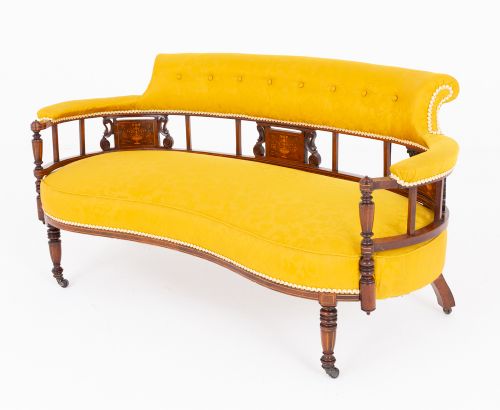
Upholstery methods span buttoned leather, damask, velvet, and standard woven fabric, occasionally accented with brass details or cane seating. Inlaid versions integrate contrasting wood veneers into the structural timber surfaces.
Conversational sofas allow two people to sit face to face without straining their necks.
What varies in quality
Quality rests in the depth and sharpness of the timber carving on the frame, where crisply defined scrollwork and deep relief foliage separate standard production from finer workshop output. The selection of the rosewood itself dictates the visual richness, particularly in the grain pattern of solid Rio timber.
Construction integrity determines daily utility, visible in the rigidity of the carved frame and the sympathetic execution of past upholstery restorations. Finer examples retain original proportions and balanced inlay work without excessive alterations.
H. Goodall And Sons·Shoolbred And Co
The Rosewood Victorian Couch Glossary
- Chaise Longue
- An upholstered long chair designed for reclining, featuring a single raised headrest end. This form dominates nineteenth-century daybed production.
- Rio Rosewood
- A dense tropical timber prized for its dark grain and heavy weight. Cabinet makers utilised this specific wood for high-status nineteenth-century frames.
- Spoon Back
- A padded chair or settee back shaped in the outline of an egg spoon. This styling is characteristic of mid-nineteenth-century upholstery design.
- Scroll End
- A decorative terminal shaped like a rolled scroll on the arm or headrest of a couch. Carvers shaped solid timber into these sweeping curves.
Rosewood Victorian Couch: Frequently Asked Questions
How do I identify a Victorian chaise longue?
Look for a timber frame constructed from rosewood featuring a single raised scroll end and exposed carved woodwork. The proportions generally suit reclining rather than upright sitting.
Examine the upholstery style and frame joinery to confirm nineteenth-century origin. Early examples display heavier carving compared to late Victorian variants.
What is the difference between a settee and a couch?
A settee provides formal multi-seat accommodation with a defined backrest and arms, whereas a couch often incorporates asymmetrical lounging elements like a single scroll end.
Both terms describe nineteenth-century upholstered seating designed for domestic reception rooms. The choice depends on whether you prefer upright socializing or reclined resting.
Can I use a rosewood couch daily?
These nineteenth-century pieces function well for regular domestic use provided the internal webbing and upholstery support have been maintained. Solid rosewood frames offer exceptional structural durability.
Position the seating away from direct sunlight and excessive heat sources to protect the polished timber finish and sensitive fabrics.
How do I date a rosewood settee?
Dating relies on stylistic shifts from early Victorian spoon backs to later inlaid Victorian and Edwardian interpretations. Carving depth and silhouette proportions offer clear chronological markers.
Inspect the timber species and secondary woods beneath the upholstery for manufacturing clues that align with specific mid-to-late nineteenth-century periods.