

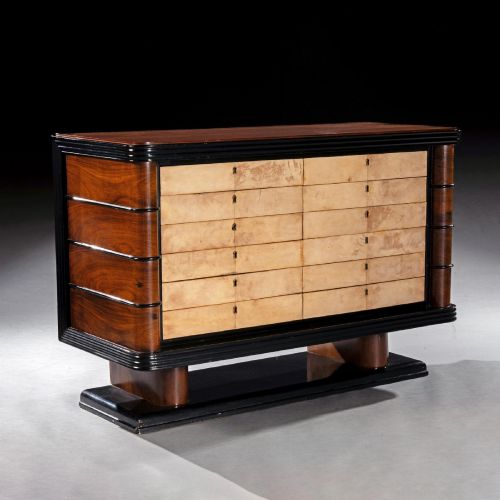
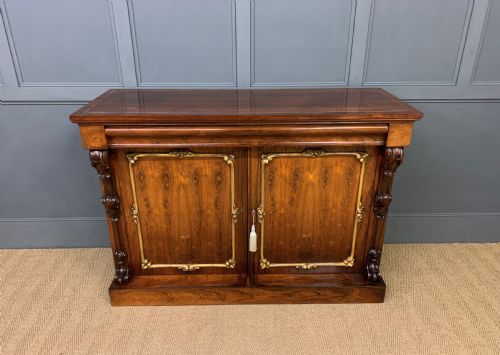
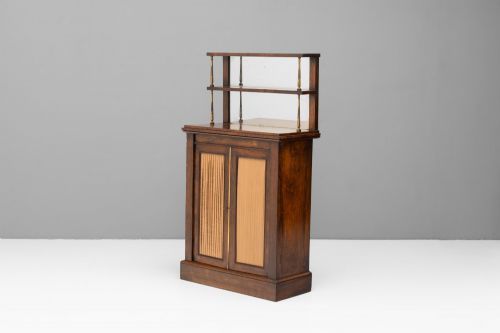
Rosewood Sideboard Cabinet
These rosewood sideboard cabinet pieces span Regency grace and Victorian presence, offering serious timber and storage for the discerning interior.
Rosewood Sideboard Cabinet
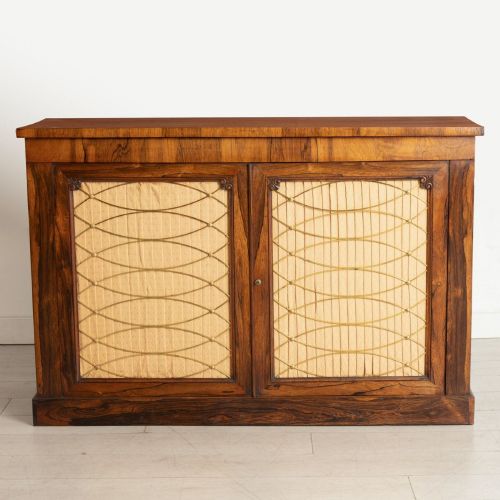
A rosewood sideboard cabinet brings together deep timber grains and practical storage, serving as a principal focal point in a dining room or salon. When searching this phrase, you encounter forms ranging from low chiffoniers with silk-backed panels to grand marble-topped credenzas.
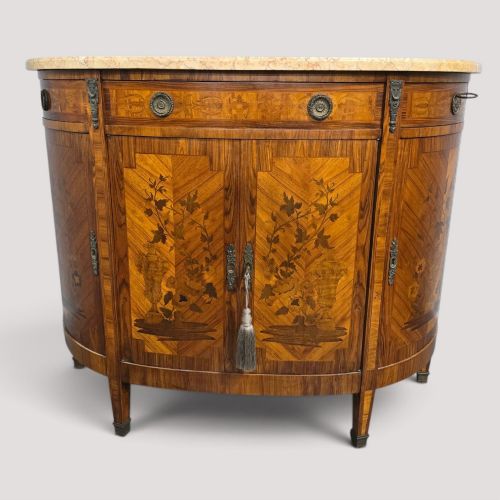
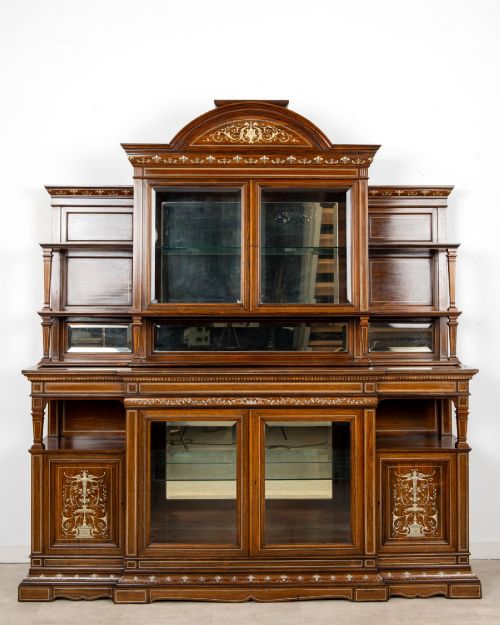
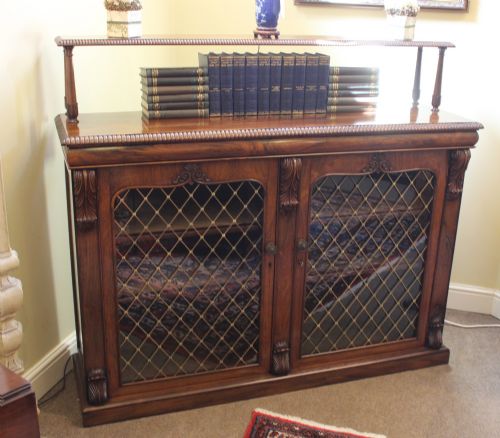
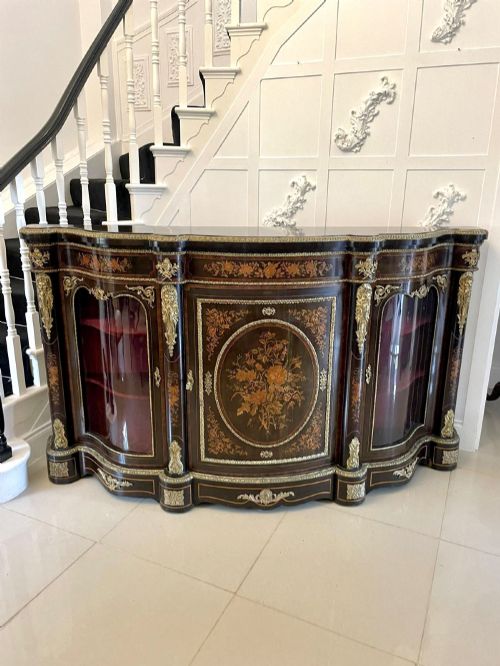
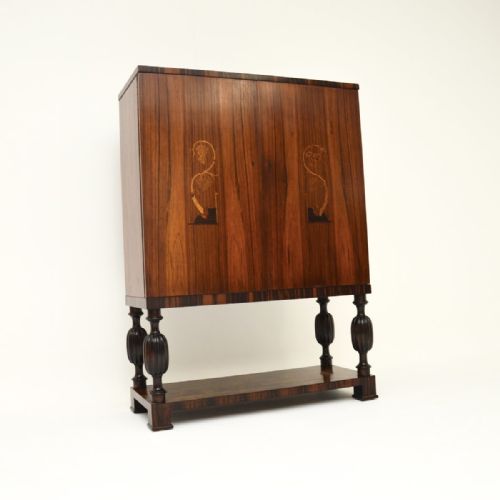
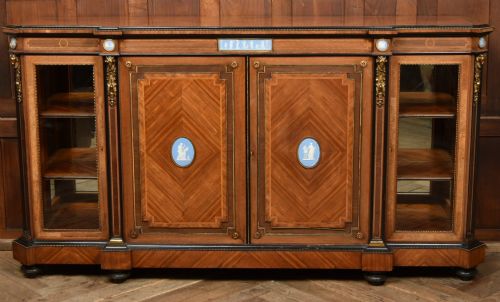
The pieces on this page lean heavily into Regency and Victorian aesthetics, with George IV, William IV, and Edwardian examples appearing alongside French marquetry and Anglo-Indian carving. The lineage covers side cabinets, display units with glass doors, and breakfront credenzas designed to hold silver, linen, or books.
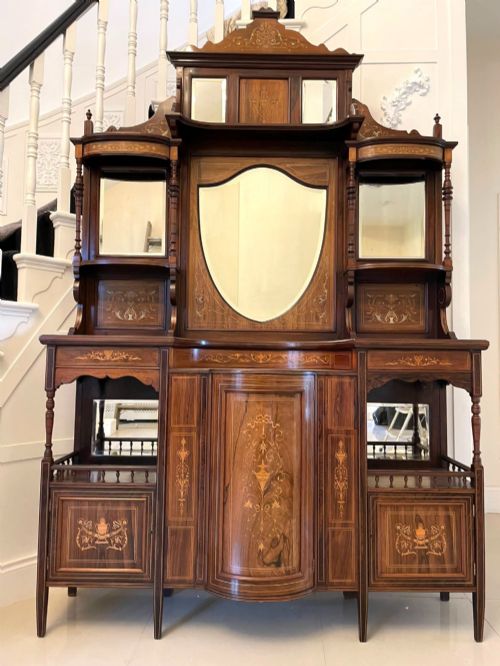
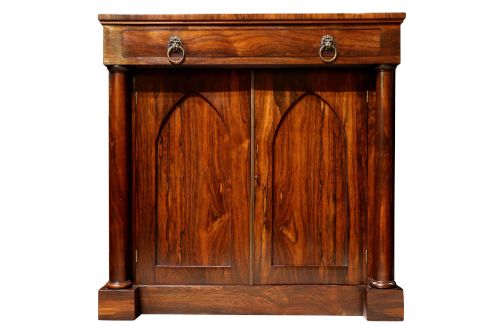
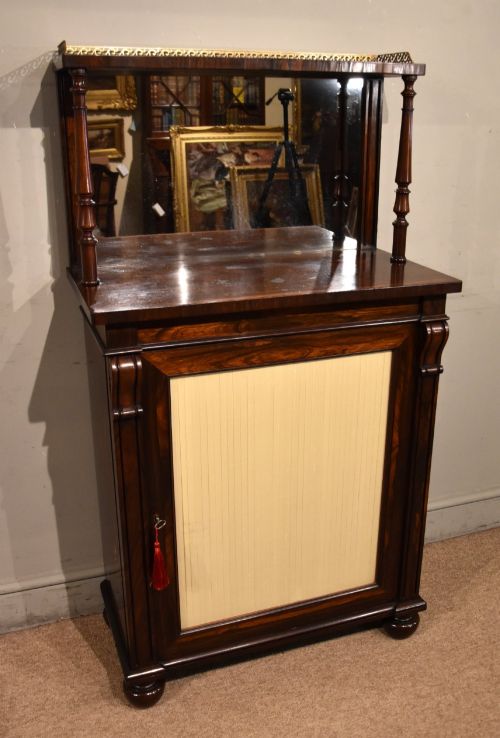
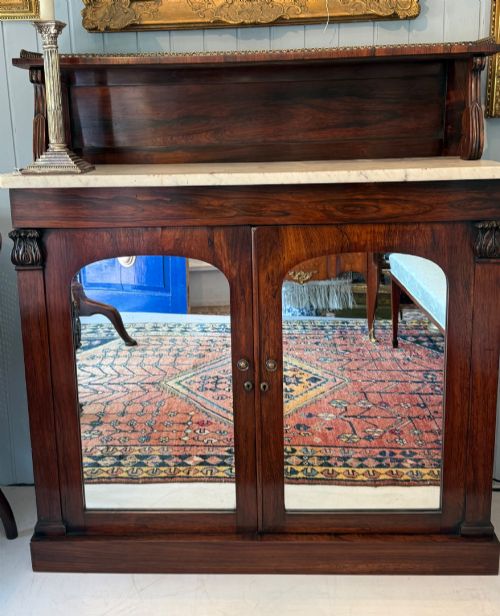
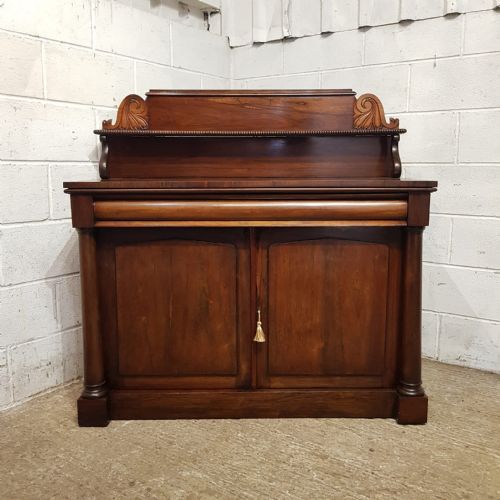
Chiffoniers dominate the earlier nineteenth-century entries, typically featuring a tiered shelf back above enclosed cupboard doors, while later Victorian designs incorporate mirrored backs and intricate floral marquetry. Simpler simulated rosewood paint finishes also emerge from the Regency period, demonstrating how cabinetmakers met diverse household budgets.
How They Were Made
Cabinetmakers constructed these pieces using dense rosewood solids and veneers laid over sturdy secondary timbers like pine or mahogany, often enriching the surfaces with contrasting satinwood, ebony, or mother-of-pearl inlay. Brass grilles, gilt ormolu mounts, and mirrored backs punctuate the darker wood, while select pieces employ white marble tops for durability and contrast.
Structural joinery relied on traditional hand-cut dovetails for drawers and tenoned frames for doors, ensuring the heavy timber remained stable through seasonal shifts in temperature and humidity. Marquetry panels display intricate floral and geometric motifs sawn from dyed and natural woods, fitted flush into the primary carcass before polishing.
Some nineteenth-century chiffoniers cleverly hid pleated silk behind brass grilles to keep drafts away from stored linens while concealing the contents.
What Varies in Quality
The standard of a rosewood sideboard cabinet rests on the selection and matching of the veneer grains across the front facade, where master makers ensured symmetrical, book-matched figures. Finer pieces demonstrate restraint and precision in their brass inlay or carved mouldings, whereas lesser examples rely on heavy, repetitive factory stamping.
Internal construction reveals the maker's hand, distinguishing workshop-produced furniture with solid secondary woods and hand-cut joinery from mass-produced late-period equivalents. The crispness of the carving, the weight of the ormolu mounts, and the integration of secondary materials like marble or silk all dictate the tier of craftsmanship.
Collinson & Lock·Holland & Sons
The Rosewood Sideboard Cabinet Glossary
- Chiffonier
- A compact sideboard or low cabinet, popular during the Regency and Victorian eras, typically featuring a shelf superstructure supported on pillars above enclosed cupboards.
- Credenza
- A grand, low-profile sideboard or display cabinet, often fitted with mirror backs, glass doors, and elaborate ormolu mounts.
- Marquetry
- Decorative veneer work forming pictorial or geometric patterns using various coloured woods, shells, or ivories fitted into a background matrix.
- Ormolu
- Gilt-bronze decorative mounts applied to furniture edges and panels, prevalent in French-influenced nineteenth-century cabinetmaking.
- Breakfront
- A piece of furniture whose central section projects forward from the flanking outer wings, creating architectural depth.
Rosewood Sideboard Cabinet: Frequently Asked Questions
What is the difference between a chiffonier and a sideboard cabinet?
A chiffonier is generally more compact and includes a raised shelf superstructure on the top surface, whereas a sideboard cabinet focuses purely on a wide, low surface and deep internal storage.
Historically, chiffoniers sat in smaller parlours or dining spaces for serving tea and displaying porcelain, while larger sideboards handled heavy dining plate in formal dining rooms.
How do I care for antique rosewood furniture?
Keep rosewood pieces away from direct sunlight and heat sources to prevent the dense timber veneers from drying out, cracking, or fading in tone.
Apply a traditional beeswax polish sparingly to nourish the grain and maintain the natural lustre without building up heavy chemical layers.
Did Regency and Victorian cabinets use solid rosewood?
Cabinetmakers almost exclusively used rosewood as a fine veneer applied over stable secondary timbers like pine or mahogany to prevent warping.
This technique allowed craftsmen to utilise the most intensely figured grain patterns across large cupboard doors and drawer fronts while maintaining structural integrity.
How can I tell a Regency cabinet from a Victorian one?
Regency pieces lean towards architectural restraint, featuring clean classical lines, subtle brass inlay, and geometric brass grilles inspired by antiquity.
Victorian examples frequently introduce heavier carving, mirrored back panels, serpentine shaping, and complex floral marquetry reflecting changing nineteenth-century tastes.