


Dark Rosewood Cupboard
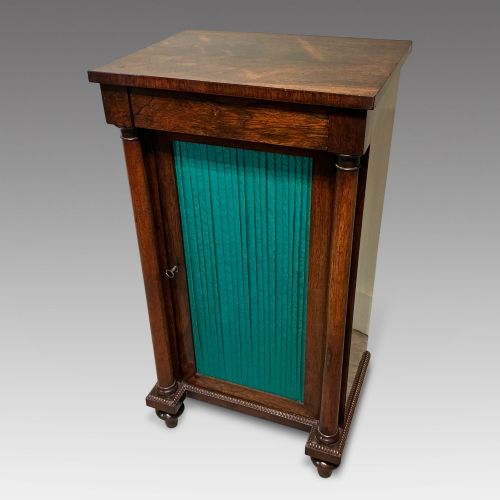
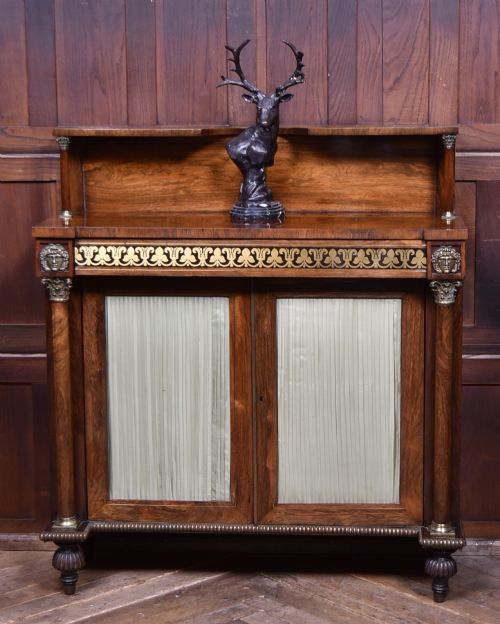
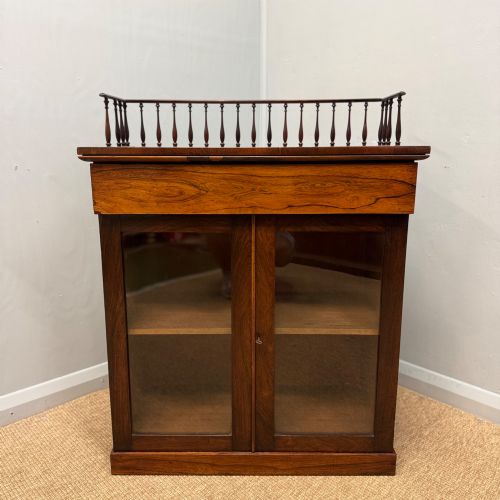
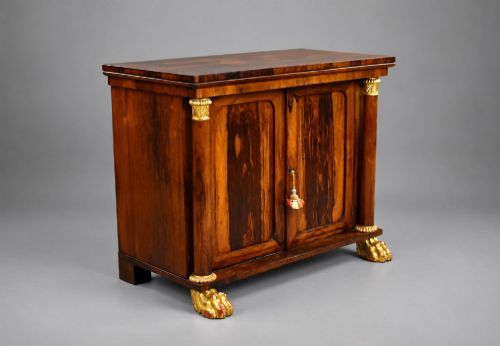
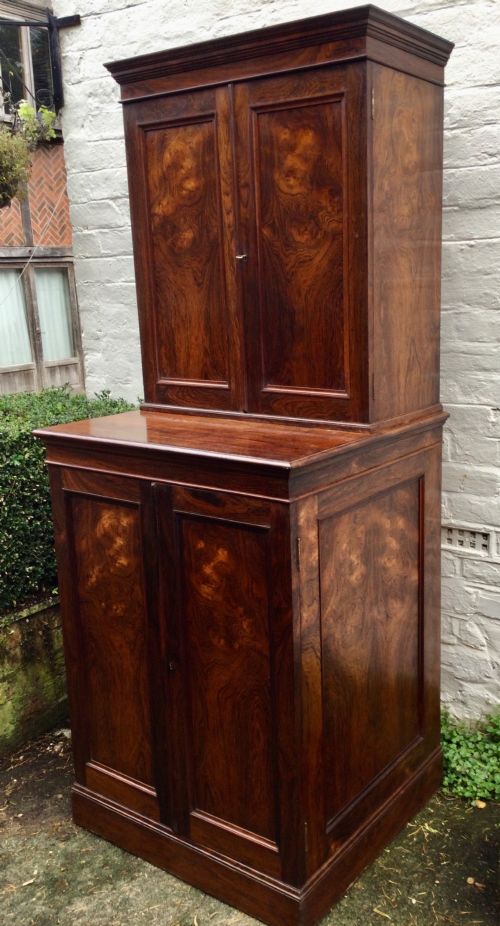
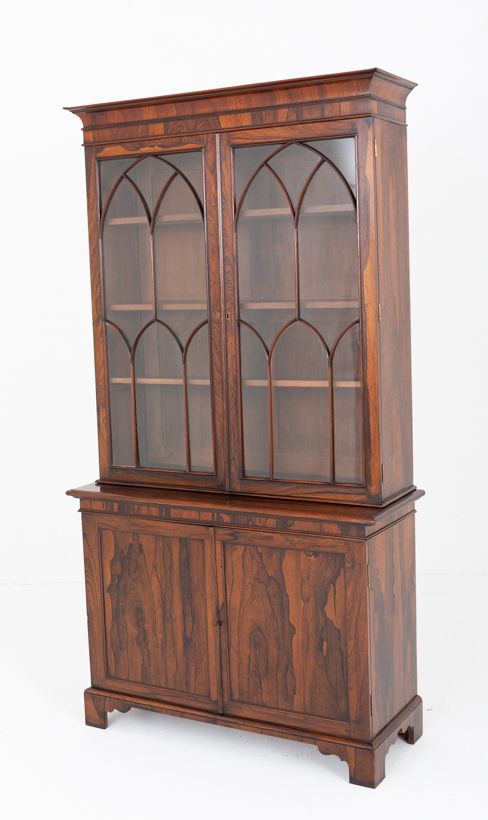
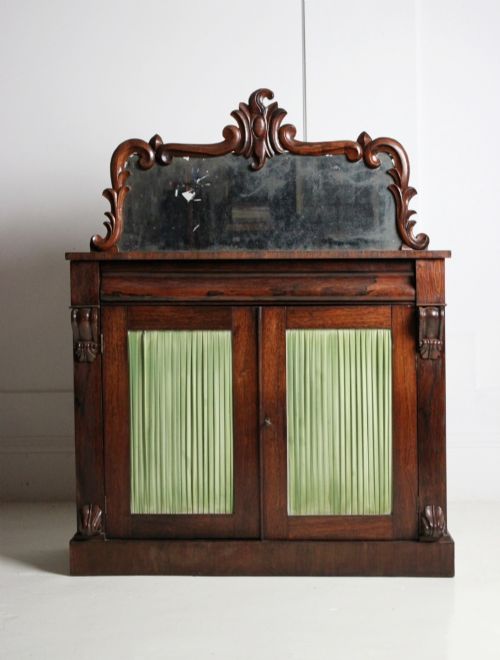
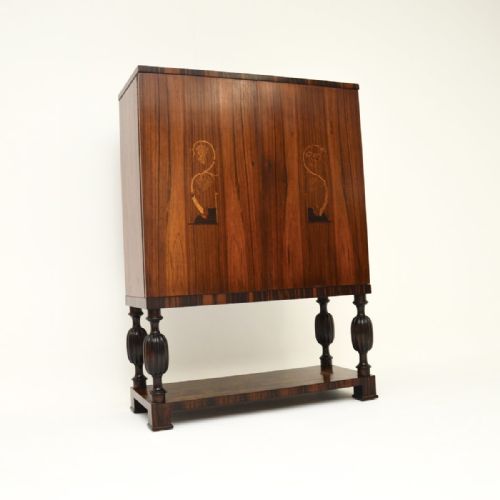
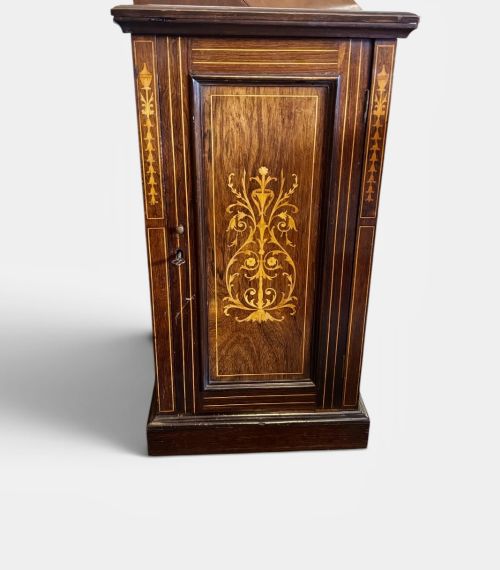
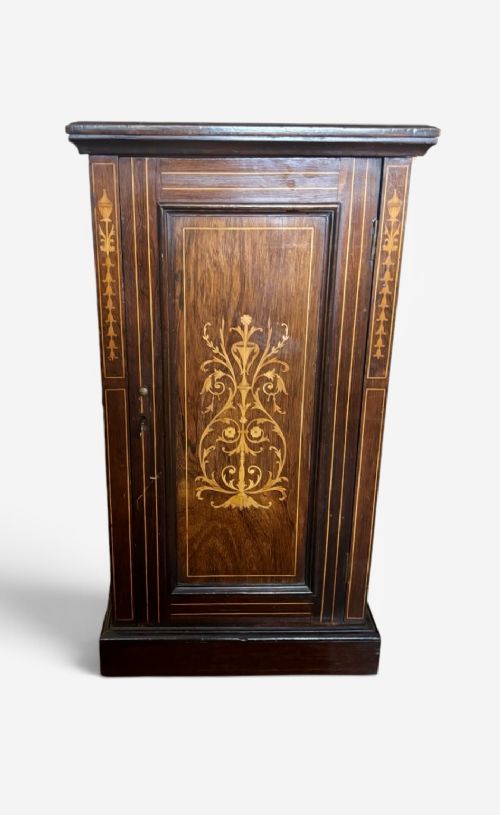
A dark rosewood cupboard brings dense, rich grain and architectural presence into a room, most often appearing as a Regency or Victorian chiffonier.
Dark Rosewood Cupboard
When searching for a dark rosewood cupboard, a buyer encounters a focused range of case furniture spanning the nineteenth century, with Regency and Victorian examples appearing most frequently. These pieces take forms such as chiffoniers, side cabinets, pier cabinets, and glazed bookcases designed to stand against a wall or fit neatly into a corner.
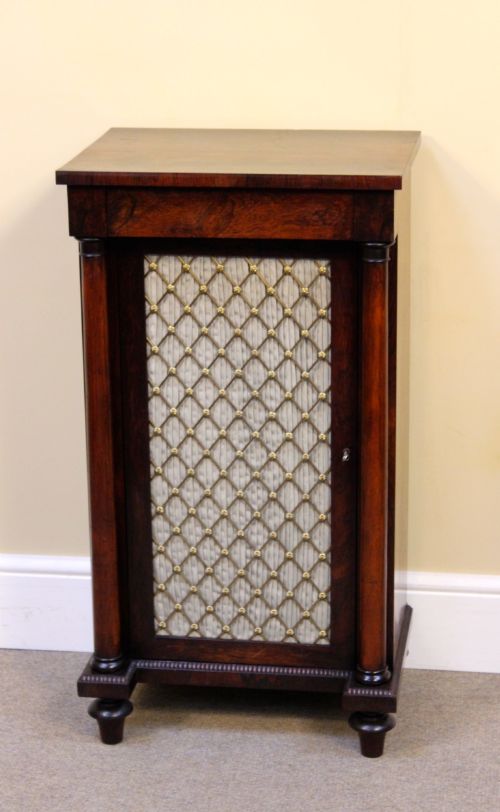
The surviving selection includes compact bedside cupboards, architectural display cabinets on cupboard bases, and low sideboards fitted with panelled doors or pleated fabric panels. Makers utilised exotic hardwoods alongside secondary timbers, occasionally applying paint finishes to simulate the characteristic dark grain of rosewood.
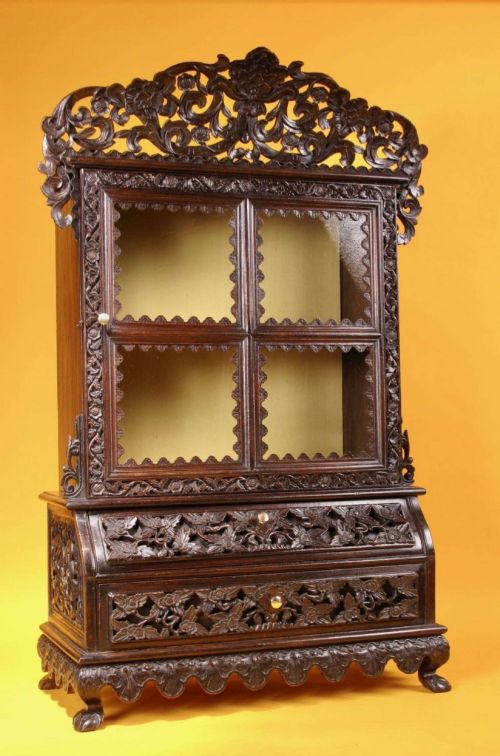
Regional variations extend from British Regency and William IV workshops to Anglo-Indian carved pieces, Biedermeier designs, and later Swedish and Chinese examples. The primary function across all these forms remains the storage and display of household goods, domestic papers, and treasured objects.

How they were made
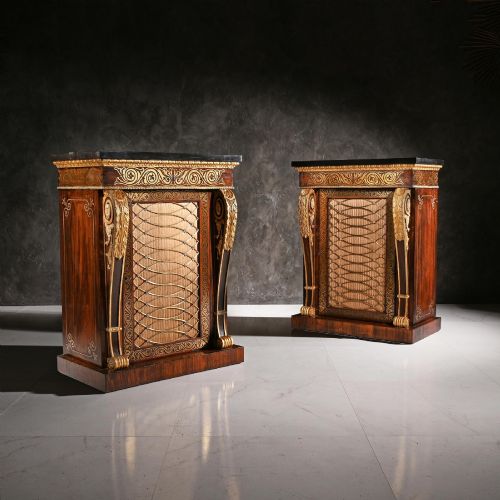
Cabinetmakers built these pieces using dense rosewood veneers and solids, frequently incorporating mahogany, pine, and exotic hardwoods within the internal carcase construction. Surfaces often display intricate satinwood inlay, contrasting crossbanding, and precision brass inlays set flush into the dark timber.
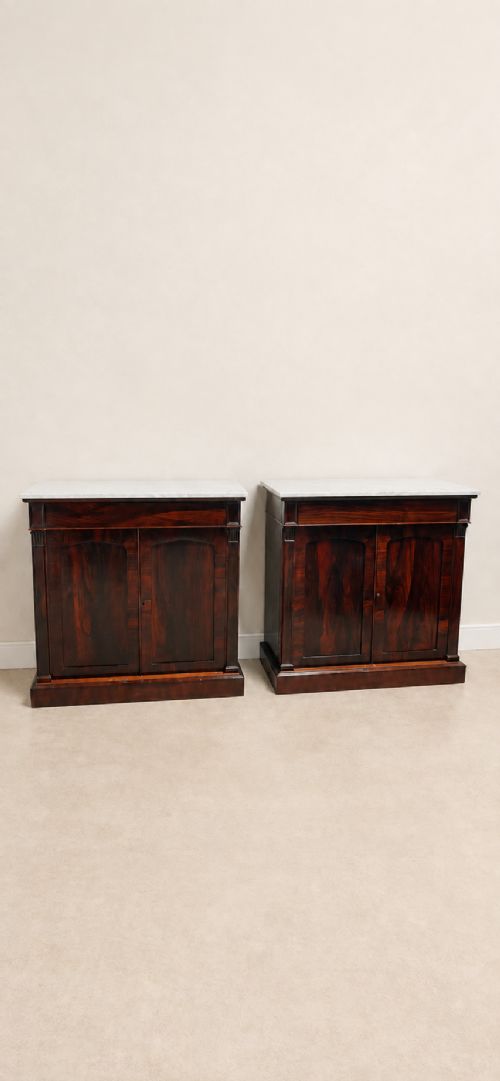
Functional details include cast brass handles, glazed doors for display sections, and pleated fabric panels backed behind glass or fretwork doors on chiffonier bases. Certain examples feature marble tops, hand-carved decorative motifs, or painted surfaces designed to mimic the rich figure of rosewood.
Dark Rosewood Cupboard Retail Price Guide 2026
Typical asking prices for dark rosewood cupboard among the pieces listed under this phrase on Sellingantiques today, from the lower quarter to the upper quarter. They describe what is for sale here now, not the wider market.
Materials recorded across the inventory include solid rosewood and veneers, complemented by brass, glass, marble, fabric, teak, mahogany, and painted pine.
What varies in quality
The standard of a dark rosewood cupboard rests primarily upon the selection of the timber veneer and the precision of its matching across the doors and drawers. Finer pieces demonstrate superior architectural proportion, restraint in ornament, and integration of high-grade brass work or fine inlay.
Execution of secondary details, such as the neatness of hand-carved elements, the quality of the glass within glazed bookcases, and the stability of the foundational carcase, distinguishes standard production from exceptional workshop output.
Louis Constantin Le Gaigneur·Holland & Sons
The Dark Rosewood Cupboard Glossary
- Chiffonier
- A low sideboard or cabinet featuring a combination of enclosed cupboard space below and shelves or a small tier above. This form developed during the Regency period and remained popular throughout the Victorian era.
- Pier cabinet
- A narrow cabinet designed specifically to fit the wall space between windows, known as the pier. These pieces frequently feature glazed doors and compact proportions.
- Crossbanding
- A strip of veneer applied around the border of a panel or drawer front with the grain running perpendicular to the central panel. This technique frames the primary timber.
- Gothic panel
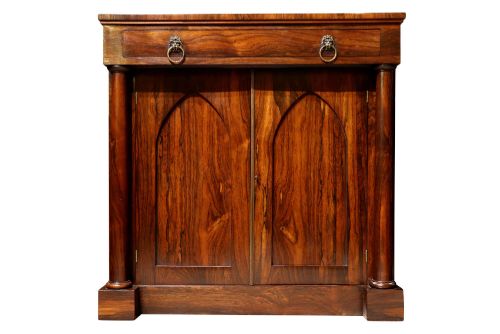
- A pointed arch or trefoil motif carved or panelled into woodwork, appearing on select Regency and nineteenth-century cabinet doors. It reflects the Gothic Revival architectural influence of the period.
- Goncalo Alves
- A dense exotic hardwood with striking contrasting grain patterns, utilised by cabinetmakers during the Regency period as an alternative to standard rosewood.
Dark Rosewood Cupboard: Frequently Asked Questions
What is a dark rosewood cupboard used for?
These pieces served historically for storing tableware, books, linens, and sheet music within formal reception rooms and parlours. Today, collectors utilise them for domestic storage while displaying decorative objects on their upper surfaces.
Their compact proportions and flat tops also make them suitable for use as side tables, media consoles, or bedside storage in contemporary interiors.
How do I tell a Regency cupboard from a Victorian one?
Regency pieces typically display classical restraint, architectural proportion, and brass inlay work reflecting classical antiquity. They often date from the early nineteenth century.
Victorian examples frequently incorporate heavier mouldings, more complex inlay work using satinwood or exotic hardwoods, and varied door configurations such as glazed bookcases or fabric panels.
Where were these cupboards placed in a historic home?
Chiffoniers and side cabinets usually stood against the main dining room or drawing room walls to hold serving items and household documents. Narrow pier cabinets were specifically built to occupy the wall spaces between large windows.
Smaller cupboards and bedside cabinets found their place in private bedchambers, while glazed bookcases stood in libraries and studies.
What is an Anglo-Indian rosewood cabinet?
Anglo-Indian pieces are furniture items made in India by local craftsmen using native timbers for British expatriates and export markets. They combine traditional British cabinet forms with intricate, deep-relief regional carving.
These pieces feature dense rosewood construction and distinct decorative motifs that set them apart from standard domestic British production.