


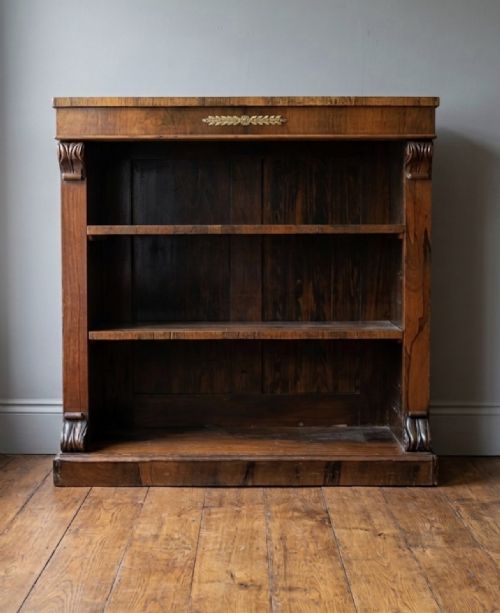


Regency Rosewood Shelf Cabinet
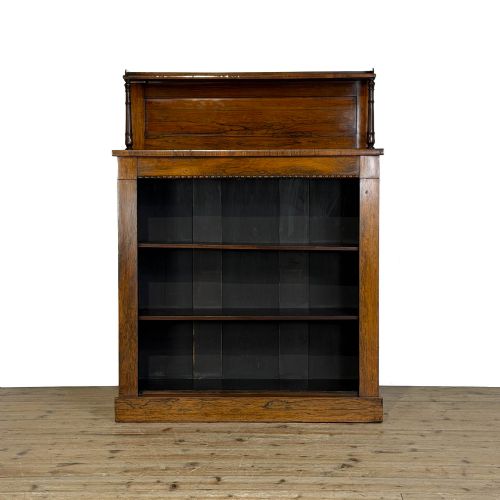
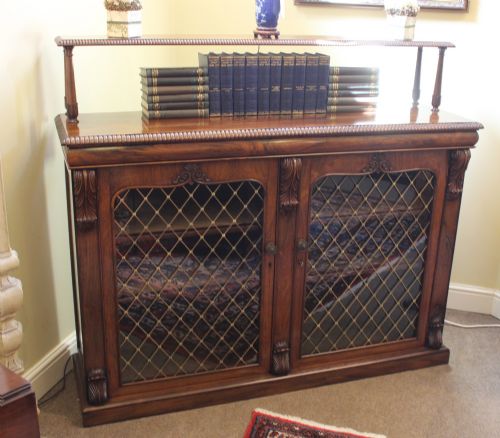
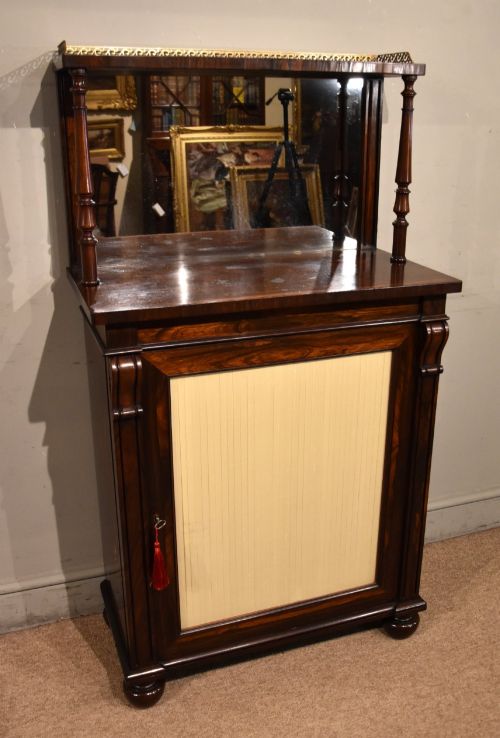
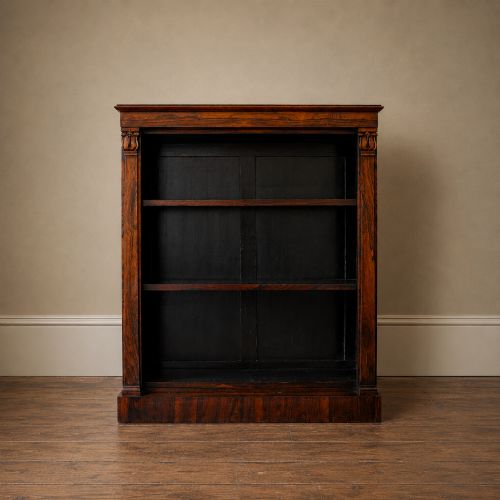
A regency rosewood shelf cabinet brings dark, figured grain and refined brass detail to a room, offering compact display space for books and small objects.
Regency Rosewood Shelf Cabinet
A regency rosewood shelf cabinet encompasses a range of low bookcases, chiffoniers, and side cabinets dating from the nineteenth century, including George IV, William IV, and later revival periods. These pieces serve primarily for displaying books and decorative objects while providing enclosed or open storage low to the ground.
Origins span genuine early nineteenth-century production alongside later twentieth-century interpretations built in the same style, sometimes utilising simulated paint finishes rather than solid timber or veneer.
Evaluating Quality
Quality rests upon the depth and figuring of the rosewood veneer and the precision of the brass inlay work set into the timber. Sharpness in carved mouldings and the structural integrity of breakfront profiles distinguish finer workshops from standard production.
The presence of original grained finishes, untouched marble tops, and functional adjustable shelving mechanisms elevate an example above standard variants.
Listings feature nineteenth-century rosewood alongside painted wood, marble, glass, and brass inlay across open bookcases and chiffoniers.
John McLean
The Regency Rosewood Shelf Cabinet Glossary
- Chiffonier
- A low cabinet featuring enclosed cupboards below, sometimes surmounted by small shelves or a superstructure. They typically stood against parlour walls for serving or display.
- Breakfront
- A cabinet front where the central section projects forward from the flanking wings. This architectural layout creates pleasing shadow lines.
- Palisander
- A dense tropical timber related to rosewood, prized for its dark purple-brown grain patterns. It was frequently used interchangeably with rosewood in nineteenth-century cabinetmaking.
- Waterfall bookcase
- A tiered shelving unit where each successive shelf steps back from the one below it. The profile resembles cascading water.
- Simulated rosewood
- Painted or grained timber finished to imitate the appearance of expensive rosewood veneers. This technique allowed cabinetmakers to achieve a decorative effect affordably.
Regency Rosewood Shelf Cabinet: Frequently Asked Questions
What is a chiffonier?
A chiffonier is a low cabinet featuring enclosed lower doors, often topped with drawers or open display shelving. They evolved during the Regency period to serve dining and parlour functions.
Unlike tall bookcases, their low profile allowed items to be displayed on top while keeping everyday objects neatly stored out of sight.
How do I spot simulated rosewood?
Simulated rosewood is achieved by painting or graining a lighter secondary timber to mimic the dark, figured appearance of tropical rosewood. Close inspection reveals brushwork or grain patterns applied over a plain wood base rather than natural growth rings.
Cabinetmakers utilised this technique during the nineteenth century to provide fashionable aesthetics without the expense of solid exotic veneers.
What are waterfall shelves?
Waterfall shelves are graduated open tiers where each shelf is slightly wider and deeper than the one above it. This creates a stepped profile resembling cascading water.
They appear on compact bookcases and cabinets designed to hold small volumes and decorative objects in restricted spaces.
How do I care for rosewood furniture?
Rosewood benefits from stable indoor humidity and protection from direct sunlight, which can fade the rich dark grain over time. Regular dusting with a soft, dry cloth preserves the polished surface.
Avoid placing damp items or modern plastic mats directly on antique polished wood or marble tops to prevent surface marking.