

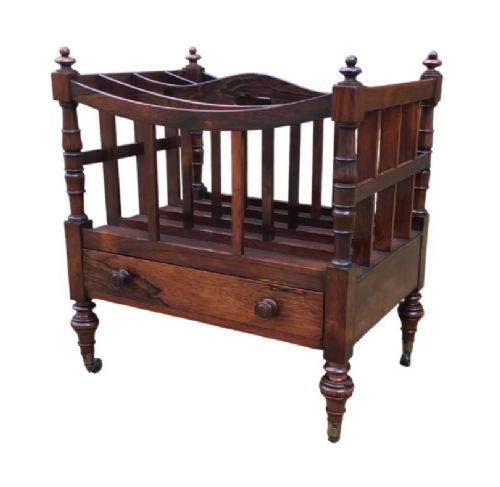
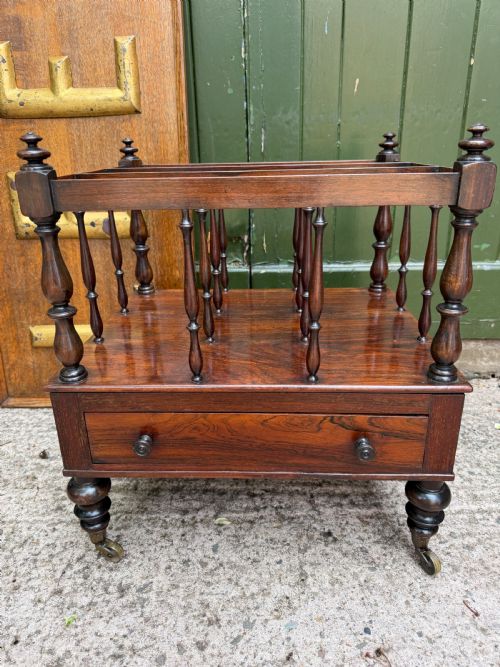


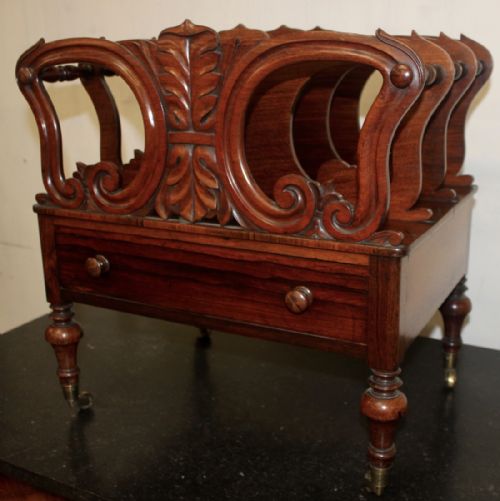


Rosewood Music Rack
A rosewood music rack brings rich timber and practical sheet storage to a room, led here by Regency and Victorian canterburys.
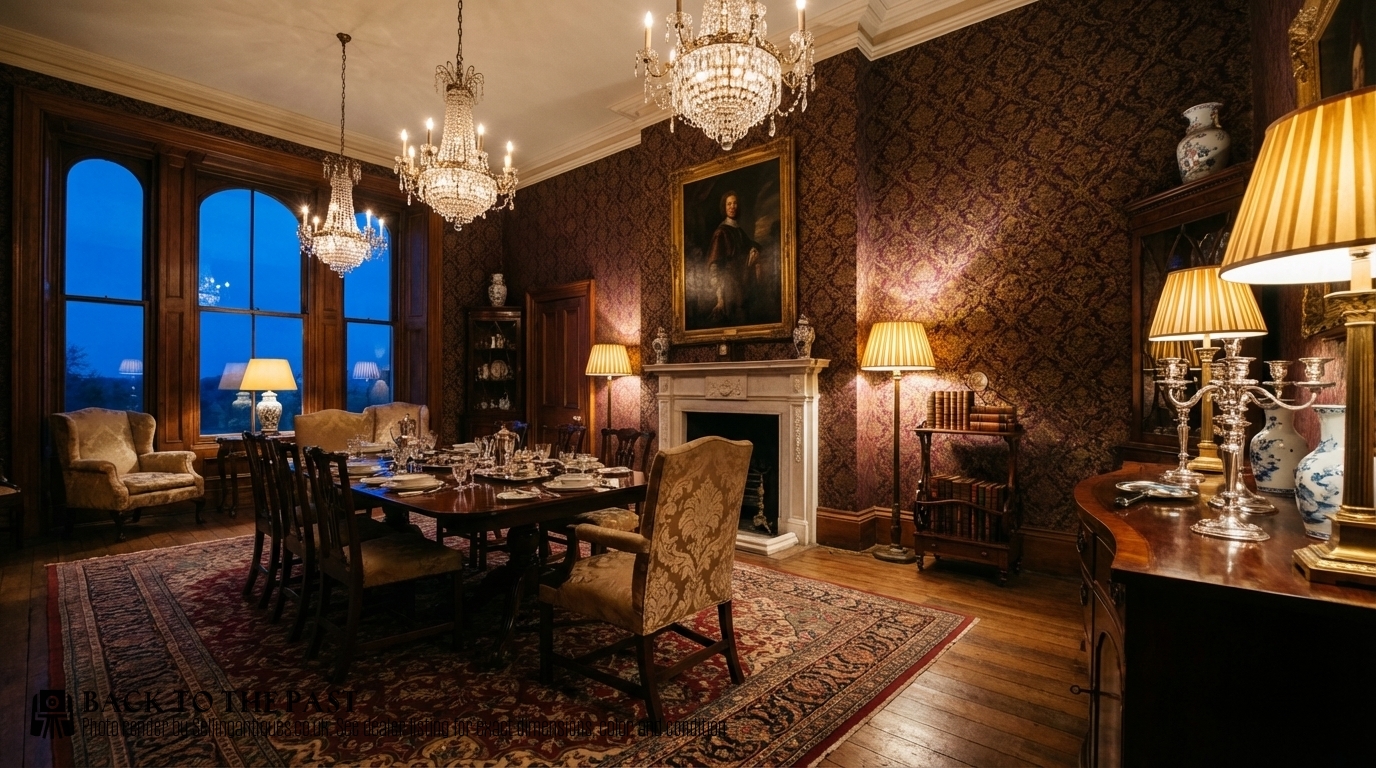
Rosewood Music Rack
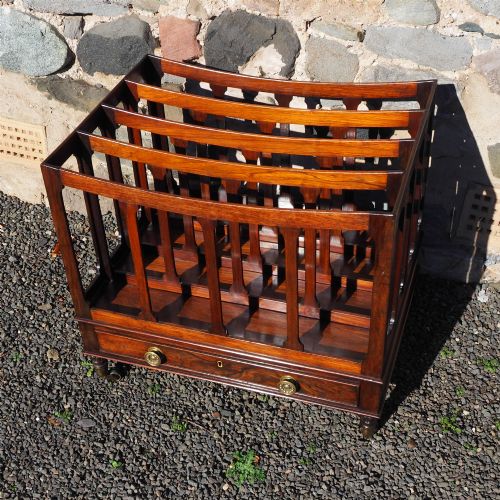
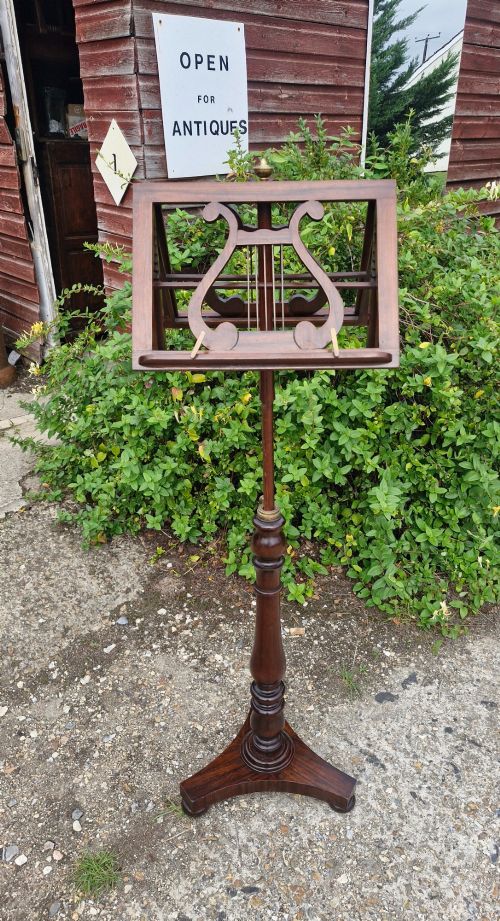
A rosewood music rack encompasses items primarily identified as canterburys, music stands, and folio stands across the nineteenth century. These pieces combine vertical dividers for paper or magazines with low wooden frames, often supported on castors for movement around a parlour or drawing room.
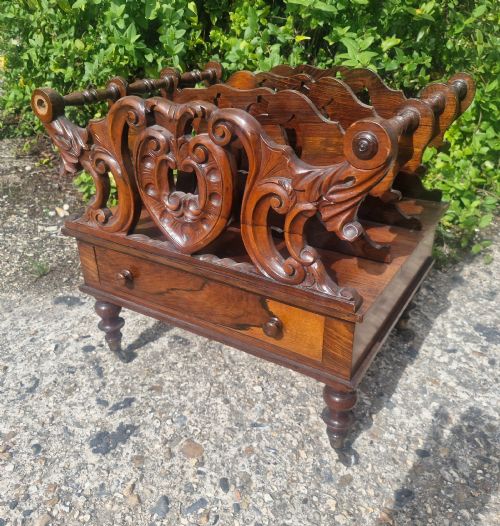
The versions most frequently met on this page date from the Regency and Victorian periods, alongside William IV and George III examples. Many incorporate lower drawers, multiple tiers, or combined whatnot shelving designed to hold bound volumes and sheet music together.
Makers and designers of the era, such as those working in the manner of Loudon or producing pieces attributed to Gillows, shaped the standard forms seen today. English and French nineteenth-century workshops dominate the origins recorded in the evidence.
How they were made
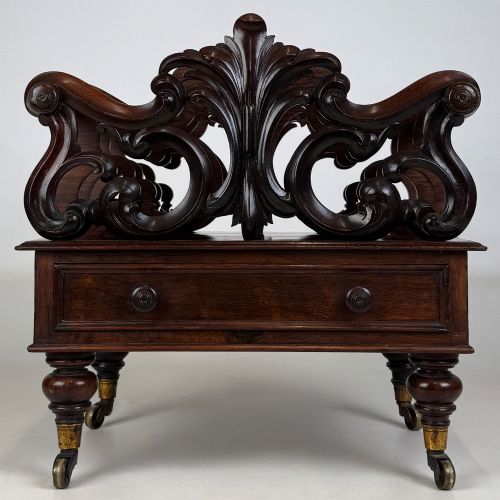
Construction relies heavily on dense rosewood, selected for its deep grain and dark tone, paired with secondary timbers for internal framing. Brass fittings commonly appear as castors, hinges, or decorative inlay accents.
Joinery methods include turned spindle supports, fretted or carved dividers, and precise framing to bear the weight of heavy folios. Finer examples add intricate inlay, ceramic elements, or carved details such as Prince of Wales feathers.
Rosewood Music Rack Retail Price Guide 2026
Typical asking prices for rosewood music rack among the pieces listed under this phrase on Sellingantiques today, from the lower quarter to the upper quarter. They describe what is for sale here now, not the wider market.
Named after an archbishop who requested a similar rack for his music, these stands ended up holding everything from newspapers to Prince of Wales feathers.
What varies in quality
The distinction between standard domestic items and top-tier pieces rests on timber selection and the crispness of the carving or inlay work. Heavier proportions, double-size formats, and integrated lower drawers elevate the ambition of the design.
Original brass castors, well-figured rosewood grain surfaces, and structural integrity without heavy restoration define the upper range of surviving examples.
Gillows·J C Loudon
The Rosewood Music Rack Glossary
- Canterbury
- A low stand with upright divisions, originally designed to hold sheet music and folios. It frequently includes a small drawer beneath the slatted section.
- Whatnot
- A piece of open shelving furniture with multiple tiers used for displaying or storing items. These frequently combine with canterbury bases in nineteenth-century rooms.
- Folio stand
- An oversized rack designed for large books, prints, or music sheets. They share construction traits with large canterburys.
- Regency
- A British design period spanning the early nineteenth century, noted for classical lines and dark woods. Pieces from this era often feature precise turning and brass mountings.
- Inlay
- The technique of inserting pieces of contrasting material into a solid wood surface to form a design. Brass and lighter timbers are typical in these pieces.
Rosewood Music Rack: Frequently Asked Questions
What is a rosewood music rack?
A rosewood music rack is a nineteenth-century furniture piece, usually a canterbury or music stand, designed to hold sheet music, newspapers, and folios.
Built from dark rosewood, these items typically feature vertical wooden dividers and often sit on small castors for easy relocation.
How were canterburys used?
These stands kept sheet music, folios, and periodicals organised and accessible beside a piano or in a drawing room.
The lower drawer, when present, stored smaller items like strings, tuning tools, or loose manuscript pages.
How do I date a rosewood music rack?
Dating relies on stylistic markers from periods such as Regency, William IV, and Victorian eras seen across the listings.
Turned legs, brass castors, Gothic revival motifs, and specific inlay patterns help narrow the decade of manufacture.
Where should I place one?
They suit living spaces, studies, or music rooms where their slender proportions and partitioned storage remain functional.
Keeping them away from direct heat sources protects the rosewood and prevents timber splitting.