


Rosewood Music Canterbury
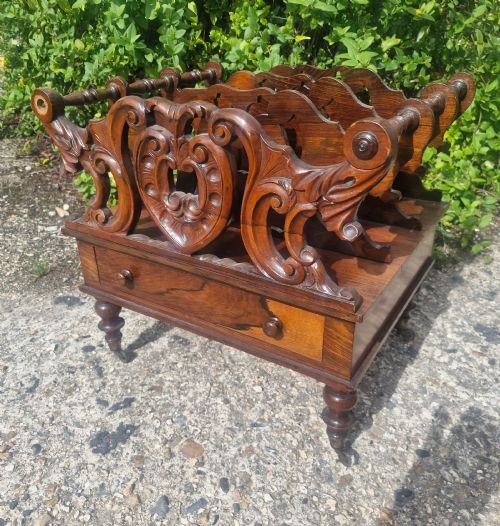
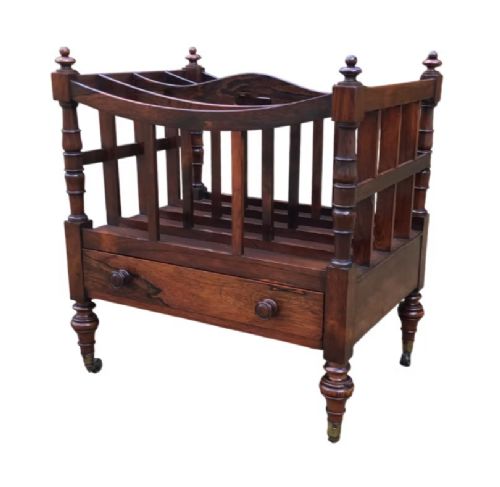
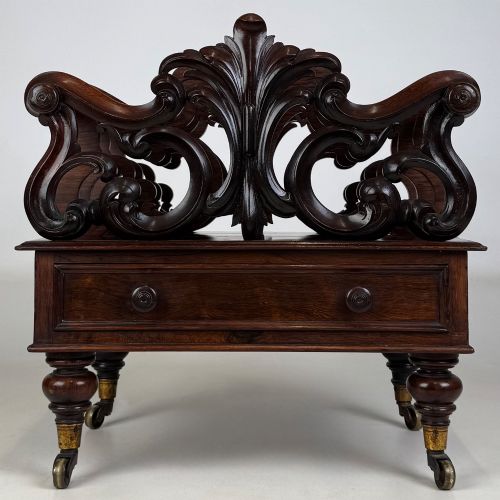
A rosewood music canterbury is a distinct nineteenth-century stand for scores and folios, prized by collectors for its rich timber and elegant vertical divisions.
What they are
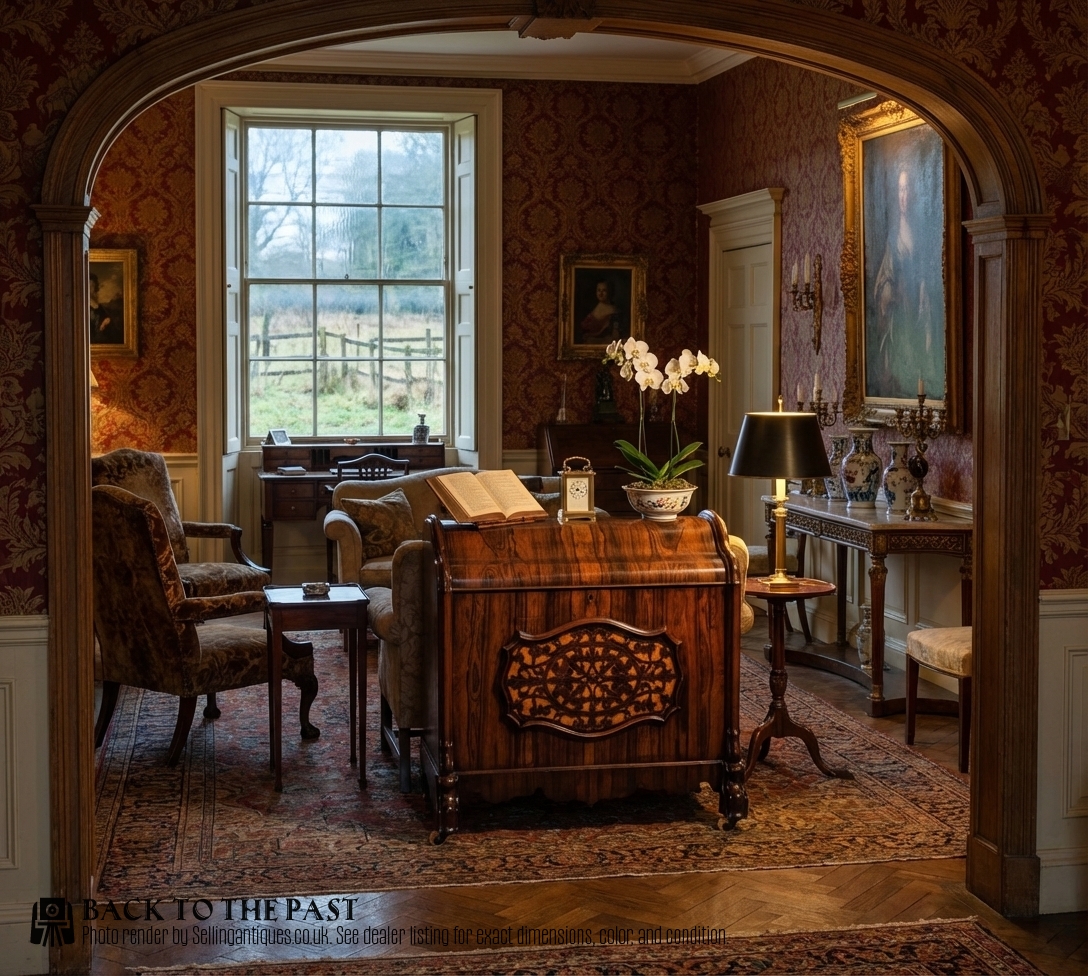
When you search for a rosewood music canterbury, you are looking at nineteenth-century stands designed specifically to hold sheet music, books, and folios near a piano or in a parlour. The pieces listed here span the Regency, George IV, William IV, and Victorian periods, demonstrating the form's evolution across several decades of British craftsmanship. You will most frequently encounter four-division variants, often fitted with a central carrying handle and a small drawer below.
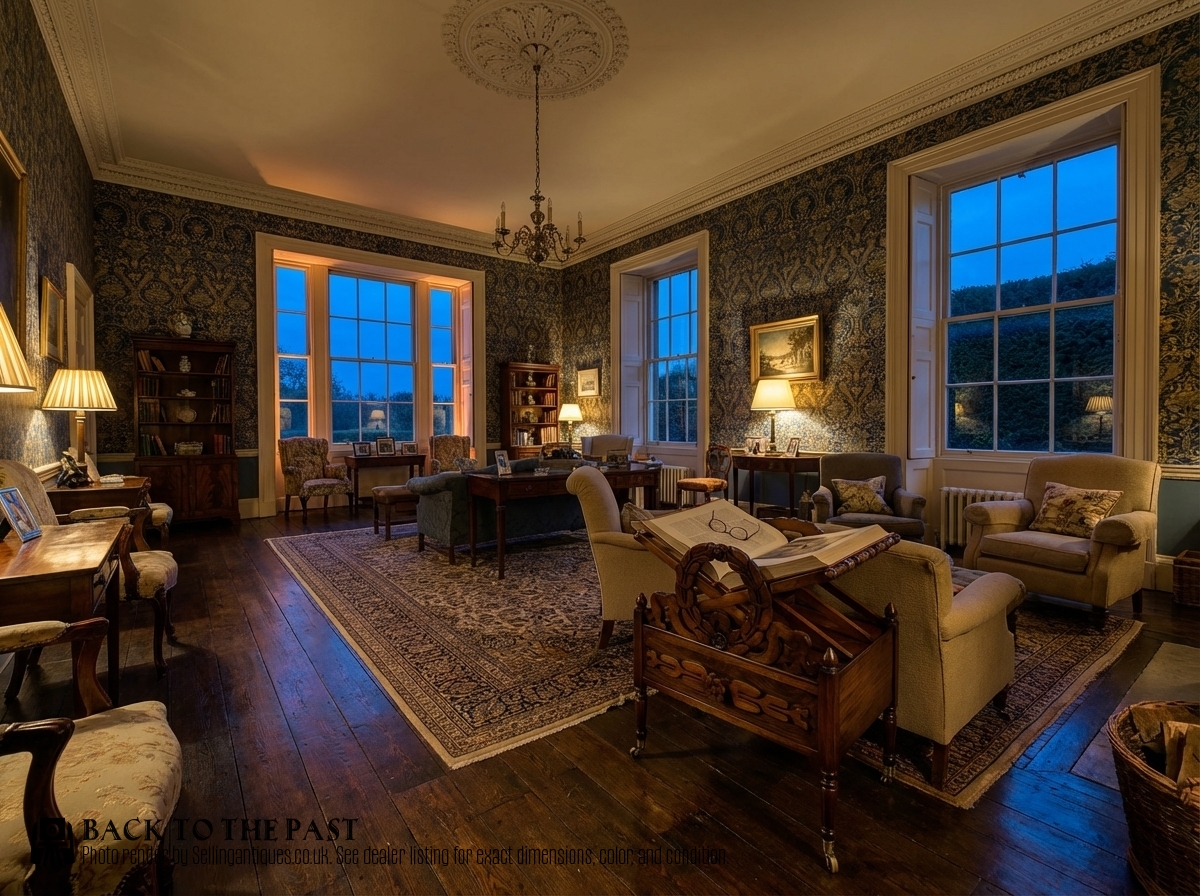
Beyond the standard music racks, the evidence shows related forms including two-tier étagères and what-nots that combine shelving with partition dividers. These variations reflect how nineteenth-century households adapted the furniture to hold newspapers, magazines, and periodicals alongside musical scores. Origins range from English workshops to American interpretations, encompassing Regency elegance and heavy Gothic Revival styling.
How they were made
The primary material across these pieces is rosewood, selected for its dark grain, warm colour, and capacity to take a high polish. Makers utilised solid timber and fine veneers over secondary woods, often enhancing the structure with turned uprights, carved details, and applied moulding.
Metals and ceramics appear as functional and decorative components, with brass castors allowing the stands to move easily across carpets and ceramic details marking specific periods. Structural divisions are formed from slender wooden slats or metal bars, creating the compartments necessary to keep scores upright without warping.
Retail Price Guide 2026
Typical UK retail prices for rosewood music canterbury, calculated from the Sellingantiques database of over a million retail prices indexed since 2003. This retail price guide relies exclusively on Sellingantiques data; no external sources or auction records are used, so the figures do not describe the wider market.
Listings for this phrase feature rosewood as the exclusive timber, combined with brass and ceramic elements across nineteenth-century periods.
What varies in quality
The lower tier of quality shows in simpler turnings, heavier or less thoughtful construction, and plain secondary woods that lack the decorative grain matching seen in superior examples. The presence of original brass hardware, intact ceramic elements, and working drawers distinguishes the finer survivors from standard production pieces.
Gillows·J C Loudon
The Rosewood Music Canterbury Glossary
- Canterbury
- A low stand with vertical divisions, originally designed to hold sheet music and folios. The name derives from the Archbishop of Canterbury, who supposedly commissioned the first such piece.
- Etagere
- A set of open shelves for displaying small objects or holding books and papers. These tiers are frequently incorporated into the upper section of multifinctional stands.
- Folio
- A large sheet of paper folded once, or a book made of such sheets, which these stands were built to accommodate. Collectors look for adequate partition spacing to hold these large volumes.
- Whatnot
- A piece of furniture consisting of a series of open shelves, often combined with a canterbury base. It serves as a general storage and display stand for the drawing room.
- Regency
- An architectural and decorative style spanning the early nineteenth century, characterised by classical restraint and refined proportions. Pieces from this period often display clean lines and subtle brass inlay.
Frequently Asked Questions
What is a music canterbury used for?
These stands were originally built to hold sheet music, bound scores, and folios near a piano or music stand in a nineteenth-century drawing room. The vertical divisions kept papers organised and accessible during musical evenings.
Over time, owners also used them to tidy away newspapers, periodicals, and books. Today, they function similarly in modern homes as decorative storage for magazines and large volumes.
How do I date a rosewood canterbury?
Dating relies on stylistic markers from the Regency, George IV, William IV, and Victorian periods. Regency and George IV examples often feature clean classical lines and fine brass mounts, while William IV and early Victorian pieces tend towards heavier carvings and Gothic Revival motifs.
Construction methods also help determine age, as earlier pieces show hand-cut joinery and specific turning styles that evolved as the nineteenth century progressed.
How do I care for antique rosewood?
Antique rosewood benefits from stable room temperatures away from direct sunlight and heat sources, which can cause timber to dry out and split. Gentle dusting with a dry, soft cloth preserves the polish without building up residue.
Occasional application of appropriate wax polish helps maintain the moisture and lustre of the wood surface. Avoid modern silicone sprays, as they can penetrate the finish and damage the timber over time.