
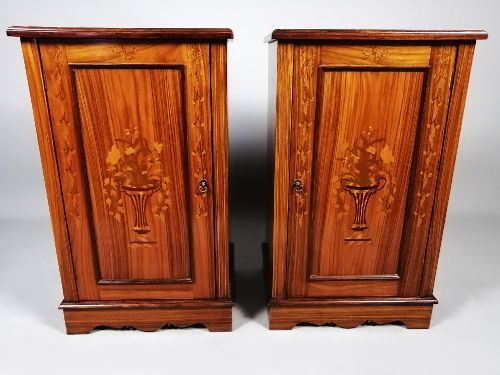
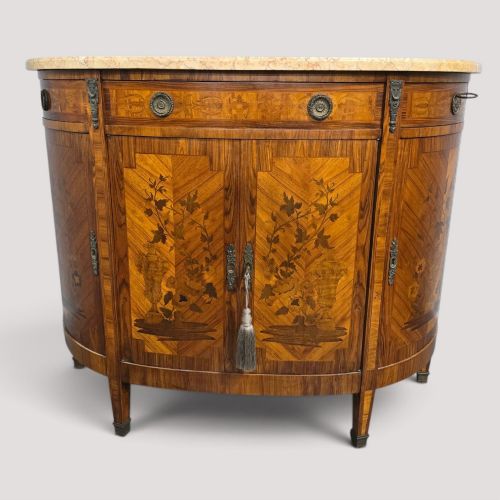
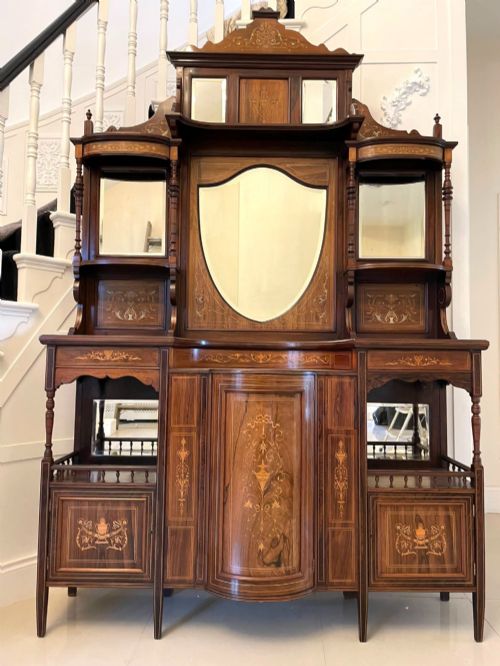
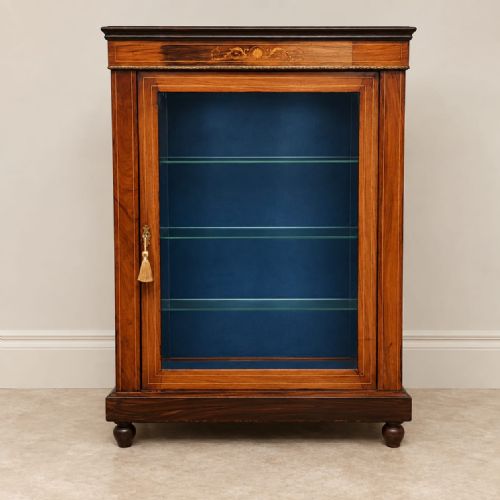
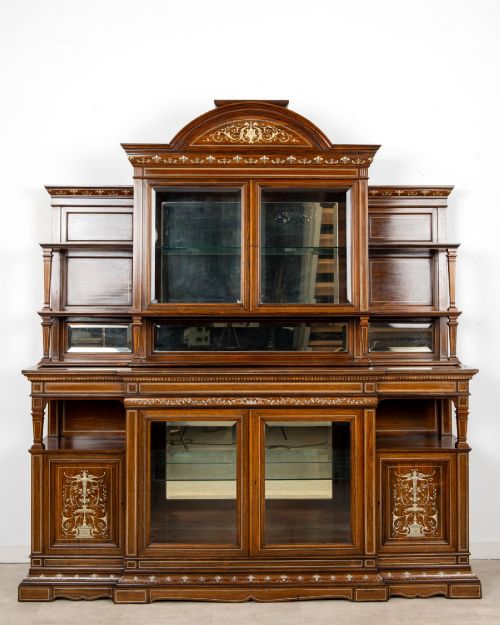
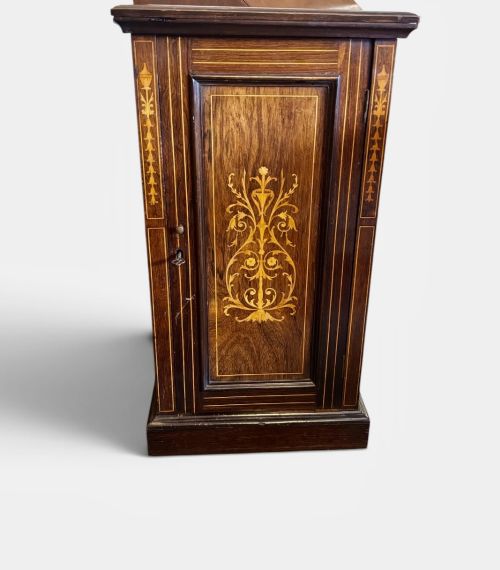
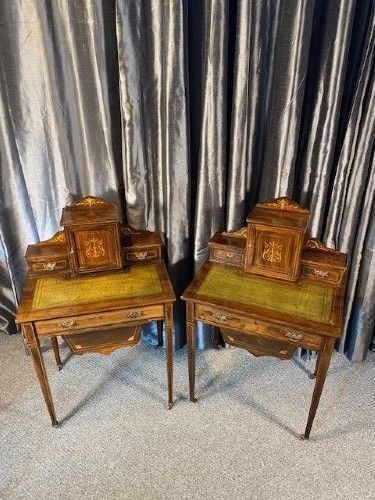
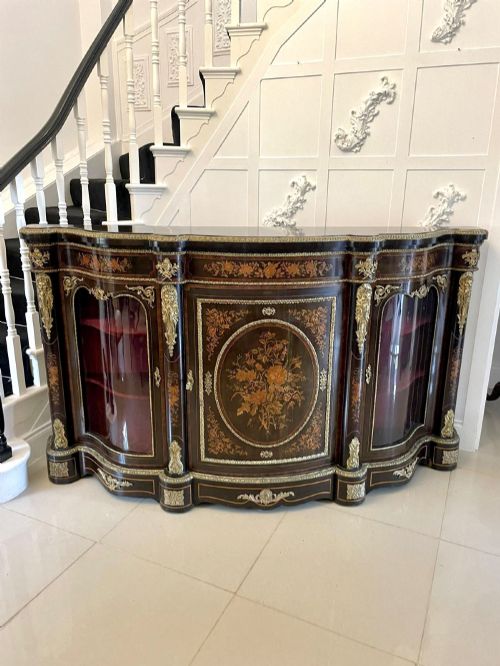
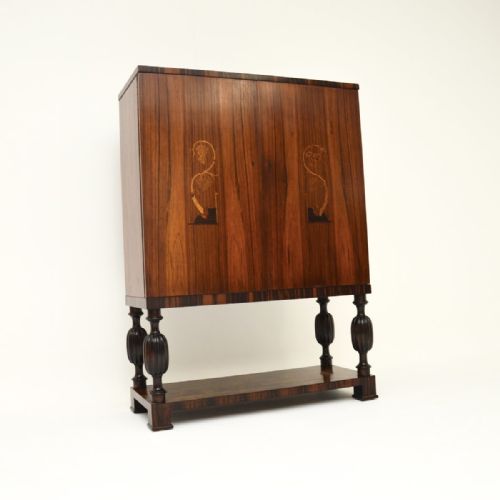
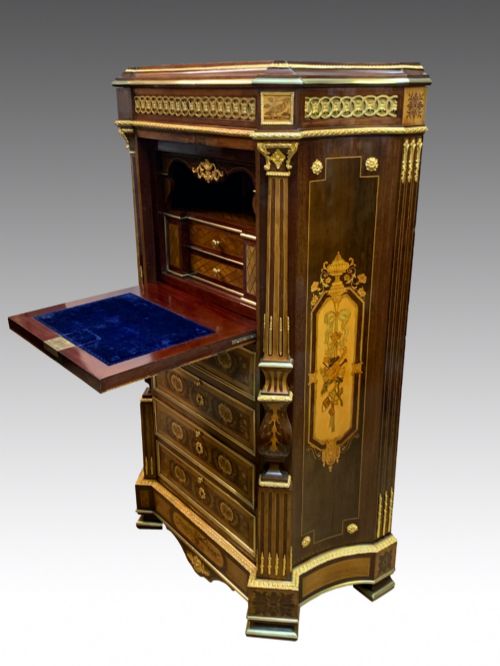
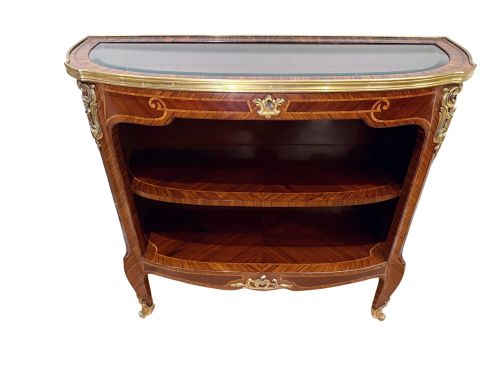
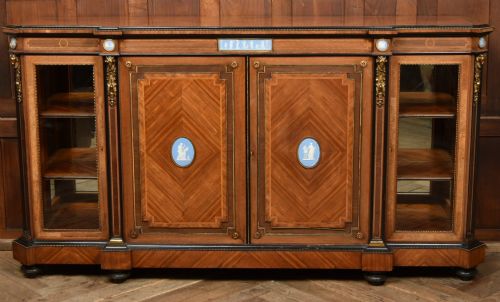
Rosewood Marquetry Cabinet
Rosewood marquetry cabinets bring together dense tropical timber and intricate floral or geometric veneer work for a striking centrepiece in any room.
Rosewood Marquetry Cabinet
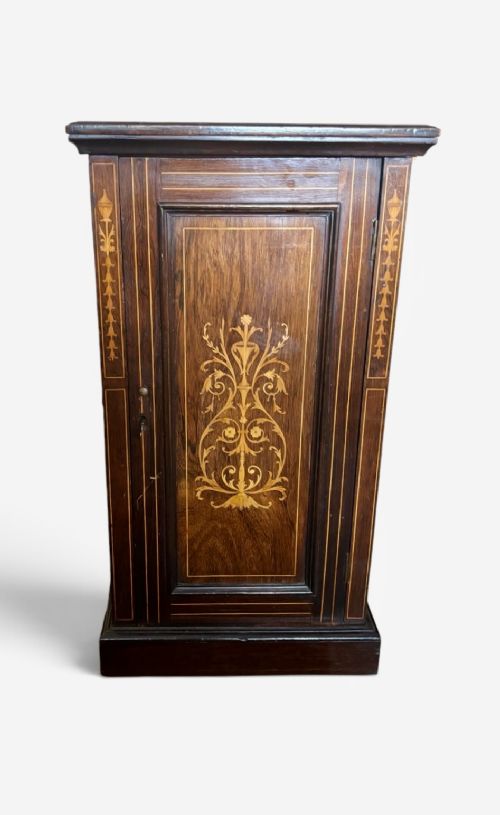
A rosewood marquetry cabinet combines a dark, richly grained foundational timber with precision-cut pictorial veneers, creating surfaces decorated with floral, foliage or geometric patterns. These pieces span several decades, crossing Victorian, Edwardian and continental revivals.
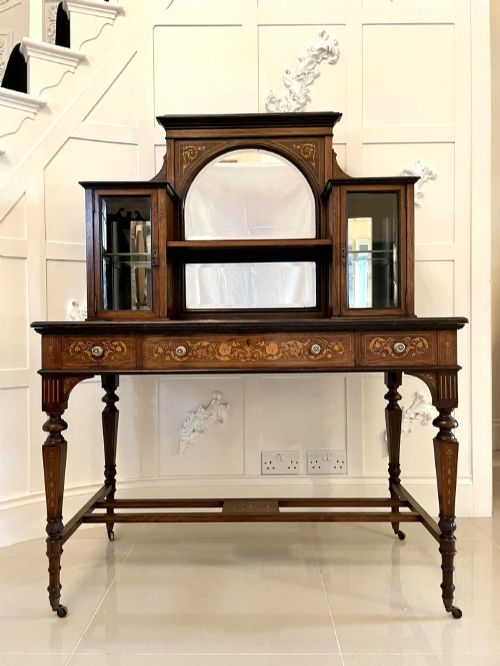
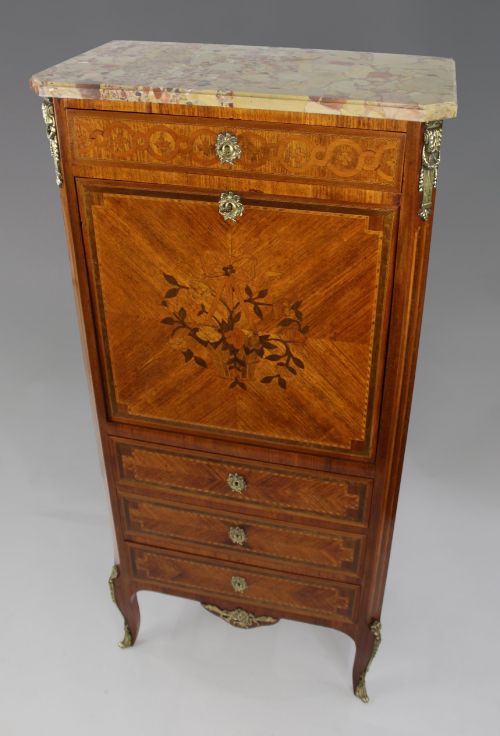
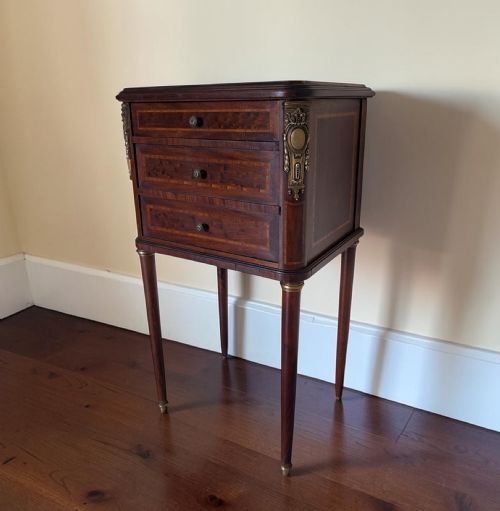
The items most frequently met on this page include side cabinets, display cabinets, and smaller bedside cupboards alongside writing desks and credenzas. Pieces range from British Victorian pier cabinets to French Louis XV style escritoires and commodes.
Makers and workshops of the nineteenth and twentieth centuries adapted these decorative techniques for various domestic settings, producing tall narrow vitrines, serpentine sideboards and compact corner units. The underlying structure relies on dense tropical hardwoods paired with contrasting lighter timbers for the inlay work.
How they were made
Craftsmen built these cabinets using a sturdy carcase of solid timber or pine, applying fine veneers of rosewood to the exterior surfaces. Contrasting timbers such as satinwood, kingwood, walnut and boxwood were sliced thinly for the marquetry panels.
Makers cut intricate pictorial designs into the surface veneers by hand, assembling pieces of different coloured woods like a jigsaw before pressing them onto the carcase. Many examples incorporate cast or chased ormolu mounts, brass stringing and glass panels to complete the facade.
Listings feature pieces spanning the Victorian and Edwardian eras alongside 19th-century French Louis XV style designs.
What varies in quality
The refinement of the marquetry design separates standard production from exceptional work, visible in the precision of the veneer joints and the shading achieved by scorching wood pieces in hot sand. Finer cabinets display complex floral sprays and ribbons using a wide palette of contrasting timbers.
Structural hardware and mountings also indicate the grade of the piece, with hand-chased ormolu mounts and heavy cast brass handles marking out superior workshops. The choice of secondary woods inside drawers and back panels reflects the standard of construction behind the polished exterior.
Collinson & Lock·Maison Krieger·Edwards & Roberts
The Rosewood Marquetry Cabinet Glossary
- Marquetry
- The art of forming decorative patterns by fitting together thin slices of wood, shell or ivory onto a structural veneer base. This technique allows for complex pictorial scenes across cabinet doors and tabletops.
- Ormolu
- Gilt bronze mounts applied to furniture edges, corners and feet for decorative accent. The process involves coating bronze with a mercury and gold amalgam before heating.
- Pier cabinet
- A low or tall display cabinet designed specifically to fit the wall space between windows. These pieces often feature glass doors and velvet-lined interiors for porcelain or small objects.
- Escritoire
- A writing cabinet featuring a fall-front desk flap that conceals small drawers and pigeonholes. Many examples incorporate elaborate marquetry and interior compartments.
- Vitrine
- A glass-fronted display cabinet designed to exhibit collections of ceramics, glass or curiosities. The sides are frequently glazed to allow maximum light penetration.
- Parquetry
- Geometric wood inlay work arranged in repeating patterns such as cubes, chequers orlozenges. It differs from marquetry through its reliance on strict symmetrical shapes rather than floral pictures.
Rosewood Marquetry Cabinet: Frequently Asked Questions
Where should I place a cabinet?
These cabinets suit drawing rooms, dining spaces or hallways where their polished timber and detailed veneer work can be appreciated away from direct sunlight. Compact versions like bedside cupboards and corner units fit smaller alcoves while maintaining storage.
Keep them away from heat sources and radiators to prevent the rosewood and delicate inlay veneers from drying out or lifting over time.
How do I clean the wood?
Dust the surfaces regularly with a soft, dry cloth to prevent particles from settling into the fine joints of the marquetry. Avoid silicone-based polishes, opting instead for traditional beeswax applied sparingly to nourish the grain.
Buff the wax gently after application using a clean cotton cloth to maintain a natural, subtle sheen across the rosewood and contrasting satinwood inlays.
How do I tell periods apart?
Victorian pieces often favour dense rosewood with elaborate floral marquetry and heavy ormolu mounts, reflecting mid to late nineteenth-century tastes. Edwardian and later revival items frequently employ lighter satinwood borders and more restrained neoclassical motifs.
French pieces from the same eras typically display more curved serpentine forms and extensive gilt bronze mounts compared to their rectilinear British counterparts.
What is a credenza?
A credenza is a low-standing side cabinet, often featuring curved serpentine shapes and multiple doors enclosing shelving or fitted drawers. In nineteenth-century interiors, they served as principal display surfaces in dining rooms and grand reception spaces.
Many incorporate central glazed display sections flanked by decorated cupboards, accented with cast brass or ormolu framing.