



French Floral Marquetry Cupboard
A French floral marquetry cupboard brings together intricate wood veneers and refined cabinet-making, offering both decorative presence and practical storage.
French Floral Marquetry Cupboard
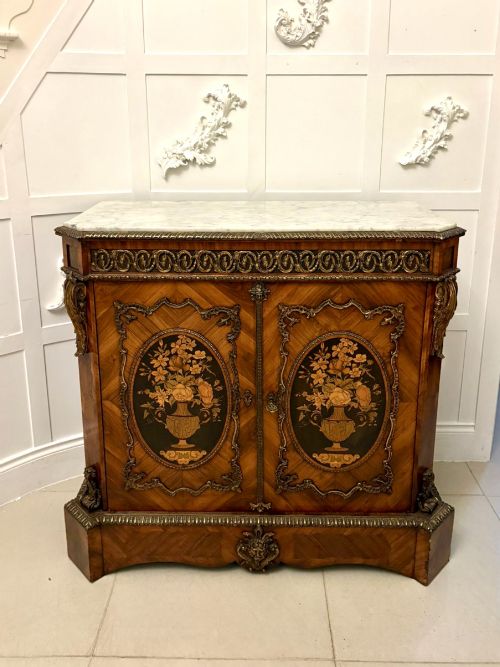
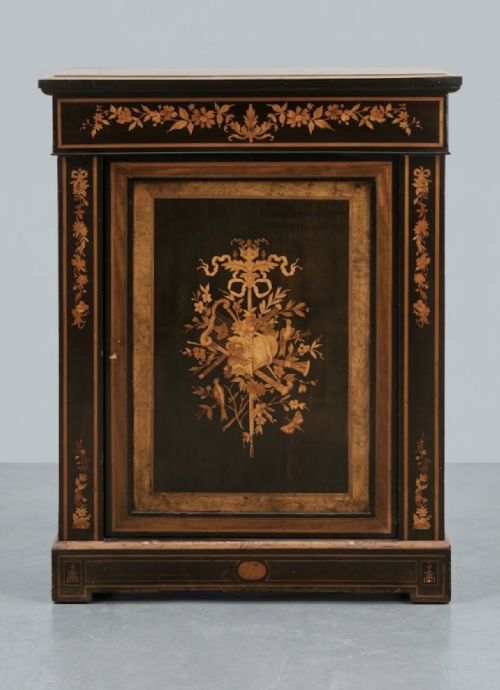
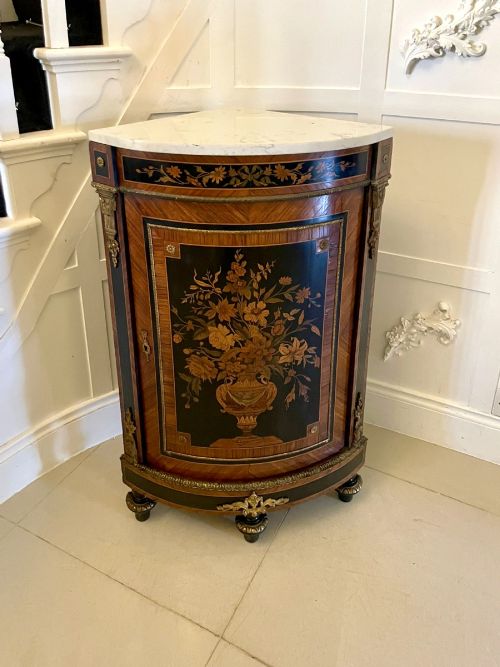
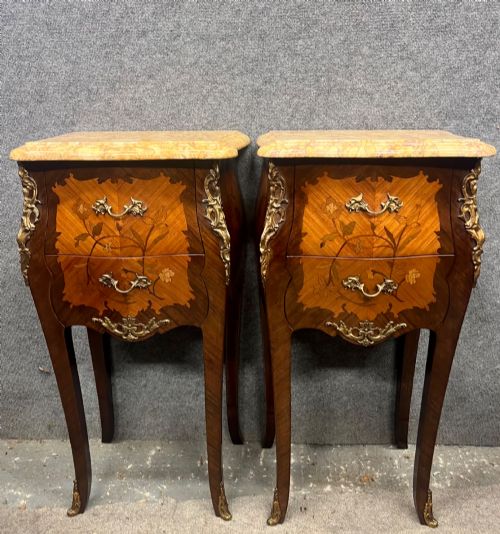
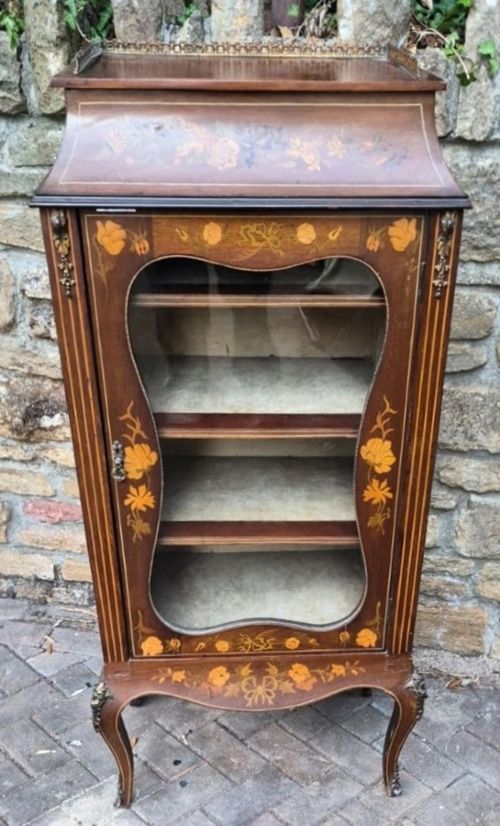
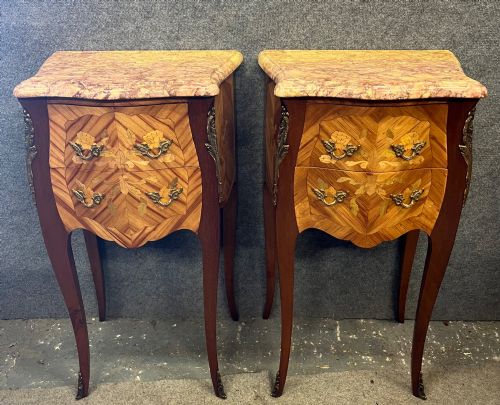
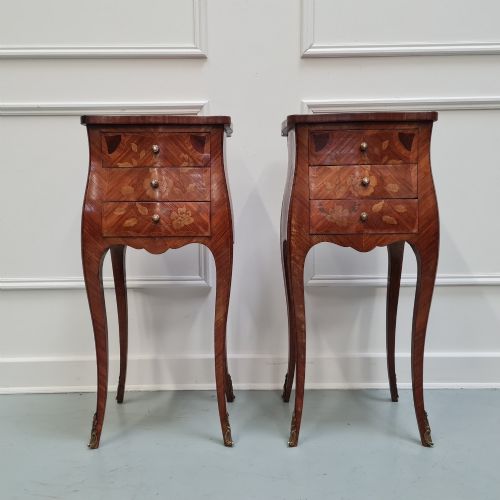
A French floral marquetry cupboard is primarily defined by its surface decoration of applied wood veneers forming botanical patterns, frequently appearing across side cabinets, corner units, and bedside chests. These pieces typically date from the eighteenth and nineteenth centuries, with revival periods extending into the early twentieth century.
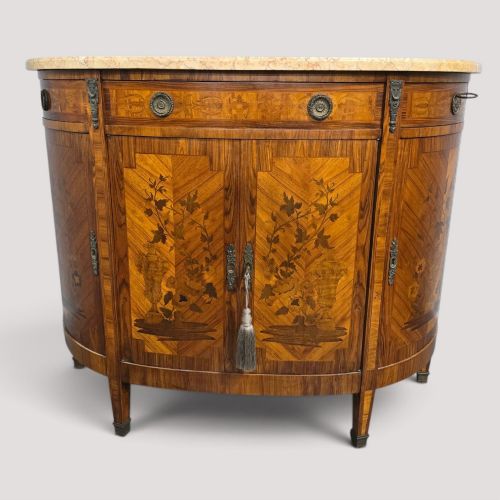
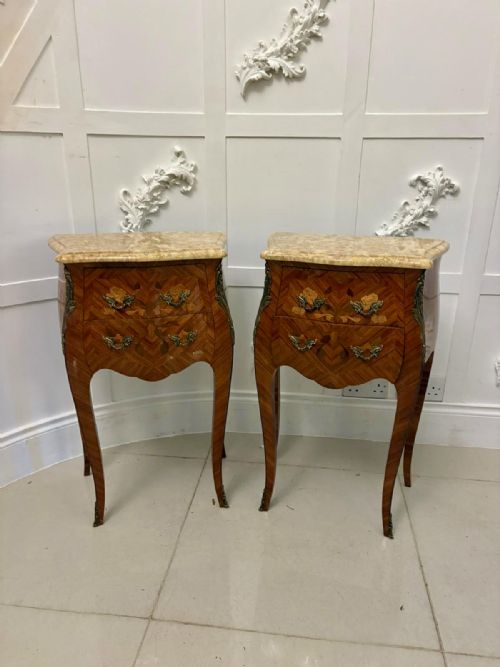
Buyers are most likely to encounter smaller bedside cabinets, demi-lune consoles, and side cabinets bearing Louis XV or Louis XVI styling. Many of these examples incorporate shaped marble tops alongside gilt bronze or ormolu mounts.
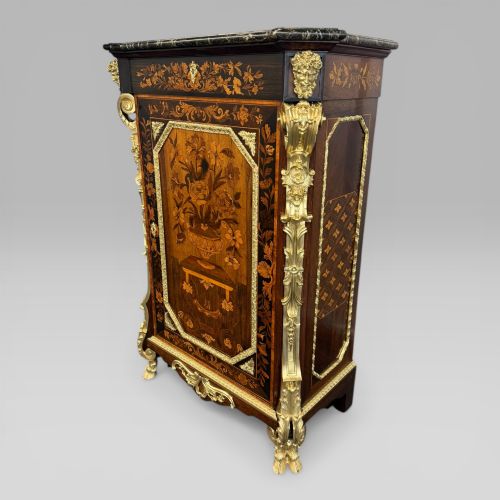
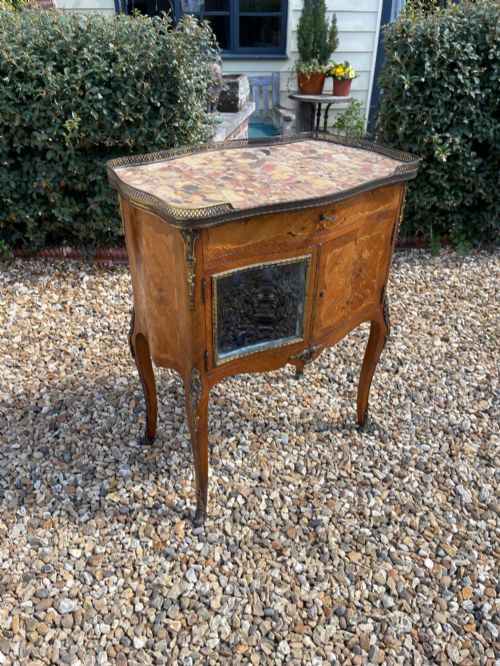
The underlying forms range from serpentine commodes and corner cupboards to tall display cabinets and slender pier cabinets. Each format utilises timber carcasses to support detailed floral panels across doors, drawers, and sides.
Materials and Construction
Cabinet makers constructed the foundational carcass from timbers such as walnut or pine before applying fine surface veneers including kingwood, rosewood, and tulipwood. Individual floral motifs were meticulously hand-cut from contrasting wood species and fitted together like puzzles before being glued to the frame.
Mounts cast in ormolu, brass, or gilt bronze were frequently applied to protect vulnerable corners and accentuate the contours of the furniture. Polished marble slabs, including Carrara varieties, were fitted to the upper surfaces of commodes, side cabinets, and console tables to provide a durable and decorative finish.
Cabinet makers sometimes used scorched pearwood to scorch petals and leaves, giving flat wooden flowers the illusion of blowing in the wind.
Judging Quality
The distinction between ordinary and exceptional pieces rests upon the precision of the veneer cutting and the natural shading of the wood used for petals and leaves. Finer examples display meticulous grain selection where the craftsman used heat-scorched shading to give three-dimensional depth to flowers and stems.
The refinement of the cast metal mounts and the harmony between the marquetry design and the serpentine or demi-lune shape of the cabinet structure heavily influence the overall standard. Superior pieces maintain crisp chisel work on the ormolu and seamless integration of the marble top with the timber frame underneath.
Edward Holmes Baldock·Paul Sormani
The French Floral Marquetry Cupboard Glossary
- Marquetry
- The art of applying small pieces of veneer to a wooden structure to form decorative patterns or pictures. Craftsmen selected various coloured woods to depict floral sprays and architectural scenes.
- Ormolu
- Gilded bronze used for decorative mounts and furniture hardware. This material added metallic brilliance to the angles and feet of fine French cabinetry.
- Demi-lune
- A half-moon shape characteristic of console tables and side cabinets designed to sit flat against a wall. This curved form allowed ornate floral marquetry to wrap smoothly around the front elevation.
- Meuble d'appui
- A French term for a supporting cabinet, generally used to describe a sideboard or low cabinet made during the nineteenth century. These pieces often feature marble tops and enclosed shelving.
- Parquetry
- Geometric wood inlay patterns such as cubes or chequers used alongside floral marquetry. It provides a structured visual contrast to natural botanical designs.
French Floral Marquetry Cupboard: Frequently Asked Questions
How do I care for marble tops?
Marble surfaces require regular wiping with a damp cloth and mild soap to remove dust and prevent staining from acidic liquids. Avoid harsh chemical cleaners that can dull the polished stone finish.
Waxing the surrounding wood veneer should be done carefully to prevent transfer onto the porous edges of the marble slab. Using coasters and protective mats preserves both the stone top and the underlying timber structure.
Are these cabinets suitable for modern homes?
These pieces integrate easily into contemporary interiors by providing functional storage within a compact footprint. Bedside chests and small side cabinets function effectively as lamp tables or decorative focal points.
Their mixed materials, including warm wood veneers and marble, complement both minimalist and traditional room schemes without dominating the space.
How do I distinguish Louis XV from Louis XVI style?
Louis XV furniture relies upon asymmetrical curves, serpentine fronts, and flowing Rococo ornamentation. The overall silhouettes are soft and rounded, featuring cabriole legs.
Louis XVI pieces introduce neoclassical straight lines, symmetrical floral marquetry, and tapered fluted legs. Ormolu mounts on Louis XVI cabinets tend to follow stricter geometric and architectural proportions.
What is the difference between marquetry and inlay?
Inlay involves setting pieces of wood or other materials into a recessed cavity carved directly into a solid wooden surface. Marquetry covers the entire surface of the furniture carcass with a veneer mosaic composed of multiple wood types.
Marquetry creates a continuous picture across doors and tabletops, whereas traditional inlay inserts a specific motif into a solid background.