



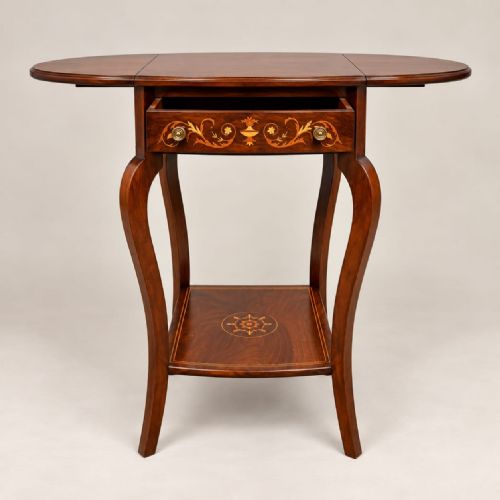
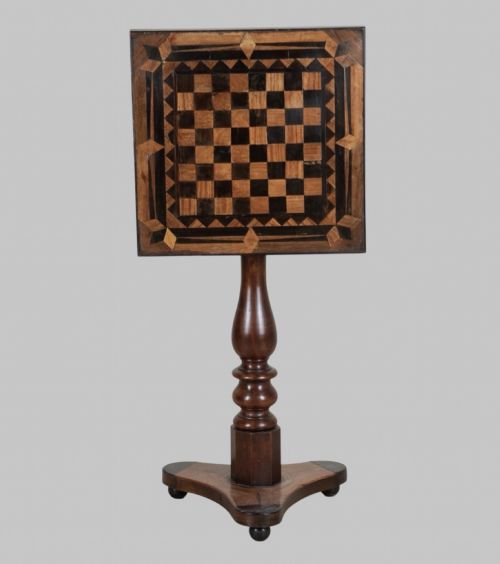
Rosewood Inlaid Occasional Table
A rosewood inlaid occasional table offers a compact surface for a lamp or books while bringing rich wood grain and decorative banding into a room.
Rosewood Inlaid Occasional Table
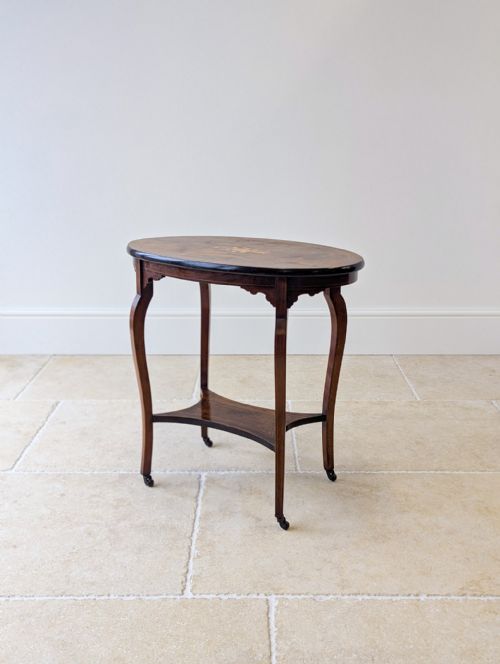
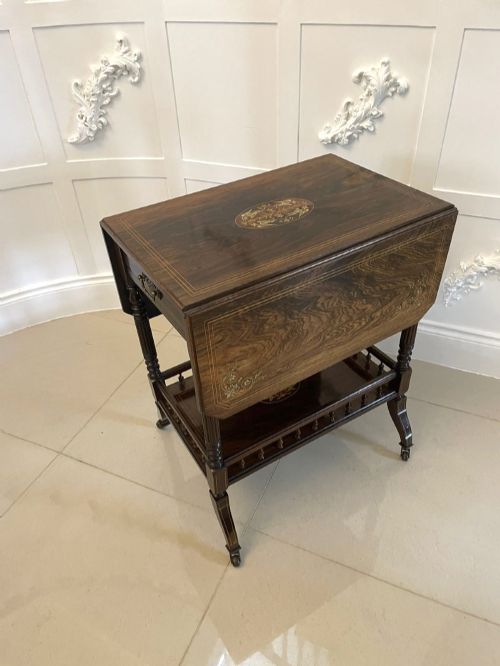
A rosewood inlaid occasional table is a small, movable piece of furniture designed for display or utility in a reception room. These items appear across the nineteenth and early twentieth centuries, spanning Regency, Victorian, and Edwardian periods.
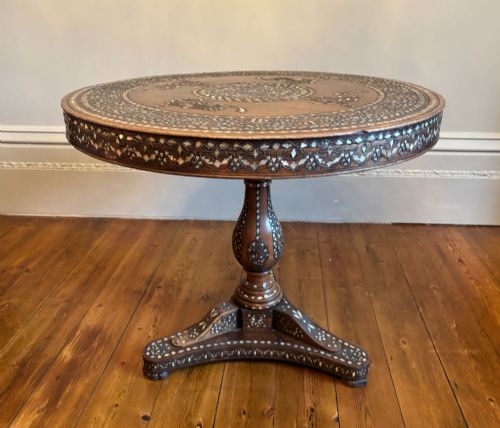
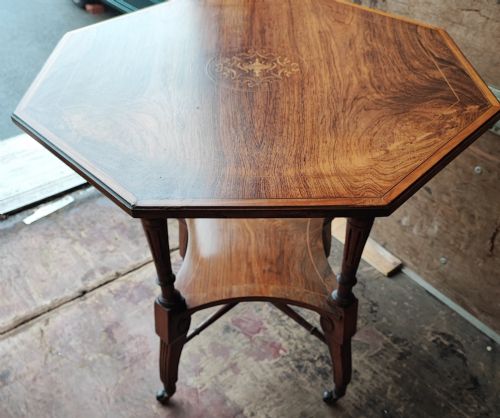
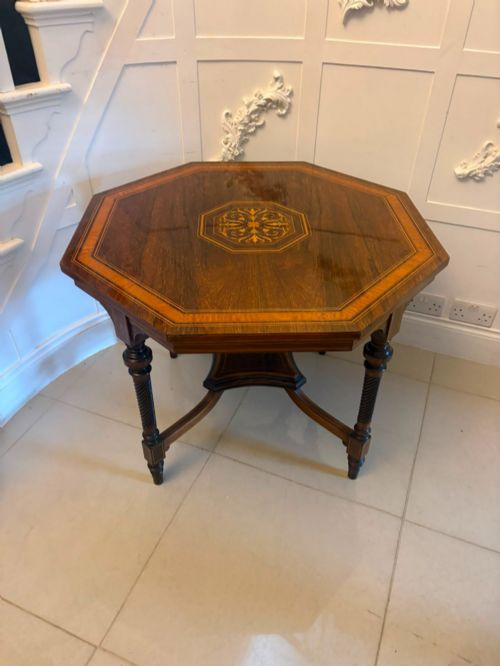
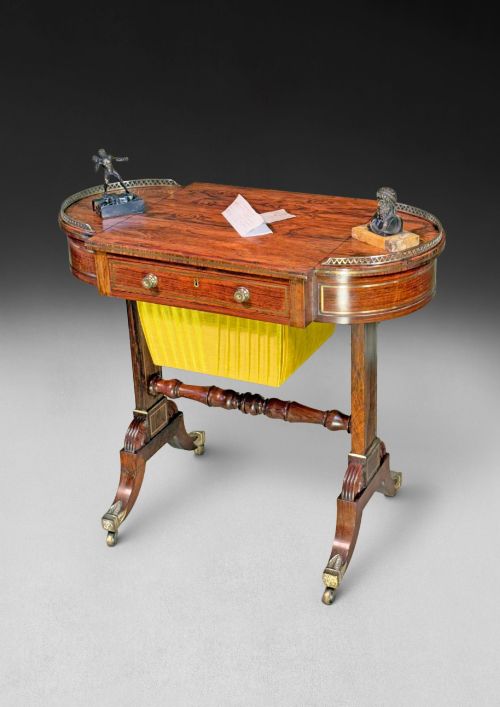
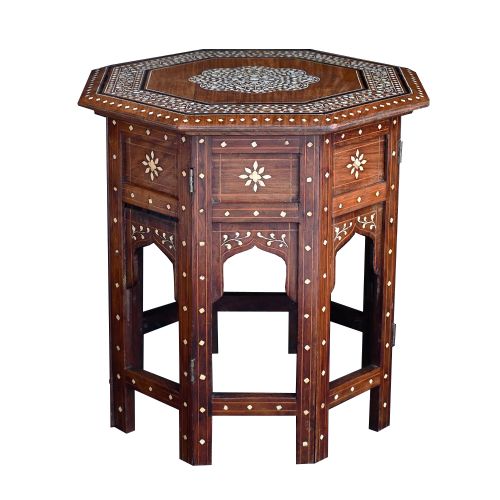
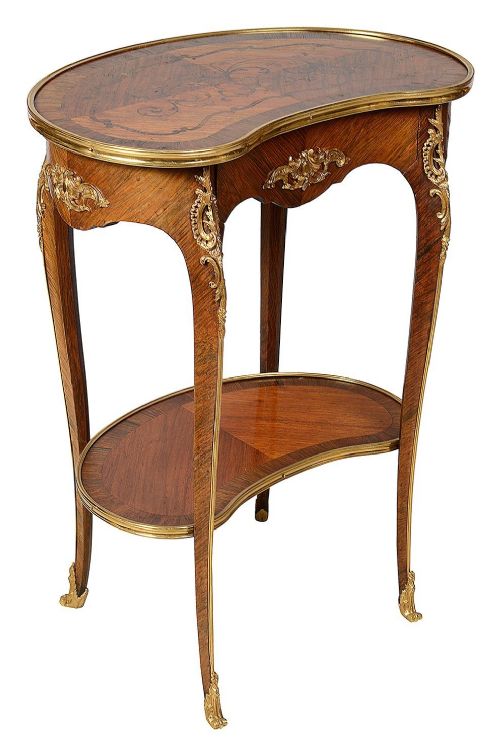
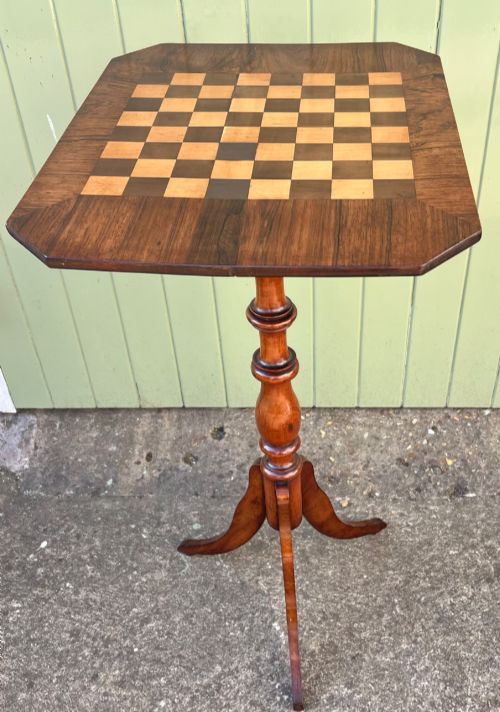
The selection here includes forms such as octagonal centre tables, nest of tables, work tables, and games tables. Pieces originate from British workshops, French makers, and Anglo-Indian production centres, notably Hoshiarpur.
The most common formats on this page combine rosewood timber with contrasting wood inlay, brass stringing, or bone and mother-of-pearl embellishment. They range from simple drop-leaf surfaces to elaborate chess and compendium tables.
Materials and construction
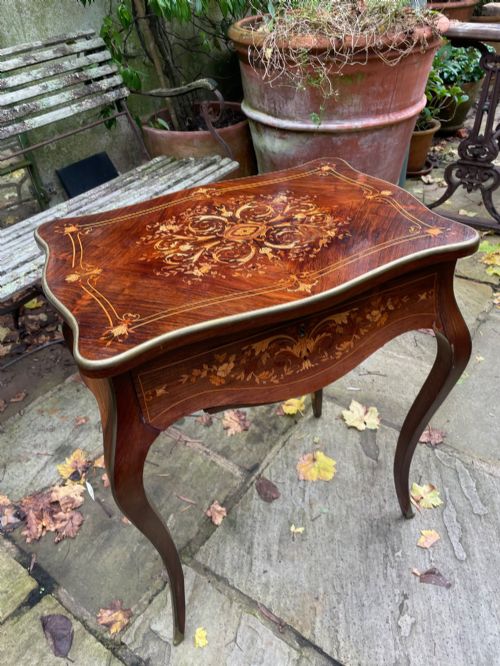
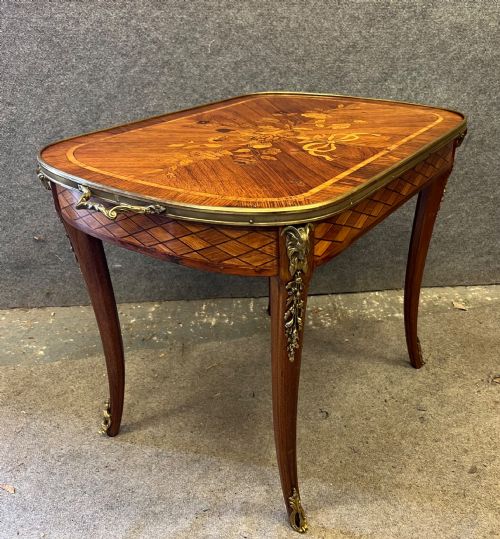
Cabinetmakers built these tables using dense rosewood as a primary solid timber or as a veneered surface over secondary woods. Marquetry and parquetry details employed satinwood, boxwood, walnut, and mahogany to form geometric patterns and floral motifs.
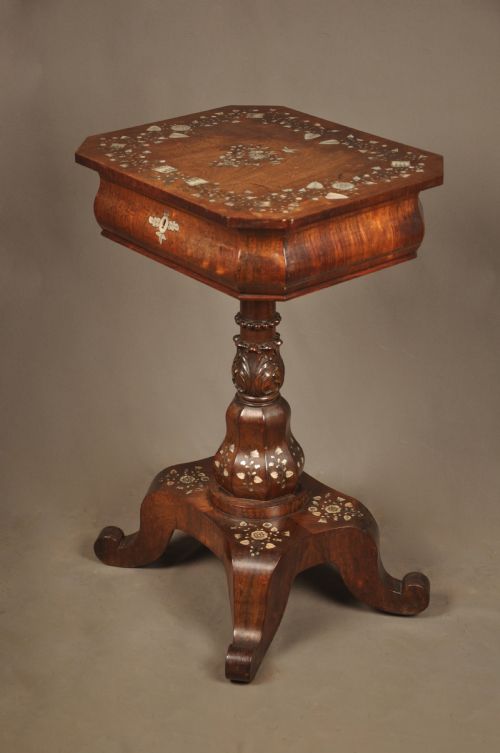
Inlay techniques included contrasting wood veneers cut into recesses, alongside brass stringing channelled directly into the top. Anglo-Indian examples from Hoshiarpur featured intricate surface carving combined with bone or mother-of-pearl inlay set into dense timber.
Rosewood Inlaid Occasional Table Retail Price Guide 2026
Typical asking prices for rosewood inlaid occasional table among the pieces listed under this phrase on Sellingantiques today, from the lower quarter to the upper quarter. They describe what is for sale here now, not the wider market.
Listings feature nineteenth and early twentieth-century pieces, spanning the Regency, Victorian, and Edwardian periods in both British and Anglo-Indian styles.
Markers of quality
Quality rests on the precision of the timber matching and the crispness of the inlay work. Finer examples display tight, symmetrical wood grains and meticulously fitted brass or bone elements that sit flush with the surrounding surface.
Structural integrity and secondary timber selection distinguish workshop standards. Superior pieces maintain rigid joints in complex forms like nesting tables and rotating chess boards, avoiding visible gaps in the veneer or loose decorative stringing.
Liberty & Co·Edwards & Roberts·Collingson & Lock
The Rosewood Inlaid Occasional Table Glossary
- Marquetry
- Decorative veneer work arranged to form pictures or ornamental patterns. It differs from inlay by assembling the design on a backing sheet before applying it to the furniture surface.
- Stringing
- Thin lines of contrasting wood or brass inlaid into channels cut into the surface of a table. This technique frames table tops and drawer fronts.
- Quartetto
- A set of four nesting tables that graduate in size to slide beneath one another. Regency makers produced notable examples in rosewood.
- Compendium table
- A multifunctional piece containing compartments for games, writing, or sewing equipment. These tables often incorporate sliding boards and fitted interiors beneath the main surface.
- Hoshiarpur
- A North Indian centre known for intricate woodwork and occasional tables. Pieces from this region feature dense carving combined with bone or mother-of-pearl inlay.
Rosewood Inlaid Occasional Table: Frequently Asked Questions
How do I date a rosewood table?
Dating relies on stylistic markers, construction methods, and secondary timbers visible beneath or inside the piece. Regency examples often feature brass stringing and classical pedestal bases, whereas Victorian items lean towards heavy marquetry and octagonal tops.
Examining the underside and drawer linings reveals joinery details that help separate early nineteenth-century production from later Edwardian or Anglo-Indian revivals.
Where were occasional tables placed?
These pieces functioned as movable surfaces for lamps, books, or tea service in Victorian and Edwardian drawing rooms. Their portable nature allowed them to sit beside seating or in the centre of a room.
Specialised forms like work tables or nest of tables provided utility that could be tucked away when not required for sewing or entertaining.
How do I clean rosewood surfaces?
Maintenance requires gentle dusting with a dry, soft cloth to prevent particulate accumulation on the polished veneer. Avoid liquid polishes and silicone sprays, which build up films over time.
Occasional application of high-grade beeswax feeds the timber and protects the finish without stripping the original patina or damaging delicate inlay work.
What is a nesting table set?
A nest of tables consists of a graduated set of small occasional surfaces designed to slide neatly beneath the largest top. They offered flexible table space for tea or writing without cluttering the room.
Regency and Victorian makers produced these sets in rosewood, sometimes integrating chess boards into the primary surface.