

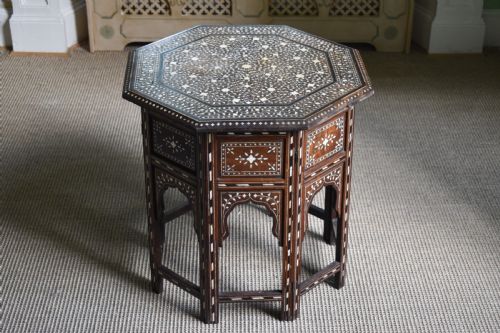

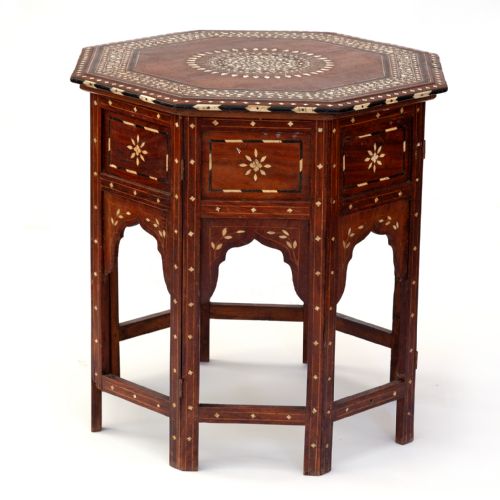


Oriental Bone Inlay Table
These oriental bone inlay table pieces bring intricate craftsmanship and rich global styles into a room, offering both functional surfaces and striking decorative focal points.
Oriental Bone Inlay Table
When you search for an oriental bone inlay table, you are looking at items defined by meticulous surface decoration and diverse regional aesthetics. The pieces on this page span the nineteenth century, the Victorian era, nineteen-ten, nineteen-twenty, and nineteen-thirty, reflecting global design revivals.
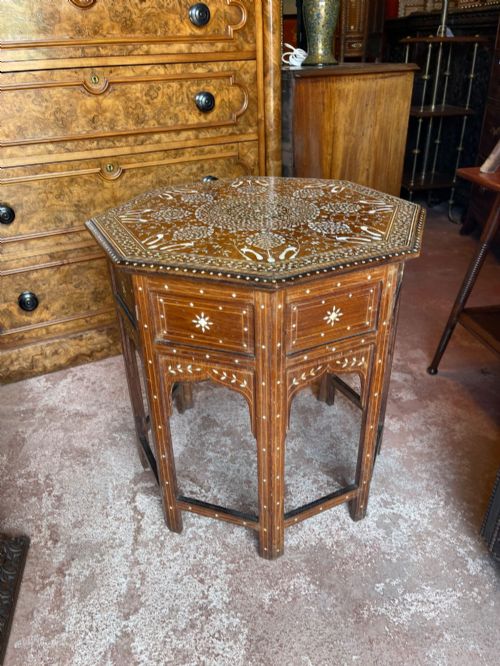
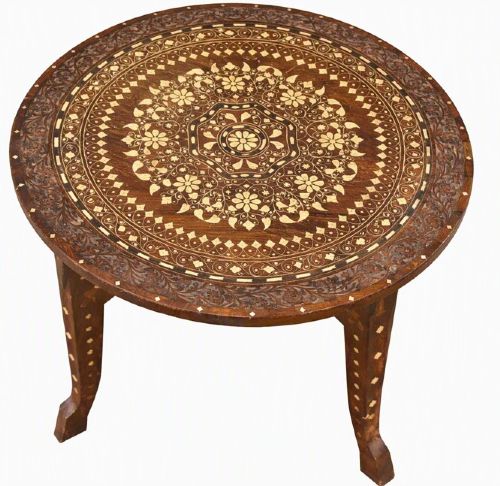
The forms vary across side tables, occasional tables, octagonal lamp tables, and folding tables, alongside related tabletop cabinets, folding screens, and chests. You will most frequently meet circular, octagonal, or star-shaped occasional tables featuring dense surface ornamentation.
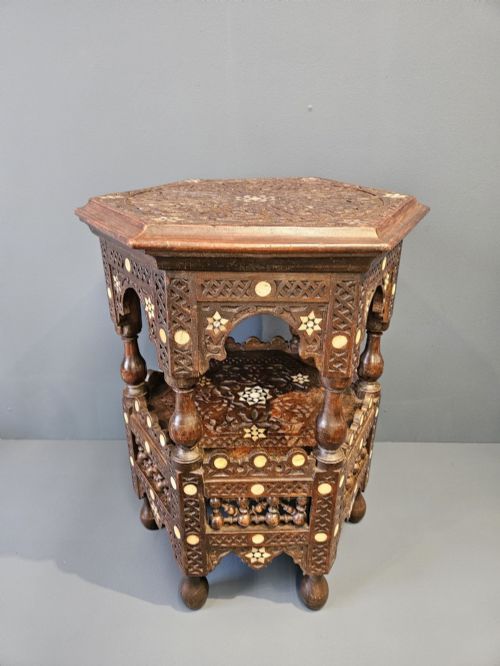
Origins and stylistic influences include Anglo-Indian, Moorish Revival, Ottoman, Syrian, Islamic Revival, Bohemian, and Meiji Period designs. These items demonstrate a rich cultural exchange in furniture making during the nineteenth and early twentieth centuries.
How they were made
Makers constructed these pieces using dense timbers such as rosewood, teak, sheesham wood, sandalwood, and walnut alongside general hardwood. Artisans carved these woods deeply to create intricate geometric and floral frameworks designed to hold contrasting decorative elements.
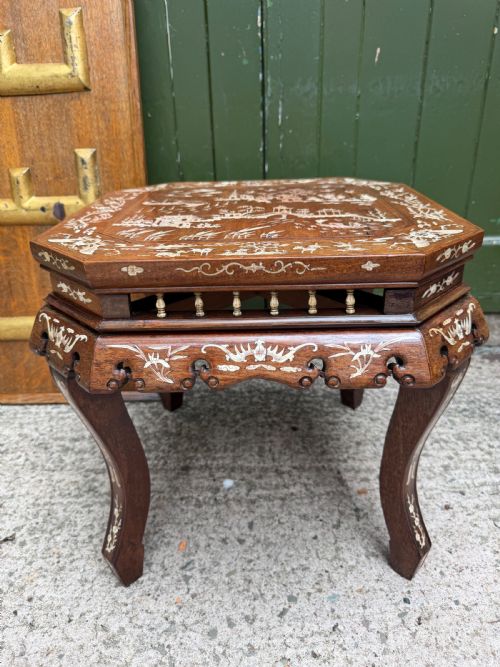
Surface ornamentation relies on hand-cut bone inlay, often combined with mother-of-pearl to catch the light and create shimmering tonal variation. Craftsmen set these small fragments meticulously into the timber base to form complex panels and borders.
Oriental Bone Inlay Table Retail Price Guide 2026
Typical asking prices for oriental bone inlay table among the pieces listed under this phrase on Sellingantiques today, from the lower quarter to the upper quarter. They describe what is for sale here now, not the wider market.
What varies in quality
Quality rests in the density and precision of the carving across the timber substrate. Superior examples display deeply sculpted foliage and crisp geometric borders that remain sharp and securely fitted.
The intricacy of the bone inlay and the integration of mother-of-pearl distinguish finer work from simpler output. Pieces stamped by notable retailers like Liberty & Co demonstrate established provenance and superior workshop standards.
Liberty & Co
The Oriental Bone Inlay Table Glossary
- Bone inlay
- A decorative technique where small pieces of bone are set into recesses carved into a wooden surface to create patterns. This method produces intricate geometric and floral designs.
- Hoshiarpur
- A historic centre in Punjab known for master woodcarving and inlay work. Tables from this region often feature dense foliage and star motifs.
- Moorish Revival
- An architectural and decorative style drawing on North African and Spanish Islamic design. It utilises horseshoe arches, rich carving, and geometric complexity.
- Octagonal
- Having eight sides. This shape appears frequently in occasional and lamp tables from these stylistic traditions.
- Mother-of-pearl
- The iridescent inner layer of certain mollusc shells. Craftsmen cut this material to accompany bone inlay for added shimmer and contrast.
Oriental Bone Inlay Table: Frequently Asked Questions
What is an oriental bone inlay table?
These items are decorative occasional surfaces featuring detailed woodcarving and inset bone or mother-of-pearl ornamentation. They reflect global design movements from the nineteenth and early twentieth centuries.
They bring historical character and rich texture into contemporary interiors as functional accent pieces.
How do I date an antique table?
Dating relies on stylistic markers, timber choices, and construction methods associated with periods like the Victorian era or the nineteenth century. Makers' marks or retailer stamps, such as Liberty & Co, provide precise chronological evidence.
Comparing regional characteristics, such as Hoshiarpur carving styles, helps narrow down the origin and timeframe.
How were these tables used historically?
They served primarily as occasional, side, or lamp tables in Victorian and Edwardian drawing rooms. Their portable folding designs also allowed for flexible placement.
Today they function effectively as bedside stands, plant supports, or central display surfaces.
How do I care for bone inlay?
Maintenance requires gentle dusting with a soft, dry cloth to protect the delicate timber and inset bone panels. Avoid placing them in direct sunlight or near heat sources to prevent wood movement.
Applying occasional suitable furniture wax helps nourish the hardwood without disturbing the intricate surface work.