



Inlaid Folding Occasional Table
An inlaid folding occasional table offers a practical surface that packs flat when not in use, bringing rich wood and intricate detail to smaller spaces.
Inlaid Folding Occasional Table
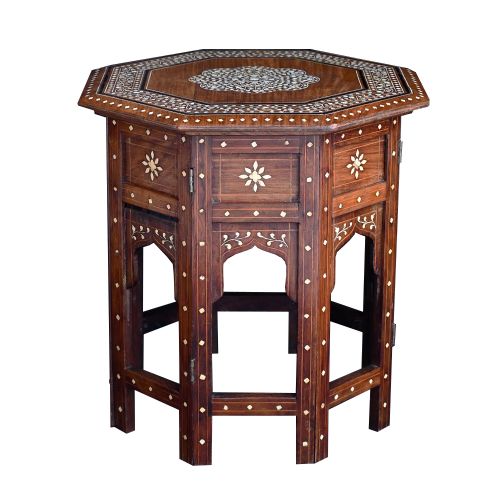
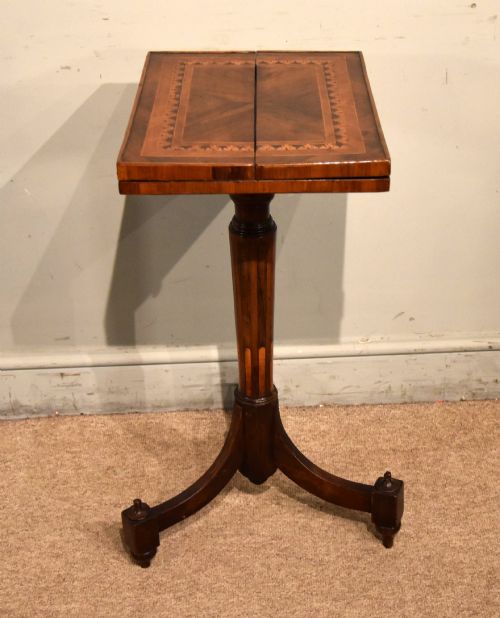
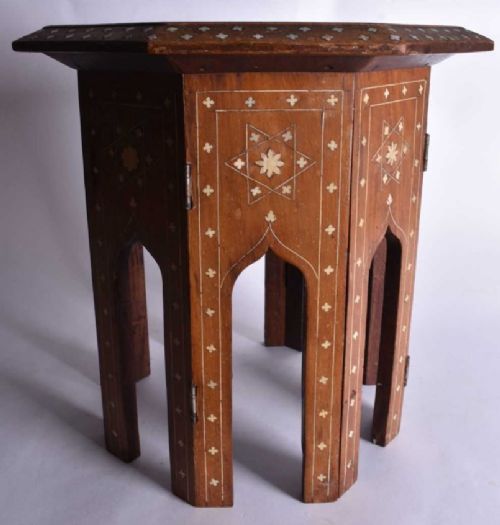
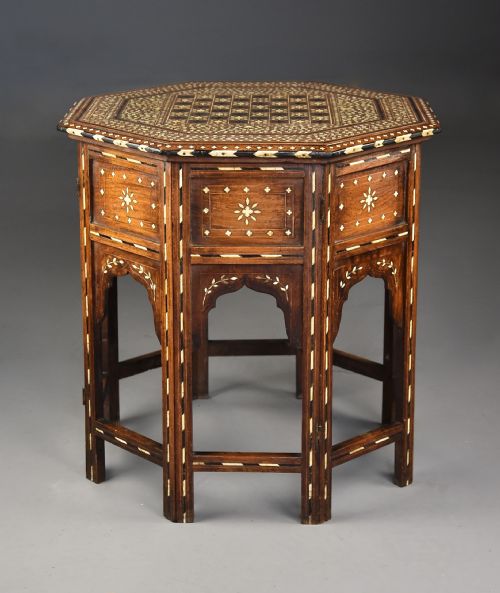
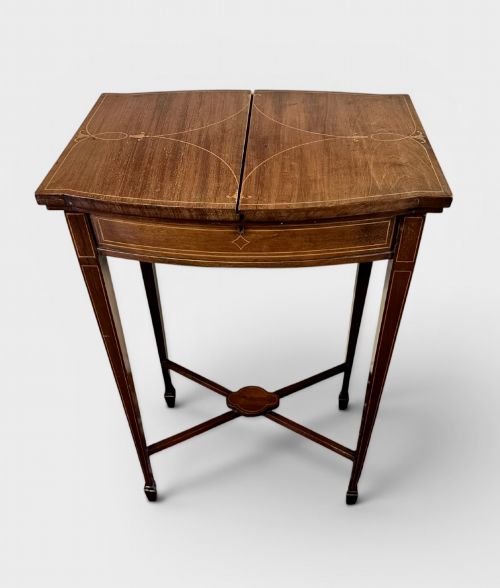
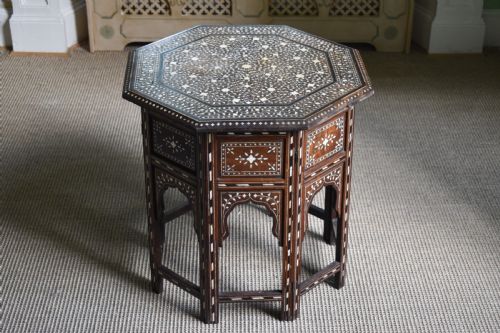
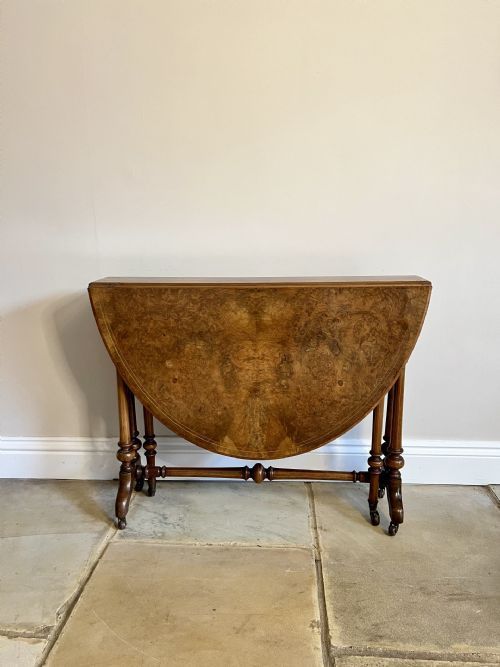
When searching for an inlaid folding occasional table, you encounter diverse forms ranging from drop-leaf pembroke tables and gate-leg sutherland tables to octagonal tables originating from British India and the Middle East. These pieces serve flexible functions in domestic settings, moving easily between rooms as tea, card, or display surfaces.
The material vocabulary spans traditional British cabinet woods like mahogany, walnut, and rosewood alongside exotic timbers such as teak and satinwood. These are enriched with decorative surface work including brass, bone, and mother-of-pearl inlay, as well as fine marquetry and floral banding.
How they were made
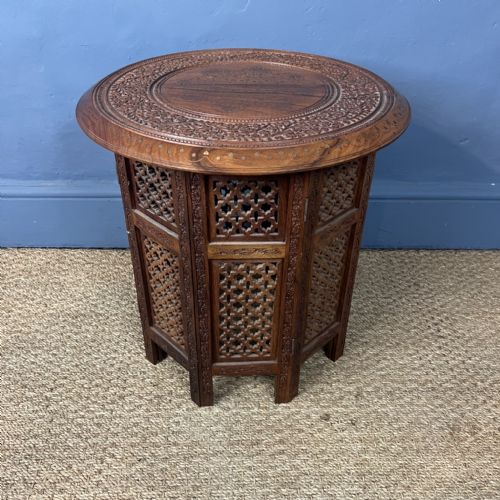
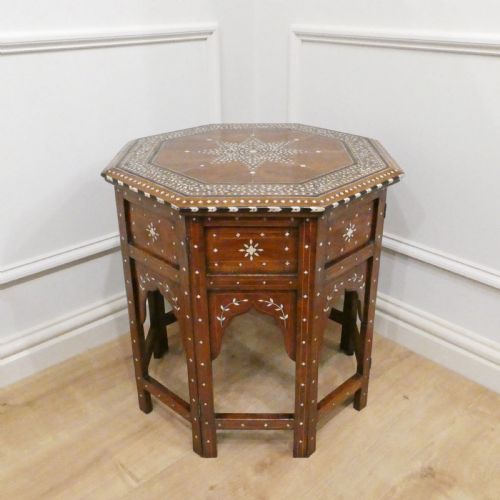
Cabinetmakers constructed the folding mechanisms using intelligent hinges, drop-leaves, and collapsible bases designed to save space without sacrificing stability. Tables from Hoshiarpur and Damascus employ intricate geometric piercing and crisp chip-carving to bed detailed brass, bone, or mother-of-pearl work directly into dense hardwoods like teak and shesham.
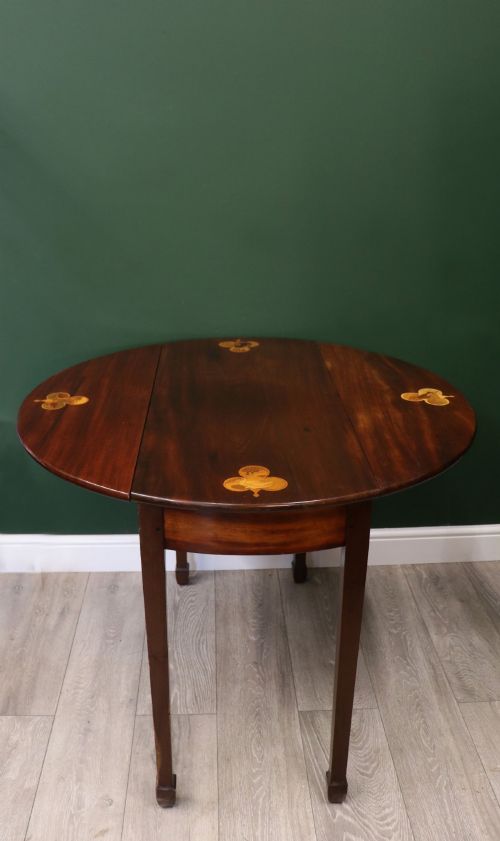
British examples rely on traditional veneering and inlay techniques, setting contrasting light satinwood or boxwood into dark mahogany or burr walnut fields. Marquetry panels utilise carefully cut organic veneers to build floral and ribbon motifs across the tops.
Some Victorian handkerchief tables actually fold into triangular shapes resembling pocket squares, neatly defying standard furniture geometry.
What varies in quality
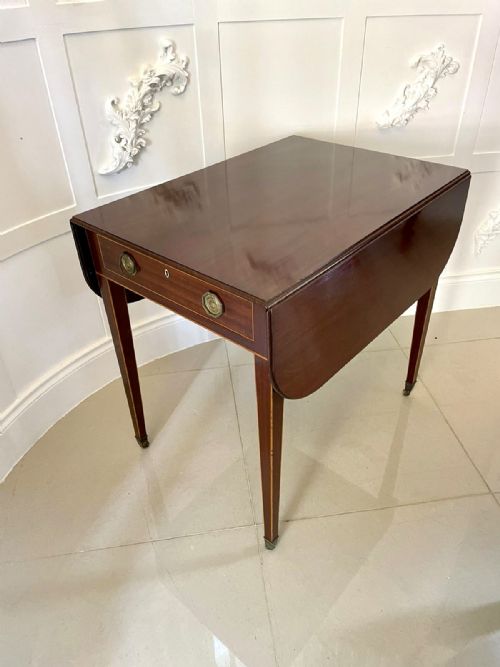
Quality rests in the precision of the joinery and the crispness of the surface decoration, distinguishing master craftsmanship from standard workshop output. On British pieces, tighter veneer matching and more complex multi-wood stringing separate superior items.
For Anglo-Indian and Middle Eastern examples, the depth and density of the carved detailing alongside the completeness of the metal or bone inlay define the grade. The integrity of the folding frame and the smoothness of the hinge action determine durability.
The Inlaid Folding Occasional Table Glossary
- Sutherland table
- A narrow drop-leaf table featuring exceptionally slender gate legs that swing out to support the wide leaves when raised.
- Pembroke table
- A rectangular or oval table fitted with hinged flaps on two opposing sides and a drawer beneath the frieze.
- Marquetry
- The art of forming decorative patterns by fitting together small pieces of wood veneer, shell, or bone into a prepared surface.
- Hoshiarpur
- A region in Punjab renowned for intricate woodwork featuring dense carving combined with inlaid brass and bone.
- Stringing
- Thin lines of contrasting timber inlaid into channels cut into the main furniture surface to create delicate borders.
Inlaid Folding Occasional Table: Frequently Asked Questions
How do I care for an inlaid table?
Dust regularly with a dry cloth and occasionally apply a neutral beeswax to nourish the timber without loosening the delicate inlay work.
Keep these pieces away from direct heat sources and strong sunlight to prevent the wood from shrinking and the historic glue from drying out.
Can I use an antique folding table daily?
Most folding tables were built for functional home use and handle normal domestic tasks quite well if treated with reasonable care.
Take care when operating older hinges and avoid placing excessive weight on the outer leaves of drop-leaf and sutherland mechanisms.
What is the difference between marquetry and inlay?
Inlay involves cutting a recess into a solid piece of wood and setting a contrasting material flush into that hollow.
Marquetry builds an entire picture or pattern from assembled pieces of veneer on a paper backing before applying it as a single sheet.
How do I identify an Anglo-Indian piece?
Look for dense overall carving covering every visible surface, combined with contrasting metal wire or bone inserts forming geometric patterns.
These tables frequently utilise teak or exotic regional timbers and often feature folding octagonal tops supported on fret-cut arcade bases.