

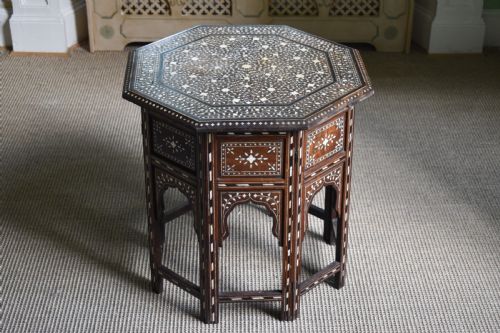


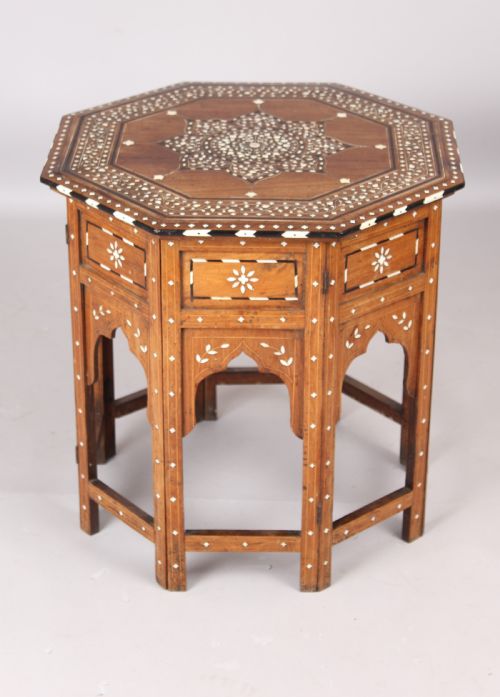

Hoshiarpur Carved Wooden Table
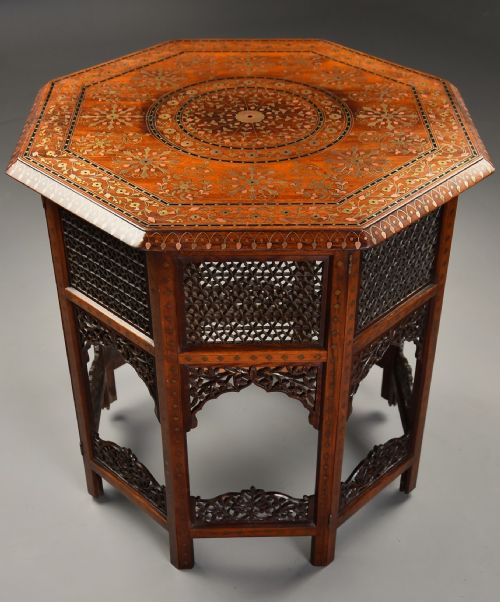
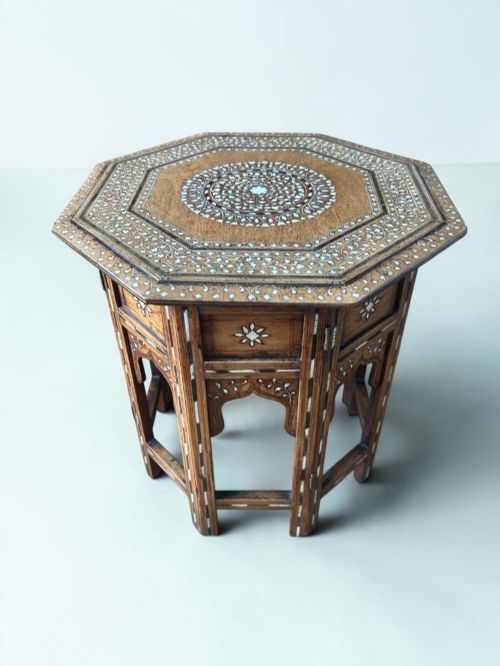
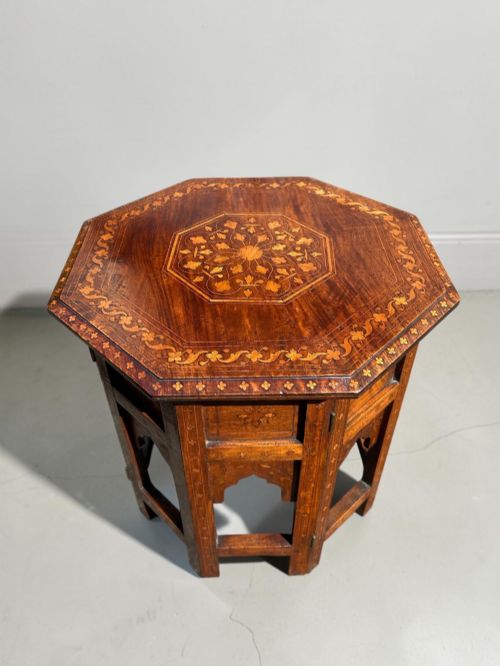
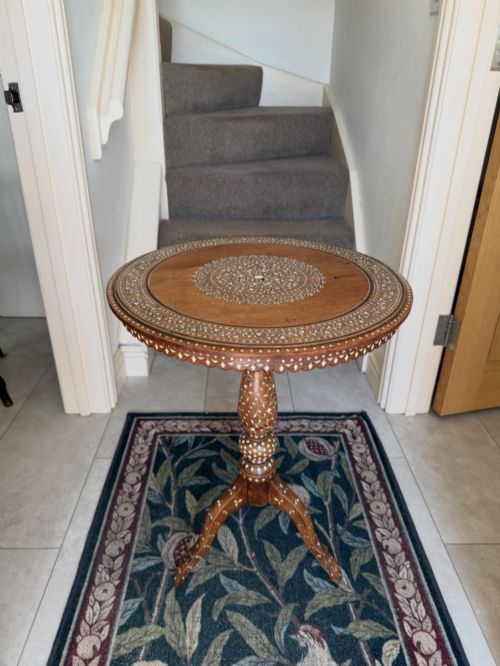
A hoshiarpur carved wooden table brings intricate craftsmanship into a room through dense carving and geometric inlay.
Hoshiarpur Carved Wooden Table
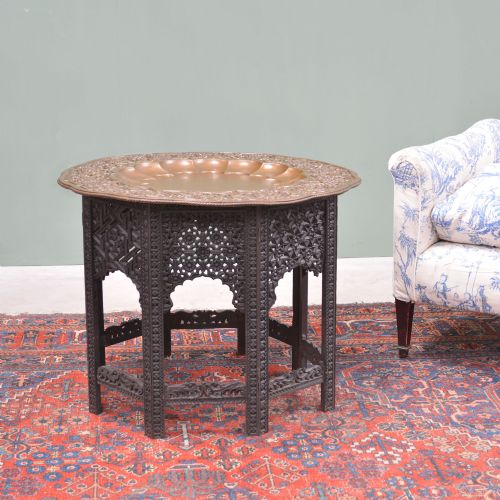
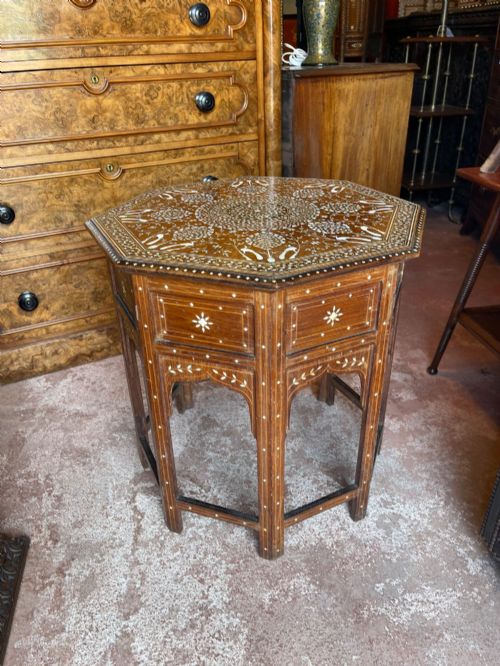
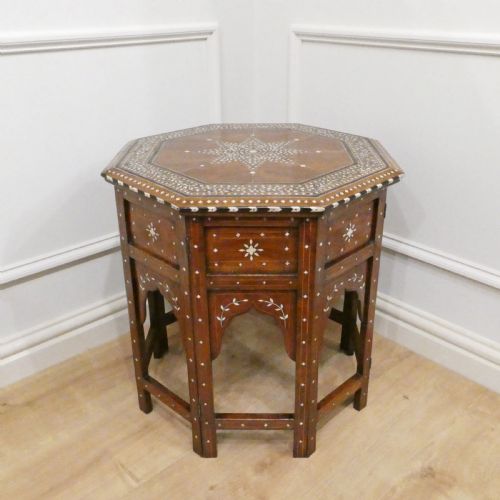
A hoshiarpur carved wooden table is an expression of Anglo-Indian artistry, created in the Punjab region during the nineteenth and early twentieth centuries. These tables frequently take octagonal forms or feature removable tray tops designed for versatility in domestic spaces. The pieces seen here span from the mid-nineteenth century through to the early decades of the twentieth century, reflecting a distinct period of cross-cultural design.
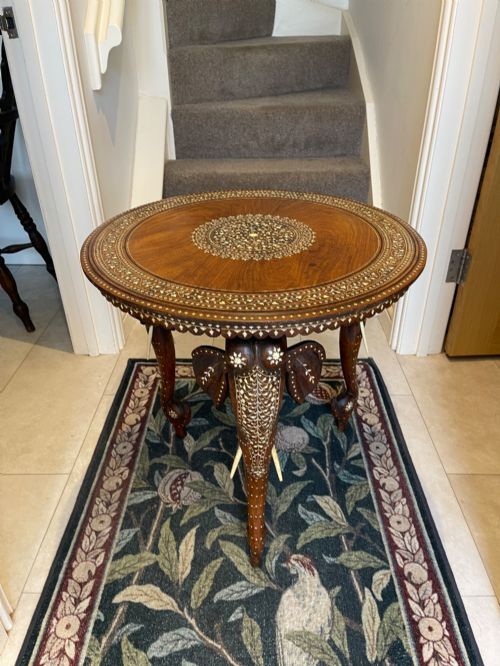
The most common formats on this page are occasional tables, side tables, and pedestal supports constructed for practical use in drawing rooms or parlours. Forms range from simple tripod bases to elaborate elephant tables and Taj Mahal motifs that showcase the sculptural ambition of the makers. Each example demonstrates the characteristic integration of surface carving with contrasting inlay work.
How they were made
The foundation of a hoshiarpur carved wooden table relies upon dense hardwoods such as teak, rosewood, and padauk, selected for their stability under intricate hand-working. Artisans carved deep, continuous floral and geometric patterns across the entire wooden surface, leaving virtually no plain areas. This labour-intensive reduction method required precise chisel work to maintain crispness across complex motifs.
Inlay work forms the secondary decorative layer, utilising bone, brass, and contrasting wood pieces fitted meticulously into hand-cut channels. These materials create striking visual contrast against the dark timber ground, often following geometric lattice or scrolling vine patterns. Folding or collapsible structures on certain forms demonstrate clever joinery designed for portability without sacrificing rigidity.
Hoshiarpur Carved Wooden Table Retail Price Guide 2026
Typical asking prices for hoshiarpur carved wooden table among the pieces listed under this phrase on Sellingantiques today, from the lower quarter to the upper quarter. They describe what is for sale here now, not the wider market.
Listings span from eighteen-sixty to nineteen-twenty, featuring teak, rosewood, padauk, bone inlay, and brass inlay in octagonal and occasional forms.
What varies in quality
The distinction between ordinary and exceptional examples lies in the depth and discipline of the carving itself. Superior pieces exhibit sharp, undercut foliage and perfectly symmetrical geometric lattices, whereas lesser items display shallow, hasty scoring that blurs the design. The complexity of the silhouette also plays a role, with multi-tiered pedestals and figural elements demanding higher levels of sculptural skill.
Material selection and the precision of the inlay determine the upper echelon of these objects. Finely sliced bone or polished brass fitted flush into the timber without visible gaps represents superior workshop standards. Furthermore, the preservation of the original surface finish without excessive modern intervention dictates the integrity of the piece.
The Hoshiarpur Carved Wooden Table Glossary
- Anglo-Indian
- A descriptive term for furniture made in India during the British colonial period, combining traditional local craftsmanship with European forms.
- Bone inlay
- A decorative technique where thin pieces of animal bone are shaped and set flush into carved channels within the wooden surface.
- Octagonal
- Having eight sides and eight angles, representing the standard geometric plan for many traditional occasional tables from this region.
- Tray top
- A removable upper section with a raised gallery edge, designed to lift off the folding or pedestal base for serving or storage.
Hoshiarpur Carved Wooden Table: Frequently Asked Questions
How do I clean a carved wooden table?
Dust the intricate carvings regularly using a soft, natural bristle brush to prevent dirt accumulation in the recesses.
Avoid liquid polishes or harsh chemical cleaners, as these can damage the aged timber and dislodge delicate bone or brass inlay.
Are these tables sturdy enough for daily use?
Most occasional and side tables function well for holding lamps, books, or decorative objects in low-traffic areas.
Exercise caution with folding or tripod structures to prevent wobbling, and avoid placing excessive weight on the edges of tray-top versions.
What is the difference between teak and rosewood pieces?
Teak offers a warm, golden-brown hue with a slightly coarser grain, often paired with brass wire or bone elements.
Rosewood presents a heavier, darker reddish-brown appearance with denser figuring that suits deep, sculptural relief carving.
How do I date a hoshiarpur table?
Examine the construction methods, the types of inlay materials, and the wear patterns on the underside of the top.
Nineteenth-century examples generally display hand-cut joinery and aged patina, while early twentieth-century pieces may show slightly more standardised formatting.