





Marquetry Octagonal Coffee Table
These marquetry octagonal coffee table pieces bring intricate geometric parquetry and diverse cultural motifs directly into your main sitting space.
Marquetry Octagonal Coffee Table
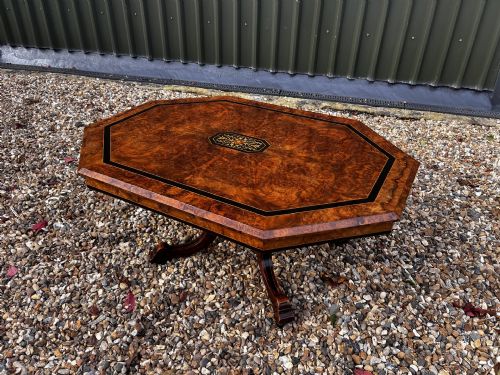
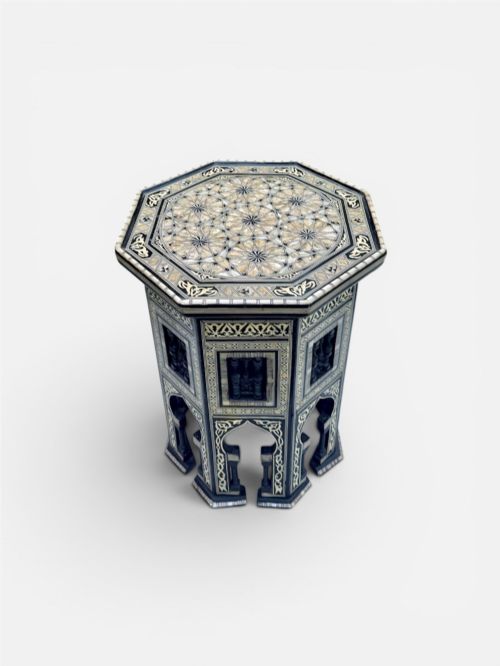
A marquetry octagonal coffee table unites distinct regional craft traditions with the practical low surfaces required by modern living. These pieces draw on late nineteenth century Anglo-Indian, Moorish Revival, Ottoman and Sorrento aesthetics.
The dominant forms on this page include occasional tables and side tables adapted into coffee tables, featuring characteristic eight-sided tops. Walnut, mahogany and ebonised wood provide the primary structures for these varied surfaces.
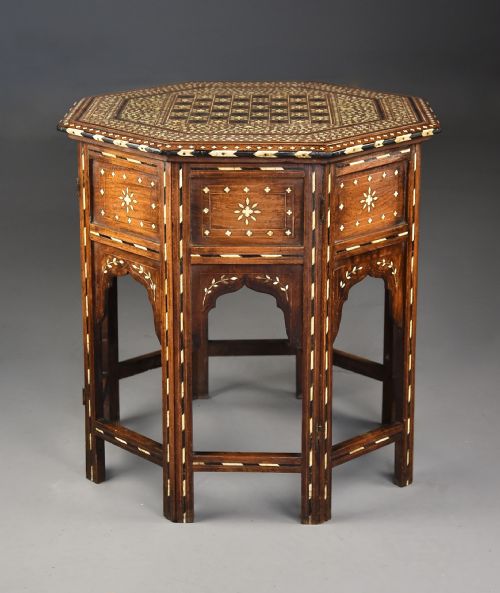
Origins stretch from British workshops influenced by Liberty and Co. to Italian provinces and Middle Eastern centres. Buyers encounter everything from Georgian mahogany examples to intricate Anglo-Indian Hoshiarpur creations.
How they were made
Constructed using durable timbers such as walnut, mahogany and ebonised wood, these tables rely on solid foundations to support complex decorative programmes. Cabinet makers shaped these woods into eight-sided tops suitable for domestic use.
Inlay work defines the surface decoration, utilising bone, mother-of-pearl and contrasting wood veneers to build geometric and floral patterns. Artisans meticulously fitted these small elements into recessed channels across the table tops.
Marquetry Octagonal Coffee Table Retail Price Guide 2026
Typical asking prices for marquetry octagonal coffee table among the pieces listed under this phrase on Sellingantiques today, from the lower quarter to the upper quarter. They describe what is for sale here now, not the wider market.
Listings feature pieces from the Georgian period through the 1930s, constructed in walnut, mahogany, rosewood and ebonised wood.
What varies in quality
The precision and density of the inlay work largely determine the standard of an individual piece. Finer examples display tightly fitted bone, mother-of-pearl and contrasting veneers with minimal filler between the elements.
Timber selection and secondary structural integrity also separate standard production from superior craftsmanship. Tables utilising burr walnut or substantial rosewood foundations generally reflect higher ambition in their creation.
Liberty and Co.
The Marquetry Octagonal Coffee Table Glossary
- Marquetry
- The art of forming decorative patterns on a wooden surface by fitting together small pieces of veneer, bone or shell. This technique allows for elaborate pictorial or geometric designs across the table top.
- Mother-of-Pearl
- The iridescent inner layer of certain mollusc shells, used extensively for inlaid highlights in these designs. It catches the light to create contrasting shimmer against darker timbers.
- Ebonised
- Wood treated with a dark finish to imitate expensive ebony. Makers frequently utilised this technique to make inlaid bone and mother-of-pearl details stand out clearly.
- Anglo-Indian
- A style describing items made in India during the British period, often combining local carving traditions with European furniture forms. Hoshiarpur workshops were particularly noted for this intricate production.
- Sorrento Ware
- Italian woodwork originating from the town of Sorrento, famous for detailed micro-mosaic inlay and geometric banding. These pieces often feature warm fruitwoods and delicate pastoral motifs.
Marquetry Octagonal Coffee Table: Frequently Asked Questions
How do I care for inlaid wood?
Inlaid wooden surfaces require gentle cleaning with a soft, dry cloth to remove dust from the recessed channels. Avoid excessive moisture, which can loosen delicate bone, mother-of-pearl or veneer elements.
Applying a suitable furniture wax occasionally helps nourish the surrounding timber and maintain the lustre of the polish without harming the inlaid sections.
Where were these tables made?
These tables originate from diverse regions, including British workshops influenced by Moorish styles, Italian provincial centres like Sorrento, and Indian hubs such as Hoshiarpur. Each area brought distinct material preferences and carving traditions to the eight-sided form.
Global trade and aesthetic movements during the Victorian era and later decades encouraged makers to adapt traditional local techniques for European homes.
What materials are used for inlay?
Inlay work on these pieces typically incorporates bone, mother-of-pearl, and contrasting wood veneers set into walnut, mahogany or ebonised wood bases. Bone provides a bright, opaque contrast against dark timber, while mother-of-pearl introduces an iridescent sheen.
Some examples also utilise specific regional timbers to achieve natural colour variations within the geometric patterns.