



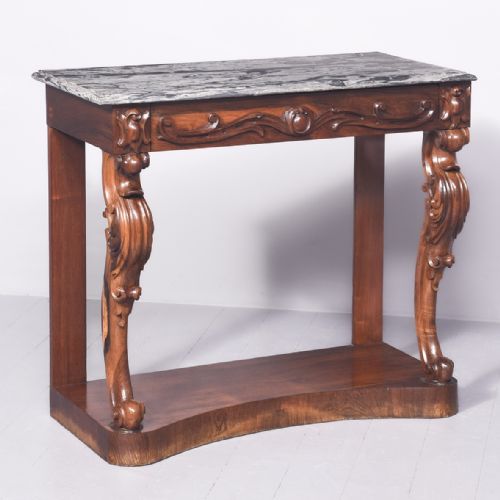


Rosewood Entry Table
A rosewood entry table brings rich grain and formal presence to a hallway, with console and centre tables dominating the selection.
Rosewood Entry Table
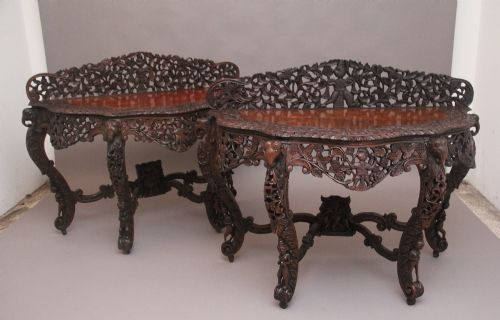
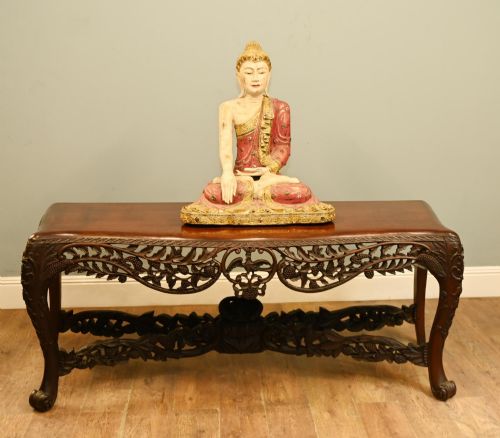
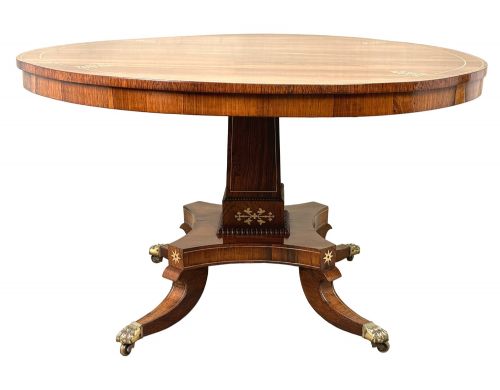
The selection ranges from compact circular centre tables and demi-lune hall pieces to substantial marble-topped pier tables and carved altar forms. Each type serves a distinct spatial function, whether placed against a hallway wall or positioned centrally in a grand entrance.
Materials and construction
These tables rely heavily on solid rosewood and dark hardwood substrates, frequently enhanced with contrasting satinwood or inlaid brass details. Structural stability is often provided by dense secondary timbers, supporting heavy marble slabs on specific console and pier formats.
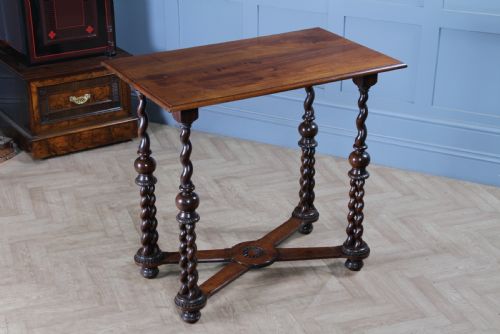
Carving techniques vary significantly by origin, featuring elaborate traditional Chinese motifs alongside British architectural elements like triple barley twist legs. Joinery methods range from European cabinet-making practices to traditional Asian mortise and tenon construction.
Rosewood Entry Table Retail Price Guide 2026
Typical asking prices for rosewood entry table among the pieces listed under this phrase on Sellingantiques today, from the lower quarter to the upper quarter. They describe what is for sale here now, not the wider market.
Listings feature nineteenth-century pieces spanning Regency, Victorian, and Qing Dynasty periods, utilising rosewood, marble, brass, and satinwood.
Evaluating quality
Quality rests upon the crispness of hand-carved detail and the selection of timber veneers or solid rosewood boards. Superior pieces exhibit precise brass inlay work, well-fitted marble tops, and stable structural integrity without excessive past restoration.
The refinement of the silhouette distinguishes finer examples, particularly in the proportions of Regency pedestal bases or the depth of relief on Anglo-Indian and Qing Dynasty carvings.
Peters of Genoa·Thonet
The Rosewood Entry Table Glossary
- Console table
- A table designed to stand against a wall, frequently secured to it with brackets for stability. These pieces often feature decorative front legs while relying on wall support.
- Pier table
- A specific type of side table traditionally placed against the wall space between two windows. They frequently incorporate heavy marble tops and mirror backs.
- Centre table
- A freestanding table designed to be viewed from all sides, placed in the middle of a room or grand hallway. Circular formats from the Regency period are typical examples.
- Demi-lune
- A half-moon shape used for table tops and frames, allowing the furniture to sit flush against a wall. This form is common in hall and console tables.
Rosewood Entry Table: Frequently Asked Questions
Where should a rosewood entry table be placed?
A console or hall table fits neatly against a primary hallway wall to provide a surface for lamps or decorative objects. Centre tables suit larger, open entryways where they can be viewed from all sides.
Ensure the dimensions allow clear passage through the entrance space, particularly when choosing deeper marble-topped pier tables.
How do I care for antique rosewood furniture?
Maintain the timber by keeping the table away from direct heat sources and strong sunlight, which can dry out and fade the wood. Dust regularly with a soft, dry cloth rather than using silicone-based polishes.
Treat marble inserts gently with mild, neutral cleaners to avoid damaging the polished stone surface.
What is the difference between a console and a centre table?
A console table is built to stand against a wall and may require structural attachment for balance. A centre table is completely freestanding with finished detailing on all sides.
Both forms appear frequently in nineteenth-century rosewood furniture collections.
How do I identify a 19th-century rosewood table?
Examine the timber density, hand-cut joinery methods, and the style of the carving or brass inlay. Nineteenth-century pieces often display distinct patination and construction traits specific to British, Anglo-Indian, or Qing Dynasty workshops.
Compare the form and decorative motifs against documented periods like the Regency or Victorian eras.