

Rosewood Chiffonier
A rosewood chiffonier brings rich dark timber and practical enclosed storage to a room, offering the classic elegance collectors seek for period interiors.
What these pieces are
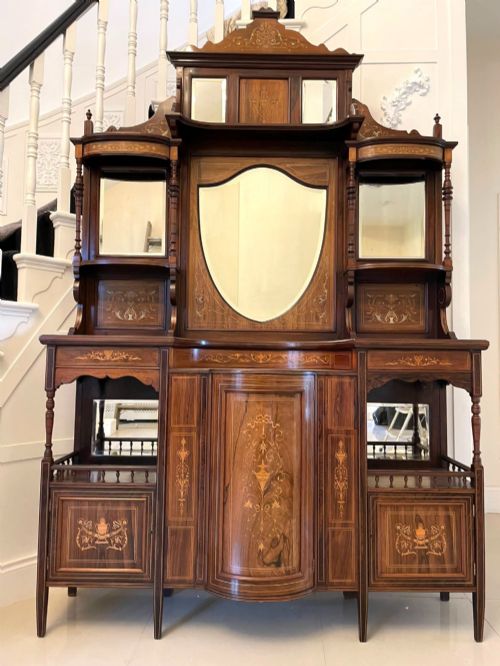
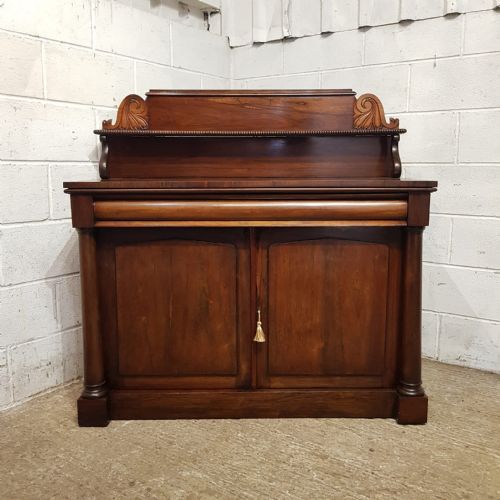
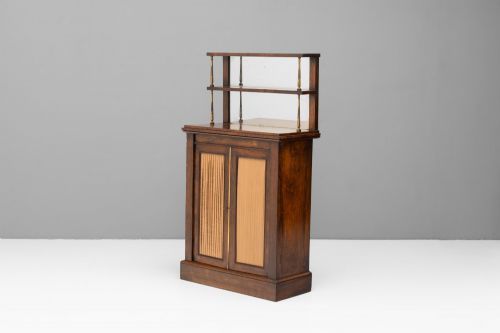
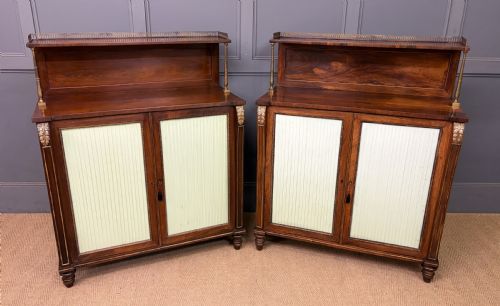
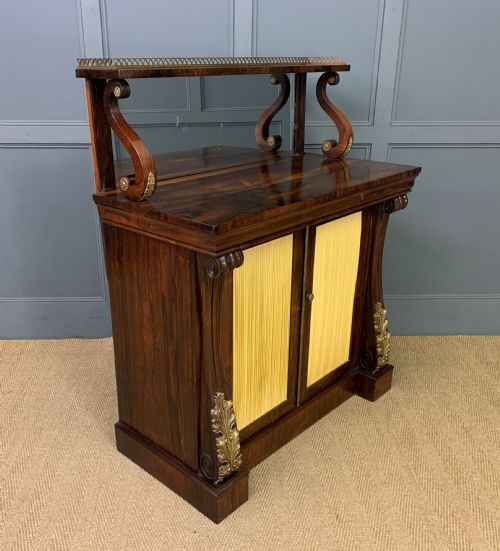
A rosewood chiffonier is a low cabinet designed for side storage, featuring a combination of lower cupboards and often a raised upper shelf or superstructure. These pieces serve as functional sideboards or display cabinets in dining rooms and sitting rooms.
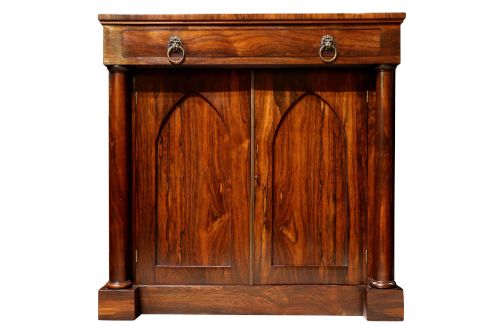
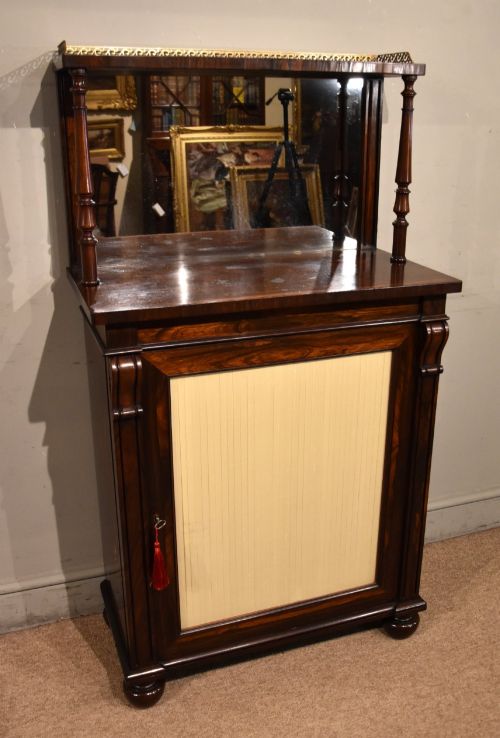
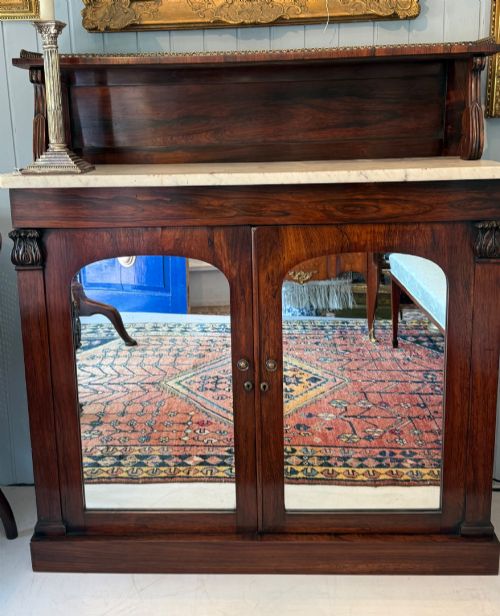
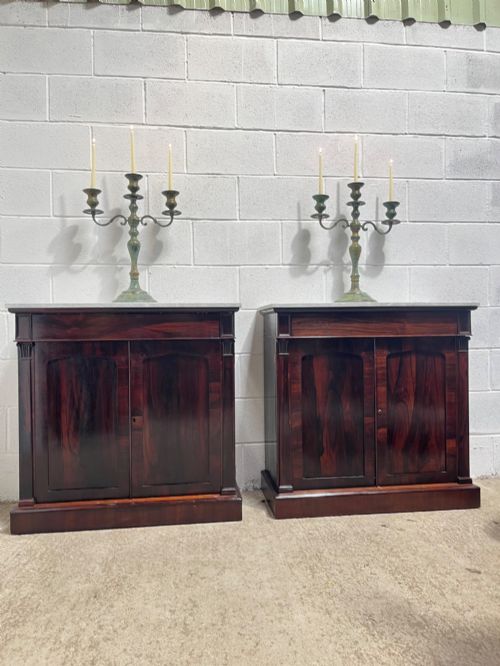
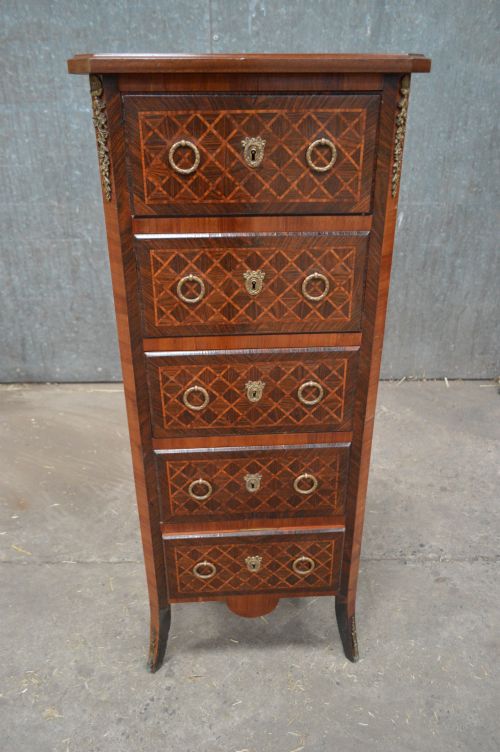
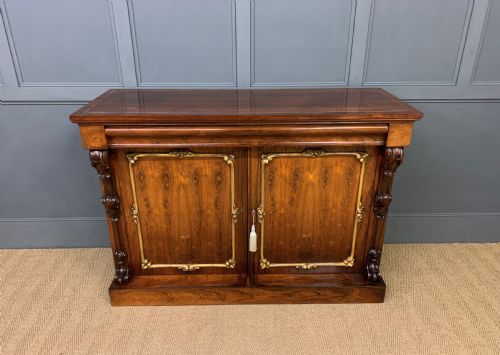
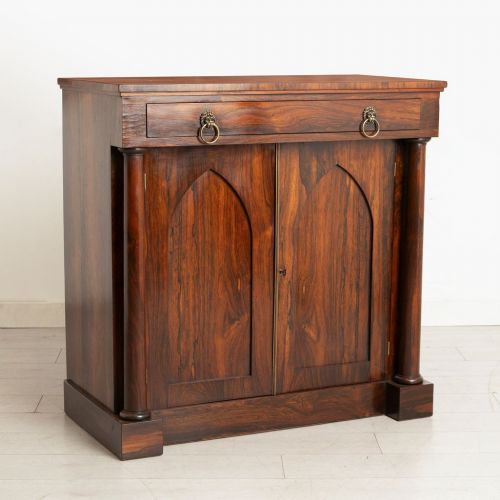
The pieces available span the Regency, William IV, and Victorian eras, with a strong showing of Regency and Early Victorian examples. Forms range from simple two-door cupboards to breakfront designs and marble-topped cabinets.
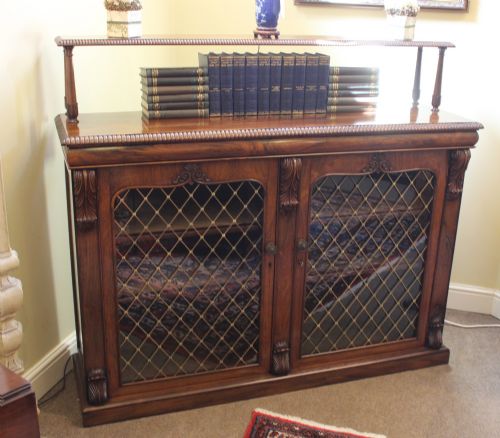
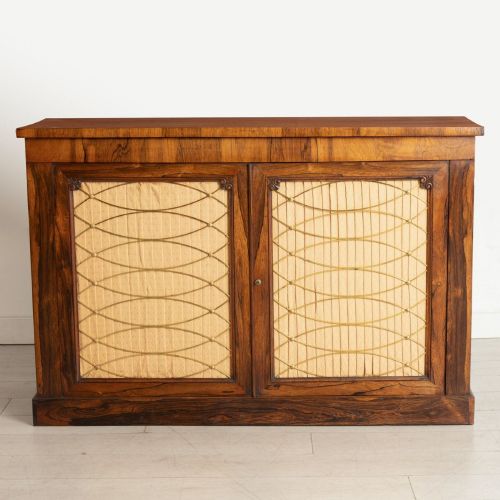
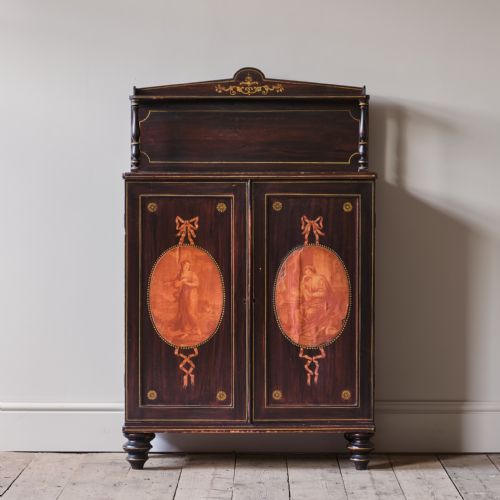
Originating largely from English workshops, these cabinets showcase the evolving domestic needs of the nineteenth century. Buyers encounter both plain timber fronts and versions enhanced with brass inlay, fabric panels, or glazed doors.
How they were made
Cabinet makers utilised dense rosewood veneers applied to solid secondary timbers, creating rich grain patterns across the main body of each chiffonier. Brass accents, marble tops, and glass panels were integrated into select pieces to elevate the design.
Interiors typically house fitted wooden shelving behind panelled or glazed doors, while upper superstructures incorporate carved supports and mirror backs on specific examples. Silk and fabric linings occasionally back the glazed compartments.
Retail Price Guide 2026
Typical UK retail prices for rosewood chiffonier, calculated from the Sellingantiques database of over a million retail prices indexed since 2003. This retail price guide relies exclusively on Sellingantiques data; no external sources or auction records are used, so the figures do not describe the wider market.
Secret side compartments occasionally hide behind carved scroll brackets, waiting for someone to discover where the butler stashed the keys.
What varies in quality
The standard of a rosewood chiffonier rests in the selection of the timber veneer and the precision of its application across large flat surfaces. Richly figured grain patterns and well-matched panels elevate the presence of the cabinet.
Construction details such as integrated marble tops, fine brass inlay, and structural stability separate standard production from superior pieces. The refinement of turned columns and carved scrollwork also marks the difference between basic utility and high craftsmanship.
William Trotter
The Rosewood Chiffonier Glossary
- Chiffonier
- A low nineteenth-century sideboard or cabinet equipped with lower doors and frequently a raised shelf structure above. This form developed to hold dining silver or books.
- Superstructure
- The raised shelf or back panel attached to the top of a cabinet, often supported by small columns or scrolling brackets.
- Breakfront
- A cabinet design where the central section projects forward from the flanking outer cupboards, creating depth and architectural rhythm on the facade.
- Simulated rosewood
- Common painted or stained graining applied to a more affordable timber to imitate the appearance of genuine exotic rosewood.
- Brass inlay
- Fine strips or decorative motifs of brass embedded flush into the timber surface to accentuate doors and drawer fronts.
Frequently Asked Questions
What is a rosewood chiffonier used for?
These cabinets function as low sideboards in dining rooms or sitting areas, providing enclosed storage behind lower doors for china, silver, or linens.
The upper shelves or superstructures serve as display ledges for decorative items, books, or small ornaments in period rooms.
How do I date a rosewood chiffonier?
Dating relies on observing stylistic markers across different nineteenth-century periods, from the clean lines of Regency pieces to the heavier proportions of William IV and Victorian examples.
Construction methods inside the cupboards and the presence of specific brass or marble additions help narrow down the decade of manufacture.
Where should I place a chiffonier?
A chiffonier fits well against a dining room wall or in a drawing room where low-level surface space is required without blocking light or windows.
Keep the timber away from direct heat sources and strong sunlight to protect the deep colour and finish of the rosewood veneer.
Are all chiffoniers fitted with marble tops?
Many examples feature solid timber tops finished with polished wood veneer, whilst select pieces incorporate fitted white or grey marble slabs.
Marble-topped variants offer a durable, heat-resistant surface that aligns with nineteenth-century serving practices in grander homes.