

Rococo Writing Table
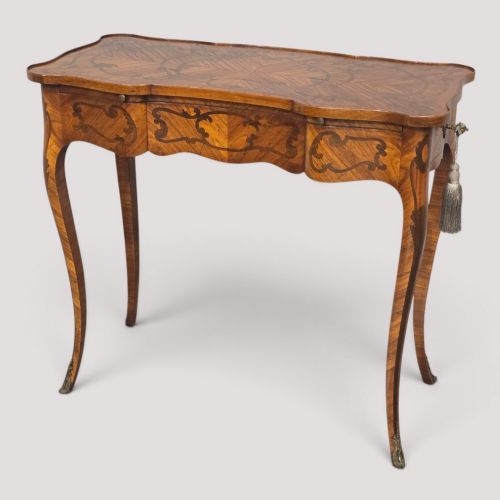
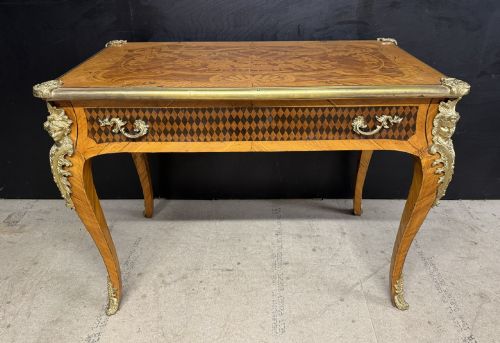
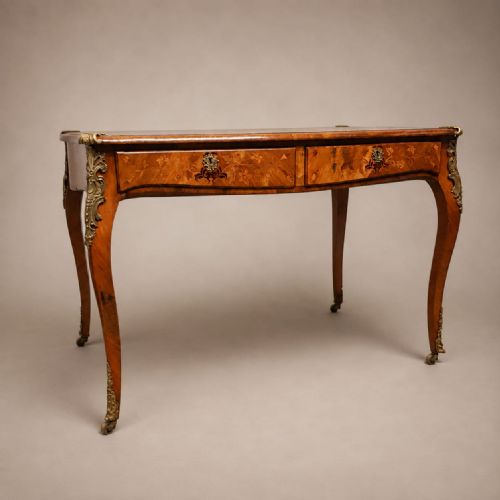
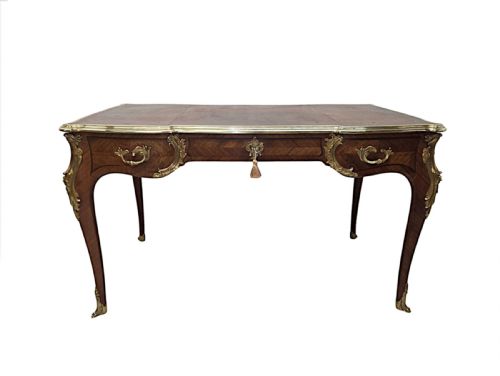
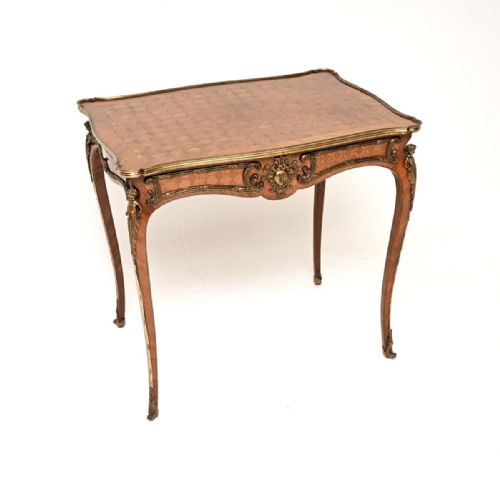
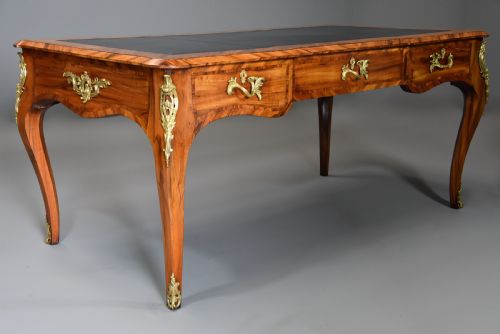
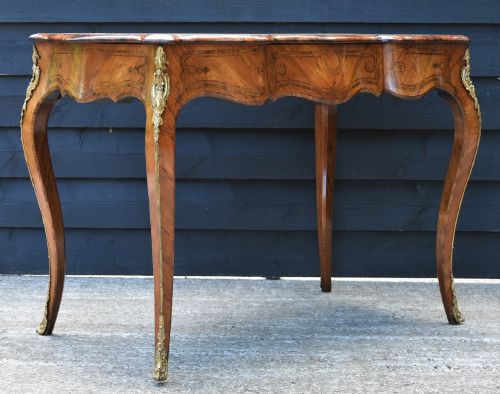
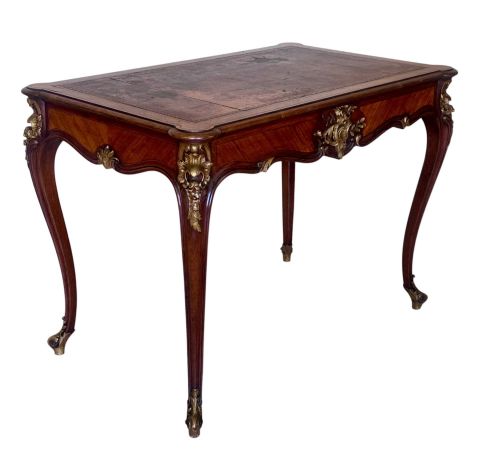
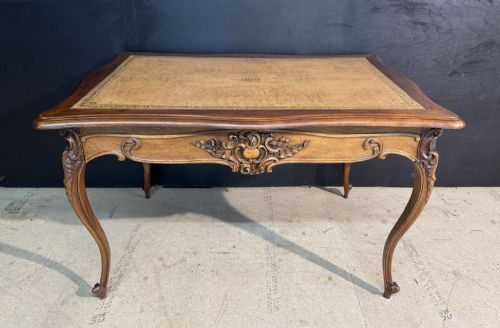
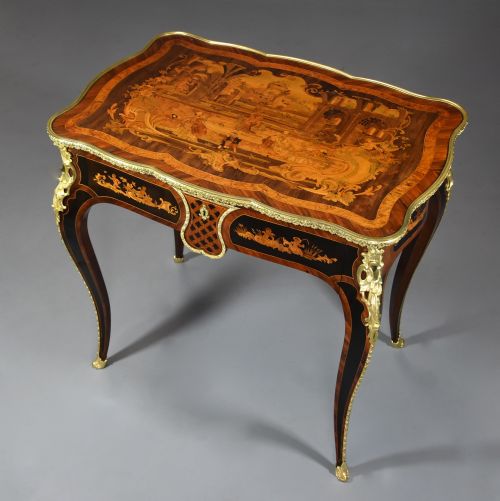
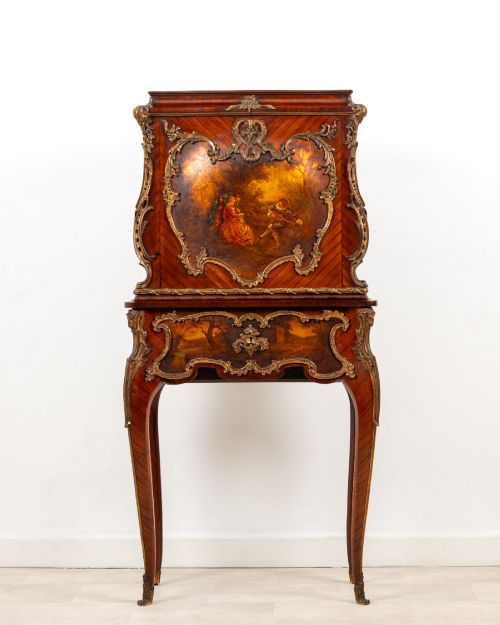
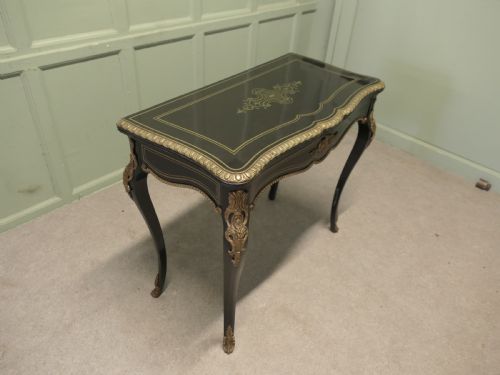
These rococo writing table examples combine organic curves with fine veneers, offering an elegant surface for correspondence.

What they are
A rococo writing table brings asymmetric lines and ornate mounts to any study, originating from European cabinetmakers who favored elaborate curves. You will encounter pieces spanning the 18th century through to the 1900 period, reflecting both original manufacture and later revival movements.
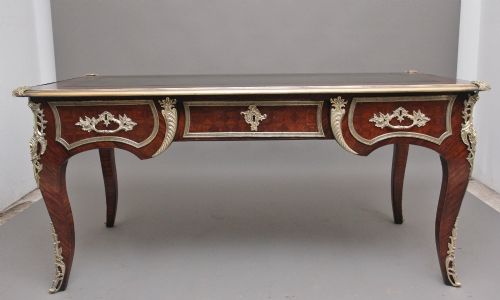
The selection on this page includes bureau plat designs alongside rosewood inlaid bureau de dame forms. Makers utilised French Louis XV and French Rococo styles, occasionally blending them with George III Hepplewhite influences.
Writing desks and writing tables form the core of these listings, constructed in woods like kingwood, rosewood, and figured walnut. Each piece provides a dedicated surface for letters, often enhanced by integrated leather writing inserts.
How they were made
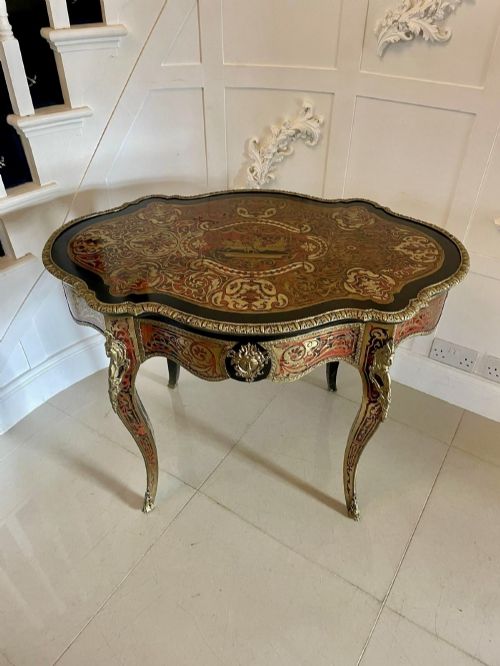
Cabinetmakers built these tables using solid timber carcases overlaid with decorative veneers such as kingwood and rosewood. Marquetry inlay techniques frequently decorated the surfaces, creating intricate floral or geometric patterns across the top and sides.
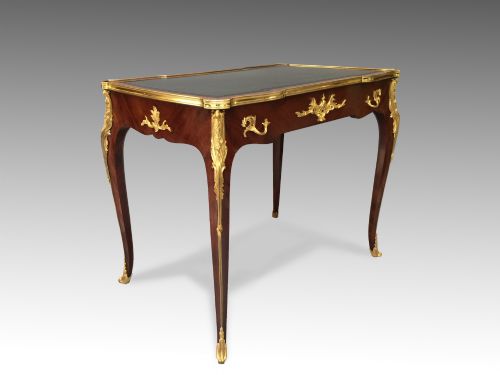
Metalworkers cast and chased ormolu and brass mounts to embellish the corners, legs, and aprons of the tables. Selected pieces also incorporated porcelain plaques, such as Sevres porcelain panels set directly into the wood.
Writing surfaces often utilised fitted leather panels bordered by gilt tooling. Structural stability relied on traditional joinery techniques appropriate to each period, from 18th century craftsmanship to 1900 revival methods.
Retail Price Guide 2026
Typical UK retail prices for rococo writing table, calculated from the Sellingantiques database of over a million retail prices indexed since 2003. This retail price guide relies exclusively on Sellingantiques data; no external sources or auction records are used, so the figures do not describe the wider market.
Some writing tables hide delicate porcelain plaques among their wooden curves, demanding that writers pause simply to admire a painted bird.
What varies in quality
The refinement of the ormolu and brass mounts dictates much of the visual success, separating sharply cast details from softer, commercially produced metalwork. Superior tables display crisp chasing on the bronze elements, whereas lesser examples show smoothed or indistinct casting lines.
Veneer selection and inlay precision reveal the workshop's ambition, with figured woods and complex marquetry demanding higher skill than plain surfaces. The harmony between the serpentine framework and the applied decorative elements determines the overall artistic achievement.
The Rococo Writing Table Glossary
- Bureau plat
- A flat-topped writing table, typically freestanding with drawers in the frieze. This form developed in France during the 18th century and remains a defining shape for the style.
- Ormolu
- Gilt bronze mounts applied to furniture for decoration and edge protection. The technique involves a mercury amalgam applied to bronze before firing.
- Marquetry inlay
- Pieces of decorative veneer fitted together to form pictorial or geometric designs on a wooden background. It requires immense precision to ensure tight joints between different wood species.
- Kingwood
- A dense, richly grained timber frequently used for high-end French furniture veneers. Its contrasting dark and golden brown streaks provide striking visual movement.
- Bureau de dame
- A small lady's writing desk, often featuring fitted compartments and a sloped or flat writing surface. These pieces emphasise delicate proportions and refined decorative mounts.
Frequently Asked Questions
What is a bureau plat?
A bureau plat is a freestanding writing table with a finished back and drawers integrated into the frieze. It was designed to sit in the centre of a room rather than against a wall.
These desks provide a broad writing surface, often lined with leather, and typically feature cabriole legs decorated with ormolu mounts.
How do I identify the wood types?
Cabinetmakers used exotic hardwoods like kingwood and rosewood for their rich grain patterns and deep colour variations. Kingwood displays distinct dark streaks against a lighter brown background.
Figured walnut and general wood veneers also appear across these pieces, requiring close visual inspection of the grain to distinguish between species.
Where were these tables used?
These tables served as functional writing surfaces in private studies, boudoirs, and principal reception rooms. Their finished appearance allowed them to occupy prominent positions in domestic interiors.
Owners utilised them for correspondence, reading, and managing personal accounts within fashionable residences.
How do I care for leather writing surfaces?
Leather inserts require gentle cleaning with a dry or barely damp cloth to avoid staining the material. Avoid harsh chemical cleaners that can strip the original polish and gilt tooling.
Applying specialist leather dressings occasionally helps maintain suppleness and prevents the surface from drying out over time.
What distinguishes revival pieces from 18th century examples?
Eighteenth century pieces reflect the primary period of manufacture and feature construction methods specific to that era. Revival pieces from the 19th century and 1900 reinterpreted these historical styles using contemporary workshop practices.
Examining the internal secondary woods, tool marks, and hardware helps clarify the precise era of construction.