
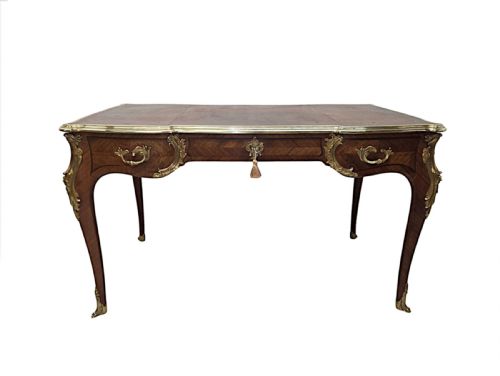
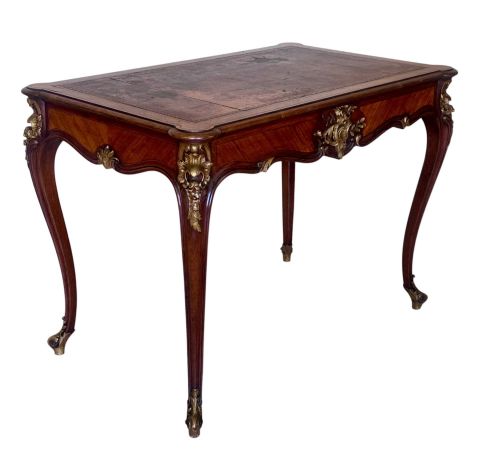
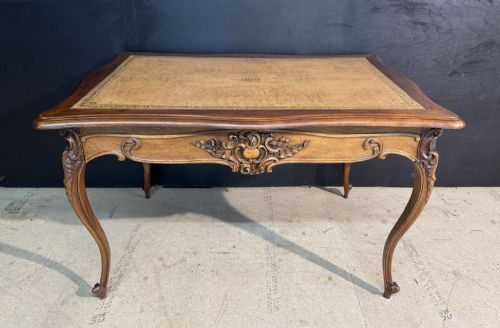
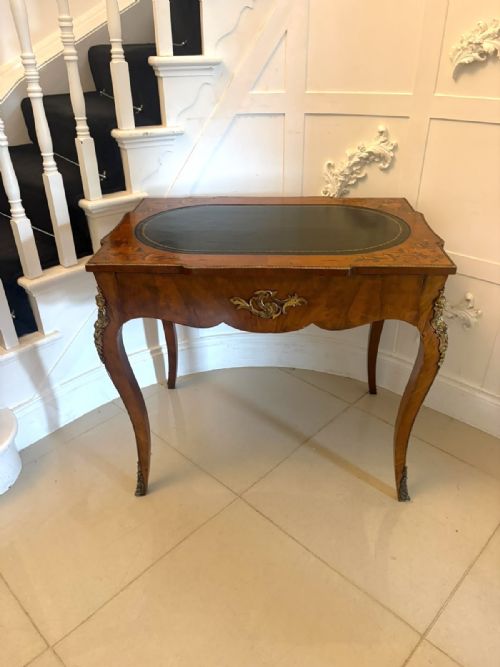


French Rococo Study Table
A French rococo study table brings sweeping serpentine lines and gilt bronze mounts to a room, offering a dramatic centrepiece for writing.
French Rococo Study Table
A French rococo study table is a freestanding writing desk designed to sit centrally within a room rather than against a wall. The pieces listed here span the nineteenth century and the twentieth century, alongside select eighteenth-century examples and revival periods.
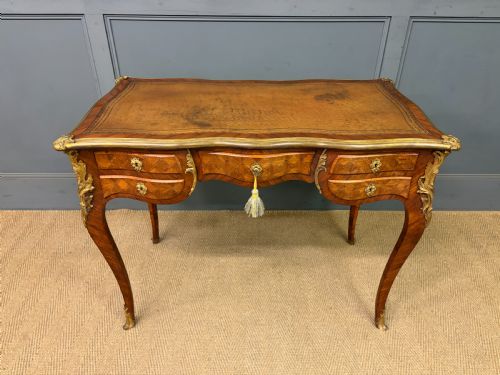
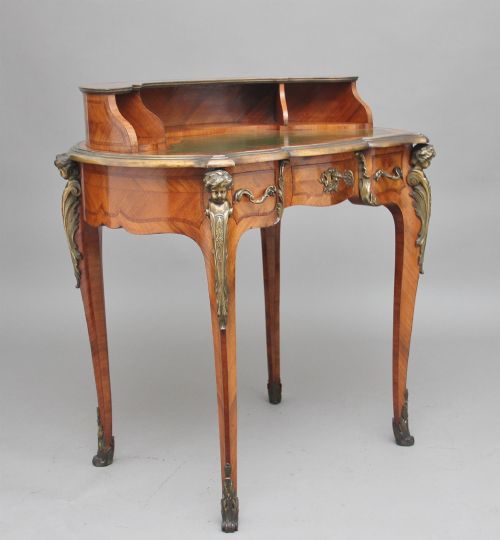
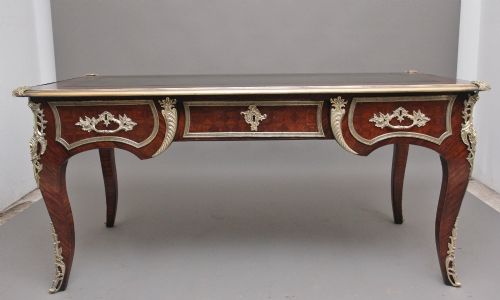
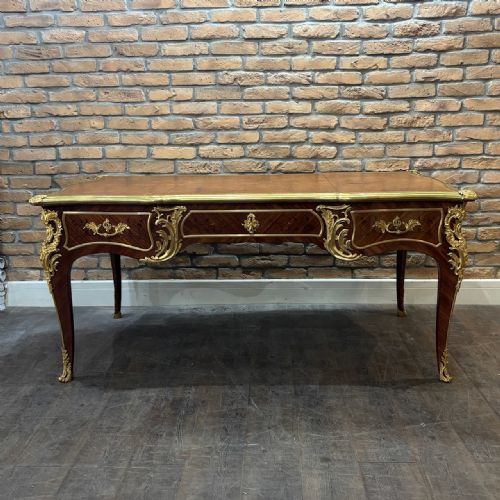
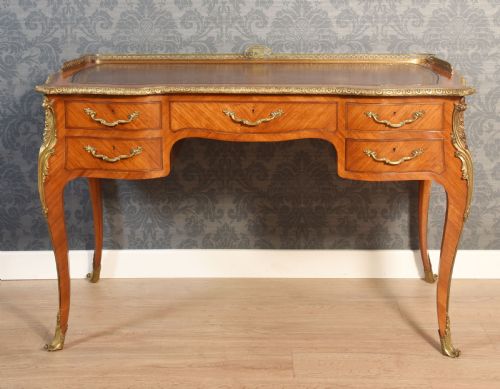
Most specimens take the form of a bureau plat or writing table, featuring shaped wooden tops inset with leather writing surfaces. The style draws heavily on Louis XV designs, characterised by asymmetrical curves, serpentine fronts and cabriole legs.
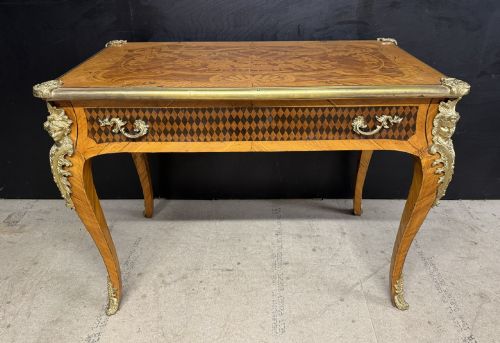
Makers and workshops across these periods utilised rich timber veneers and decorative bronze mounts to recreate the exuberance of the original French rococo movement. Buyers encounter both restrained nineteenth-century walnut versions and more heavily ornamented kingwood and marquetry pieces.
How they were made
Cabinetmakers constructed the carcase using structural timbers such as mahogany or walnut, then applied decorative veneers like kingwood, rosewood, burr walnut and satinwood. Marquetry panels featured intricate floral or geometric inlaid patterns across the top and drawer fronts.
Ormolu and gilt bronze mounts were cast, chased and fire-gilded to accent the corners, handles, apron and sabots of each desk. Toolled leather inserts were traditionally glued onto the writing surface to provide a durable and tactile workspace.
The listings span multiple centuries, incorporating nineteenth-century revival pieces alongside eighteenth-century originals and twentieth-century interpretations.
What varies in quality
The refinement of the cast bronze mounts distinguishes finer examples from standard production pieces, particularly where hand-chasing reveals crisp detail in the acanthus leaves and scrolls. Marquetry execution also dictates grade, with multi-timber pictorial inlays requiring superior technical skill compared to simpler geometric banding.
The choice and figuring of the timber veneer heavily influence overall merit, especially on burr walnut and kingwood surfaces where grain symmetry matters. Structural integrity relies on the quality of the cabinetwork in the drawers, framing and joints underneath the decorative skin.
CH Jeanselme and Co·Maison Millet
The French Rococo Study Table Glossary
- Bureau plat
- A freestanding writing table fitted with one or more drawers along the frieze. These desks typically feature leather-inset tops and were designed to stand away from walls.
- Ormolu
- Gilt bronze mounts applied to furniture for decorative effect. The technique involves applying a gold amalgam to heated bronze before firing.
- Marquetry
- Decorative veneer patterns formed by fitting together thin slices of various coloured woods. Craftsmen arrange these pieces to create pictorial or abstract designs.
- Sabot
- A decorative metal mount fitted to the foot of a cabriole leg. It protects the timber base and enhances the curved profile.
- Frieze
- The horizontal band running directly beneath the desk top. This section frequently houses the writing drawers and mounts.
French Rococo Study Table: Frequently Asked Questions
What is a bureau plat?
A bureau plat is a rectangular writing table with drawers in the frieze, finished on all sides to allow placement in the middle of a room.
These desks served as working surfaces for correspondence and administration in formal rooms.
Where should I place a study table?
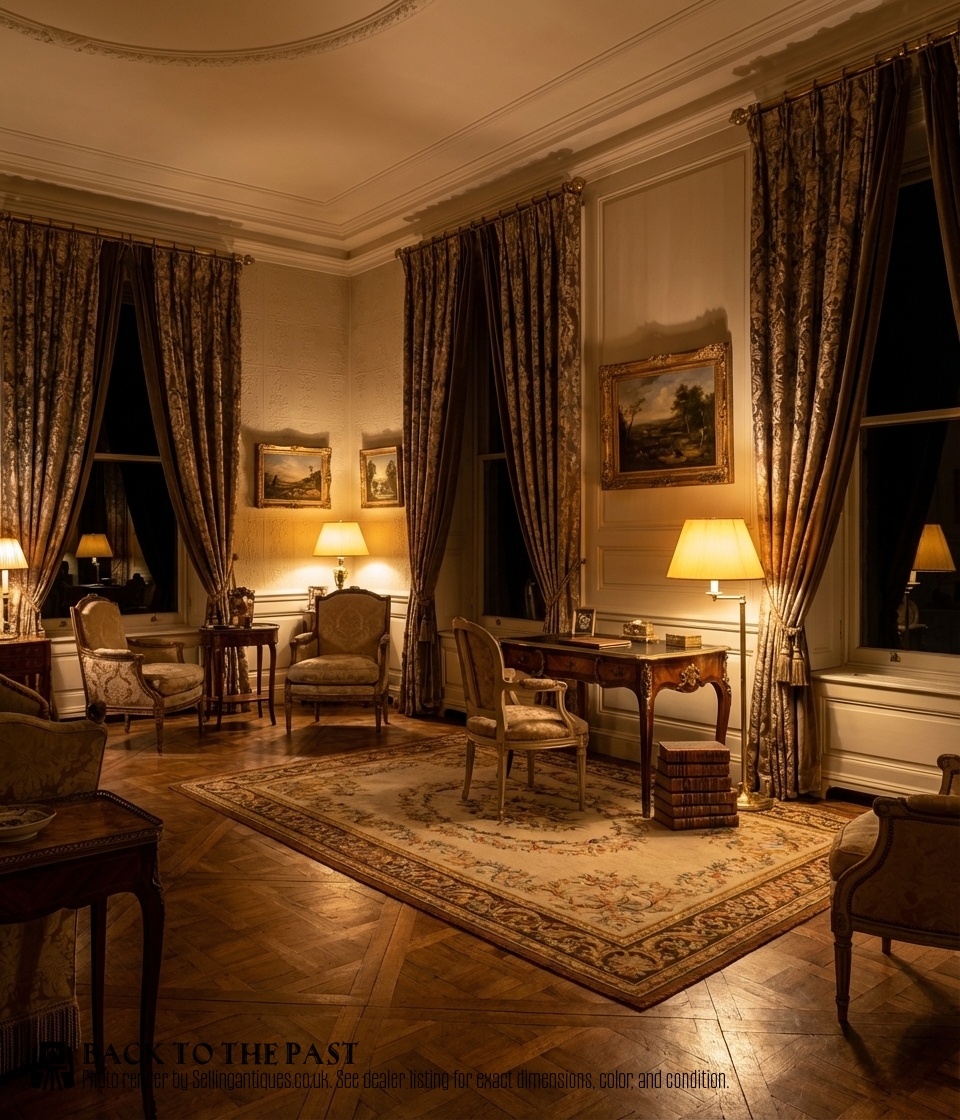
Because these tables feature finished backs and decorated mounts on all sides, they are intended to float in the centre of a study or library.
Positioning them away from walls showcases the cabriole legs and ormolu details properly.
How do I care for the leather top?
The leather writing surface benefits from occasional cleaning with a damp cloth and a light application of neutral leather balm to prevent drying.
Avoiding direct sunlight helps preserve the colour and gold tooling around the edges.
How can I tell revival periods apart?
Nineteenth-century revival pieces often display machine precision in their marquetry and standardised casting in the ormolu mounts compared to earlier work.
Examining the secondary timbers inside the drawer boxes and the wear patterns on the underside helps clarify the age of the piece.