

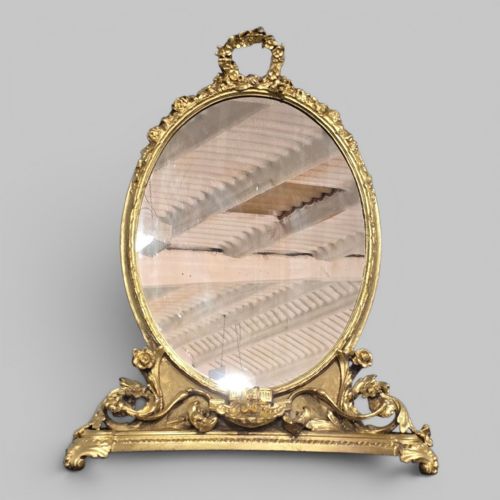


Rococo Tabletop Mirror
A rococo tabletop mirror brings fluid curves and ornate, scroll-heavy styling to a dressing space.
Rococo Tabletop Mirror
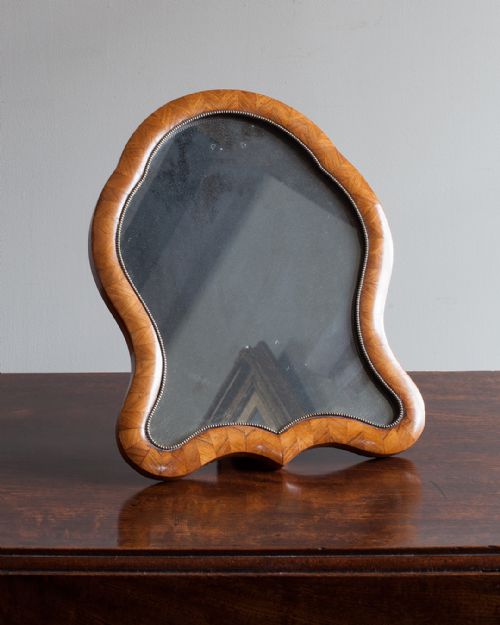
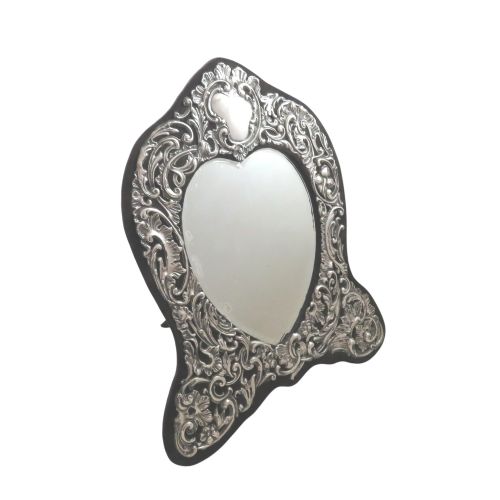
A rococo tabletop mirror combines asymmetrical scrolling, organic shell motifs, and C-scroll framing scaled for dressing tables and desks. These pieces sit on small stands or easel backs, designed to move between rooms or rest permanently upon a surface.
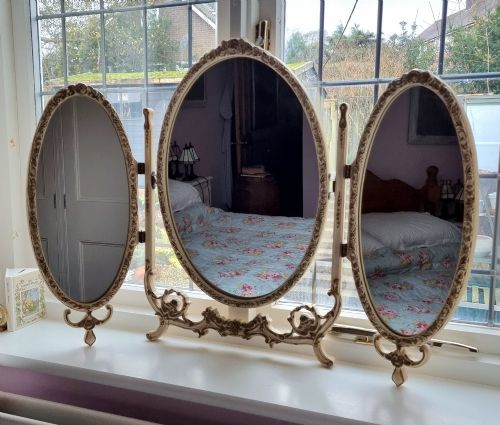
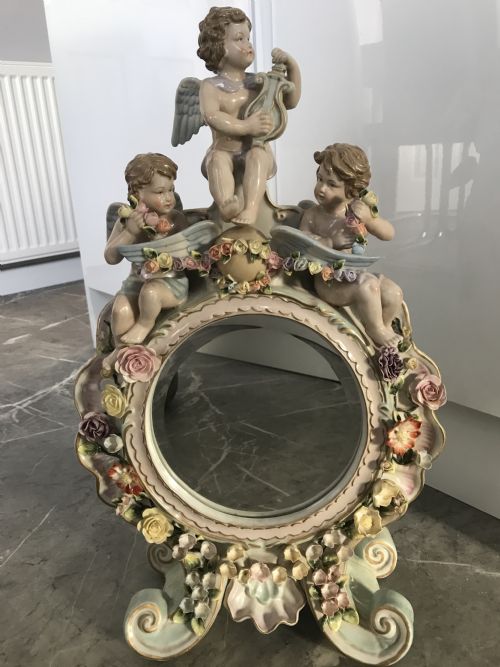
The versions met here span the Victorian era, the Edwardian period, and the 1930s, alongside continental European interpretations. Forms range from simple swinging oval glasses to triple-panel folding mirrors and elaborate porcelain frames adorned with flowers.
Makers drew on 18th-century French aesthetics, producing revival pieces in cast brass, carved wood, and silver. A buyer selects these objects for their decorative impact and practical utility during daily routines.
Materials and construction
Makers utilised cast brass, sterling silver mounts, and silver-gilt frames, often pairing them with heavy glass plates featuring bevelled edges. Wooden examples employ carved oak, kingwood, and giltwood finished with gesso to hold sharp decorative relief.
Continental factories and smaller workshops also moulded porcelain frames, decorating them with applied floral details and coloured glazes. Swing mechanisms and easel backs rely on metal hinges and struts screwed securely into the reverse of the frame.
Rococo Tabletop Mirror Retail Price Guide 2026
Typical asking prices for rococo tabletop mirror among the pieces listed under this phrase on Sellingantiques today, from the lower quarter to the upper quarter. They describe what is for sale here now, not the wider market.
Object forms span simple swing mirrors, triple-panel dressing table models, and elaborate easel-backed vanity pieces originating from British and continental makers.
Judging quality and craftsmanship
Quality rests in the crispness of the modelling across the frame, whether cast in metal, carved in wood, or shaped in porcelain. Superior examples show deep, hand-finished relief work in the scrolls and foliage rather than soft, mass-produced outlines.
The integration of the mirror glass matters greatly, with bevelled plates and secure backings distinguishing finer workshop output. Robust hinges on triple mirrors and sturdy easel struts indicate durable construction designed to withstand daily adjustment.
The Rococo Tabletop Mirror Glossary
- Rococo Revival
- A design movement drawing inspiration from the 18th-century French rococo style, popular during the Victorian era. It emphasises asymmetry, scrolling foliage, and shell motifs.
- Gesso
- A plaster-like mixture applied to wood frames and carved before gilding or painting. It provides a smooth surface that holds intricate decorative detail.
- Easel mirror
- A looking glass supported by a hinged leg on the back, allowing it to stand independently on a tabletop. This style removes the need for a fixed wooden frame stand.
- Bevelled glass
- A mirror plate with edges cut and polished at an angled slope. This technique catches the light and adds depth to the appearance of the glass.
- Silver deposit
- A decorative technique where pure silver is bonded chemically and electrically to a ceramic or porcelain surface in ornamental patterns. It creates a striking contrast against coloured glazes.
Rococo Tabletop Mirror: Frequently Asked Questions
How do I clean a antique mirror glass?
Use a soft cloth dampened slightly with water or a mild, ammonia-free glass cleaner applied to the cloth rather than directly onto the glass. Avoid spraying liquid near the edges where moisture can seep behind the silvering.
Take care around the frame materials, particularly giltwood, gesso, and porcelain, as harsh chemicals or excessive moisture will damage the finish. Dry the surface thoroughly after cleaning.
Can I replace the mirror glass?
Replacing the glass is possible, but original bevelled plates contribute significantly to the character and age of the object. Think carefully before altering the glass if the current plate remains stable.
If replacement is necessary, consult a specialist restorer who can source glass matching the thickness and slight imperfections of the period. Modern, flawless glass can sometimes look harsh within an antique frame.
How do I date a tabletop mirror?
Examine the materials, the construction of the back panel, and the fixings holding the glass in place. Victorian and Edwardian pieces often show specific manufacturing marks, metal compositions, or registration numbers.
Stylistic cues also help narrow the period, moving from heavy Victorian cast brass towards lighter Edwardian forms and later 1930s variations. Hallmarks on silver mounts provide precise dates for marked items.