


Gilt Dressing Table Mirror
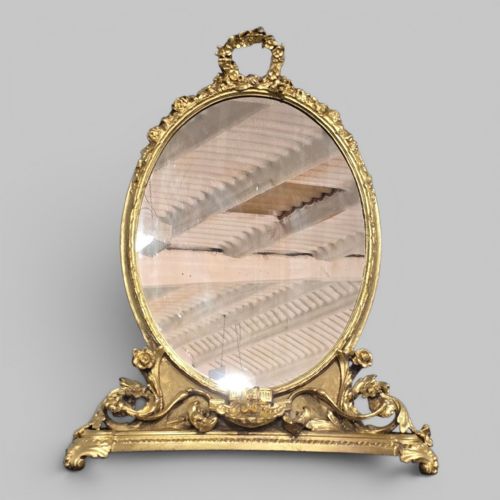
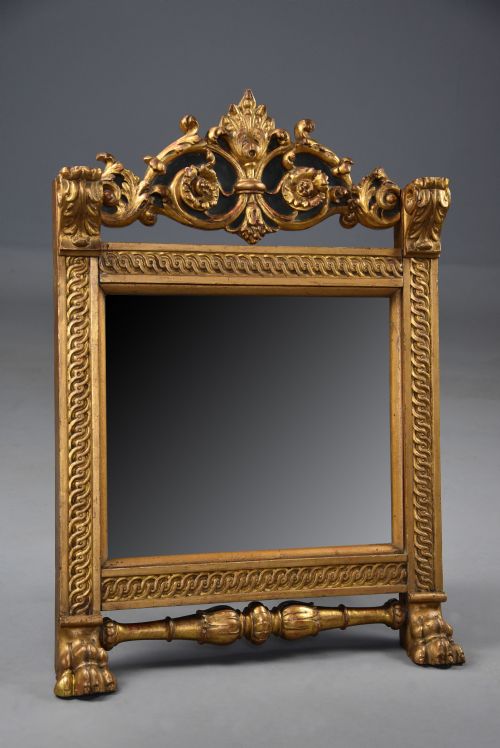
A gilt dressing table mirror sits on a chest or dressing surface, catching the light and framing a reflection through gilded metal or carved wood.
Gilt Dressing Table Mirror
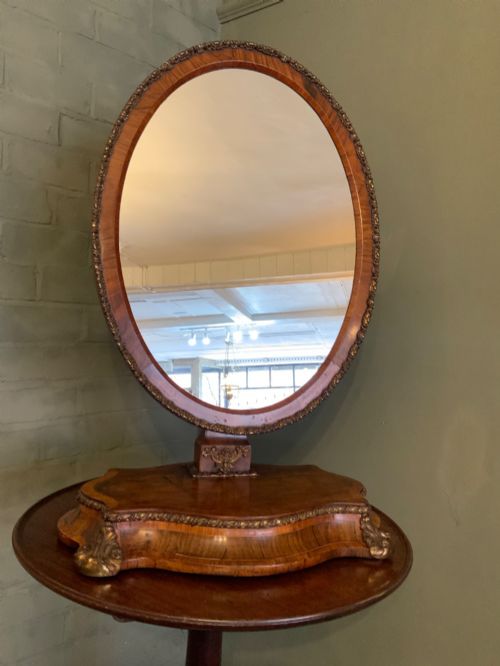
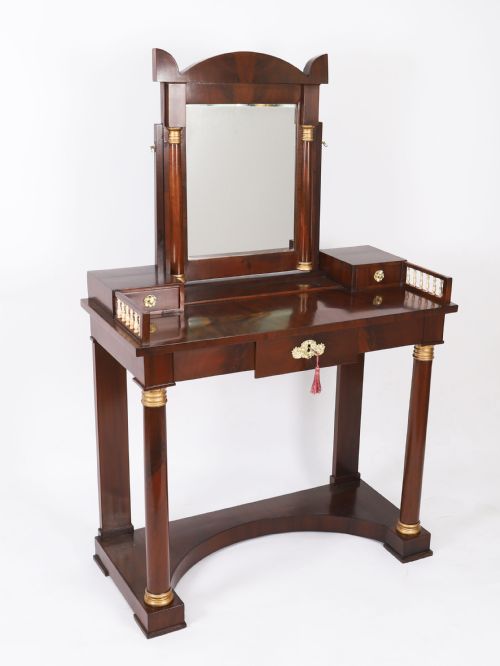
A gilt dressing table mirror sits on a dressing surface, designed to provide a clear reflection for grooming while adding a decorative focal point to a bedroom or boudoir. These items span various forms, from tabletop and toilet mirrors to folding triptychs and adjustable pedestal designs.
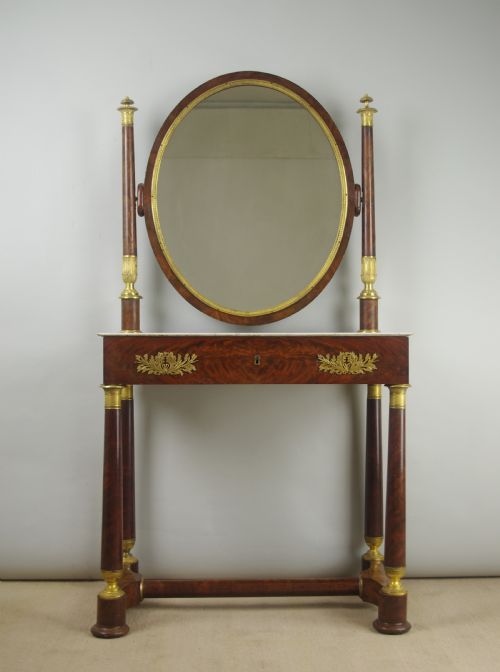
The versions most commonly met on this page date from the nineteenth century, including Victorian examples and French pieces influenced by the Empire and Rococo revival styles. Earlier eighteenth-century George II and Georgian walnut or mahogany toilet mirrors also appear, featuring simpler rectangular plates above small drawer bases.
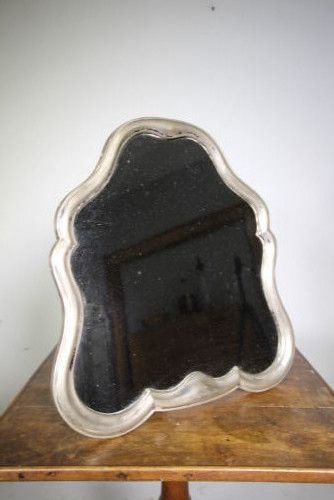
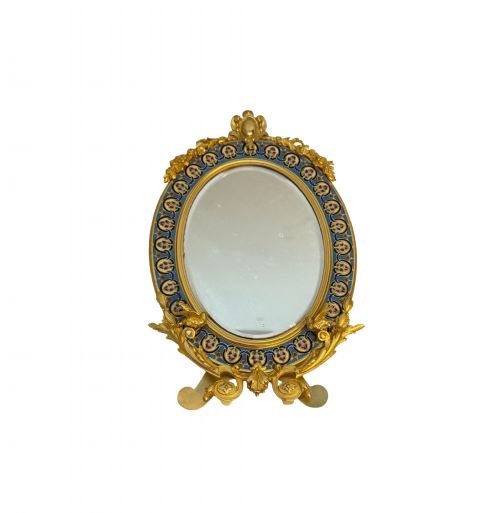
Makers and workshops across Britain and continental Europe produced these mirrors in considerable variety, using glass alongside metals and timbers. Buyers encounter everything from small easel-backed frames to large, ornate table mirrors framed in gilded bronze, ormolu, or carved giltwood.
How they were made
Craftsmen built the structural frames of these mirrors using solid timbers such as mahogany, walnut, or kingwood, often shaping the wood with curves and mouldings before applying parcel-gilt details. Alternatively, frames were carved from softwoods and coated in gesso before being heavily gilded with gold leaf.
Metal components relied on bronze, brass, and ormolu, cast and chased with decorative motifs before receiving a gilt finish. Many French and continental pieces incorporate champleve enamel panels or porcelain plaques inset into the metal mounts around the mirror glass.
The glass itself was typically hand-silvered and bevelled, held securely within the frame by wooden backs or metal pins. Easel stands, hinges, and pivoting brass screws allowed the mirror plate to tilt to the required angle for daily use.
Several mirrors include hidden compartments within their small base drawers, once used to stash secret love letters or morning tea money.
What varies in quality
The standard of carving and metal chasing dictates much of the visual merit, with crisp, hand-finished details outshining mass-produced castings. Finer examples display deeply undercut foliage, sharp rococo scrolls, and well-fitted bronze mounts that integrate seamlessly with the timber or gesso base.
The choice of secondary materials and construction methods separates workshop tiers. High-grade eighteenth-century pieces use figured walnut or dense mahogany with traditional dovetail joinery in the small base drawers, whereas lesser items employ simpler veneers and pine carcases.
Originality of components remains paramount, particularly the survival of the mercury or early silvered mirror glass, original backboards, and matching brass hardware. Replacements alter the integrity of the piece, whereas undisturbed surfaces reflect the true age and origin.
Thiebaut Freres·Joseph Meissonnier·F.Bienvue·John Franklin London
The Gilt Dressing Table Mirror Glossary
- Ormolu
- Gilded bronze, widely used for decorative mounts on nineteenth-century French furniture and mirror frames. The technique involves applying a gold amalgam to heated bronze.
- Champleve
- An enamelling technique where troughs or cells are hollowed out of a metal surface and filled with vitreous enamel before firing. It frequently appears on nineteenth-century bronze frames.
- Giltwood
- Timber, commonly lime or pine, that has been carved and coated with gold leaf over a prepared gesso ground. It forms the basis of many ornate eighteenth and nineteenth-century mirrors.
- Toilet Mirror
- A traditional term for a small dressing table mirror, usually fitted with a small box base containing one or more small drawers. These date predominantly from the Georgian and Victorian periods.
- Triptych
- A mirror composed of three folding panels, featuring a central looking glass flanked by two hinged side wings. This arrangement allows the user to view reflections from multiple angles.
Gilt Dressing Table Mirror: Frequently Asked Questions
What is a toilet mirror?
A toilet mirror is a small tabletop glass designed for grooming, typically mounted on a supportive frame with pivoting screws. Many older versions sit atop a miniature chest base fitted with small drawers for trinkets.
These pieces were standard bedroom furnishings before full-length dressing mirrors became common. They offered a portable reflection at a convenient height.
How do I date a gilt dressing table mirror?
Dating relies on examining the construction methods of the frame, the type of timber, and the bevel or silvering of the glass. Georgian examples often feature straightforward mahogany or walnut box bases, while Victorian and later pieces show heavier cast brass or intricate gesso work.
Stylistic cues such as French Empire or Rococo revival motifs also help narrow down the decade of production. Original hardware and backboards provide further clues to the period.
Where should I place a table mirror?
These mirrors work best on sturdy chests of drawers, dressing tables, or console tables where they can rest securely. Placing them near a window helps bounce natural light around the room.
Because many feature pivoting frames or easel backs, you can adjust the angle to suit the height of the surface it rests upon. Ensure the supporting furniture can comfortably bear the weight of heavier bronze or giltwood frames.
Are triptych mirrors adjustable?
Triptych mirrors feature hinged side panels that fold inward or outward around a fixed central plate. This allows the user to angle the wings to see different sides of the reflection.
Most hinges operate smoothly on traditional pivots, though older metal may require gentle handling. The folding design also allowed nineteenth-century owners to adjust the mirrors for storage or travel.