

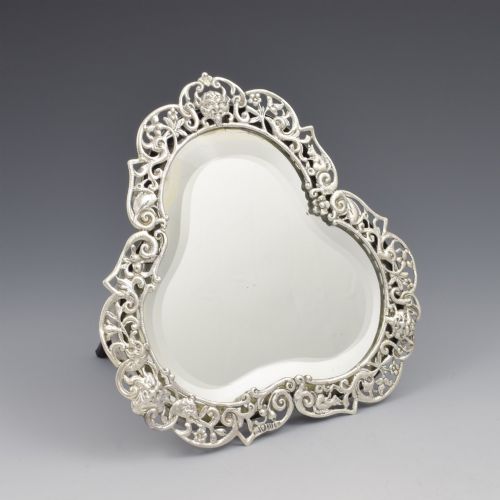


Tabletop Mirror Frame
A tabletop mirror frame sits upon your dressing chest or bureau, offering a moveable glass surface for daily toilette.
Tabletop Mirror Frame
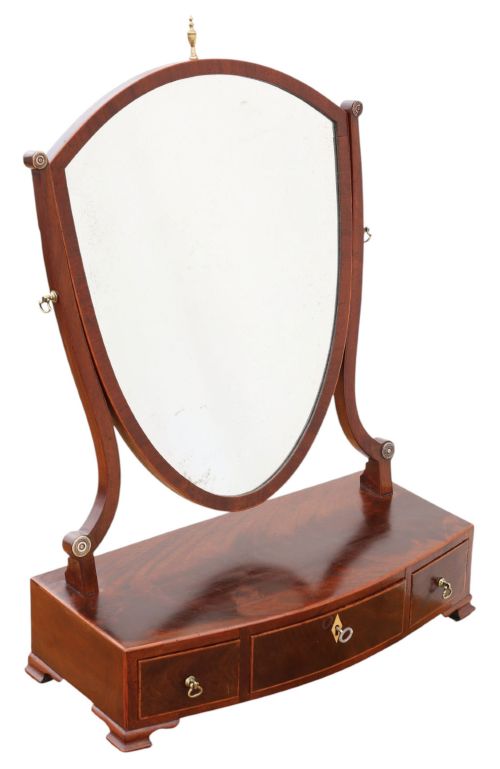
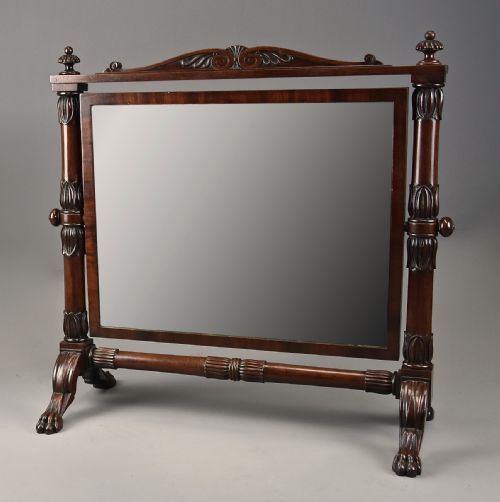
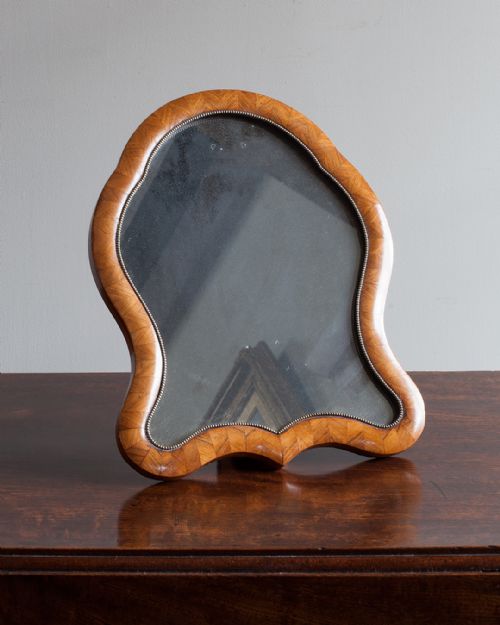
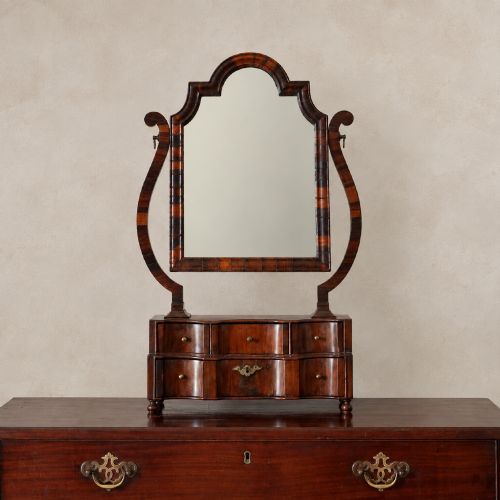
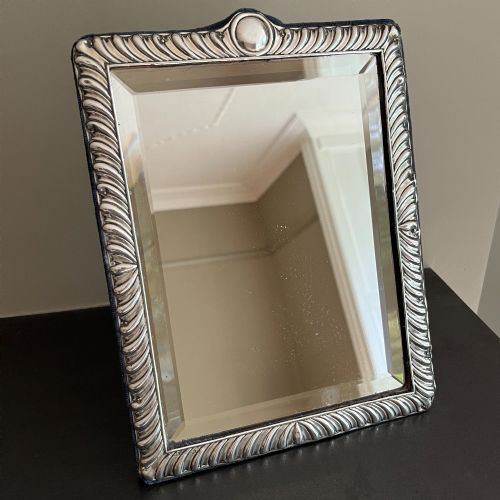
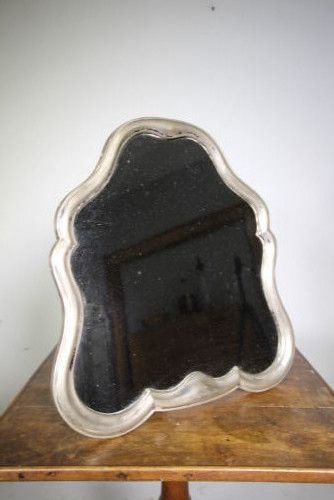
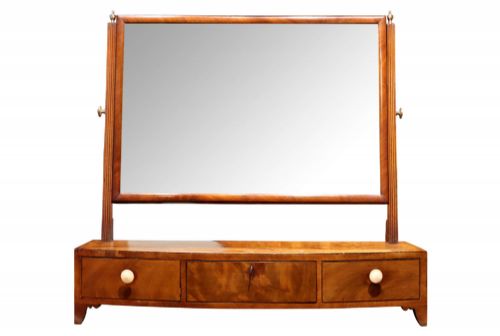
A tabletop mirror frame brings together portable glass and a supportive stand designed to rest on a chest of drawers, dressing table or bureau. When you examine a tabletop mirror frame, you encounter various period forms ranging from Georgian swing glasses supported by uprights to Victorian easel backs and silver strut mirrors.
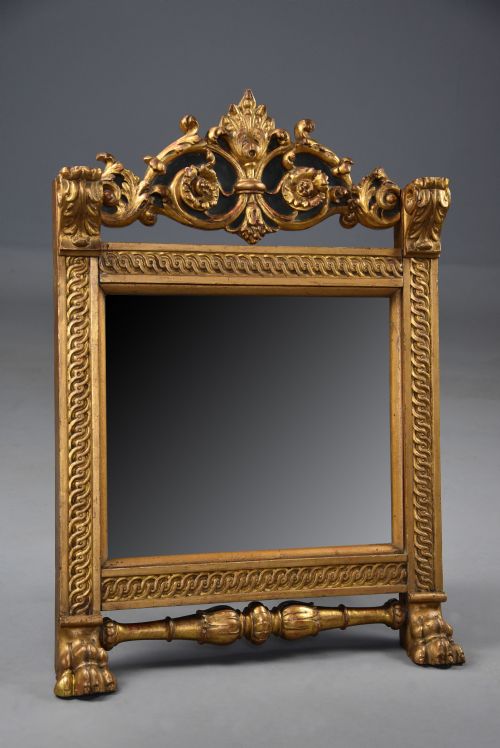
The selections span centuries, featuring early examples in walnut and mahogany alongside later silver, porcelain, or giltwood pieces. Many items incorporate small drawers within the base structure, while others rely on simple hinged struts or pivots to angle the glass plate.
Materials and Construction
Makers utilised timber such as mahogany, walnut, kingwood, and laburnum to construct the structural frames and swing boxes. Solid woods were often shaped and polished, while specialised pieces incorporated veneers or intricate marquetry.
Metalwork played a significant role, particularly in later Victorian and Edwardian examples fashioned from sterling silver, silver gilt, or brass. Craftsmen also employed porcelain, ormolu, and glass to create decorative easel frames.
Some Edwardian silver mirrors managed to incorporate depictions of live animals and birds into their pierced frames.
Judging the Standard of Execution
Quality rests upon the crispness of timber carving, the precision of dovetail joints in drawer boxes, and the integrity of the original mirror glass. Finer pieces demonstrate careful selection of grain patterns in woods like Cuban mahogany or figured walnut.
Metal frames show distinction through deep relief chasing, clear hallmarks on silver components, and sturdy hinges that support the weight of the glass without slipping. The refinement of decorative mounts and enamel plaques further separates standard work from exceptional output.
Henry Matthews·Sitzendorf·WMF
The Tabletop Mirror Frame Glossary
- Swing mirror
- A glass plate hung on pivots between two upright arms, allowing the user to tilt the reflection.
- Easel mirror
- A frame supported by a hinged leg at the rear, designed to stand upright on a flat surface.
- Toilet mirror
- A smaller dressing mirror traditionally placed upon a dressing table or washstand.
- Strut mirror
- A metal or wood frame featuring a hinged back support, common in Edwardian and late Victorian silver pieces.
- Cheval mirror
- A full-length dressing glass mounted in a freestanding frame, though smaller tabletop versions also appear in period styles.
Tabletop Mirror Frame: Frequently Asked Questions
How do I date a tabletop mirror frame?
Dating relies on combining the timber species, construction methods, and hardware styles with any visible hallmarks. Earlier Georgian examples display hand-cut dovetails and pegged joints, whereas later Victorian pieces often use machine-cut elements and stamped metal mounts.
Silver components frequently carry date letters and maker marks that pinpoint the exact year of manufacture. Stylistic cues, such as Art Nouveau whiplash lines or Queen Anne walnut veneers, also guide the chronological placement.
What is the difference between a swing mirror and an easel mirror?
A swing mirror hangs between two vertical posts mounted on a heavy base or box, allowing the glass to rotate freely back and forth. This form dominates Georgian and Regency mahogany dressing mirrors.
An easel mirror uses a single hinged prop attached to the back of the frame, much like a photographic frame. This design appears more commonly in late 19th-century silver, porcelain, and brass tabletop pieces.
Were these mirrors used only for grooming?
While primarily designed for dressing tables and toilet chests to assist with personal grooming, many decorative tabletop frames served as interior ornaments. Giltwood, porcelain, and silver examples were frequently displayed on mantelpieces, sideboards, or bureaus.
Their decorative qualities meant they functioned as display pieces in formal rooms as well as utilitarian objects in private bedchambers.
Can I replace the mirror glass?
Original mirror glass often exhibits foxing, light oxidation, or silver loss due to age, which many collectors prefer to preserve as evidence of authenticity. Replacing the plate is possible, but modern glass can look overly bright within an antique frame.
When replacement is necessary for functional use, careful selection of slightly aged or silvered glass helps maintain the visual harmony of the period piece.