


Rococo Style Figurines
Rococo style figurines bring theatrical movement, pastel shades and theatrical pastoral charm to a room.
Rococo Style Figurines
Rococo style figurines capture the theatrical pastoral scenes and delicate forms associated with eighteenth-century taste, though most examples encountered here date from the nineteenth century. Buyers will find porcelain figures, putti, allegorical groups and figural candlesticks produced across Europe.
The selection leans heavily toward Continental factories and revivalists such as Samson of Paris, Meissen and various German manufacturers imitating earlier Chelsea or Derby models. These pieces translate courtly elegance into decorative mantel ornaments and table centerpieces.
How They Were Made
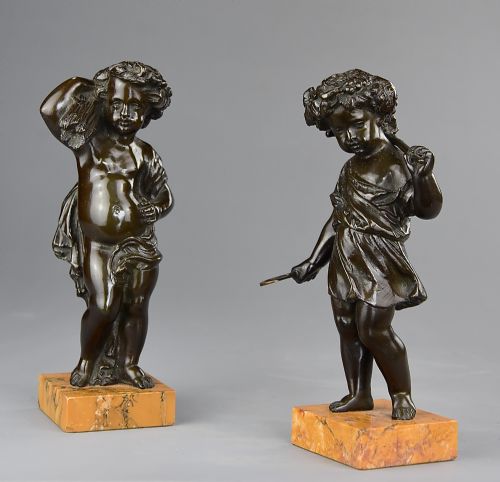
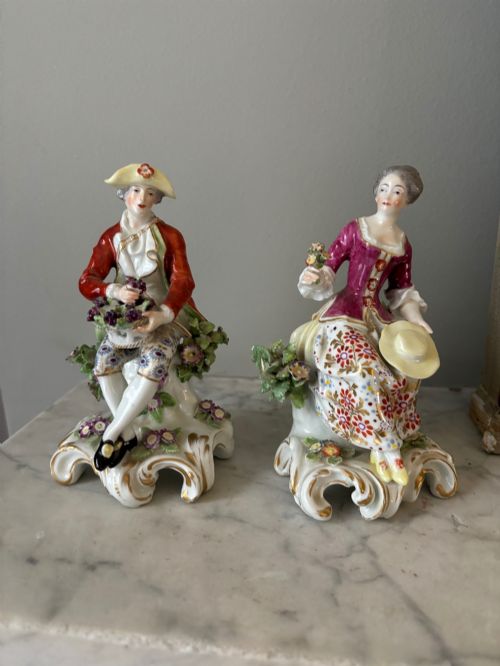
Makers utilised hard-paste porcelain and bronze, frequently finished with gilding, enamel colours and gold leaf to achieve rich surface detail. Some delicate works incorporate applied porcelain lace or elaborate bocage foliage backgrounds.
Casting and hand-modelling allowed for intricate gestures, flowing drapery and detailed floral bases that define the style.
Rococo Style Figurines Retail Price Guide 2026
Typical asking prices for rococo style figurines among the pieces listed under this phrase on Sellingantiques today, from the lower quarter to the upper quarter. They describe what is for sale here now, not the wider market.
Several bronze putti carry harvest grapes with entirely serious expressions.
What Varies in Quality
Quality rests in the crispness of the modelling, the subtlety of the hand-painted enamels and the precision of the gilding. Superior pieces retain fine facial expressions and delicate extremities without heavy glaze pooling.
Later mass-produced interpretations often lose the energetic fluidity and fine detail seen in earlier factory work or skilled revival pieces.
Edme Samson·Meissen·Volkstedt·Ernst Bohne Sohne·Carl Thieme·Sitzendorf
The Rococo Style Figurines Glossary
- Hard-paste porcelain
- A durable ceramic composition fired at high temperatures, offering a smooth, vitreous body ideal for detailed figure work.
- Ormolu
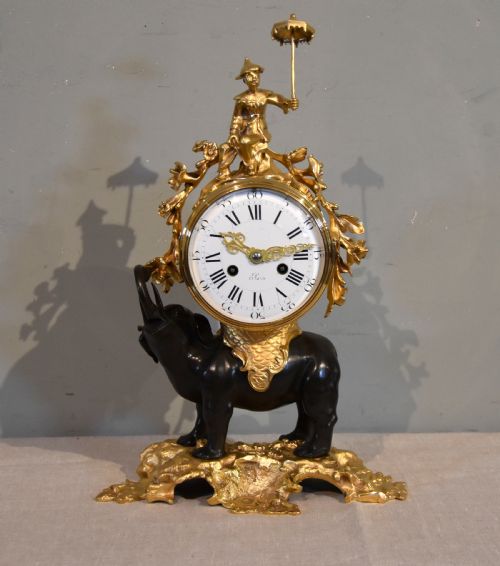
- Gilded bronze used for mounts, decorative bases and clocks, providing a bright metallic contrast to porcelain or marble.
- Bocage
- An applied background of leaves and flowers surrounding a porcelain figure, typical of eighteenth-century style English and Continental works.
- Putto
- A plump, winged infant figure often representing a cherub or mythological cupid, frequently seen in pairs holding grapes or musical instruments.
- Biscuit porcelain
- Unglazed ceramic fired to a matte, marble-like finish that highlights sculptural form and delicate modelling.
Rococo Style Figurines: Frequently Asked Questions
How do I identify a reproduction figure?
Look closely at the enamelling, weight and base marks to understand the period of manufacture. Many nineteenth-century French and German factories intentionally copied earlier English marks.
Familiarity with factory styles helps distinguish eighteenth-century originals from later revival pieces made by firms like Samson.
What are bocage figurines?
Bocage figurines feature an intricate background of applied porcelain foliage and blossoms behind the central character. This technique creates a naturalistic bower effect common in antique pastoral scenes.
These delicate leafy sections require careful handling due to their complex, fragile construction.
Where should I display porcelain figures?
Place them in secure cabinets or on stable mantels away from direct foot traffic to prevent accidental knocks. Good lighting helps highlight the fine hand-painted enamel details and gilding.
Keep them away from direct sunlight to preserve the painted colours over time.
What subjects are most common?
Common themes include pastoral shepherds, allegorical figures representing the seasons, musical putti and romantic couples. These theatrical subjects reflect the decorative tastes of the eighteenth and nineteenth centuries.
Figures were often modelled in pairs to adorn mantelpieces or dining tables symmetrically.