

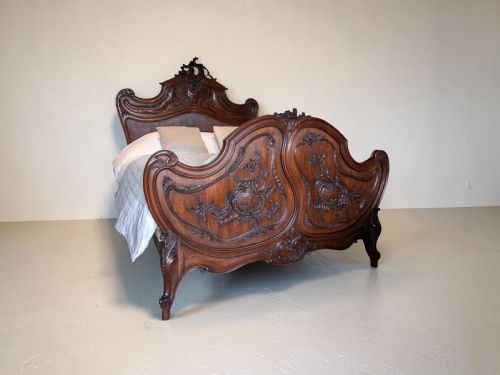


Rococo Style Bed
When you search for a rococo style bed, you find ornate walnut, giltwood, and painted timber frames built to last.
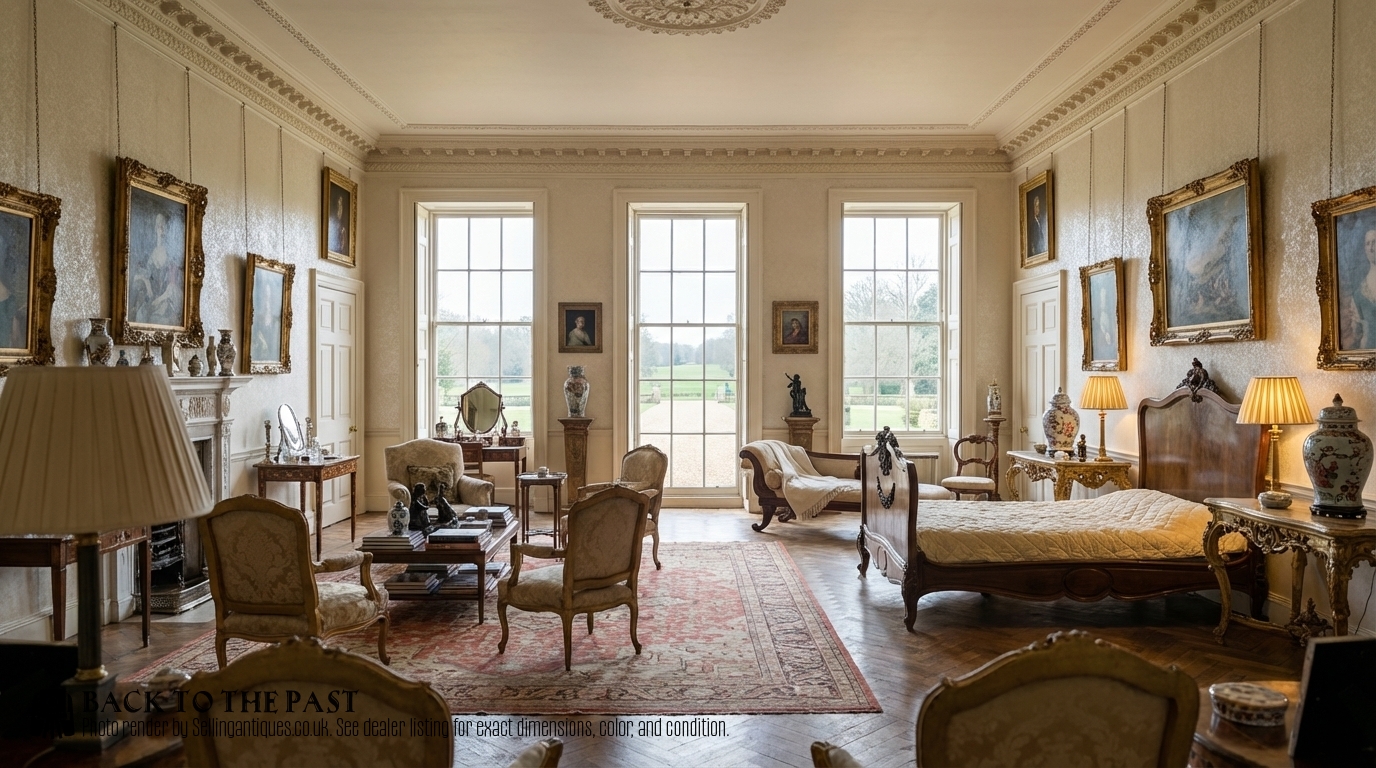
Rococo Style Bed
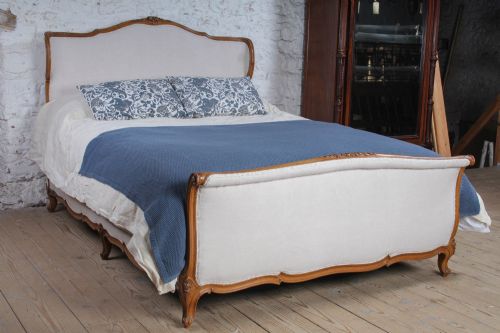
A rococo style bed brings 19th-century and early 20th-century European craftsmanship into a modern bedroom. These pieces draw heavily on French Chateau, Louis XV, and Italian design traditions.
Most examples found here date from the Victorian era up to the 1930s, encompassing walnut, painted wood, and giltwood frames. Alongside full-size beds and bedframes, buyers frequently encounter daybeds, bedside tables, and stools that match the aesthetic.
Makers of this period combined sweeping curves with delicate floral or scroll carvings. The results range from simple painted doubles to elaborate king and super king size suites with matching cabinets.
How they were made
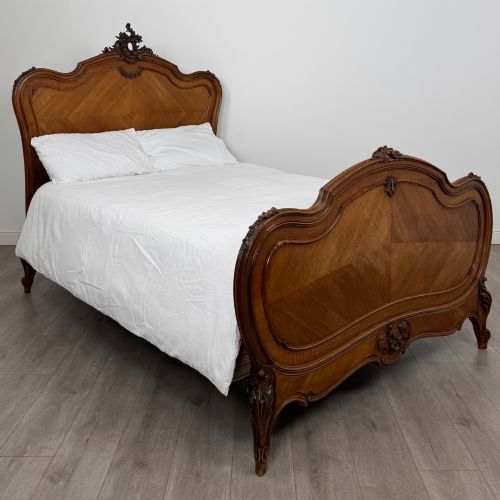
Craftsmen shaped these frames from solid timbers including walnut, mahogany, rosewood, and oak. Carvers worked directly into the wood to produce the asymmetrical scrolls and leaf motifs characteristic of the style.
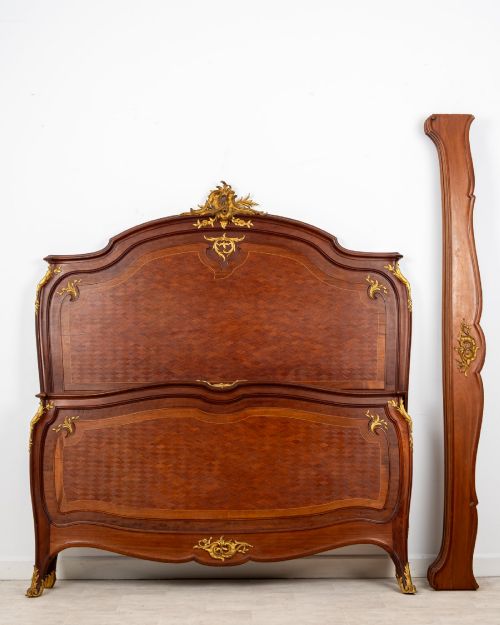
Surface finishes varied from clear polish over figured walnut to painted and parcel gilt treatments. Ormolu mounts and giltwood highlights added metallic contrast to the carved timber.
Upholstered elements relied on traditional stuffing and fabric panels, sometimes complemented by cane work or leather inserts set within the carved wooden framework.
The listings span from the 1880s through the 1930s, featuring walnut, painted wood, giltwood, marble, and brass.
What varies in quality
The distinction between ordinary and exceptional pieces lies in the depth and crispness of the hand carving. Skilled artisans created smooth, flowing lines that integrate seamlessly into the structural joints of the frame.
Material selection dictates much of the visual impact, with figured walnut veneers and heavy giltwood outperforming simple painted softwoods. Original metal mounts and intact parcel gilt surfaces elevate a piece above later restorations.
The Rococo Style Bed Glossary
- Giltwood
- Wood that has been coated with gold leaf or gold paint. This finish catches the light and accentuates the carved details on headboards and cresting rails.
- Ormolu
- Applied bronze or brass cast ornaments finished with gold gilding. Makers mounted these decorative fixtures onto walnut and kingwood bedframes.
- Parquetry
- Geometric wood inlay patterns arranged on a surface. Craftsmen used contrasting timbers to create decorative panels on headboards and furniture.
- Daybed
- A piece of furniture serving as both a chair and a bed. These frames feature upholstered backs or side panels in the Louis XV style.
- Cresting rail
- The top horizontal member of a headboard or bed-head board. This area often displays the most elaborate hand-carved rococo ornamentation.
Rococo Style Bed: Frequently Asked Questions
What size mattresses fit antique beds?
Many older European beds measure slightly differently from standard modern dimensions. Custom mattress makers can build a piece to fit the exact interior frame of the bedstead.
Checking the internal width and length before purchase ensures a proper fit for standard bedding.
How do I care for giltwood and carved walnut?
Dust carved wooden surfaces gently with a soft, dry cloth to prevent dirt from settling into deep crevices. Avoid chemical polishes that can degrade original finishes and delicate gold leaf.
Keep antique timber away from direct sunlight and strong heat sources to prevent the wood from drying out or splitting.
Are bedside cabinets always matching?
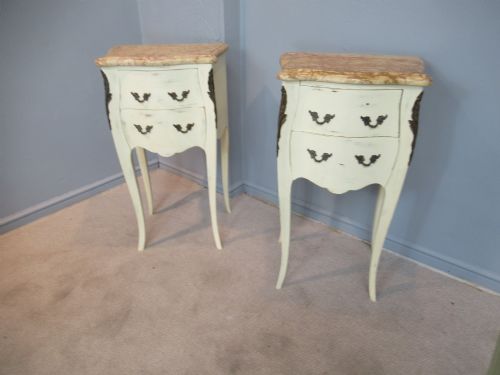
Some listings include matching bedside tables, cupboards, or nightstands created in the same workshop and period. Other pieces stand alone as individual bedroom furniture.
Matching suites provide a cohesive look, while single cabinets allow for eclectic interior arrangements.
How do I distinguish Louis XV style from Italian rococo?
Louis XV style pieces tend to feature refined French Provincial elegance with subtle floral carvings and polished walnut. Italian rococo examples often display bolder carving, heavier gilding, and Venetian influences.
Both traditions share curved lines and asymmetrical forms derived from 18th-century design.